



Walk onto any commercial or industrial wiring job, and you'll hear the same debate: XHHW-2 vs RHW-2 - which one do I specify? For contractors and project buyers working on 600V feeder circuits and plant power distribution, the choice is rarely clear. Many teams default to the lowest price per foot or match a gauge number, and miss the insulation and rating gaps that lead to failed NEC inspections, premature cracking, and costly rework halfway through a project.
This guide breaks down the real-world differences between these two thermoset wire options, specifically for commercial building feeder circuits and industrial plant power distribution work. You'll walk away with a clear decision framework, not just a list of specs.

1. The Core Material Gap: Insulation That Defines On-Site Durability
The difference between XHHW-2 and RHW-2 does not start with voltage rating or gauge - it starts with the insulation material wrapped around the conductor. This is the factor that determines how long the wire will last under heat, moisture, and continuous load.
1.1 XLPE Insulation in XHHW-2: Engineered for Continuous Heat and Moisture
XHHW-2 uses XLPE (cross-linked polyethylene) insulation, a modified polymer that is chemically cross-linked to resist thermal breakdown and moisture intrusion. This is what makes XLPE wire stand up to sustained stress that would degrade standard insulation.
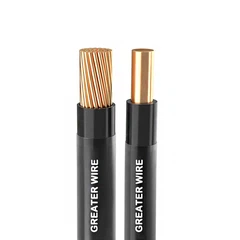
XLPE insulated XHHW-2 building wire carries a 90°C wet and dry rating, meaning it maintains its structural integrity at 90°C conductor temperature even when exposed to moisture. For heavy-duty runs, such as 500 kcmil XHHW-2 Class B Copper feeding industrial distribution panels, this translates to longer service life under full continuous load, even in hot plant environments or outdoor conduit runs.
1.2 Standard Thermoset Insulation in RHW-2: Reliable for Standard Commercial Loads
RHW-2 uses a standard thermoset wire insulation formulation that delivers dependable performance for typical commercial applications. It is a proven, widely available option that meets baseline requirements for most indoor, temperature-controlled commercial projects.
For standard feeder runs where loads are consistent and environmental conditions are mild - such as 4/0 AWG RHW-2 Building Wire feeding commercial distribution panels - this insulation delivers reliable service at a more budget-friendly price point. It is a mature, widely recognized product that works well when matched to its intended conditions.

2. Rating Differences: What They Mean for Compliance and Service Life
Rating numbers on a spec sheet mean nothing if you cannot translate them to on-site risks. Here is how the temperature and wet location differences play out on actual jobs.
2.1 Temperature Ratings: 90°C Wet/Dry vs. Standard Thermoset Limits
The 90°C wet and dry rating of XHHW-2 is not just a marketing number - it is the threshold at which insulation begins to degrade prematurely. In industrial plants where ambient temperatures run high, or where feeder conductors carry full load for long hours, conductor temperature climbs. Standard thermoset insulation exposed to sustained high heat will harden, crack, and lose its dielectric properties faster, leading to early failure.
This is the core of the most common pain point on hot, humid job sites: teams that spec standard thermoset wire for high-heat feeders often face replacement costs within just a few years, far earlier than expected.
2.2 Wet Location Performance: Avoiding Moisture-Driven Insulation Failure
The wet location electrical wire rating difference is the second critical decision point. XHHW-2's XLPE formulation is inherently more resistant to moisture penetration over time, making it suitable for runs that see regular humidity, occasional condensation, or outdoor conduit exposure.
For UL 44 rated building wire comparison, always verify wet location ratings against product datasheets for your exact product. RHW-2 is rated for wet locations as well, but its standard thermoset insulation has lower long-term moisture resistance for continuous exposure. For permanently damp spaces or direct outdoor runs, the XLPE option reduces long-term failure risk.
3. Use Case Mapping: Which Wire Fits Your Commercial or Industrial Project
The right choice is never "one is better" - it is about matching the wire to the job. Below is how the two products align with common commercial and industrial scenarios.
3.1 When to Specify XLPE Insulated XHHW-2 Building Wire
Choose XHHW-2 for heavy-duty, high-stress applications where durability and longevity are priorities:
· Industrial plant power distribution with high ambient temperatures
· Feeder circuits running through unconditioned spaces, outdoor conduit, or humid commercial mechanical rooms
· Runs that will carry near-full load on a continuous basis
· Projects where long service life and reduced maintenance are valued over lowest upfront cost
For smaller industrial branch feeders in high-heat zones, 10 AWG XHHW-2 Stranded Copper Wire is a common spec that delivers XLPE durability at smaller conductor sizes. For larger mains, 500 kcmil XHHW-2 Class B Copper is the standard workhorse for industrial distribution.
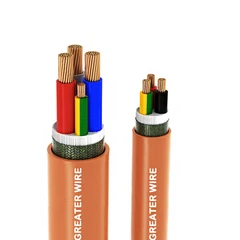
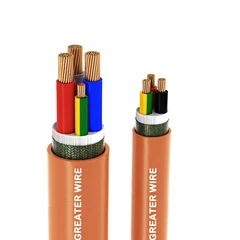
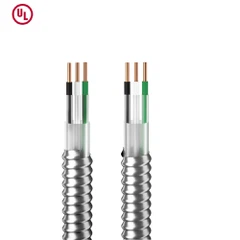
Both XHHW-2 and RHW-2 differ from THHN/THWN-2, which uses a thinner PVC jacket built for general-purpose conduit wiring rather than heavy-duty feeder service. For reference, both 600V thermoset options are also commonly installed inside aluminum interlocked armor or galvanized steel armor MC cable assemblies for added mechanical protection, paired with 3/C or 4/C configurations and a bare ground or insulated green ground conductor.
3.2 When RHW-2 Is the Cost-Effective, Code-Compliant Choice
RHW-2 is the smart pick for standard commercial work where conditions are controlled and loads are predictable:
· Commercial building feeder circuits in temperature-controlled indoor environments
· Dry office, retail, or light commercial distribution runs
· Cost-sensitive projects with moderate, non-continuous loads
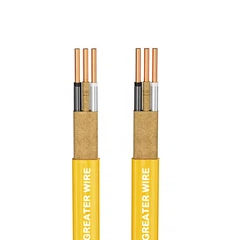
For general light commercial branch circuits, 12 AWG General-purpose Thermoset Building Wire delivers reliable performance at an accessible price point. For medium feeder runs, 4/0 AWG RHW-2 Building Wire is a widely stocked and cost-effective option.
4. Practical Selection Checklist: Stop Picking Wire Solely By Price
Before you lock in your spec, run through this checklist. Never select a wire solely based on gauge or unit cost - that is the mistake that leads to rework and failed inspections.
· Confirm the maximum ambient temperature and long-term moisture exposure level of the installation location.
· Verify project specifications and NEC requirements for the specific application and location.
· Match conductor size, stranding type, and configuration (such as 3/C or 4/C with insulated green ground) to your calculated load and voltage drop requirements.
· Compare total lifecycle cost (material + installation + expected maintenance/replacement), not just the per-foot price.

5. Frequently Asked Questions
Q1: Can I use RHW-2 in wet locations?
A: RHW-2 carries a wet location rating for approved installations. However, for continuous moisture exposure or high-heat wet environments, XLPE XHHW-2 offers better long-term durability and reduced risk of insulation degradation.
Q2: Is XHHW-2 always better than RHW-2?
A: No. XHHW-2 offers higher heat and moisture resistance, but it typically comes at a higher material cost. For standard indoor commercial projects with controlled conditions, RHW-2 is fully reliable and more cost-effective.
Q3: What voltage rating do XHHW-2 and RHW-2 share?
A: Both XHHW-2 and RHW-2 building wires are commonly available in 600V ratings for standard commercial and industrial power distribution applications.
Q4: Can I mix XHHW-2 and RHW-2 on the same project?
A: Yes, as long as each wire is specified for its exact run conditions. It is common to use XHHW-2 for high-stress outdoor or industrial feeder runs and RHW-2 for indoor commercial branch circuits on the same job.
6. Final Takeaway
The XHHW-2 vs RHW-2 decision boils down to one rule: pick XLPE XHHW-2 for heavy-duty, hot, moisture-exposed industrial and feeder runs; pick standard thermoset RHW-2 for standard, temperature-controlled commercial projects where cost efficiency is a priority.
If you need help sizing conductors for your specific commercial or industrial project, or want a quote for custom configurations with armor or multi-conductor assemblies, reach out to our team. We'll help you spec the right product for the job, on time and on budget.
Dongguan Greater Wire & Cable Co., Ltd.
Tel/WhatsApp/Wechat: +86 136 6257 9592
Tel/WhatsApp/Wechat: +86 135 1078 4550
Email: manager01@greaterwire.com
Website: www.greaterwire.com