

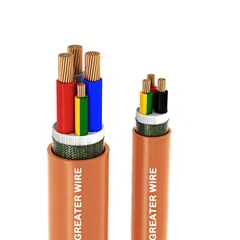
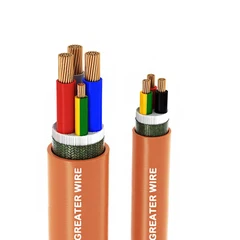

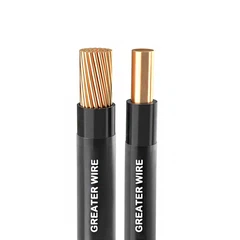
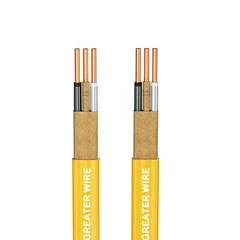
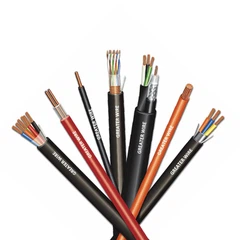
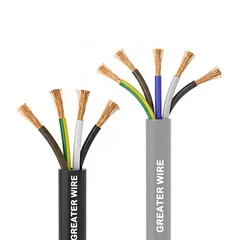
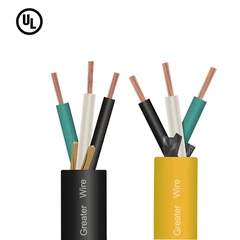
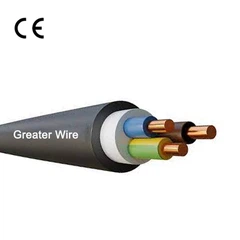
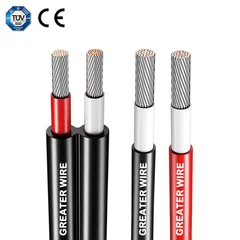

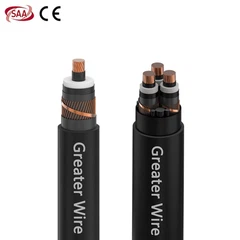
Choosing the right cable for underground service entrance wiring is an important decision for electrical contractors, engineers, utility contractors, and cable procurement professionals. In Canada, two cable types that may be considered for underground power connections are ACWU90 and USEI90.
Both cable types are available in 600 V, 90°C configurations, and both can be used in certain underground electrical installations when the product and installation meet applicable requirements. However, they have different constructions, product standards, and typical applications.
The most important difference is their design purpose. ACWU90 is an armoured power cable that provides additional mechanical protection through interlocked metallic armour. USEI90 is a dedicated underground service entrance cable designed for underground secondary distribution and service connections.
So, which one should you choose?
The answer depends on the service entrance arrangement, mechanical protection requirements, conductor configuration, installation method, and local electrical code.
This guide compares ACWU90 and USEI90 to help electrical contractors, distributors, engineers, and project buyers make informed cable selection decisions.
1. What Are ACWU90 and USEI90 Cables?
Before comparing their applications, it is important to understand what each cable designation means and how the two products are constructed.
Both are Canadian cable types, but they are covered by different CSA product standards.
1.1 What Is ACWU90 Cable?
ACWU90 is a Canadian armoured cable designation commonly used for power distribution.
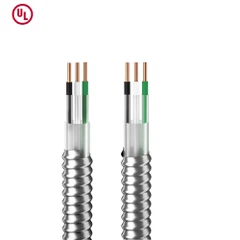
A typical ACWU90 cable consists of:
One or more insulated power conductors.
Cross-linked polyethylene (XLPE) insulation, commonly RW90.
A bonding conductor in typical multicore constructions.
Aluminum interlocked armour (AIA).
An overall protective outer jacket, commonly PVC.
The interlocked aluminium armour is one of the most distinctive features of this cable. It provides mechanical protection and helps protect the insulated conductors during installation and operation.
The outer jacket provides additional protection against moisture and environmental exposure when the specific product is rated for those conditions.
Typical ACWU90 characteristics include:
| Characteristic | Typical specification |
|---|---|
| Cable type | Armoured power cable |
| Voltage rating | Commonly 600 V |
| Conductor material | Aluminum or copper, depending on product |
| Insulation | XLPE, commonly RW90 |
| Armour | Aluminum interlocked armour |
| Bonding conductor | Provided according to cable construction |
| Outer jacket | Commonly PVC |
| Maximum conductor temperature | 90°C |
| Product standard | CSA C22.2 No. 51 |
The exact construction, voltage rating, and additional environmental approvals must be verified from the manufacturer's datasheet.
For example, some ACWU90 products are marked sunlight resistant, suitable for direct burial, or approved for hazardous locations. These features should never be assumed for every product carrying the ACWU90 designation.
1.2 What Is USEI90 Cable?
USEI90 stands for Underground Service Entrance cable, with the "I" identifying its XLPE-insulated construction.
It is designed primarily for underground service entrance and secondary distribution applications.
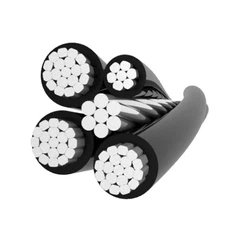
A typical USEI90 cable consists of:
Two or more aluminum phase conductors, depending on configuration.
A full-size or reduced neutral conductor.
XLPE insulation around each conductor.
An individual PVC jacket around each insulated conductor.
A twisted or assembled cable configuration.
Unlike ACWU90, typical USEI90 construction does not use aluminum interlocked armour.
Instead, each insulated conductor has its own protective PVC covering.
Typical USEI90 characteristics include:
| Characteristic | Typical specification |
|---|---|
| Cable type | Underground service entrance cable |
| Voltage rating | Commonly 600 V |
| Conductor material | Commonly aluminum |
| Insulation | XLPE |
| Conductor covering | Individual PVC jacket |
| Neutral | Full-size or reduced neutral, depending on design |
| Armour | Not normally included |
| Maximum conductor temperature | 90°C |
| Product standard | CSA C22.2 No. 52 |
USEI90 products are available in different conductor sizes and configurations. Some manufacturers also offer copper or alternative aluminum conductor options.
Always confirm the actual product construction before specifying the cable.
2. ACWU90 vs USEI90: Key Differences at a Glance
The most significant differences are their armour construction, conductor arrangement, mechanical protection, and intended applications.
| Comparison | ACWU90 | USEI90 |
|---|---|---|
| Primary design | Armoured power distribution cable | Underground service entrance cable |
| Typical voltage rating | 600 V | 600 V |
| Temperature rating | 90°C | 90°C |
| Product standard | CSA C22.2 No. 51 | CSA C22.2 No. 52 |
| Insulation | XLPE | XLPE |
| Outer protection | Interlocked armour with overall jacket | Individual PVC jackets |
| Armour | Aluminum interlocked armour | Normally no metallic armour |
| Conductor arrangement | Single- or multicore configurations | Commonly phase conductors plus neutral |
| Bonding arrangement | Bonding conductor or specified armour/bonding arrangement | Separate bonding provisions determined by installation design |
| Typical application | Feeders, branch circuits, and approved service entrance applications | Underground service entrance and secondary distribution |
| Direct burial | Permitted when the specific product and installation meet requirements | Commonly available for direct burial when product-approved |
| Cable tray | Available for suitable certified products and installations | Not its typical application |
| Mechanical protection | Provided by interlocked armour | Relies primarily on installation protection and product construction |
The table describes typical products, not every available construction.
Both cable types can have different conductor sizes, configurations, and additional ratings. The actual product marking and certification must determine whether a particular cable is suitable for the intended installation.
3. Why Does Cable Construction Matter for Service Entrance Wiring?
The construction difference between ACWU90 and USEI90 directly affects how each cable is installed and protected.
Understanding this difference is more useful than comparing their voltage and temperature ratings alone.
3.1 Mechanical Protection: ACWU90 Has Interlocked Armour
ACWU90 uses aluminum interlocked armour surrounding the insulated conductor assembly.
This armour provides additional protection against certain mechanical stresses, including impacts and damage that may occur during cable installation.
It can be useful where the service entrance route passes through:
Underground trenches.
Equipment rooms.
Outdoor electrical installations.
Areas with potential mechanical exposure.
Cable trays or other approved wiring systems.
However, interlocked armour does not make the cable immune to mechanical damage.
It should not be treated as a substitute for all required burial protection, physical guarding, or suitable installation practices.
3.2 Individual Conductor Jackets: USEI90 Uses a Different Protection Method
Typical USEI90 construction uses XLPE-insulated conductors with individual PVC jackets.
The phase conductors and neutral are assembled together, often in a twisted configuration.
This arrangement provides electrical insulation and environmental protection without using metallic interlocked armour.
For underground secondary distribution and service entrance applications, this construction can be suitable when installed according to the product approval and applicable electrical code.
However, it does not provide the same integrated mechanical protection as ACWU90.
Where excavation, vehicle traffic, or other mechanical hazards are present, the installation may require additional protection.
3.3 Bonding and Neutral Arrangements Are Not the Same
This is an important difference that contractors should not overlook.
A typical multicore ACWU90 cable includes a bonding conductor as part of its construction. Some single-conductor configurations use a different bonding arrangement, such as concentric bonding conductors.
USEI90 generally includes phase conductors and a neutral conductor, but the neutral should not automatically be treated as an equipment bonding conductor.
The service installation must provide the required bonding and grounding arrangement under the applicable electrical code.
The neutral and bonding conductor have different functions:
Neutral conductor: Carries current as part of the normal electrical circuit where the system requires it.
Bonding conductor: Provides the intended fault-current path between non-current-carrying conductive parts and the electrical bonding system.
Incorrectly assuming that the neutral can replace a required bonding conductor may create a serious installation problem.
Always follow the service equipment design, utility requirements, and applicable grounding and bonding rules.


4. Where Is ACWU90 Used in Service Entrance Wiring?
ACWU90 is primarily an armoured power distribution cable, but it is not limited to feeder and branch circuit applications.
The Canadian Electrical Code identifies ACWU90 among the armoured cable types that may be used for underground service entrance wiring, subject to applicable installation requirements.
Some manufacturers also specifically identify their ACWU90 products for service entrance applications above or below ground.
Potential applications include:
4.1 Underground Service Entrance Connections
ACWU90 may be considered for an underground service entrance where:
The cable has the required product approval.
The voltage rating matches the electrical system.
The conductor size meets the calculated load requirements.
The installation method is permitted.
The required mechanical protection and bonding arrangements are provided.
Its interlocked armour can be beneficial where additional mechanical protection is desired.
However, the cable's armour does not automatically eliminate the need for burial cover, suitable backfill, or protection at exposed transition points.
4.2 Service Feeders and Distribution Circuits
ACWU90 is commonly used for feeders and branch circuits in commercial, industrial, and institutional electrical installations.
For example, it may connect:
Main distribution equipment to a subpanel.
Outdoor electrical equipment to a distribution board.
Service equipment to downstream electrical equipment.
Underground distribution points to building electrical systems.
These applications are different from the utility's incoming distribution network. The exact cable selection depends on the circuit function and installation design.
4.3 Outdoor and Wet-Location Applications
Certain ACWU90 products are approved for wet locations and outdoor exposure.
Some are also marked sunlight resistant and suitable for direct burial.
For outdoor service entrance installations, buyers should verify the specific product's:
Sunlight-resistance marking.
Wet-location suitability.
Direct-burial approval.
Low-temperature rating.
Outer jacket performance.
Connector and termination compatibility.
A standard ACWU90 designation alone does not guarantee every additional environmental rating.
5. Where Is USEI90 Used in Service Entrance Wiring?
USEI90 is specifically designed for underground service entrance and secondary distribution applications.
Its construction is particularly relevant where a service connection requires phase conductors and a neutral conductor assembled as an underground cable system.
5.1 Underground Utility Secondary Connections
USEI90 is commonly used for underground secondary distribution at 600 V or less.
Typical applications include:
Underground utility secondary distribution.
Underground service connections to buildings.
Connections between distribution equipment and service entrance equipment, where permitted.
Direct-buried secondary cable installations.
Underground duct installations.
For utility-related projects, the supply authority's specifications are particularly important.
A utility may specify cable conductor sizes, neutral configuration, insulation and jacket colours, acceptable product certifications, and installation details.
A cable that meets the general product standard may still fail to meet a particular utility's project specification.
5.2 Direct-Buried Service Entrance Installations
Many USEI90 products are designed for direct-burial applications.
Their individual XLPE insulation and PVC jackets provide the electrical and environmental protection required by their product specifications.
However, direct-burial suitability does not mean the cable can be installed without considering the surrounding conditions.
Contractors must still evaluate:
Required burial cover.
Soil conditions.
Backfill material.
Mechanical damage risks.
Cable routing.
Separation from other underground services.
Protection at risers and building entries.
The applicable electrical code and inspection authority determine the installation requirements.
5.3 Underground Duct Installations
USEI90 products may also be suitable for installation in underground ducts or approved raceway systems.
The exact product must be approved for the proposed installation.
Duct installation requires attention to:
Cable outside diameter.
Duct size and fill.
Cable pulling tension.
Minimum bending radius.
Pulling lubricant compatibility.
Cable grouping and heat dissipation.
Moisture exposure.
A cable suitable for direct burial is not automatically approved for every duct or raceway arrangement.

6. Can ACWU90 Replace USEI90 for Underground Service Entrance Wiring?
In some Canadian installations, ACWU90 may be used instead of USEI90, but the two cables are not automatically interchangeable.
The 2024 Canadian Electrical Code identifies both cable types in its provisions for underground service entrance applications.
However, their suitability must be assessed according to the exact wiring arrangement and applicable requirements.
Consider the following example.
A commercial building requires a 600 V underground service connection from a utility-approved supply point to the service equipment.
The project team is evaluating two options:
Option A: ACWU90
The project requires an armoured cable construction because the route has mechanical exposure concerns. The selected ACWU90 product has the required service entrance application approval, conductor configuration, and voltage rating.
Option B: USEI90
The utility specifies a triplex underground secondary cable with two phase conductors and a neutral. The installation is designed for direct burial or an approved underground duct system, with suitable mechanical protection where required.
Both may be viable under their respective installation conditions.
The final choice should consider:
| Selection factor | Why it matters |
|---|---|
| Utility requirements | The supply authority may specify the cable type and conductor configuration |
| Mechanical protection | ACWU90 includes interlocked armour; USEI90 relies on its approved installation arrangement |
| Neutral arrangement | USEI90 commonly has a full or reduced neutral |
| Bonding requirements | The service design must provide the required fault-current path |
| Installation method | Direct burial, duct, raceway, or other wiring method |
| Cable certification | The cable must meet the required CSA product standard |
| Termination compatibility | Lugs, connectors, glands, and service equipment must match the cable |
| Project cost | Material, installation labour, accessories, and protection requirements all affect total cost |
The best cable is not necessarily the one with the highest mechanical protection or the lowest purchase price. It is the cable that satisfies the complete electrical and installation requirements.
7. What About ACWU90 HL Cable for Service Entrance Wiring?
Some ACWU90 products are available with an HL marking for hazardous-location applications.
For example, certain manufacturers offer ACWU90 products approved for specified hazardous locations under CSA C22.2 No. 174.
However, the HL designation should not be misunderstood.
It does not mean that the cable is a higher voltage version, a special underground service entrance cable, or automatically suitable for every hazardous location.
Hazardous-location approval depends on the specific product certification, conductor size, construction, and approved installation accessories.
Where a service entrance route passes through a classified hazardous location, the project team must evaluate:
The hazardous area classification.
The exact cable certification.
The approved cable gland or connector.
The enclosure and equipment approval.
The applicable hazardous-location installation rules.
An ordinary ACWU90 cable is not automatically approved for hazardous locations, and an ACWU90 HL product is not automatically interchangeable with USEI90.
The HL marking addresses a different installation consideration from the underground service entrance designation.

8. ACWU90 vs USEI90: Which Cable Is More Suitable for Different Projects?
The following practical comparison can help buyers narrow down their options.
| Project requirement | Cable to evaluate first | Reason |
|---|---|---|
| Underground utility secondary distribution | USEI90 | Specifically designed for underground secondary and service applications |
| Underground building service entrance | USEI90 or ACWU90 | Both may be suitable under applicable conditions |
| Service entrance route requiring integrated armour | ACWU90 | Aluminum interlocked armour provides additional mechanical protection |
| Commercial building feeder | ACWU90 | Armoured construction is suitable for many approved feeder applications |
| Underground duct service connection | USEI90 or ACWU90 | Depends on product approval, duct design, and project specification |
| Outdoor distribution with mechanical exposure | ACWU90 | Armour may provide useful additional protection |
| Utility-specified triplex secondary cable | USEI90 | Matches the typical phase-and-neutral service cable arrangement |
| Hazardous-location feeder | Certified ACWU90 HL or another approved cable | Depends on hazardous-location classification and product approval |
This is a preliminary selection guide, not a substitute for engineering review or approval by the authority having jurisdiction.
9. Important Standards: CSA Product Standards vs Canadian Electrical Code
For Canadian service entrance projects, understanding the difference between product standards and installation rules is essential.
9.1 CSA C22.2 No. 51: Armoured Cables
CSA C22.2 No. 51 covers armoured cables, including relevant ACWU cable constructions.
It addresses the cable as a manufactured product.
When purchasing ACWU90, verify:
The cable type marking.
Conductor material and size.
Insulation construction.
Armour construction.
Outer jacket.
Voltage and temperature ratings.
Certification status.
Additional ratings, where required.
9.2 CSA C22.2 No. 52: Underground Secondary and Service-Entrance Cables
CSA C22.2 No. 52 covers underground secondary and service entrance cables, including USEI90.
A typical USEI90 product uses XLPE-insulated conductors with individual PVC jackets.
When specifying USEI90, verify:
Phase conductor sizes.
Neutral conductor size.
Full or reduced neutral configuration.
Insulation and jacket materials.
Voltage and temperature ratings.
Direct-burial or duct application approval.
Required certification.
The product standard does not replace installation requirements.
9.3 CSA C22.1: Canadian Electrical Code, Part I
The Canadian Electrical Code governs how electrical equipment and wiring systems are installed.
For underground service entrance projects, the following areas are particularly relevant:
| CEC reference | General subject | Why it matters |
|---|---|---|
| Section 6 | Services and service equipment | Establishes requirements for service installations |
| Section 10 | Grounding and bonding | Addresses electrical grounding and bonding arrangements |
| Rule 12-012 | Underground installations | Addresses burial cover, backfill, and underground protection |
| Rule 12-602 | Use of armoured cable | Relevant to ACWU90 installation conditions |
| Table 19 | Permitted cable applications | Identifies cable types for specified conditions of use |
| Appendix D, Table D1 | General cable information | Provides cable type and construction reference information |
The 2024 CEC identifies USEI90 and ACWU90 among the cable types relevant to underground service entrance applications.
However, the exact installation must be checked against the applicable Code provisions, local amendments, and utility requirements.
The CEC is adopted by provincial and territorial authorities, and the applicable edition may differ between jurisdictions.
Always confirm the rules currently enforced at the project location.


10. What About UL, IEC, and AS/NZS Markets?
ACWU90 and USEI90 are Canadian cable designations.
Their construction may resemble products used in other markets, but similar construction does not establish equivalent certification or permitted applications.
10.1 United States: UL and NEC
For US projects, service entrance cable selection must comply with the applicable National Electrical Code (NEC) and product listing requirements.
Relevant references may include:
UL 854 for service-entrance cable.
NEC Article 230 for services.
NEC Article 300 for general wiring methods.
Applicable requirements for underground installations.
A CSA-certified USEI90 cable is not automatically a UL-listed USE cable.
Likewise, ACWU90 should not automatically be treated as a US Type MC or other UL cable designation.
Check the actual product listing and the installation requirements of the authority having jurisdiction.
10.2 IEC Markets
IEC-based projects use cable designations and installation standards appropriate to the project voltage, conductor arrangement, and environment.
IEC 60502-1 covers power cables with extruded insulation for rated voltages from 1 kV up to 3 kV, while IEC 60364 addresses low-voltage electrical installations.
These standards do not make ACWU90 or USEI90 automatically equivalent to an IEC cable type.
The project specification should identify the required cable standard and installation method.
10.3 Australia and New Zealand: AS/NZS
For Australian and New Zealand projects, applicable requirements may include AS/NZS 3000 and relevant product standards for underground wiring systems.
Service entrance arrangements, utility connection requirements, conductor materials, and underground cable approvals may differ from Canadian practices.
A Canadian USEI90 designation should not be used as a substitute for a locally approved service cable without confirming regulatory acceptance.
The same principle applies to ACWU90.
11. Common Mistakes When Selecting ACWU90 or USEI90
The following mistakes can lead to unsuitable cable specifications, installation delays, or inspection problems.
| Common mistake | Why it is a problem | Recommended approach |
|---|---|---|
| Assuming both cables have identical construction | Their armour and conductor arrangements differ | Review the complete product datasheets |
| Selecting based only on 600 V and 90°C ratings | These ratings do not establish installation suitability | Check product approval and application |
| Assuming USEI90 has metallic armour | Typical USEI90 construction uses individual PVC-jacketed conductors | Plan mechanical protection separately |
| Assuming ACWU90 is only for feeders | Some products and CEC provisions allow service entrance applications | Check the exact product and installation rules |
| Treating the neutral as the bonding conductor | Neutral and bonding functions are different | Follow the service grounding and bonding design |
| Assuming every ACWU90 product is sunlight resistant | Additional ratings vary by manufacturer | Check the cable markings |
| Assuming direct-burial approval removes burial requirements | Code requirements for cover and backfill still apply | Follow the applicable underground installation rules |
| Treating CSA and UL certifications as interchangeable | Product standards and certification scopes differ | Verify approval for the destination market |
| Assuming HL means better underground protection | HL relates to hazardous-location approval | Evaluate mechanical and environmental requirements separately |
12. Practical Checklist for Cable Buyers and Contractors
Before ordering ACWU90 or USEI90, prepare the following project information.
Electrical system
Nominal system voltage.
Single-phase or three-phase arrangement.
Maximum load current.
Available fault-current information, where required.
Phase conductor size.
Neutral conductor size.
Grounding and bonding arrangement.
Cable construction
ACWU90 or USEI90 designation.
Aluminum or copper conductor.
Number of conductors.
XLPE insulation.
Armour requirements.
Overall or individual PVC jacket configuration.
Voltage and temperature ratings.
Required CSA certification.
Installation conditions
Direct burial or underground duct.
Burial depth and mechanical protection.
Soil conditions and moisture exposure.
Building entry and cable riser details.
Cable routing and bending radius.
Cable gland, lug, and connector requirements.
Utility and inspection authority specifications.
Project compliance
Applicable CEC edition.
Provincial or territorial amendments.
Supply authority requirements.
Product certification.
Installation approval.
Providing these details helps manufacturers and distributors recommend a cable construction that matches the actual service entrance application.
13. Frequently Asked Questions
Is ACWU90 suitable for underground service entrance wiring?
Yes. ACWU90 may be used for underground service entrance wiring where the specific product and installation meet the applicable Canadian Electrical Code requirements. Its interlocked armour provides additional mechanical protection compared with typical unarmoured USEI90 construction.
Is USEI90 always better than ACWU90 for underground service entrance applications?
No. USEI90 is specifically designed for underground secondary and service entrance applications, but ACWU90 may also be permitted for certain underground service entrance installations. The better choice depends on the utility specification, mechanical protection requirements, cable arrangement, and installation method.
What is the main construction difference between ACWU90 and USEI90?
ACWU90 typically contains insulated conductors surrounded by aluminum interlocked armour and an overall protective jacket. USEI90 typically contains XLPE-insulated phase conductors and a neutral conductor, each with an individual PVC jacket, assembled into a cable configuration without metallic interlocked armour.
Can ACWU90 replace USEI90 in a direct-buried installation?
Potentially, yes, if the ACWU90 product is approved for direct burial and the installation meets the applicable Code and utility requirements. However, the conductor arrangement and bonding design must also be suitable for the service connection.
Does USEI90 have a bonding conductor?
Typical USEI90 products contain phase conductors and a neutral conductor. The neutral should not automatically be treated as the equipment bonding conductor. The required bonding arrangement must be established by the service design and applicable electrical code.
Is ACWU90 HL required for service entrance wiring?
No. HL identifies a hazardous-location approval for specific products. It is not a general requirement for ordinary service entrance wiring. Use an HL-rated product only where the installation requires and accepts that approval.
Can USEI90 be installed in underground conduit?
Many USEI90 products are suitable for underground duct or conduit installations, but the exact product documentation and local installation requirements must be checked. Cable diameter, duct fill, pulling tension, bending radius, and thermal conditions should also be considered.
Are ACWU90 and USEI90 approved for use in the United States?
Not automatically. They are Canadian cable designations associated with CSA product standards. US projects require the appropriate product listing and compliance with the applicable NEC requirements. Similar construction does not establish equivalent UL certification.
Conclusion
ACWU90 and USEI90 can both be relevant to underground service entrance wiring in Canada, but they are designed with different construction approaches and typical applications.
USEI90 is specifically intended for underground service entrance and secondary distribution, commonly using individually insulated and jacketed phase conductors with a full or reduced neutral. ACWU90 is an armoured power distribution cable with aluminum interlocked armour, offering additional mechanical protection and a wider range of approved wiring applications.
For contractors and procurement professionals, the decision should not be based on voltage and temperature ratings alone. Utility specifications, conductor configuration, bonding requirements, mechanical protection, installation method, and local electrical code acceptance must all be considered.
GERITEL WIRE provides cable solutions for electrical distribution projects and can support your evaluation of ACWU90 construction, conductor options, armour configurations, and project specifications. Whether you are sourcing armoured power cables for service entrance applications or comparing cable requirements for underground distribution, our team can help review the technical details and identify suitable product options. Contact GERITEL WIRE to discuss your project requirements, request product information, and explore cable solutions for your next electrical installation.
Dongguan Greater Wire & Cable Co., Ltd.
Tel/WhatsApp/Wechat: +86 136 6257 9592
Tel/WhatsApp/Wechat: +86 135 1078 4550
Email: manager01@greaterwire.com
Website: www.greaterwire.com