


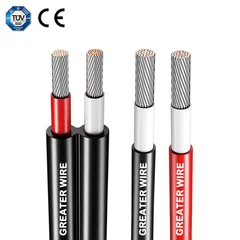

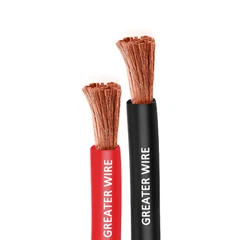
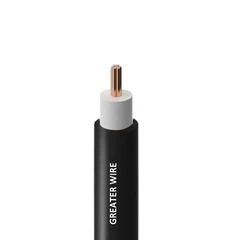
Solar farms require reliable electrical cables to transfer power from photovoltaic (PV) modules to inverters, transformers, and ultimately the utility grid. Choosing the right cable for each part of the system is essential for electrical safety, long-term performance, and project cost control.
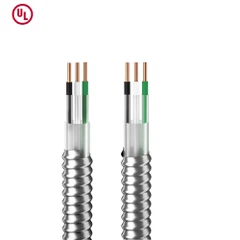
ACWU90 is a widely used armoured power cable in Canadian electrical installations. Its cross-linked polyethylene (XLPE) insulation, aluminum interlocked armour, and protective outer jacket make it a potential option for certain outdoor and underground power distribution applications.
But is ACWU90 suitable for solar farm power distribution?
The answer is yes, for certain low-voltage AC distribution applications, provided the specific cable is approved and correctly rated for the installation. However, ACWU90 should not automatically be used for photovoltaic DC circuits or medium-voltage collection systems.
This guide explains where ACWU90 may fit into a solar farm electrical system, where other cable types are more appropriate, and what engineers, electrical contractors, and procurement professionals should verify before selecting it.
1. Understanding the Electrical Cable Requirements of a Solar Farm
Before selecting a cable, it is important to understand how electricity moves through a typical utility-scale solar farm.
A solar farm does not use one cable type for the entire electrical system. Different sections operate at different voltages and perform different functions.
A simplified grid-connected solar power system includes the following stages:
PV modules: Solar panels generate direct current (DC) electricity.
String or array connections: Multiple PV modules are connected to form strings and arrays.
Combiner equipment: DC power from multiple strings is collected where the system design requires it.
Inverter: DC electricity is converted into alternating current (AC).
Step-up transformer: AC voltage is increased to a suitable level for the collection network.
AC collection system: Power is transferred toward the main substation.
Grid interconnection: The generated electricity is delivered to the utility network.
Each stage has different electrical and environmental requirements.
1.1 Main Cable Applications in a Solar Farm
| Solar farm section | Electrical function | Typical cable considerations |
|---|---|---|
| PV module connections | Transfers DC power between modules | PV-rated cable, UV resistance, DC voltage rating |
| PV strings to combiner equipment | Collects DC power | Suitable PV cable and DC-rated connectors |
| Combiner equipment to inverter | Transfers higher-current DC power | DC voltage rating, conductor sizing, installation method |
| Inverter to step-up transformer | Transfers low-voltage AC power | AC-rated power cable, ampacity, voltage drop, mechanical protection |
| Transformer to main substation | Transfers medium-voltage AC power | Medium-voltage cable with the appropriate insulation and voltage rating |
| Main substation to grid | Connects the plant to the utility network | Project-specific medium- or high-voltage cable system |
The distinction between DC and AC circuits is particularly important.
A cable that is suitable for a 600 V AC distribution circuit is not automatically suitable for a photovoltaic DC circuit operating at a similar nominal voltage. The cable must be specifically evaluated and rated for the intended electrical system.
2. What Is ACWU90 Cable?
ACWU90 is a Canadian cable designation commonly associated with aluminum-conductor, aluminum-armoured wiring.
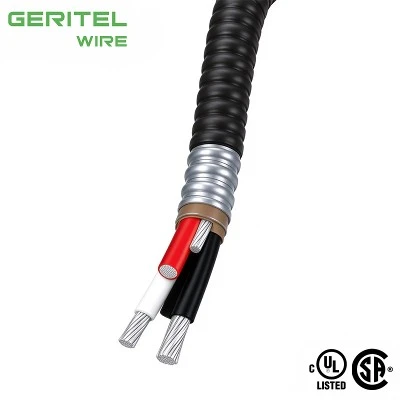
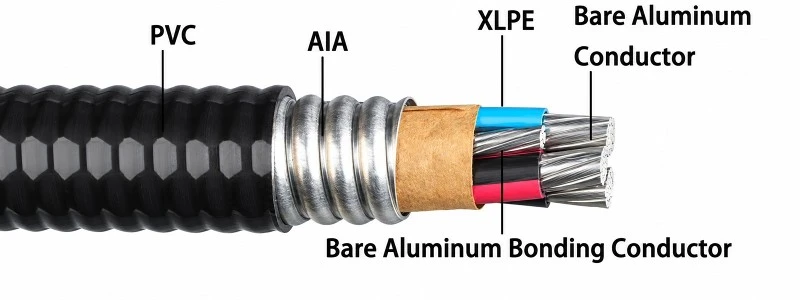
A typical ACWU90 cable includes several layers designed to provide electrical insulation and mechanical protection.
2.1 Typical ACWU90 Cable Construction
| Component | Typical material | Main function |
|---|---|---|
| Conductor | 8000-series aluminum alloy | Carries electrical current |
| Insulation | Cross-linked polyethylene (XLPE), Type RW90 | Provides electrical insulation and thermal performance |
| Bonding conductor | Bare aluminum in typical multicore constructions | Provides the designated bonding path |
| Armour | Aluminum interlocked armour (AIA) | Provides mechanical protection |
| Outer jacket | PVC | Provides additional environmental and mechanical protection |
The exact construction varies by manufacturer and product configuration. Buyers should confirm the conductor material, bonding arrangement, armour construction, and jacket specifications from the actual datasheet.
2.2 Typical Electrical and Environmental Ratings
Many Canadian ACWU90 products are available with the following characteristics:
| Characteristic | Typical product specification |
|---|---|
| Rated voltage | 600 V |
| Maximum conductor operating temperature | 90°C |
| Insulation | RW90 XLPE |
| Armour | Aluminum interlocked armour |
| Outer jacket | PVC |
| Conductor | Commonly 8000-series aluminum |
| Installation | Exposed wiring, cable tray, and approved underground applications |
| Environmental properties | May include sunlight resistance, moisture resistance, and low-temperature ratings |
These are common product characteristics, not universal requirements for every ACWU90 cable.
For example, some manufacturers identify their products as sunlight resistant and suitable for direct burial, while other product configurations may have different markings or installation limitations.
Always verify the specific cable's printed markings, certification, datasheet, and installation instructions.

3. Can ACWU90 Be Used in Solar Farm Power Distribution?
ACWU90 can be a candidate for certain solar farm applications, particularly low-voltage AC feeders.
However, its suitability depends on the circuit's location, voltage, current, installation environment, and applicable electrical requirements.
The following sections explain where it may and may not be appropriate.
3.1 Low-Voltage AC Distribution: A Potential Application
One possible application is the AC connection between an inverter and a step-up transformer.
Depending on the system architecture, an inverter may produce low-voltage three-phase AC power. A suitable ACWU90 cable could potentially be used to connect the inverter output to the transformer input.
For example, consider a solar farm with:
A low-voltage three-phase inverter output.
A transformer designed for that output voltage.
A cable route installed underground or in an approved cable tray.
An ACWU90 product with a matching voltage rating and installation approval.
In this situation, ACWU90 may be considered if the project design confirms that the cable meets all electrical and environmental requirements.
Its aluminum interlocked armour can provide useful mechanical protection, while the outer jacket can provide additional protection against environmental exposure when the specific product is appropriately rated.
However, several engineering checks remain necessary:
Is the cable voltage rating suitable for the inverter output?
Can the conductor carry the required continuous current?
Is the conductor size adequate for voltage drop?
Is the installation method permitted?
Is the cable suitable for the expected ambient and soil conditions?
Are the termination accessories compatible with the cable construction?
Does the cable have the required product certification?
The cable's 90°C insulation rating does not automatically mean the circuit can use the ampacity associated with a 90°C conductor under every installation condition. Equipment terminal temperature limitations and applicable code requirements must also be considered.
3.2 Underground AC Feeder Circuits
Solar farms often have extensive underground cable routes connecting inverters, transformers, and electrical distribution equipment.
ACWU90 may be suitable for some of these low-voltage underground feeder applications when the specific product is approved for the installation method.
Potential advantages include:
Mechanical protection
The aluminum interlocked armour helps protect the cable against certain mechanical impacts during installation and service.
Environmental protection
A suitable outer jacket and insulation system can support use in wet or outdoor conditions, subject to the manufacturer's product ratings.
Direct-burial options
Some ACWU90 products are specifically identified by their manufacturers as suitable for direct burial. The installation must still comply with the applicable electrical code and inspection authority requirements.
Simplified cable installation
An armoured cable may reduce the need for a separate raceway in some permitted wiring methods. Whether this is possible depends on the applicable code and project design.
Before selecting ACWU90 for underground solar farm feeders, engineers should evaluate burial conditions, cable spacing, soil thermal resistivity, installation depth, ampacity, and mechanical protection.
Direct-burial approval should never be assumed from the ACWU90 designation alone.
3.3 Outdoor Cable Tray Applications
Solar farms may use cable trays or other approved support systems for routing AC feeders around inverter stations and electrical equipment.
A suitable ACWU90 product may be considered for these installations if its cable markings, certification, and manufacturer's instructions permit the intended use.
Important considerations include:
Cable tray type and loading capacity.
Cable support spacing.
Cable bending radius.
Sunlight exposure.
Ambient temperature.
Cable grouping and heat dissipation.
Mechanical protection against installation damage.
Proper cable termination and bonding.
Where cables are exposed to sunlight, verify that the exact ACWU90 product is marked or documented as sunlight resistant.
Do not assume every PVC-jacketed ACWU90 cable has the same UV performance.
4. Where Should ACWU90 Not Be Used in a Solar Farm?
Although ACWU90 may be suitable for certain AC power distribution applications, it is not a universal solar farm cable.
Two important applications require particular attention: photovoltaic DC circuits and medium-voltage collection systems.
4.1 Photovoltaic DC Circuits
ACWU90 should not be selected as a substitute for dedicated PV cable in photovoltaic source circuits simply because its insulation and voltage characteristics appear similar.
PV circuits operate under specific electrical and environmental conditions.
PV cables may need to withstand:
Continuous DC voltage.
Long-term outdoor sunlight exposure.
High operating temperatures.
Wet and dry environmental conditions.
Temperature cycling.
Mechanical stress associated with module structures.
Compatibility with PV connectors and equipment.
In North America, dedicated photovoltaic cable types are covered by specific product standards.
For example:
In Canada, CSA C22.2 No. 271 covers photovoltaic cables. Relevant cable types include RPV and RPVU.
In the United States, UL 4703 covers photovoltaic wire.
These standards and cable types address applications that should not be assumed to be covered by a general ACWU90 product certification.
A suitable PV cable should be selected according to the actual DC circuit voltage, system design, installation method, and local electrical code.
Practical recommendation: Use the PV cable type specified by the system designer and accepted by the relevant authority for module, string, and other designated photovoltaic DC circuits.
4.2 Medium-Voltage AC Collection Systems
Utility-scale solar farms often use step-up transformers to increase inverter output voltage before transmitting electricity through the plant's medium-voltage collection network.
Common project designs may use medium-voltage systems such as 5 kV, 15 kV, 25 kV, or 35 kV, depending on the project and local utility requirements.
A typical 600 V ACWU90 product is not suitable for these circuits.
Medium-voltage systems require cables designed and tested for the applicable voltage class, insulation stress, grounding arrangement, and installation conditions.
For example, IEC 60502-2 covers power cables with extruded insulation for rated voltages from 6 kV up to 30 kV, including specified voltage designations within that range.
The appropriate cable must be selected according to the actual system voltage and applicable standard.
Practical recommendation: Use a properly rated medium-voltage cable system for transformer-to-substation and other medium-voltage collection circuits. Do not substitute a 600 V ACWU90 cable for a medium-voltage feeder.
5. ACWU90 vs. PV Cable vs. Medium-Voltage Cable
Choosing the correct cable becomes easier when the main cable types are compared by application.
| Comparison | ACWU90 | PV cable (e.g. RPVU90) | Medium-voltage power cable |
|---|---|---|---|
| Primary application | Low-voltage power distribution | Photovoltaic system circuits | Medium-voltage power distribution |
| Typical system side | AC distribution | PV DC and designated PV AC applications, according to cable approval | AC collection network |
| Common voltage examples | 600 V | Product-specific; Canadian RPVU90 products may be rated 2 kV | Project-specific, such as 15 kV or 25 kV |
| Typical insulation | RW90 XLPE | PV-rated insulation | MV-rated XLPE or other approved insulation |
| Mechanical construction | Aluminum interlocked armour | Depends on PV cable design | May be unarmoured or use an approved protective construction |
| Sunlight resistance | Product-specific | Commonly a specified PV cable requirement | Product-specific |
| Direct burial | Only where the specific product and installation permit it | Product-specific | Product-specific |
| Main selection concern | AC feeder rating and installation suitability | DC voltage and photovoltaic application approval | System voltage and MV cable design |
The table provides a general comparison. Actual voltage ratings, installation permissions, and certifications must be confirmed from the selected product documentation.
6. Key Factors to Check Before Selecting ACWU90 for a Solar Farm
Even when ACWU90 appears suitable for a low-voltage AC feeder, engineers must verify that the cable can safely handle the actual operating conditions.
The following factors are particularly important.
6.1 Voltage Rating
Start by confirming the operating voltage of the circuit.
Many ACWU90 products are rated 600 V. This may be appropriate for certain low-voltage AC systems, but it is not sufficient for circuits operating above the cable's rated voltage.
The following information should be confirmed:
Nominal system voltage.
Maximum operating voltage.
AC or DC application.
Grounding arrangement.
Equipment voltage rating.
Required cable certification.
Never compare cable voltage ratings without considering whether they apply to AC or DC service.
6.2 Ampacity and Conductor Size
Ampacity refers to the maximum current a conductor can carry continuously under specified conditions without exceeding its permitted temperature.
Solar farm AC feeders may carry substantial current, particularly where multiple inverters are connected to a common transformer.
Cable size selection should consider:
Inverter rated output current.
Maximum continuous operating current.
Conductor material.
Installation method.
Ambient temperature.
Number of loaded conductors.
Cable grouping and spacing.
Soil thermal resistivity for underground circuits.
Applicable ampacity correction and adjustment factors.
Equipment terminal temperature limitations.
For aluminum-conductor ACWU90, the conductor size may need to be larger than an equivalent copper conductor to achieve comparable electrical performance.
The final size should be determined through the applicable electrical code and project engineering calculations.
6.3 Voltage Drop
Long cable routes are common in large solar farms.
Excessive voltage drop can reduce system efficiency and affect the operating performance of connected equipment.
For AC feeders, voltage drop depends on:
Cable length.
Load current.
Conductor resistance.
Conductor reactance.
Power factor.
Circuit configuration.
Operating temperature.
For three-phase AC circuits, voltage drop should be calculated using an appropriate three-phase method and the cable's electrical characteristics.
Do not select a cable based on ampacity alone. A conductor may meet the current-carrying requirement but still produce excessive voltage drop over a long route.
6.4 Sunlight and Temperature Exposure
Solar farms are generally installed in open areas with significant sunlight exposure.
Cable jackets and insulation may experience elevated temperatures due to direct solar radiation and surrounding environmental conditions.
When selecting ACWU90 for exposed installations, verify:
Sunlight-resistance markings.
Maximum conductor temperature.
Minimum installation temperature.
Ambient temperature limitations.
Compatibility with cable tray or support materials.
Manufacturer installation recommendations.
A 90°C conductor rating does not mean the cable can be exposed to unlimited ambient temperature or installed without ampacity adjustments.
6.5 Mechanical Protection
Solar farms may be located in agricultural, desert, coastal, or undeveloped areas.
Cable routes may be exposed to mechanical risks from:
Construction vehicles.
Excavation equipment.
Ground movement.
Rodents and other animals.
Maintenance activities.
Cable handling during installation.
ACWU90's interlocked armour can provide mechanical protection, but it should not be treated as protection against every possible external impact.
Where the risk is significant, additional mechanical protection may be required by the project design or local electrical code.
6.6 Corrosion and Environmental Conditions
Solar farms may be installed in coastal regions, agricultural land, industrial areas, or locations with high soil moisture.
These environments can affect metallic cable components and electrical terminations.
For ACWU90 installations, consider:
Soil chemistry and corrosivity.
Salt exposure.
Water ingress at cable glands.
Compatibility of metallic connectors.
Enclosure sealing.
Grounding and bonding continuity.
Protection of exposed cable armour and accessories.
The cable itself should not be evaluated separately from its termination system.
6.7 Cable Routing and Installation Method
The installation method influences both electrical performance and mechanical protection.
Possible arrangements include:
Direct burial.
Underground conduit.
Cable trench.
Cable tray.
Outdoor equipment connections.
Each method has different requirements for heat dissipation, mechanical protection, cable support, and inspection.
For example, an ACWU90 cable installed directly in soil may have different ampacity from the same cable installed in an underground conduit or a concrete-encased duct bank.
The engineering calculation must reflect the actual installation configuration.
7. Relevant Standards and Certification Requirements
Solar farm cable selection involves more than checking the cable's voltage and temperature ratings.
Product standards establish requirements for cable construction and performance, while electrical installation codes determine how approved products may be installed.
These are different functions.
7.1 Canadian Standards: CSA and CEC
ACWU90 is primarily associated with Canadian electrical installations.
For Canadian projects, important references include:
| Standard or code | General scope | Relevance |
|---|---|---|
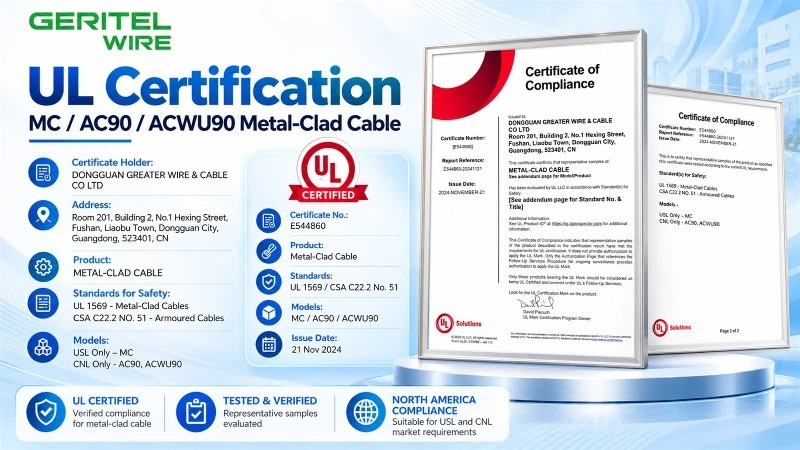
| CSA C22.2 No. 51 | Armoured cables | Relevant to ACWU90 product construction and certification |
| CSA C22.1, Canadian Electrical Code, Part I | Electrical installation requirements | Governs permitted wiring methods and installation conditions |
| CSA C22.2 No. 271 | Photovoltaic cables | Relevant to dedicated PV cable types such as RPV and RPVU |
The 2024 Canadian Electrical Code includes updates to Section 64 covering renewable energy and photovoltaic installations.
However, the applicable CEC edition depends on provincial or territorial adoption and local amendments.
For example, Ontario's Electrical Safety Authority publishes guidance on photovoltaic wiring methods and cable types under the Ontario Electrical Safety Code.
Therefore, a cable's CSA certification alone does not establish that it is permitted for every location within a solar farm.
The product must be approved for the intended application, and the installation must comply with the applicable code.
7.2 United States: NEC and UL
For solar farm projects in the United States, cable selection must follow the applicable edition of the National Electrical Code (NEC), local amendments, and product listing requirements.
Important references include:
NEC Article 690: Solar photovoltaic systems.
NEC Article 310: Conductors for general wiring applications.
UL 4703: Photovoltaic wire.
UL 44: Thermoset-insulated wires and cables, where applicable to the product.
The exact cable and installation requirements depend on the circuit location, voltage, wiring method, and product listing.
A CSA ACWU90 product should not automatically be treated as UL-listed or approved for every US solar installation.
The project team should verify the certification and acceptance requirements with the authority having jurisdiction.
7.3 IEC and International Markets
For projects designed around IEC standards, different cable standards may apply to the various sections of the solar farm.
Relevant examples include:
IEC 62930: Electric cables for photovoltaic systems with a rated voltage up to 1.5 kV DC.
IEC 60502-1: Power cables with extruded insulation for rated voltages from 1 kV up to 3 kV.
IEC 60502-2: Power cables with extruded insulation for rated voltages from 6 kV up to 30 kV.
IEC 60364-7-712: Low-voltage electrical installations - requirements for solar photovoltaic power supply systems.
The relevant edition and national adoption should be checked for the project.
For Australia and New Zealand, applicable requirements may include AS/NZS 3000 and AS/NZS 5033, together with relevant product standards and local regulatory requirements.
A cable manufactured to a Canadian ACWU90 specification is not automatically compliant with IEC or AS/NZS requirements.
Always confirm the required cable type and certification for the destination market.
8. Common Mistakes When Selecting ACWU90 for Solar Farm Projects
Several purchasing and engineering mistakes can lead to unsuitable cable selection.
| Common mistake | Why it is a problem | Recommended approach |
|---|---|---|
| Using ACWU90 for all solar farm circuits | Different circuits have different voltage and application requirements | Separate PV DC, LV AC, and MV AC cable specifications |
| Selecting cable based only on the 90°C rating | Temperature rating does not establish voltage or ampacity suitability | Check all electrical ratings and installation conditions |
| Assuming all ACWU90 products are sunlight resistant | Product features vary by manufacturer | Verify exact product markings and datasheets |
| Using 600 V ACWU90 in a medium-voltage system | The voltage rating is insufficient | Specify an appropriate MV cable |
| Treating ACWU90 as a substitute for PV cable | General AC cable approval does not establish PV circuit suitability | Select the required PV-rated cable |
| Ignoring underground thermal conditions | Soil and installation arrangement affect ampacity | Perform installation-specific calculations |
| Overlooking aluminum conductor termination | Incorrect connectors can cause poor electrical connections | Use connectors rated for aluminum conductors |
| Assuming CSA approval equals UL approval | Certification systems and product scopes differ | Verify the certification required in the project market |
Avoiding these mistakes helps reduce installation problems, unnecessary replacement costs, and project delays.
9. Practical Checklist for Solar Farm Cable Buyers
Before requesting a quotation or placing an order, prepare the following information.
| Specification | Information to confirm |
|---|---|
| Application | Inverter output, LV feeder, PV DC circuit, or MV collection |
| Circuit type | AC or DC |
| System voltage | Nominal and maximum operating voltage |
| Current | Rated and maximum operating current |
| Conductor material | Aluminum or copper |
| Conductor size | AWG, kcmil, or mm² |
| Number of conductors | Single-core or multicore |
| Insulation | RW90 XLPE or other specified insulation |
| Armour | Aluminum interlocked armour or another required construction |
| Outer jacket | PVC or project-specified material |
| Installation method | Direct burial, conduit, trench, or cable tray |
| Environmental conditions | Sunlight, moisture, temperature, soil conditions, and chemical exposure |
| Cable certification | CSA, UL, IEC, AS/NZS, or other required approval |
| Accessories | Cable glands, lugs, connectors, and bonding components |
Providing this information allows cable manufacturers and distributors to evaluate the application more accurately and recommend a suitable construction.

10. Frequently Asked Questions
Is ACWU90 suitable for solar farms?
Yes, ACWU90 may be suitable for certain low-voltage AC distribution applications in solar farms, such as inverter output feeders, provided the specific product has the required voltage rating, certification, and installation approval.
It should not automatically be used for photovoltaic DC circuits or medium-voltage collection systems.
Can ACWU90 be used between solar inverters and transformers?
Potentially, yes. If the inverter output voltage is within the cable's rating and the cable meets the required ampacity, voltage drop, environmental, and installation requirements, ACWU90 may be considered for the low-voltage AC connection to a step-up transformer.
The final decision must be based on the project design and applicable electrical code.
Can ACWU90 be buried directly in a solar farm?
Some ACWU90 products are specifically approved or identified by their manufacturers for direct burial.
However, direct-burial suitability must be confirmed from the actual cable markings and datasheet. Burial depth, bedding, mechanical protection, ampacity, and other installation requirements must also comply with the local electrical code.
Can ACWU90 replace PV wire?
Not automatically. Dedicated PV cable types are designed and evaluated for photovoltaic applications, including the relevant DC operating conditions.
ACWU90 should not be substituted for PV wire in module and string circuits unless the exact product is specifically approved for that application and accepted by the relevant authority.
Is ACWU90 suitable for medium-voltage solar farm collection circuits?
A typical 600 V ACWU90 cable is not suitable for medium-voltage collection circuits. These circuits require cable systems designed for the actual medium-voltage rating.
Does ACWU90 need to be sunlight resistant for outdoor solar installations?
If the cable is exposed to direct sunlight, its sunlight-resistance rating should be verified. Not all products with the ACWU90 designation necessarily have identical environmental ratings.
Check the manufacturer's markings and datasheet before selecting the cable for exposed outdoor installation.
Is aluminum-conductor ACWU90 suitable for large solar projects?
Aluminum conductors may offer weight and material-cost advantages for large power distribution projects. However, the conductor size, ampacity, voltage drop, connector compatibility, and installation conditions must be evaluated.
Aluminum should not be selected based on material cost alone.
Conclusion
ACWU90 can be a practical cable option for certain low-voltage AC power distribution applications in solar farms, particularly where a suitable armoured cable is required for outdoor, cable tray, or approved underground installations. Its XLPE insulation, aluminum interlocked armour, and protective jacket can offer useful electrical and mechanical characteristics when the selected product is correctly specified.
However, ACWU90 is not a universal solar farm cable. Dedicated PV-rated cables are generally required for designated photovoltaic DC circuits, while medium-voltage collection systems require appropriately rated medium-voltage cable designs.
For engineers, contractors, and procurement teams, the key is to match each cable to its actual circuit function, operating voltage, installation environment, and certification requirements.
GERITEL WIRE supports cable buyers and project teams with ACWU90 cable solutions for suitable low-voltage power distribution applications. Whether you are evaluating aluminum conductor sizes, armour construction, outer jacket options, or installation requirements, our team can help you review the technical specifications for your project. Contact GERITEL WIRE to discuss your solar farm cable requirements, request product details, and explore suitable cable options for your electrical distribution system.
Dongguan Greater Wire & Cable Co., Ltd.
Tel/WhatsApp/Wechat: +86 136 6257 9592
Tel/WhatsApp/Wechat: +86 135 1078 4550
Email: manager01@greaterwire.com
Website: www.greaterwire.com