

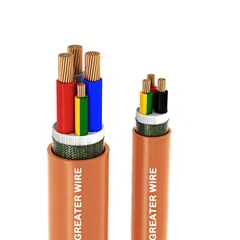
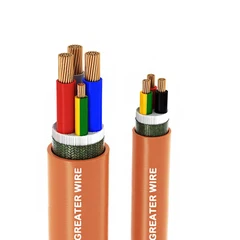

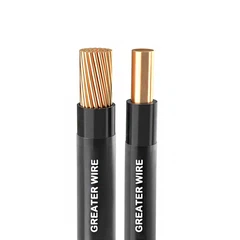
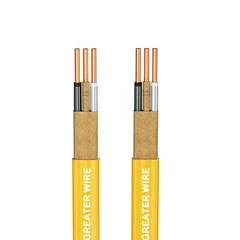
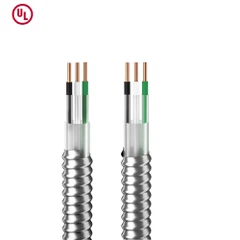
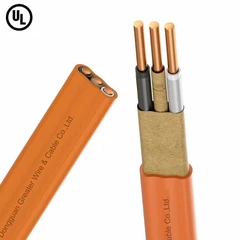
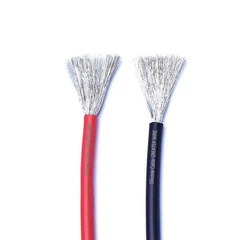
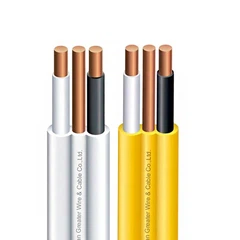
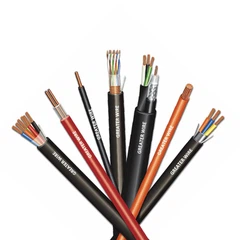
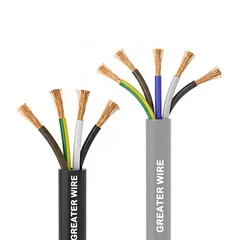
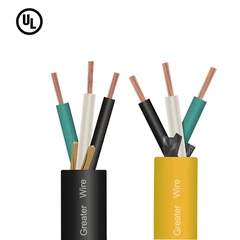
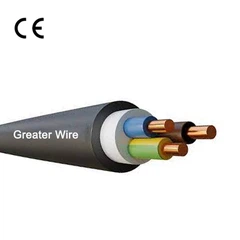
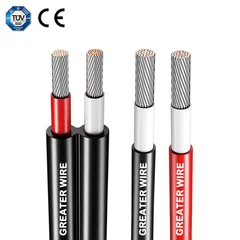

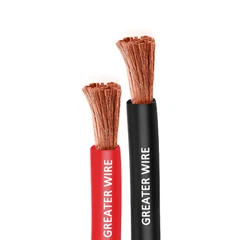
TC-ER cable is widely used in industrial facilities, cable tray systems, and equipment connections. But when a cable is installed outdoors, direct sunlight introduces an important question: can the cable withstand prolonged ultraviolet (UV) exposure without compromising its protective jacket?
Yes, TC-ER cable can be used outdoors in direct sunlight when the specific cable is identified as sunlight resistant and meets the applicable installation requirements. The TC-ER marking alone does not confirm resistance to sunlight. Under the US National Electrical Code (NEC), Type TC cable exposed to direct sunlight must be identified as sunlight resistant. The exact requirements depend on the adopted code edition and installation conditions. UL 1277 · EC&M's guide to TC cable requirements
This guide explains what sunlight resistance means, how to verify cable ratings, and what buyers should consider when specifying cable for solar farms, energy storage systems, and other outdoor industrial applications.

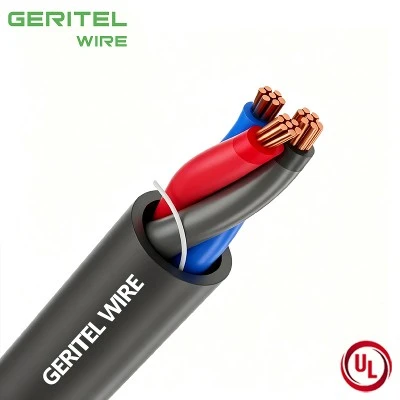
1. What Does TC-ER Mean?
TC-ER stands for Tray Cable–Exposed Run. It identifies a type of tray cable approved for certain exposed-run installations, subject to applicable code requirements.
Type TC cable is commonly used for power, lighting, control, and signal circuits in industrial environments. The additional ER designation allows qualifying cable to be installed in specified exposed runs between a cable tray and utilization equipment when the required conditions are met.
For example, the NEC permits qualifying TC-ER installations in industrial establishments under specified conditions, including continuous support and protection against physical damage. The cable must also meet the relevant product and installation requirements.
However, TC-ER is an installation-related designation, not a universal outdoor environmental rating.
A cable may be suitable for exposed-run installation but still require separate verification for:
Direct sunlight and ultraviolet exposure.
Wet or damp locations.
Oil, chemicals, or other industrial contaminants.
Direct burial.
Operating temperature and voltage requirements.
These properties are evaluated separately. A cable's suitability for one condition should never be assumed to establish suitability for all the others.
2. Can TC-ER Cable Be Used in Direct Sunlight?
The Importance of Sunlight-Resistant Markings
Direct sunlight exposes cable jackets to ultraviolet radiation, which can gradually degrade some nonmetallic materials. Depending on the material and environment, prolonged exposure may contribute to discoloration, hardening, cracking, or other deterioration.
To address this risk, cable manufacturers can provide products with jackets evaluated for sunlight resistance. Under UL 1277, cable jackets that meet the applicable sunlight-resistance requirements are surface marked with wording such as "SUN RES" or "SUNLIGHT RESISTANT."
For a cable installed outdoors, buyers should check the actual product markings and technical documentation rather than relying on a general statement that the cable is designed for industrial use.
A sunlight-resistant rating indicates that the cable has been evaluated for the relevant UV exposure. It does not automatically establish resistance to every outdoor hazard, such as standing water, chemicals, abrasion, or extreme temperatures.
Where Sunlight-Resistant TC-ER Cable May Be Used
When the cable's ratings and installation conditions are appropriate, sunlight-resistant TC-ER cable may be considered for applications such as:
Outdoor cable trays at manufacturing plants.
Exposed connections between trays and industrial equipment.
Outdoor motor and pump connections.
Solar energy installations.
Selected outdoor power and control wiring applications.
The cable must still satisfy the requirements for its intended wiring method, electrical load, environmental conditions, and jurisdiction.
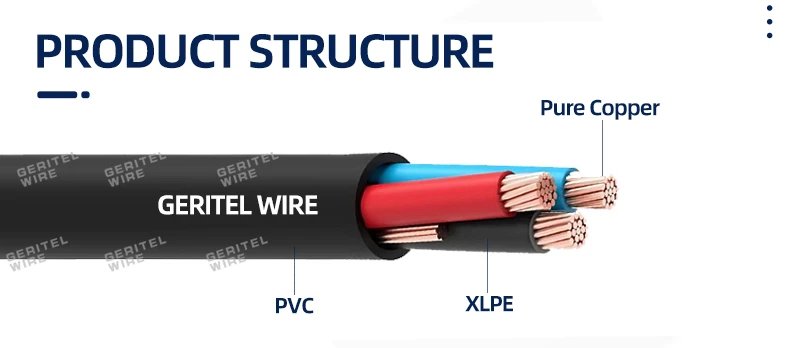
What If the Cable Has a Black PVC Jacket?
A black jacket does not, by itself, prove sunlight resistance. Although many outdoor cable products use black jackets and UV-resistant formulations, color is not a substitute for the appropriate rating or certification.
Likewise, a thick or rugged jacket should not be assumed suitable for prolonged sunlight exposure without supporting product information.
For purchasing and engineering purposes, the most reliable approach is to verify the exact cable model, its markings, and its manufacturer documentation.
3. Sunlight Resistance vs. Wet-Location Suitability
Outdoor installations often expose cable to both sunlight and moisture. These are different environmental conditions, and they require separate checks.
| Cable characteristic | What it addresses | What to verify |
|---|---|---|
| TC-ER marking | Specified exposed-run applications | Support, mechanical protection, and applicable installation rules |
| Sunlight resistance | Direct exposure to UV radiation | "SUN RES" or "SUNLIGHT RESISTANT" marking and supporting documentation |
| Wet-location suitability | Exposure to moisture in permitted wet locations | Applicable wet rating, insulation type, jacket construction, and product listing |
| Temperature rating | Permitted operating temperature under specified conditions | Wet and dry ratings where applicable |
| Direct-burial identification | Installation directly in the earth where permitted | Explicit product identification and burial requirements |
The NEC includes requirements for Type TC cable used in wet locations and for cable exposed to direct sunlight. The exact requirements should be checked against the edition adopted by the project jurisdiction. NFPA 70 Article 336.10 · UL 1277
A Wet Location Cable must be suitable for the intended moisture exposure, while a sunlight-resistant cable must be evaluated for direct UV exposure. Some products are designed to meet both requirements, but buyers should verify both properties for the specific cable.
Similarly, a sunlight-resistant cable should not automatically be treated as suitable for direct burial. Burial suitability requires its own confirmation.
4. Choosing Cable for Solar Farms and Renewable Energy Projects
Solar farms and other renewable energy facilities can involve long outdoor cable routes, changing weather conditions, and equipment distributed across large sites. Cable specifications therefore need to account for both electrical performance and environmental exposure.
Solar Farm Electrical Cable
Solar Farm Electrical Cable is a broad application description rather than a single universal cable type. A solar project may use different cables for photovoltaic strings, inverter connections, tracker motors, auxiliary power, controls, and energy storage equipment.
For TC-ER cable used in outdoor power or control circuits, buyers should consider:
Whether the cable is approved for the intended wiring method.
Whether the jacket is identified as sunlight resistant where direct exposure occurs.
Whether the cable is suitable for wet locations.
Conductor size, ampacity, voltage rating, and temperature limits.
Resistance to abrasion, oil, or chemicals where relevant.
Required grounding and mechanical protection.
The standards and approvals required by the project owner and local authority.
A TC-ER product used to connect a cable tray to outdoor equipment may be suitable for that specific role when its ratings and installation conditions are satisfied. This does not mean that TC-ER cable automatically replaces specialized photovoltaic cable for every DC circuit in a solar array.
ESS Battery Cable
ESS Battery Cable is another application-oriented term covering cable requirements in energy storage systems. Battery systems can involve DC power connections, AC distribution, control circuits, monitoring, and auxiliary equipment wiring.
Different circuits may require different voltage ratings, conductor constructions, insulation materials, and certifications. A TC-ER cable may be suitable for certain power or control connections, but its use must be assessed against the specific circuit, environmental exposure, and equipment requirements.
For outdoor battery installations, verify sunlight resistance and wet-location suitability wherever those conditions apply. Also review the temperature range, chemical exposure, mechanical protection, and any requirements imposed by the battery system manufacturer or project specifications.
Do not assume that a cable appropriate for an outdoor control circuit is automatically suitable for battery interconnections or other specialized energy storage circuits.
Renewable Energy Electrical Cable
Renewable Energy Electrical Cable is a useful umbrella term for cables used in solar, energy storage, wind, and related power systems. However, renewable energy projects do not all use the same wiring methods or cable standards.
A cable selected for one application may not be appropriate for another. For example, an outdoor TC-ER cable used for an exposed equipment connection may have different requirements from a photovoltaic cable routed with PV modules or a specialized cable used within a battery system.
The best approach is to specify the actual circuit, installation method, environmental conditions, and required approvals before selecting a cable.
5. How to Verify Cable Tray Ratings and Product Documentation
When reviewing a Cable Tray Rated Cable, do not assume that the cable-tray designation automatically establishes suitability for every outdoor condition.
Cable-tray suitability, exposed-run approval, sunlight resistance, wet-location suitability, and direct-burial approval are separate considerations. The exact product documentation determines which properties apply.
Before approving a cable, review the following.
Check the Complete Cable Marking
Look for the full cable type, voltage rating, conductor type, temperature designation, and relevant environmental markings. Where direct sunlight is expected, verify the sunlight-resistant identification.
Request the Manufacturer's Datasheet
The datasheet should identify the cable construction and its applicable ratings. Confirm that the documentation refers to the exact product being quoted, including conductor size, number of conductors, insulation, and jacket construction.
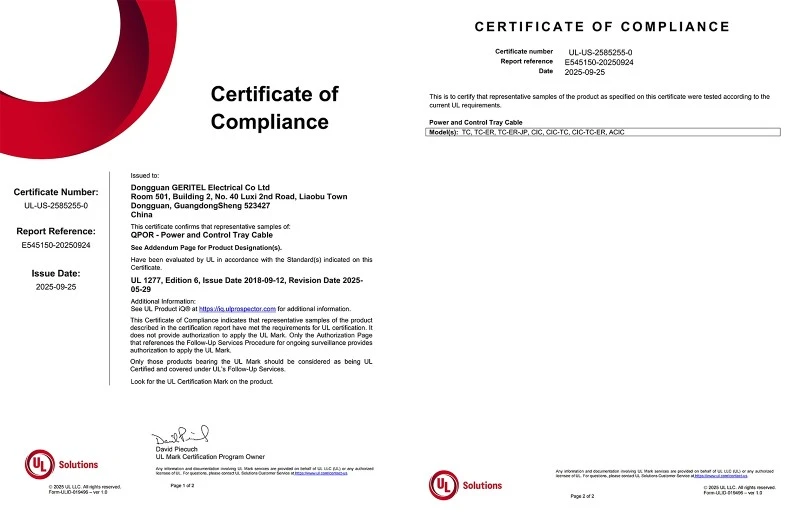
Verify Certification and Listing
If the project specifies UL-listed cable, confirm the appropriate listing and applicable standard. Do not rely solely on a sales description, an isolated marking, or a generic claim of compliance.
Review Installation Requirements
Check the applicable NEC edition or other governing electrical code. Confirm any requirements for support, physical protection, cable-tray installation, wet locations, and outdoor exposure.
For international projects, do not assume that a UL listing automatically establishes compliance with CSA, IEC, AS/NZS, or other regional standards. Confirm the approvals and technical requirements applicable to the project location.
6. Common Mistakes When Using TC-ER Cable Outdoors
Mistake 1: Assuming TC-ER Means Sunlight Resistant
The ER designation relates to exposed-run installation conditions. It does not independently establish sunlight resistance. Verify the cable's specific marking and documentation.
Mistake 2: Using Jacket Color as Proof of UV Resistance
A black jacket may be common in outdoor cable products, but color alone does not demonstrate that the cable has been evaluated for sunlight exposure.
Mistake 3: Confusing Sunlight Resistance with Wet-Location Suitability
A cable may have one rating without the other. Where an installation involves both rain and direct sunlight, verify both requirements.
Mistake 4: Assuming All Outdoor Cable Can Be Directly Buried
Outdoor suitability and direct-burial suitability are not interchangeable. Check the product's explicit identification for direct burial before using it in the earth.
Mistake 5: Ignoring the Local Code and Project Specifications
Cable selection must account for the electrical code adopted by the jurisdiction, the installation method, and any additional project requirements. A product suitable for one installation may not be acceptable for another.
A systematic review of these points helps prevent inappropriate substitutions, installation delays, and avoidable maintenance issues.

7. Frequently Asked Questions
Can TC-ER cable be installed outdoors without conduit?
It may be permitted for specified exposed-run applications when the cable and installation meet the applicable requirements. The ER designation does not remove all requirements for support, mechanical protection, environmental suitability, or compliance with local code.
Is every TC-ER cable sunlight resistant?
No. Verify the specific cable's sunlight-resistant marking and supporting documentation. Do not assume that all TC-ER products have the same jacket rating.
Can sunlight-resistant TC-ER cable be used in wet locations?
Only if the specific cable is also suitable for the intended wet-location application. Sunlight resistance and wet-location suitability are separate properties.
Does a sunlight-resistant rating mean a cable can be buried directly?
No. Direct-burial suitability must be verified separately. A cable intended for exposed outdoor use is not automatically approved for installation directly in soil.
What should buyers provide when requesting a quotation?
Provide the intended application, installation environment, voltage, conductor size, number of conductors, required cable type, applicable standards, and any special environmental requirements. Include whether the cable will be exposed to direct sunlight, moisture, oil, chemicals, or mechanical damage.
These details help the supplier identify products that align with the project specification rather than making assumptions from a broad application description.
Conclusion
TC-ER cable can be used outdoors in direct sunlight when the specific product is identified as sunlight resistant and the installation meets the applicable electrical code and manufacturer requirements. The TC-ER marking alone does not guarantee UV resistance, wet-location suitability, or direct-burial approval. For solar farms, energy storage installations, and industrial equipment connections, verify each required rating independently and confirm that the complete cable construction matches the intended application. Careful specification review helps contractors, engineers, distributors, and procurement teams choose appropriate products and reduce avoidable installation and maintenance risks.
GERITEL WIRE supports distributors, contractors, OEMs, and project procurement teams with cable solutions for industrial power, control, and renewable energy applications. Whether you are sourcing Solar Farm Electrical Cable, evaluating ESS Battery Cable, or comparing options for Renewable Energy Electrical Cable and outdoor cable-tray installations, our team can help review conductor configurations, insulation and jacket constructions, and relevant product ratings. Contact GERITEL WIRE to discuss your application, request technical information, and identify cable options that align with your project specifications and applicable market requirements.
Dongguan Greater Wire & Cable Co., Ltd.
Tel/WhatsApp/Wechat: +86 136 6257 9592
Tel/WhatsApp/Wechat: +86 135 1078 4550
Email: manager01@greaterwire.com
Website: www.greaterwire.com