

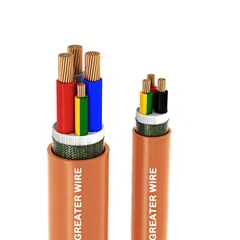
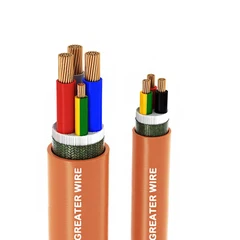

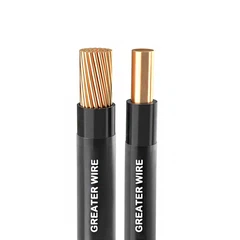
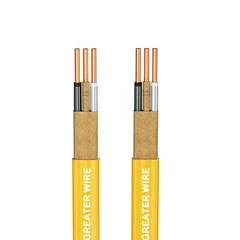
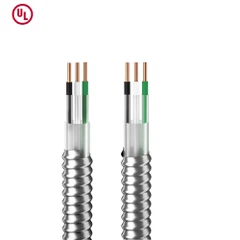
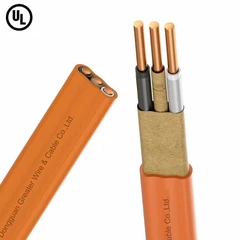
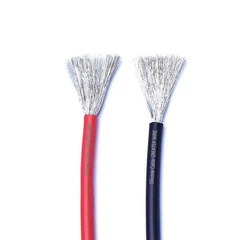
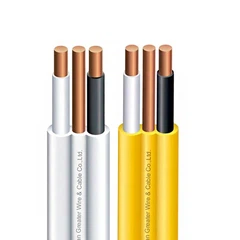
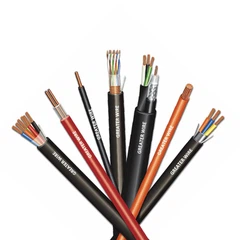
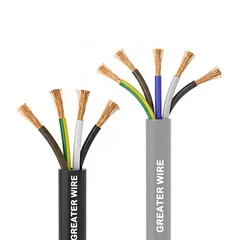
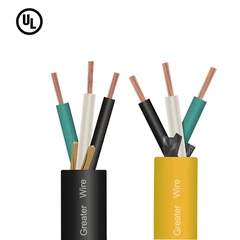
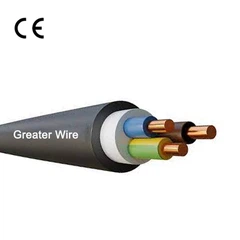

TC-ER cable is widely used in industrial facilities, manufacturing plants, and equipment wiring because it can simplify certain cable-tray and exposed-run installations. But what happens when the installation environment includes rain, moisture, washdown areas, or other wet conditions? Can TC-ER cable still be used safely and legally?
Yes, TC-ER cable can be used in wet locations when the specific cable construction is suitable for wet-location use and the installation complies with applicable electrical codes. However, the "ER" marking alone does not confirm wet-location suitability. Buyers and installers must verify the cable's insulation ratings, product markings, certification, and manufacturer documentation.
This guide explains the relationship between TC-ER ratings and wet-location requirements, highlights common selection mistakes, and provides practical guidance for electrical contractors, engineers, distributors, and procurement professionals.

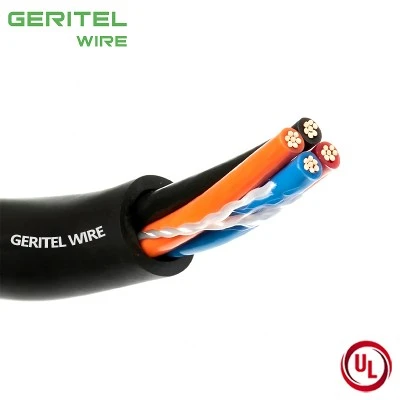
1. What Does TC-ER Cable Mean?
TC-ER stands for Tray Cable–Exposed Run. It describes a type of power and control tray cable that has been evaluated for certain exposed-run applications in addition to its intended tray-cable uses.
Under the US National Electrical Code (NEC), Type TC cable is permitted in cable trays and other specified applications. Type TC-ER cable can also be used for qualifying exposed runs between cable trays and utilization equipment, subject to applicable conditions, including support and protection against physical damage.
The key distinction is that TC-ER identifies an exposed-run capability, not a universal environmental rating.
According to UL 1277, applicable cable markings identify conductor types and temperature ratings, including wet, dry, or wet-or-dry ratings where relevant. The standard also distinguishes exposed-run identification from other product characteristics.
When evaluating TC-ER cable, consider these separate properties:
TC-ER rating: Addresses eligibility for specified exposed-run installations.
Wet-location suitability: Addresses whether the cable is suitable for use in wet environments.
Temperature rating: Defines the applicable operating-temperature limits under specified conditions.
Sunlight resistance: Addresses exposure to ultraviolet radiation from sunlight.
Direct-burial suitability: Addresses installation directly in the earth and must be verified separately.
One rating should not be assumed to imply another.
2. Can TC-ER Cable Be Used in Wet Locations?
Understanding the NEC Requirements
NEC Article 336 addresses Type TC cable applications. Section 336.10 includes provisions for using Type TC cable in wet locations, provided it is resistant to moisture and corrosive agents. The exact requirements should be checked against the NEC edition adopted by the local jurisdiction and any applicable amendments.
This means the answer depends on the specific product rather than simply its TC-ER designation.
A cable may be suitable for a wet industrial environment if its construction and evaluation support that application. However, a product intended only for dry locations should not be installed in a wet location simply because it carries a TC-ER marking.
For example, consider the following situations:
Outdoor cable-tray installation: Verify wet-location suitability and sunlight resistance where the cable is exposed to both moisture and direct sunlight.
Industrial washdown area: Confirm the cable's suitability for the actual moisture, cleaning chemicals, temperature, and mechanical conditions.
Underground or continuously damp area: Check whether the product is approved for the specific installation method, including direct burial if applicable.
Indoor dry equipment connection: Confirm the appropriate temperature rating, exposed-run conditions, and other installation requirements.
The governing principle is straightforward: the cable must be suitable for both the wiring method and the environmental conditions.
How to Verify Wet-Location Suitability
Before approving a cable for a wet location, review the following information:
Product markings: Check the cable legend, temperature designation, and any wet-location identification.
Technical datasheet: Confirm the environmental ratings and intended applications.
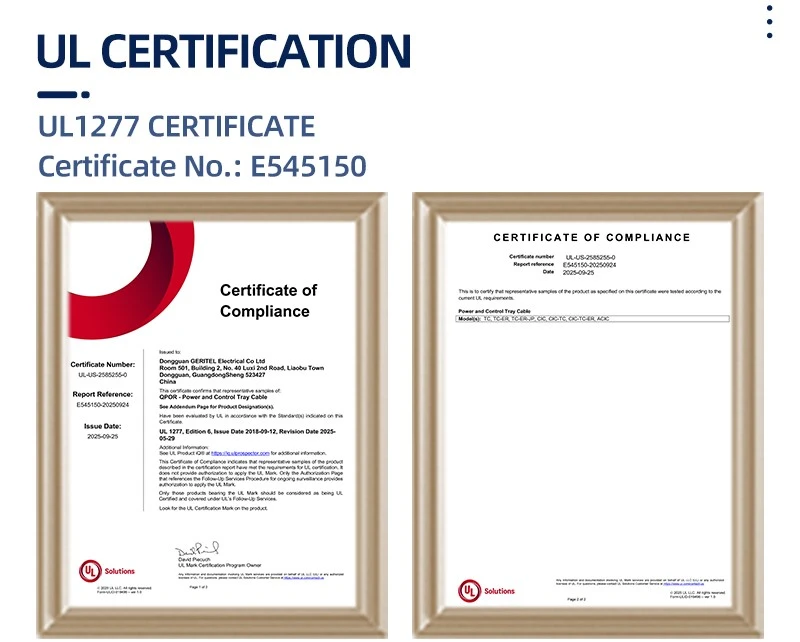
Certification or listing: Verify the product's evaluated uses through the relevant certification documentation.
Installation instructions: Review limitations relating to moisture, chemicals, sunlight, temperature, and mechanical protection.
Applicable electrical code: Confirm that the selected product and proposed wiring method comply with local requirements.
UL's Wire and Cable Application Guide explains how wire and cable ratings and markings identify approved uses, including temperature and wet-location information.
If the product documentation is unclear, ask the manufacturer for written confirmation before installation.
3. TC-ER Cable Exposed Run Meaning: What It Does-and Does Not-Tell You
Understanding the TC-ER Cable Exposed Run Meaning helps prevent a common specification error: treating an installation designation as proof of every environmental capability.
The "ER" suffix relates to qualifying exposed-run applications. It does not, by itself, establish that a cable is suitable for every wet, outdoor, chemically aggressive, or underground environment.
Consider these examples:
| Cable characteristic | What it indicates | What still needs verification |
|---|---|---|
| TC-ER | Suitability for specified exposed-run applications | Wet-location rating, sunlight resistance, and other environmental properties |
| Wet-location rating | Suitability for wet environments under specified conditions | Temperature limits, chemicals, and installation method |
| Sunlight-resistant marking | Evaluated resistance to sunlight exposure | Wet-location suitability and other environmental conditions |
| Direct-burial identification | Suitability for direct burial where permitted | Burial requirements, soil conditions, and any additional protection |
| VW-1 marking | A particular flame-test classification | Wet-location suitability, sunlight resistance, and burial approval |
The distinctions matter because industrial cable installations may involve several environmental challenges at once. A cable used outdoors might need wet-location and sunlight-resistant ratings, while a cable near machinery may also need appropriate mechanical protection.
Never rely on the TC-ER marking as a substitute for reviewing the full product specification.

4. Choosing TC-ER Cable for Industrial Applications
Selecting the right cable requires more than confirming that it fits inside a tray or can be routed outside a tray. The cable must also meet the electrical and environmental requirements of the application.
TC-ER Cable for Industrial Automation
TC-ER Cable for Industrial Automation applications may include machine connections, control circuits, power distribution, and connections between cable trays and industrial equipment.
In these settings, buyers should evaluate:
Required voltage and current-carrying capacity.
Conductor material, size, and stranding.
Insulation and overall jacket construction.
Wet-location and temperature ratings.
Resistance to sunlight, oil, chemicals, and mechanical damage where relevant.
Required grounding conductors and installation support.
Applicable certification and local code requirements.
For example, a cable routed to a machine in a dry production area may face different environmental conditions from one installed near outdoor equipment or a washdown station. The cable specification should reflect the actual operating environment rather than relying on a generic industrial-use description.
XHHW vs THHN Tray Cable
The comparison XHHW vs THHN Tray Cable requires care because XHHW and THHN are conductor insulation designations, not interchangeable descriptions of every complete cable assembly.
THHN generally refers to thermoplastic-insulated conductors with a nylon covering that are rated for dry-location use under the applicable designation. THWN-2 conductors, by contrast, are rated for wet or dry locations at the specified temperature, subject to their product markings and listing. XHHW-2 conductors are generally cross-linked-polyethylene-insulated conductors rated for wet or dry locations, subject to the applicable product requirements.
However, these designations do not automatically establish that an individual conductor can be installed by itself as a complete wiring method, or that a finished tray cable is suitable for every wet application.
When comparing products, check the complete cable construction and its certification rather than comparing insulation acronyms alone. If a project requires tray cable, verify the finished cable's Type TC or TC-ER listing and applicable environmental ratings.
Jacket Construction and Environmental Exposure
Cable jackets help protect the underlying construction, but a material name alone does not prove suitability for wet locations.
For example, PVC and nylon may serve different functions within a cable construction. The cable's complete design, material combination, and evaluation determine whether it is suitable for the intended conditions.
Ask the supplier to confirm the product's performance for the actual exposure, including prolonged moisture, cleaning agents, oils, ultraviolet radiation, and temperature fluctuations where relevant. If the cable passes between wet and dry environments, make sure its ratings cover the entire installation route.
5. What Should Buyers Ask a TC-ER Cable Supplier?
Electrical distributors, contractors, OEMs, and project procurement teams can reduce specification risks by confirming the product details before ordering.
Confirm the Complete Product Designation
Request the full cable type and surface markings rather than relying on a short product name. Confirm the voltage rating, conductor size, temperature designation, and wet-location suitability.
Request Supporting Documentation
Ask for the current technical datasheet, applicable certification or listing information, and installation instructions. For projects with specific approval requirements, verify the product in the relevant certification database.
Clarify Environmental Conditions
Explain where the cable will be installed and what conditions it will encounter. Relevant details include indoor or outdoor use, direct sunlight, washdown, moisture, chemical exposure, temperature, and possible mechanical damage.
Verify the Applicable Market Standard
UL and NEC requirements are important for many North American installations, but they should not automatically be treated as equivalent to CSA, IEC, AS/NZS, or other regional requirements. Confirm the standard and approval required by the project's jurisdiction and end user.
For buyers sourcing from a Bulk TC-ER Cable Supplier, these checks are particularly important when ordering large quantities for multiple projects. Confirm that the approved product designation and construction match the purchase order and that any substitutions are reviewed before shipment.
A qualified supplier should be able to explain the product's ratings and provide documentation for the exact model being quoted.
6. Common Mistakes to Avoid
Several avoidable mistakes can lead to incorrect cable selection or installation delays.
Mistake 1: Assuming TC-ER automatically means wet-rated. The exposed-run designation does not replace verification of wet-location suitability.
Mistake 2: Treating sunlight resistance as a wet-location rating. These properties address different environmental conditions and should be confirmed separately.
Mistake 3: Choosing cable based only on its jacket material. PVC, nylon, and other material names do not independently establish a cable's approved uses.
Mistake 4: Comparing conductor designations instead of complete cable products. THHN, THWN-2, and XHHW-2 have distinct characteristics. The complete cable assembly and wiring method must meet project requirements.
Mistake 5: Assuming one region's approval applies everywhere. Product certification and installation rules vary by jurisdiction. Confirm the standards required for the destination market.
A consistent review process helps engineering, procurement, and installation teams work from the same technical requirements and reduces the risk of costly field changes.

7. Frequently Asked Questions
Is every TC-ER cable suitable for outdoor installation?
No. TC-ER identifies certain exposed-run capabilities, but outdoor use also depends on wet-location suitability, sunlight resistance, and other environmental requirements. Check the exact product documentation.
Does TC-ER mean the cable is waterproof?
No. TC-ER is not a general waterproof designation. Wet-location suitability means the cable has been evaluated for specified wet conditions; it does not mean the cable can be submerged or used in every moisture-related application.
Can TC-ER cable be used in a wet cable tray?
It may be used when the specific cable is suitable for wet locations and the installation complies with the applicable code. Verify the product's ratings and installation requirements before use.
Is a 90°C dry rating the same as a 90°C wet rating?
No. Dry and wet temperature ratings are separate conditions. A cable's applicable temperature rating must be verified for the environment in which it will be installed.
Can a TC-ER cable be directly buried?
Only when the specific cable is identified or approved for direct burial and the installation meets applicable requirements. Neither TC-ER nor a wet-location rating alone should be treated as proof of direct-burial suitability.
Conclusion
TC-ER cable can be used in wet locations when its specific construction is suitable for those conditions and the installation follows the applicable electrical code. The TC-ER marking identifies exposed-run capability; it does not independently establish wet-location, sunlight-resistant, or direct-burial suitability. Before purchasing, verify the complete cable designation, environmental ratings, certification, and manufacturer instructions. For industrial automation and power distribution projects, reviewing these details early helps contractors, engineers, distributors, and procurement teams select suitable products and avoid unnecessary delays or noncompliant installations.
GERITEL WIRE supplies cable solutions for industrial power distribution, control systems, and demanding wiring applications. As a Bulk TC-ER Cable Supplier, we support distributors, contractors, OEMs, and project buyers seeking clear product specifications and dependable sourcing options. Whether you need a Custom TC-ER Cable Manufacturer for project-specific requirements or are evaluating options from an Industrial Cable Factory TC-ER, our team can help review conductor configurations, insulation and jacket constructions, ratings, and documentation needs. Contact GERITEL WIRE to discuss your application, request technical information, and identify cable options that align with your project specifications and applicable market requirements.
Dongguan Greater Wire & Cable Co., Ltd.
Tel/WhatsApp/Wechat: +86 136 6257 9592
Tel/WhatsApp/Wechat: +86 135 1078 4550
Email: manager01@greaterwire.com
Website: www.greaterwire.com