

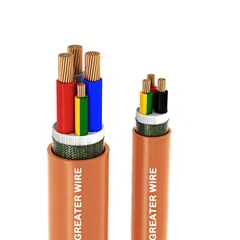
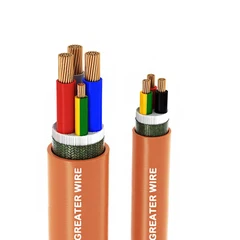

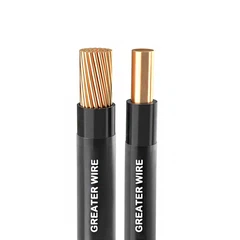
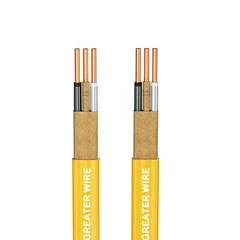
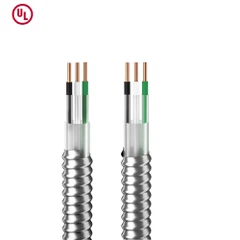
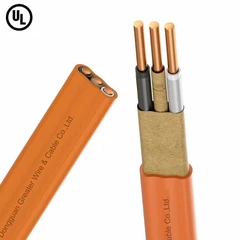

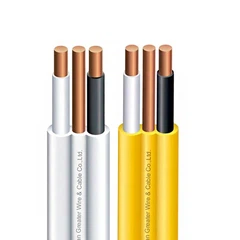
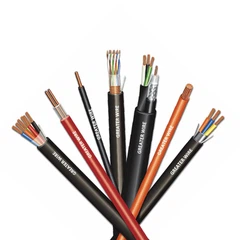
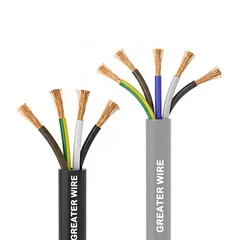
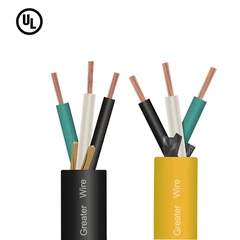
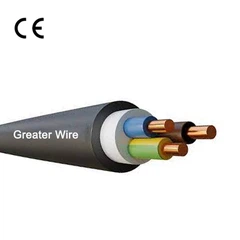
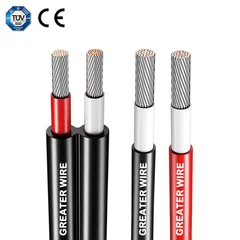

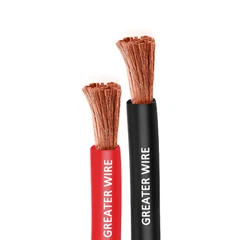
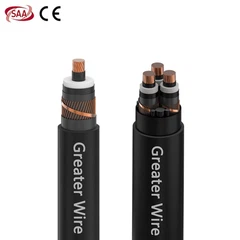
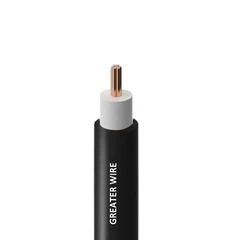

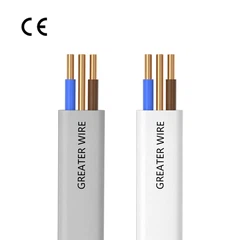
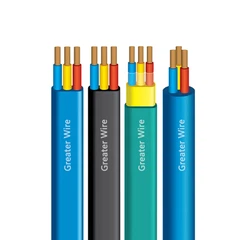
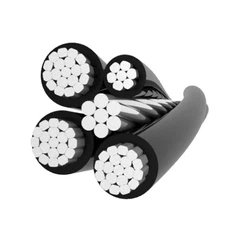
TC-ER cable is widely used in industrial power distribution, control panels, machinery connections, and cable tray systems. When selecting a cable for a project, one common question is: How many conductors can a TC-ER cable have?
The short answer is that TC-ER cable does not have one universal conductor count that applies to every product. Under UL 1277, covered power and control tray cables are constructed with two or more circuit conductors, with or without grounding conductors and optional optical-fiber members. Actual conductor counts depend on the cable design, conductor size, application, and manufacturer's product range.
This guide explains how conductor counts work, how to distinguish current-carrying conductors from grounding conductors, and how to choose a suitable TC-ER cable for industrial projects.

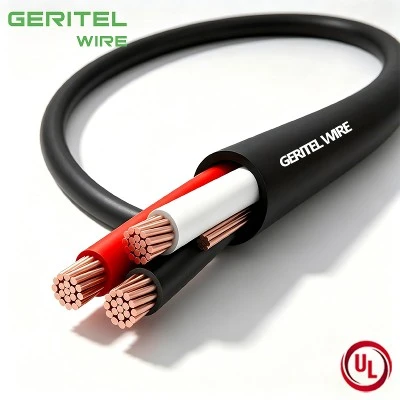
1. What Is a TC-ER Cable?
TC-ER stands for Tray Cable–Exposed Run. It refers to a type of power and control tray cable that meets the applicable requirements for certain exposed-run installations.
TC-ER cable is commonly used in industrial facilities to connect equipment, control panels, motors, and other electrical devices. Under the US National Electrical Code (NEC), qualifying TC-ER cable may be installed in specified exposed runs between cable trays and utilization equipment, subject to applicable conditions, including support and protection against physical damage.
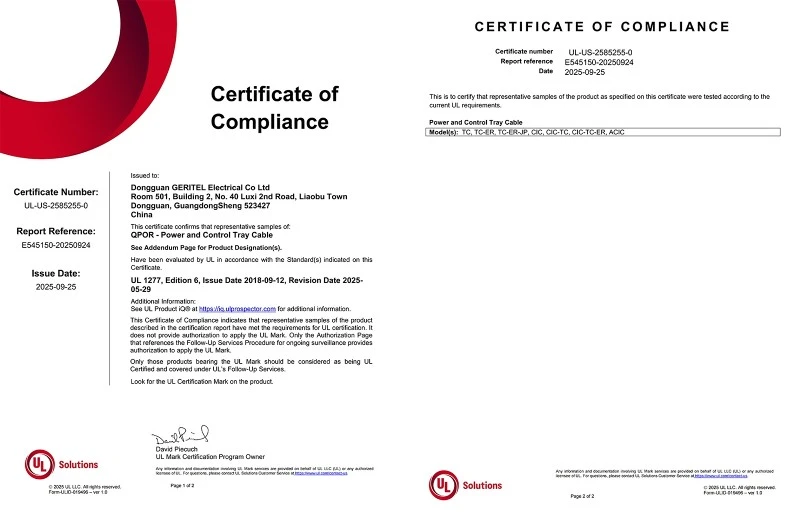
UL 1277 covers electrical power and control tray cables with two or more circuit conductors, or specified thermocouple-extension wire constructions. The cables may include grounding conductors and optional optical-fiber members under an overall jacket. See the UL 1277 standard overview.
The important point is that TC-ER describes a cable type and its permitted installation applications, not a fixed number of conductors.
2. How Many Conductors Can a TC-ER Cable Have?
There is no single conductor count suitable for every TC-ER cable. Products are available in different configurations to support power, control, instrumentation, and equipment-wiring requirements.
Depending on the design and manufacturer, a TC-ER cable may contain a small number of conductors for a simple power connection or many conductors for a more complex control application.
Common configurations include:
2 conductors: May be used for certain two-wire circuits where the electrical design and applicable code permit.
3 conductors: Common in certain power and control applications, depending on the circuit.
4 conductors: May support three-phase power circuits or other arrangements, depending on conductor functions and grounding requirements.
Multiconductor designs: May contain additional conductors for multiple control signals, auxiliary circuits, or other specified functions.
Paired or triad constructions: Used in certain instrumentation and control cable designs, subject to the applicable cable type and listing.
Some manufacturers offer multiconductor products with several dozen conductors, while other product lines focus on power cables with fewer, larger conductors. These are examples of available designs, not a universal maximum or a guarantee that every configuration is available as TC-ER.
Is There a Maximum Number of Conductors?
The practical maximum depends on the applicable product standard, the manufacturer's certified construction, and the physical and electrical requirements of the cable.
As conductor count increases, the cable generally needs more internal space, and its overall diameter and weight may increase. The manufacturer must also account for insulation, conductor arrangement, grounding, shielding where required, jacket construction, and the applicable performance tests.
For this reason, buyers should not assume that a cable can be manufactured with any requested conductor count simply because the product is described as TC-ER.
The correct approach is to identify the required configuration and confirm that the specific product is listed or certified for the intended application.
3. What Counts as a Conductor?
When reading a TC-ER cable datasheet, it is important to distinguish between insulated circuit conductors and grounding conductors.
Circuit Conductors
Circuit conductors carry electrical current as part of the intended circuit. Depending on the application, they may supply power, carry control signals, or support other electrical functions.
For example, a three-phase power circuit may use three phase conductors. A control circuit may require several conductors to connect switches, sensors, relays, or other equipment.
The number and function of the conductors must be determined by the electrical design rather than selected solely according to the number of cores available in a catalogue.
Equipment Grounding Conductors
A TC-ER cable may also contain an equipment grounding conductor. This conductor provides a grounding path for fault current as required by the applicable electrical design and code.
A cable described as having three circuit conductors plus one grounding conductor may be written as "3 conductors + ground" or represented using a manufacturer-specific notation.
That is not necessarily equivalent to a cable with four current-carrying circuit conductors. The grounding conductor has a different function, and its size, insulation, and identification must meet the relevant requirements.
When comparing quotations, always confirm whether the stated conductor count includes or excludes the grounding conductor.
Shielding, Fillers, and Optical Fibers
Other cable components should not automatically be counted as electrical circuit conductors.
Shielding: A metallic shield or drain wire may be included for electromagnetic-interference control, depending on the design. Its role differs from that of a normal circuit conductor.
Fillers: These help maintain the cable's shape and structure but do not carry electrical current.
Optical fibers: Some composite cable constructions include optical-fiber members for communications or monitoring. These are not electrical circuit conductors.
Grounding conductors: These provide a protective grounding function and should be identified separately in the specification.
Understanding these distinctions helps prevent errors when ordering cable or reviewing a technical datasheet.

4. How Conductor Count Affects Cable Selection
Choosing the number of conductors involves more than counting the connections on a machine. The selected cable must match the circuit design, electrical load, installation environment, and applicable code.
Power Distribution Requirements
A Power Distribution Cable may require several conductors for power delivery, plus a grounding conductor where required. The correct arrangement depends on factors such as whether the circuit is single-phase or three-phase, the system voltage, the equipment connections, and the grounding design.
A higher conductor count does not automatically mean that a cable can carry more current. Ampacity depends on factors including conductor size and material, insulation temperature rating, installation conditions, and the number of conductors that are current-carrying under the applicable rules.
Electrical Load and Conductor Size
An Electrical Power Cable should be specified according to the expected electrical load and the applicable ampacity requirements.
For instance, a cable with three large conductors may be designed for a power circuit, while a cable with many smaller conductors may be intended for control or signal circuits. Comparing these products by conductor count alone would be misleading.
Before finalizing a cable specification, verify:
The required conductor count and the function of each conductor.
Conductor material, such as copper or aluminum where available.
Conductor size and stranding.
Voltage rating and temperature rating.
Required grounding conductor and its size.
Insulation and overall jacket construction.
Cable-tray and exposed-run suitability.
Environmental ratings and required certifications.
These details help ensure that the cable meets the actual electrical and installation requirements.
Medium Power Applications
Medium Power Cable Systems can involve specific requirements for power delivery, equipment connections, motor circuits, or industrial distribution. However, "medium power" is a broad application description rather than a universal TC-ER cable classification.
For any such application, confirm the required voltage class, current capacity, conductor arrangement, and cable listing. Do not assume that every TC-ER cable is suitable for a particular power level merely because the conductor count appears adequate.
If the system operates above the voltage rating of a standard low-voltage TC-ER product, a different cable type or construction may be required.
5. TC-ER Cable for Industrial Control Wiring
Industrial Control Wiring often requires more conductors than a straightforward power connection because a system may include sensors, switches, relays, actuators, status signals, and auxiliary functions.
A multiconductor TC-ER cable may simplify routing by grouping several conductors within one overall jacket. However, the selected cable must be appropriate for the circuit types it contains and the intended installation.
When planning a control cable, consider the following.
Identify Every Required Signal
Prepare a circuit schedule that identifies each signal or connection. Include spare conductors only when they are needed or justified by the project requirements.
Check Signal and Power Separation
Some installations require power and control circuits to be separated. If different circuit types are proposed within the same cable, verify that the cable construction and applicable electrical code permit that arrangement.
Determine Whether Shielding Is Necessary
Sensitive control or instrumentation circuits may require shielding to reduce electrical noise. Shielding requirements depend on the equipment, signal type, and operating environment. A shielded design must be specified and verified separately from the conductor count.
Allow for Grounding and Future Needs
Confirm the grounding arrangement and whether additional conductors are required for future equipment connections. Spare conductors can be useful, but adding them increases cable size and cost and should be balanced against project needs.
A properly prepared conductor schedule helps the cable supplier quote the right construction and reduces the risk of incorrect substitutions.
6. How to Read a TC-ER Cable Specification
A cable datasheet provides the information needed to determine whether a product matches the project specification.
For example, a datasheet might describe a cable as:
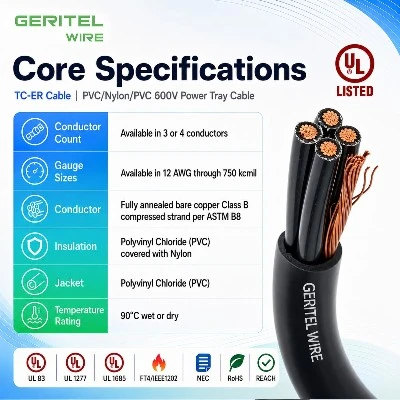
"600 V TC-ER, 4 conductors, 12 AWG copper, PVC/nylon insulation, overall PVC jacket."
This example identifies the voltage rating, cable type, conductor count, conductor size, material construction, and jacket. It does not, by itself, establish every environmental rating or confirm that the cable meets every project requirement.
When reviewing a product, check the following fields:
| Specification field | What it tells you |
|---|---|
| Cable type | The listed cable category and permitted applications |
| Number of conductors | The quantity of specified circuit conductors |
| Grounding conductor | Whether a protective grounding conductor is included and its size |
| Conductor size | The cross-sectional size of each conductor |
| Conductor material | Copper, aluminum, or another specified material |
| Voltage rating | The maximum rated system voltage under the product specification |
| Temperature rating | Applicable operating-temperature limits and conditions |
| Insulation and jacket | The construction surrounding the conductors and the complete cable |
| Environmental markings | Relevant suitability for conditions such as wet locations or sunlight exposure |
| Certification | The applicable listing or approval for the intended market |
For Industrial Power Wiring, the cable must be evaluated as a complete product. A correct conductor count alone cannot establish that the cable is electrically suitable, mechanically appropriate, or approved for the proposed installation.
7. Can a TC-ER Cable Be Custom-Made With a Specific Conductor Count?
Some manufacturers offer different conductor counts, conductor sizes, colors, shielding options, and jacket constructions. Whether a particular combination is available depends on the manufacturer's product range and the requirements of the applicable certification.
For custom or project-specific requirements, buyers should provide a clear specification rather than requesting only a conductor count.
Include:
Required number of circuit conductors.
Whether an equipment grounding conductor is needed.
Conductor size and material.
Voltage and temperature ratings.
Required insulation and jacket construction.
Shielding or special identification requirements.
Intended installation method and environmental conditions.
Required standards, certifications, and destination market.
The manufacturer can then assess whether an existing product meets the requirements or whether another construction needs to be evaluated.
Any change to a listed cable's construction must be reviewed appropriately. A product should not be assumed to retain its original certification if its design is altered outside the scope of that approval.
For projects involving Electrical Infrastructure Cable, consistency between the specification, quotation, approved datasheet, and delivered product is especially important. This helps engineering, procurement, and installation teams work from the same product requirements.

8. Common Mistakes When Specifying TC-ER Conductor Counts
Mistake 1: Assuming TC-ER Has One Standard Conductor Count
TC-ER products are available in different configurations. The correct count depends on the circuit design and the manufacturer's listed product range.
Mistake 2: Counting the Grounding Conductor as a Circuit Conductor Without Clarification
A grounding conductor has a protective function. Specify it separately when necessary to avoid ambiguity in quotations and purchase orders.
Mistake 3: Selecting Cable Based Only on Conductor Count
Ampacity, voltage rating, insulation, jacket, environmental conditions, and installation requirements are equally important.
Mistake 4: Assuming Every Conductor Combination Is Available
A manufacturer may not offer every combination of conductor size, count, insulation, shielding, and jacket. Confirm availability and certification for the exact construction.
Mistake 5: Ignoring Regional Standards
UL and NEC requirements are relevant to many North American projects, but they should not automatically be treated as equivalent to CSA, IEC, AS/NZS, or other regional requirements. Verify the standards and approvals required for the project location.
Avoiding these mistakes helps buyers reduce specification errors, quotation delays, and unnecessary changes during installation.
9. Frequently Asked Questions
Is there a minimum number of conductors in TC-ER cable?
UL 1277 covers power and control tray cables constructed with two or more circuit conductors, as well as specified thermocouple-extension wire constructions. The exact product construction must be verified against the applicable standard and listing.
What is the maximum number of conductors in TC-ER cable?
There is no single maximum conductor count that applies to every TC-ER product. Available counts depend on the manufacturer, cable design, conductor size, and applicable certification requirements.
Does a four-conductor TC-ER cable include a grounding conductor?
Not necessarily. Product descriptions may count circuit conductors separately from the grounding conductor. Check the datasheet and confirm how the manufacturer defines the stated conductor count.
Can TC-ER cable be used for both power and control circuits?
TC-ER products are used in power and control applications, but suitability depends on the cable construction, circuit requirements, listing, and applicable code. Confirm that the selected cable is approved for the intended use.
Can I request a custom conductor count?
You can ask a manufacturer or supplier about available configurations. Whether a specific count and construction can be supplied depends on product capability, certification, and project requirements.
Conclusion
TC-ER cable can contain different numbers of conductors, and there is no single conductor count that applies to every product. The appropriate configuration depends on the electrical circuit, conductor size, grounding requirements, cable construction, and the manufacturer's certified product range. When selecting cable for power distribution, industrial control, or equipment wiring, confirm the complete datasheet rather than relying on conductor count alone. Clear specifications help engineers, contractors, distributors, and procurement teams select suitable cable products and avoid costly ordering or installation errors.
GERITEL WIRE supports distributors, contractors, OEMs, and project buyers seeking cable solutions for industrial power distribution and control applications. Whether you are planning Industrial Control Wiring, specifying a Power Distribution Cable, or sourcing an Electrical Power Cable for industrial facilities, our team can help review conductor configurations, sizes, insulation and jacket options, and applicable product requirements. We also support project discussions involving Medium Power Cable Systems, Industrial Power Wiring, and Electrical Infrastructure Cable. Contact GERITEL WIRE to discuss your requirements, request product information, and identify cable options aligned with your project specifications and target market.
Dongguan Greater Wire & Cable Co., Ltd.
Tel/WhatsApp/Wechat: +86 136 6257 9592
Tel/WhatsApp/Wechat: +86 135 1078 4550
Email: manager01@greaterwire.com
Website: www.greaterwire.com