

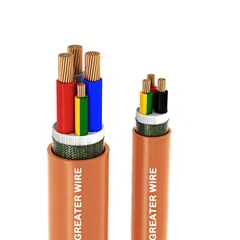
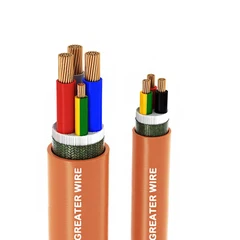

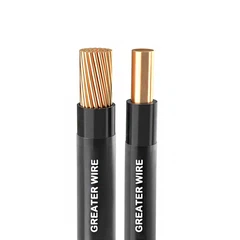
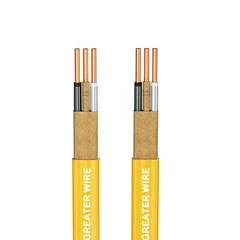
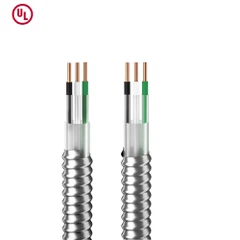



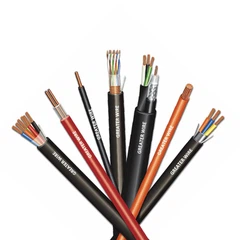
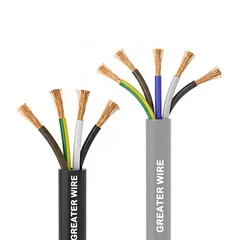
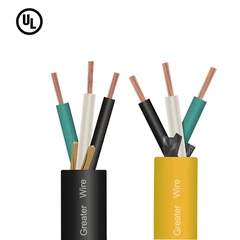
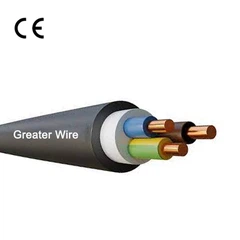
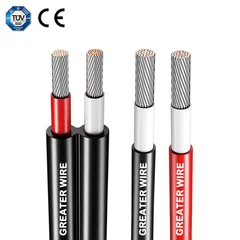

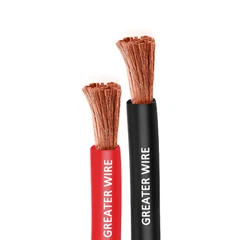
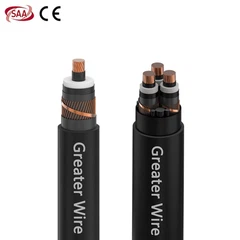
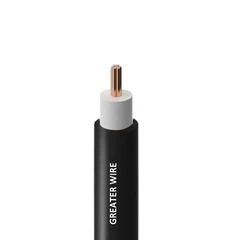

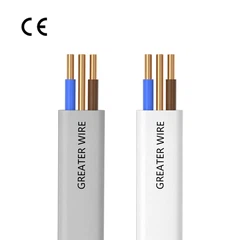
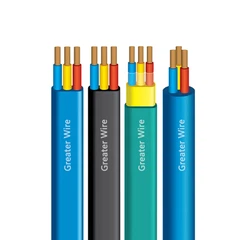
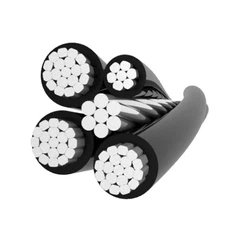
The main difference is whether the cable assembly includes a dedicated equipment grounding conductor (EGC), which provides a path for fault current if an energized conductor contacts exposed conductive equipment.
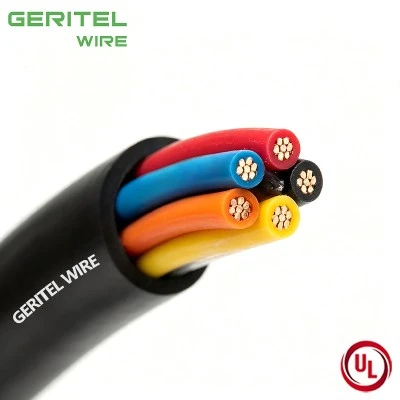
A typical TC-ER cable contains insulated conductors beneath an overall jacket. Depending on the cable design, it may also include a bare or insulated grounding conductor. The grounding conductor is separate from the normal current-carrying circuit conductors, such as phase conductors and a neutral conductor. It is intended for electrical safety rather than carrying current during normal operation.
Under the US National Electrical Code (NEC), Type TC cable is generally defined as a factory assembly of two or more insulated conductors, with or without an associated grounding conductor, under a nonmetallic jacket. However, the requirements for a particular installation can be more specific than the general cable definition. For example, NEC Article 336 includes grounding requirements for TC-ER exposed runs between cable trays and utilization equipment. Source: NEC Article 336
TC-ER Cable With a Grounding Conductor
A cable with a dedicated grounding conductor includes an additional conductor specifically intended for equipment grounding. It is commonly insulated green or green with yellow stripes, or supplied as a bare conductor where the product design permits.
This configuration can simplify installation because the grounding conductor is part of the cable assembly. Electricians can connect it to the designated grounding terminals at the equipment and the appropriate grounding point in the electrical system.
Typical applications include motor feeders, industrial machinery, control panels, and power distribution equipment where a dedicated equipment grounding conductor is required by the project design.
TC-ER Cable Without a Dedicated Grounding Conductor
A cable without a separate grounding conductor contains only the conductors specified for its circuit, with no additional conductor dedicated to equipment grounding.
This does not automatically mean that the installation is unsafe or prohibited in every circumstance. The acceptability of the cable depends on the application, the applicable code, the cable construction, and the grounding method permitted for the installation.
For TC-ER exposed runs between a cable tray and utilization equipment under NEC Article 336.10(7), equipment grounding must be provided as specified by that section. For cables containing conductors sized 6 AWG or smaller, the provision allows an insulated conductor to be permanently identified as the equipment grounding conductor at the time of installation, in accordance with NEC 250.119(B). This is not a blanket permission to use any cable without checking its listing and the installation requirements.
Important: Do not assume that a metal cable tray, a cable shield, or an ordinary circuit conductor automatically replaces a dedicated grounding conductor. The grounding arrangement must be specifically permitted by the applicable code and verified for the installation.
Comparison Table: TC-ER Cable With Ground vs Without Ground
| Comparison point | With a dedicated ground | Without a dedicated ground |
|---|---|---|
| Cable construction | Includes a separate equipment grounding conductor | No separate grounding conductor in the cable assembly |
| Grounding arrangement | Grounding conductor is connected as required by the design | An alternative grounding arrangement must be verified where permitted |
| Installation planning | Usually more straightforward when a dedicated EGC is specified | Requires closer review of code requirements and the intended grounding method |
| Conductor count | Includes an additional grounding conductor beyond the circuit conductors | Contains the specified circuit conductors without a separate EGC |
| Cable size and cost | May have a larger overall diameter or higher material cost, depending on construction | May be smaller or less expensive, but this is product-dependent |
| Suitable application | Where the project calls for an integral equipment grounding conductor | Only where the cable and installation method satisfy all applicable requirements |
The table describes general design differences, not a universal rule for every cable. Product specifications and the adopted electrical code determine which construction is acceptable.

Why Is the Equipment Grounding Conductor Important?
1. It Provides a Path for Fault Current
If insulation fails and an energized conductor contacts a conductive motor frame or enclosure, an effective equipment grounding path helps carry fault current back to the source. This helps protective devices, such as circuit breakers or fuses, operate as intended.
Without an effective grounding path, exposed metal parts can remain energized, increasing the risk of electric shock and equipment damage.
2. It Supports Reliable Equipment Protection
Industrial facilities often contain motors, pumps, compressors, conveyors, and automated production equipment. A properly designed grounding system helps support electrical safety and the operation of protective devices throughout the installation.
For Electrical Infrastructure Cable specifications, grounding should therefore be treated as a functional safety requirement rather than simply another optional cable feature.
3. It Helps Simplify Installation and Inspection
An integral grounding conductor can make it easier for installers to identify the intended grounding connection and for inspectors to verify the cable arrangement against the approved drawings.
However, the presence of a green conductor alone does not prove that the cable is correctly grounded. The conductor must be properly sized, connected, and installed in accordance with the applicable requirements.

How to Choose the Right TC-ER Cable for Industrial Applications
Step 1: Confirm the Electrical System Design
Start by identifying the circuit type, system voltage, number of phase conductors, neutral requirements, and equipment grounding requirements. For example, a three-phase motor circuit may need three phase conductors and an equipment grounding conductor, while another circuit may require a neutral as well.
Do not determine the grounding conductor requirement simply by counting the cable cores. Check the manufacturer's construction details and the electrical drawings.
Step 2: Verify the Applicable Code and Cable Listing
For installations in the United States, review the applicable edition of NFPA 70 (NEC), including Article 336 for Type TC cable, as well as relevant grounding provisions. The adopted edition and local amendments matter.
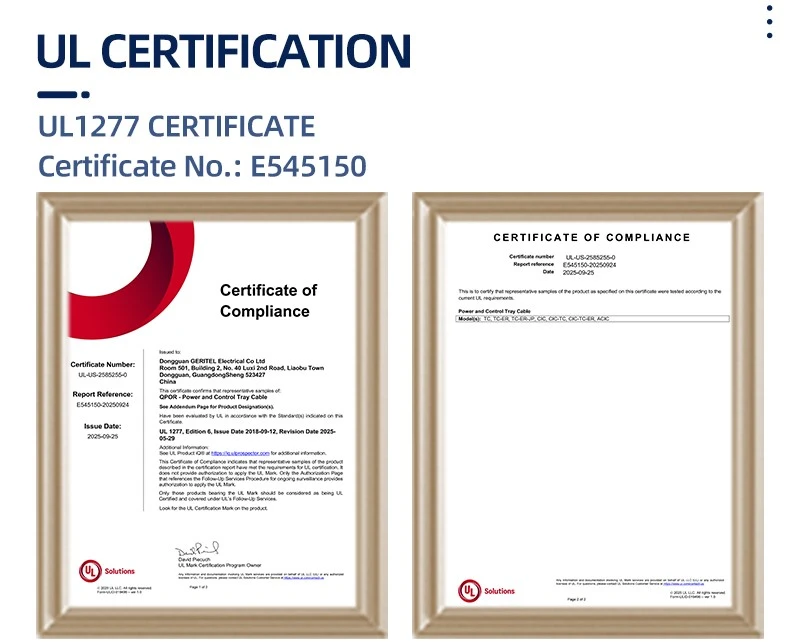
In Canada, applicable Canadian Electrical Code requirements and CSA-certified product markings must be reviewed. UL, CSA, IEC, and AS/NZS requirements are not interchangeable simply because cables have similar constructions or voltage ratings.
Before ordering, confirm the product's listing, markings, conductor sizes, voltage rating, temperature rating, and permitted installation methods.
Step 3: Check the Actual Grounding Conductor Size
The grounding conductor must meet the requirements applicable to the circuit and installation. It should not be assumed that the grounding conductor must always be the same size as the phase conductors, or that a smaller conductor is automatically acceptable.
Grounding conductor sizing depends on applicable code rules, including the relevant overcurrent protection and installation conditions. Confirm the required size with the electrical designer or qualified installer.
Step 4: Evaluate the Installation Environment
Cable selection involves more than choosing a grounding configuration. Consider exposure to moisture, sunlight, oil, chemicals, abrasion, mechanical impact, and temperature extremes. Each characteristic must be supported by the cable's actual markings and certifications.
For Refinery Cable Systems and Petrochemical Plant Cable applications, review chemical exposure, mechanical protection, process equipment requirements, and the facility's electrical specifications before selecting a product.
For Oil and Gas Electrical Cable installations, also consider whether the cable is intended for the relevant fixed wiring application and whether its ratings match the environmental and operational conditions.
Step 5: Review Hazardous-Area Requirements Separately
A TC-ER marking does not, by itself, establish that a cable is suitable for every hazardous location. Hazardous-area use depends on the applicable classification, cable approval, installation method, fittings, sealing requirements, and other provisions of the governing code.
When specifying Hazardous Area Cable Wiring, verify the exact location classification and required product approvals with the project engineer. Do not assume that an ordinary TC-ER cable is suitable for a classified area simply because it is used in an industrial facility.
Common Mistakes to Avoid
Mistake 1: Assuming that "without ground" always means prohibited.
Cable construction and installation requirements must be evaluated together. Some arrangements may be permitted under specific code provisions, while others are not.
Mistake 2: Assuming that a grounding conductor is optional whenever a cable is installed in a metal tray.
A cable tray can serve as an equipment grounding conductor only where the applicable code permits it and the tray system meets the required conditions. It should never be assumed to provide an acceptable grounding path without verification.
Mistake 3: Treating the shield as the grounding conductor.
A shield intended for electrical noise control is not automatically suitable as an equipment grounding conductor. Its permitted function must be established by the cable design and applicable code.
Mistake 4: Ordering by core count alone.
A cable described as 4-core or 5-core may have different conductor assignments depending on the manufacturer. Always confirm whether the quoted core count includes a dedicated grounding conductor.
Mistake 5: Selecting a cable based only on price.
A lower initial purchase price may not represent the best overall value if the cable does not meet the required construction, listing, environmental ratings, or grounding provisions.
Frequently Asked Questions
Is TC-ER cable required to have a ground wire?
For TC-ER exposed runs between cable trays and utilization equipment under NEC 336.10(7), equipment grounding must be provided in accordance with that section. The code includes a specific provision for certain cables with conductors sized 6 AWG or smaller to have an insulated conductor permanently identified as the equipment grounding conductor at installation. Other installations must be assessed under their applicable requirements.
Can I use TC-ER cable without a dedicated ground for a motor?
Do not decide based on the motor application alone. Confirm the circuit design, the applicable code requirements, the cable's listing, and the permitted grounding method. Where a dedicated equipment grounding conductor is required by the installation, a cable without one may not be suitable unless a code-compliant alternative is specifically permitted.
Does a grounding conductor need to be the same size as the phase conductors?
Not necessarily. The required equipment grounding conductor size depends on the applicable code and circuit protection requirements. The design should be checked against the relevant sizing rules rather than relying on a general assumption.
How can I tell whether a TC-ER cable includes a ground?
Review the cable datasheet, construction drawing, conductor color code, and product description. Ask the supplier to confirm the number and size of circuit conductors and whether a separate equipment grounding conductor is included. A cable's total core count alone may not answer this question.
Are TC-ER grounding requirements the same in every country?
No. NEC requirements apply within their relevant jurisdiction and adopted edition. Canadian, IEC-based, and AS/NZS installations may follow different standards and local regulations. A cable accepted under one system should not automatically be considered compliant under another.

Conclusion
The key difference between TC-ER cable with ground and without ground is the presence of a dedicated equipment grounding conductor, but the correct selection depends on more than cable construction alone. Circuit requirements, conductor sizing, product certification, installation method, and local electrical codes all matter.
For reliable Industrial Power Wiring, confirm the grounding arrangement before placing an order, and make sure the selected cable is suitable for the specific equipment and installation environment. When in doubt, obtain confirmation from the electrical designer, qualified installer, or cable manufacturer.
GERITEL WIRE supports industrial cable sourcing with product options designed to meet different conductor configurations, voltage requirements, and application needs. Whether your project involves machinery connections, control systems, or demanding industrial installations, our team can help you review cable specifications and identify the details that matter before ordering. Contact GERITEL WIRE to discuss your required conductor count, grounding configuration, cable ratings, and project requirements, and request product information for your next cable procurement project.
Dongguan Greater Wire & Cable Co., Ltd.
Tel/WhatsApp/Wechat: +86 136 6257 9592
Tel/WhatsApp/Wechat: +86 135 1078 4550
Email: manager01@greaterwire.com
Website: www.greaterwire.com