























Most generic MC cable articles only introduce universal benefits of PVC-jacketed MC cable, failing to solve contractors' core on-site confusion: with multiple alternatives including aluminum MC cable and conduit-run THHN/THWN-2 or XHHW-2 single wires, what exact scenarios truly require copper conductor PVC jacketed MC cable? Especially for direct burial applications, the three mainstream specs - 8/4, 14/4, and 8AWG 3-core (3/C) - are not interchangeable. Each serves fixed burial depths, load ranges, and grounding code requirements. This article eliminates generic content and focuses exclusively on copper-only material advantages, direct-burial code compliance, and spec-specific selection logic to deliver precise, project-ready decision standards.
1. Why Choose Copper PVC Jacketed MC Cable
Generic PVC MC cable content broadly describes "durability and protection" but ignores the non-negotiable material value of copper conductors for permanent and buried wiring. For direct burial and long-term commercial power distribution, copper's low resistivity and zero oxidation voltage decay solve critical pain points that aluminum MC cable cannot address. Aluminum conductors gradually oxidize underground over years, causing voltage drop, overheating connections, and premature circuit failure. For code-sensitive, long-lifespan buried projects, copper PVC-jacketed MC cable is either preferred or mandatory.
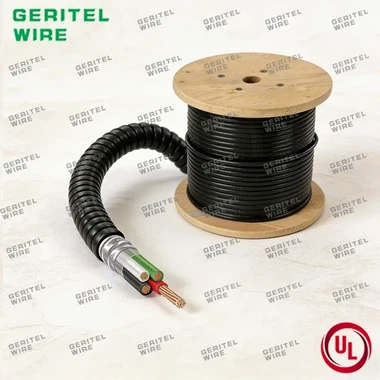
Its structure is purpose-built for direct burial, not ordinary indoor use. The modified PVC jacket resists soil abrasion and underground moisture for standard burial conditions. Inner insulation is tiered for buried environments: standard THHN/THWN-2 for dry and damp shallow burial, and upgraded XHHW-2 for deep, high-moisture ground to boost water and aging resistance. Armor configurations are strictly spec-matched: lightweightaluminum interlocked armor supports light-to-medium burial for 14/4 and 8AWG 3/C, while heavy-duty galvanized steel armor is exclusively paired with 8/4 for deep, high-compression underground routes - a level of detail absent from generic MC cable guides.
Tailored for buried code requirements, all three core specs support dual grounding systems: bare ground for cost-effective residential buried branch circuits, and insulated green ground for high-standard commercial public-area burial. The combination of dedicated armor, dual insulation options, and configurable grounding forms a copper-specific direct-burial selection system that differentiates this cable from general-purpose indoor MC cables.

2. Core Use Cases: Exclusive Scenarios That Require Copper PVC Jacketed MC Cable (Direct Burial Focus)
Instead of vague "commercial and residential" descriptions, this section defines copper-only, spec-specific applicable scenarios where alternative cables cannot match performance or compliance, fully answering the article's core question: when to use it.
1) Long-Term Commercial Direct Burial for Degradation-Free Permanent Power
Outdoor yard power, building perimeter circuits, and underground equipment feeders for office buildings, shopping complexes, and hotels require 10+ years of stable operation - this is the primary application for 8/4, 14/4, and 8AWG 3/C copper PVC jacketed MC cable. Buried circuits are difficult to repair or replace. Aluminum MC cable suffers progressive underground oxidation and voltage drop, while conduit-based THHN/THWN-2 and XHHW-2 wiring faces water accumulation, dust buildup, and high long-term failure rates. Spec matching is precise: 14/4 MC cable with PVC jacket and ground serves low-current multi-branch burial circuits for landscape lighting and exterior outlets; 8AWG 3/C PVC jacketed MC cable powers medium-duty single-phase buried equipment such as HVAC systems and water pumps;8/4 MC cable with PVC jacket and ground handles long-distance, high-current main burial feeders for commercial campus distribution.
2) Standard-Soil Direct Burial: Code-Compliant, Labor-Saving Integrated Wiring
For non-corrosive, normally damp/dry soil burial projects, copper PVC jacketed MC cable delivers a unique all-in-one solution that outperforms traditional conduit systems. Conventional direct burial relies on THHN/THWN-2 or XHHW-2 single conductors inside conduit, which requires heavy labor for trenching, pipe laying, and sealing, plus high failure risk if conduit cracks and collects water. In contrast, 8/4, 14/4, and 8AWG 3/C copper MC cable features factory PVC jacketing + interlocked armor, allowing code-approved direct burial without conduit. Use aluminum-armored 14/4 and 8AWG 3/C for shallow, light-duty burial; select steel-armored 8/4 for deep, heavy-load underground trunk routes.
3) High-Code Public Burial Projects with Strict Grounding Standards
Public venues, commercial plazas, and high-traffic buildings enforce rigorous grounding safety for underground service and equipment circuits. Generic indoor cables and aluminum burial MC cables often fail inspection due to unstable grounding performance. 14/4 and 8 AWG 3/C copper PVC jacketed MC cable resolve this with configurable grounding: bare ground wires for standard auxiliary buried branches, and insulated green ground for critical public-area burial circuits. Isolated green-ground design prevents ground fault misfires and leakage risks caused by humid underground soil, making this combination the most inspector-friendly solution for commercial public burial wiring.
3. Exclusion Scenarios: When NOT to Use 8/4, 14/4, 8AWG 3/C Copper PVC Jacketed MC Cable
Replacing generic "harsh environment" warnings, this section delivers burial-specific, spec-exact exclusion rules to help contractors avoid over-specification and improper installation:
First, avoid copper specs for temporary burial jobs: low-cost aluminum PVC-jacketed MC cable fully satisfies short-term construction power needs. Second, do not use these standard copper MC specs in corrosive soil, chemical sites, or continuously submerged trenches - standard PVC jacket lacks heavy anti-corrosion and submersible performance, requiring specialized burial cables. Third, never deploy 8/4, 14/4, or 8AWG 3/C copper MC cable in hazardous classified locations; standard aluminum/steel armor and PVC jacketing do not meet explosion-proof requirements.
4. Direct Burial Spec Selection Guide: One-to-One Application Matching
Below is a burial-only, contractor-focused spec guide tailored exclusively to the three core models, eliminating generic gauge-load descriptions:
14/4 MC Cable with PVC Jacket and Ground - Shallow, light-duty multi-branch burial. Ideal for commercial landscape lighting, exterior receptacle circuits, and residential yard distribution. Paired with lightweight aluminum interlocked armor and bare ground for cost-effective, easy-install shallow burial.
8AWG 3-Core PVC Jacketed MC Cable - Medium-duty buried equipment feeder. Designed for underground HVAC units, water pumps, and standalone commercial machinery. Supports upgraded insulated green ground to meet strict public-building burial grounding codes.
8/4 MC Cable with PVC Jacket and Ground - Deep, long-distance heavy-duty burial trunk cable. Among the three specs, only 8/4 delivers high-current capacity for extended commercial campus burial runs. Matches galvanized steel armor to resist deep-soil compression and rock abrasion for main power distribution routes.
FAQ: Copper PVC Jacketed MC Cable Direct Burial & Spec Selection
Q1: For direct burial, why choose 8/4, 14/4, 8AWG 3/C copper MC instead of aluminum equivalents?
A1: Buried circuits are hard to access for maintenance. Aluminum conductors oxidize underground, causing severe voltage drop and equipment failure over time. Copper maintains stable conductivity and underground corrosion resistance, ensuring decades of reliable service for permanent buried power systems.
Q2: Can THHN/THWN-2 or XHHW-2 conduit wiring replace copper PVC jacketed MC cable for burial?
A2: Not recommended. Conduit single-wire burial requires excessive labor and materials and suffers water ingress and insulation degradation. Copper MC cable integrates PVC jacket and armor for direct-burial compliance, cutting construction time while improving long-term reliability.
Q3: When to choose THHN/THWN-2 vs XHHW-2 insulation for buried copper MC cable?
A3: THHN/THWN-2 is cost-effective for standard shallow burial with normal wet/dry cycling. XHHW-2 upgraded insulation is recommended for 8/4 heavy-duty deep burial and high-moisture soil to enhance water resistance and service life.
Q4: Which armor type fits each burial scenario?
A4: Aluminum interlocked armor suits 14/4 and 8AWG 3/C shallow, light-to-medium burial. Galvanized steel armor is mandatory for 8/4 deep burial and high-compression underground trunk lines to prevent mechanical damage.
5. Conclusion
The unique value of copper conductor PVC jacketed MC cable lies in three irreplaceable scenarios: code-compliant direct burial, long-term commercial permanent power distribution, and high-standard grounded public wiring. For contractor material selection, 14/4 covers shallow light-burial branches, 8AWG 3/C serves medium-duty buried equipment feeders, and8/4 supports heavy-duty deep burial trunk circuits. By matching dedicated armor, insulation, and grounding configurations, these three copper-only specs deliver the optimal balance of compliance, stability, and construction efficiency for modern residential and commercial underground projects.
Contact our team for project-specific quotations, technical documentation, and customized configurations for 8/4, 14/4, and 8AWG 3/C copper PVC jacketed MC cable.
Dongguan Greater Wire & Cable Co., Ltd.
Tel/WhatsApp/Wechat: +86 136 6257 9592
Tel/WhatsApp/Wechat: +86 135 1078 4550
Email: manager01@greaterwire.com
Website: www.greaterwire.com