


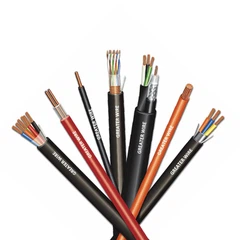
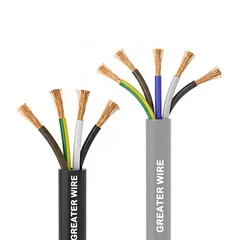

Yes, AC90 cable may need additional mechanical protection in busy service areas when it is exposed to a risk of physical damage. Its interlocked metal armour provides mechanical protection, but that does not make the cable damage-proof or suitable for every installation environment.
In Canadian electrical installations, the need for additional protection depends on the cable's location, the likelihood of impact or abrasion, the surrounding equipment, and the applicable Canadian Electrical Code (CEC) requirements. Areas such as maintenance corridors, workshops, loading zones, equipment rooms, and industrial service spaces deserve particular attention because tools, carts, machinery, and routine maintenance activities can damage exposed cable.
The key is to distinguish between the protection already provided by AC90 armour and the additional protection required by the actual site conditions.

1. What Mechanical Protection Does AC90 Armour Already Provide?
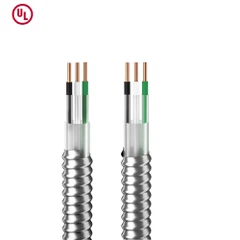
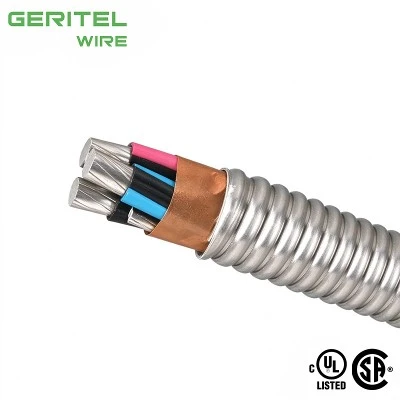
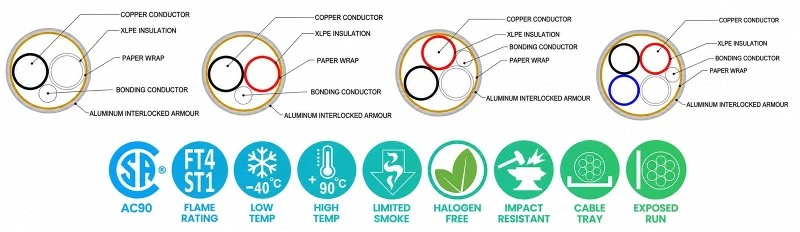
A typical AC90 cable contains insulated conductors, a bonding conductor, and interlocked metal armour. The armour provides a protective metal covering around the conductor assembly and helps resist physical damage during installation and normal service.
However, interlocked armour is not equivalent to a heavy-duty steel conduit or impact-resistant enclosure. It can still be damaged by:
Repeated impact from carts, toolboxes, or maintenance equipment.
Contact with sharp metal edges or moving machinery.
Crushing from heavy objects or stored materials.
Abrasion caused by repeated movement against rough surfaces.
Accidental strikes from forklifts, pallet trucks, or other vehicles.
For example, Nexans identifies its AC90 product as an armoured cable for open and concealed wiring in dry locations. Its product information describes interlocked aluminum armour, but does not claim that the cable is suitable for every high-impact environment.
AC90+1
The practical distinction is that AC90 armour provides a basic level of mechanical protection, while additional safeguards address specific hazards that exceed what the cable can reasonably withstand.
2. What Does the Canadian Electrical Code Require?
For Canadian installations, the 2024 Canadian Electrical Code (CSA C22.1:24) provides several relevant requirements. Three provisions are particularly useful when assessing AC90 in busy service areas.
Rule 2-200: General protection of electrical equipment
Rule 2-200 requires electrical equipment to be installed and guarded so that adequate provision is made for the safety of people and property, and for protection against mechanical or other damage to which the equipment may be exposed.
philtech.ca
This is a general safety principle. It supports evaluating actual site hazards rather than assuming that a cable's armour eliminates every need for protection.
Rule 12-518: Protection for cable in exposed installations
Rule 12-518 requires cable used in exposed wiring to be adequately protected against mechanical damage where it:
Passes through a floor.
Is less than 1.5 m above a floor.
Is otherwise exposed to mechanical damage.
This is especially relevant to service corridors, equipment rooms, workshops, and other areas where cables may be exposed to routine physical contact. The rule is not limited to vehicle traffic.
philtech.ca
Importantly, the 1.5 m height condition should not be interpreted as meaning that every cable above 1.5 m is automatically safe without protection. The rule separately addresses locations where the cable is exposed to mechanical damage, regardless of height.
Rule 12-604: Protection for armoured cables in lanes
Rule 12-604 addresses a more specific situation. Where armoured cable is subject to mechanical damage in lanes and driveways, and is not otherwise protected, steel guards of at least No. 10 MSG must be adequately secured to protect cable located less than 2 m above grade.
philtech.ca
This provision is particularly relevant to AC90 installed near vehicle routes or exposed driveways.
It should not be treated as a universal requirement for every indoor service corridor. The specific conditions in the rule matter, while Rule 12-518 and the general protection principle in Rule 2-200 address other exposed installations.
3. Which Busy Service Areas Are More Likely to Need Additional Protection?
The need for additional mechanical protection depends on what happens around the cable, not simply whether the building is classified as commercial or industrial.
2055 Oak Industrial Dr NE, Grand Rapids, MI 49505 | LoopNet
Industrial service corridors
Maintenance personnel may move tools, ladders, carts, and replacement equipment through narrow spaces. Cable installed at low level or beside frequently used access routes may need a guard or other suitable protection.
Industrial Storage: How to be a skilled product organizer - Interlake Mecalux
Warehouse and loading areas
Forklifts, pallet trucks, and moving loads can strike exposed cable. Cable near vehicle paths, loading bays, and storage areas deserves particular attention.
ELECTRICAL COMPANY | Bahamas | Mepco LTD Bahamas
Mechanical and equipment rooms
Pumps, motors, service panels, and other equipment may create tight working spaces. Tools, removable components, and maintenance activities can cause accidental impacts or abrasion.
6257 34 St NW, Edmonton, AB T6B 2V6 | AlphaSpace
Utility and maintenance rooms
Exposed cable can be vulnerable when technicians access valves, piping, control panels, or other building services.
FABRICATION | Fabricated with Precision. Finished to Last. - Australian Metal Fabrication & Powder Coating
Workshops and fabrication areas
Tools, metal stock, workpieces, and moving equipment can damage cable routed along walls, structural members, or workstations.
These are practical risk examples, not automatic code classifications. A cable routed behind a robust structural barrier may not face the same exposure as one installed directly beside a forklift aisle.
4. What Types of Additional Mechanical Protection Can Be Used?
The appropriate safeguard depends on the expected impact, the cable route, and the applicable wiring-method requirements.
Leitungsführungskanäle LKM | OBO
COUVERCLE CHEMIN DE CABLE AG
Sidewinder Cable Protection System – Lawson Products
Surface Mount Cable Guards - Adept Direct
Elektrofachmarkt-online - Deckel für Kabelrinne 100mm
Uw bedrijfsveiligheid in een case | Group Beyers
Linie kablowe | Power Industries
LKM Asennuskanavat | OBO
Beaverswood Heavy-Duty Safety Bollards | UK-Made & Certified - RackitDirect
|
Protection method |
Typical application |
Key consideration |
|---|---|---|
|
Steel guard or protective channel |
Exposed cable near impact-prone areas |
Must be strong enough for the anticipated impact and securely fixed |
|
Protective metal enclosure |
Cable routed beside machinery or service equipment |
Must allow suitable access and avoid sharp edges |
|
Suitable raceway or conduit system |
Cable sections requiring additional enclosure |
Confirm that the cable and raceway combination is permitted by the CEC |
|
Physical barriers or bollards |
Cable near vehicle or material-handling routes |
Position barriers to prevent impact before vehicles reach the cable |
|
Relocation behind structural protection |
Cable routed through busy areas |
Often reduces exposure without adding a separate cable covering |
Steel guards
Steel guards can protect exposed AC90 from accidental impacts. They are particularly relevant to the conditions described in CEC Rule 12-604 for armoured cables in lanes and driveways.
The guard must be adequately secured and designed to protect the cable from the expected physical hazard. A thin decorative cover should not be assumed to provide meaningful impact protection.
Protective enclosures
A suitable metal enclosure can shield cable from tools, equipment, and accidental contact. Its design should consider the cable's route, accessibility, ventilation where relevant, and the possibility of sharp edges damaging the armour.
Raceway and conduit
A raceway may be considered for sections where a higher degree of physical protection is needed. However, it is important not to assume that any AC90 cable can simply be installed inside any conduit.
CEC Rule 12-602(4) permits armoured cable with an overall jacket to be installed in a raceway when the conditions of Rule 12-902(2) are met. Standard AC90 products without an overall jacket should not automatically be treated as suitable for this arrangement. The specific cable construction and permitted wiring method must be verified.
philtech.ca+1
Physical barriers
In warehouse and industrial environments, barriers such as properly designed bollards or protective frames can prevent vehicles and material-handling equipment from reaching cable routes.
This can be particularly effective where the main risk comes from moving equipment rather than ordinary pedestrian activity.

5. Does Installing AC90 Higher on the Wall Eliminate the Need for Protection?
Not necessarily. Raising a cable route can reduce the risk of accidental impact, but the installation must still be assessed against the actual exposure.
For example:
A cable routed above normal pedestrian reach and away from lifting equipment may have a lower risk of physical damage.
A cable installed below 1.5 m above the floor in an exposed installation must be assessed under Rule 12-518.
A cable installed above 1.5 m may still need protection if it is exposed to machinery, moving materials, or maintenance activities.
A cable near a vehicle route may require a physical safeguard even if it is not close to the floor.
Cable routing is often one of the most cost-effective ways to reduce mechanical damage. However, moving a cable higher does not automatically remove every protection requirement.
6. Does Additional Mechanical Protection Change AC90's Environmental Rating?
No. Mechanical protection and environmental suitability are separate considerations.
Standard AC90 is commonly rated for dry locations. For example, Nexans specifies its AC90 product for open and concealed wiring in dry locations only.
AC90
Adding a steel guard, protective channel, or other mechanical safeguard does not automatically make standard AC90 suitable for:
Wet or continuously damp locations.
Direct burial.
Outdoor exposure to weather.
Locations where oil or chemicals may deteriorate the cable materials.
If the installation requires both mechanical protection and resistance to moisture or other environmental conditions, a different cable construction may be necessary.
For example, ACWU90 or TECK90 may be considered for certain industrial applications, but their suitability depends on the exact product ratings, certification, and installation requirements. A cable's name alone does not establish approval for every environment.
7. Common Mistakes When Protecting AC90 Cable
Electrical contractors, engineers, and procurement teams should avoid these common assumptions:
Mistake 1: Assuming metal armour makes additional protection unnecessary.
Interlocked armour provides mechanical protection, but severe impact or repeated abrasion can still damage it.
Mistake 2: Treating the 1.5 m height as a universal safe boundary.
CEC Rule 12-518 also addresses cable exposed to mechanical damage, regardless of whether it is above or below 1.5 m.
Mistake 3: Applying Rule 12-604 to every indoor service area.
This rule specifically addresses armoured cable in lanes and driveways. Other exposed installations must be assessed under the relevant general requirements.
Mistake 4: Using an unsuitable protective sleeve.
A sleeve or enclosure must be compatible with the cable and permitted wiring method. Do not assume that a short piece of ordinary conduit is automatically an acceptable solution.
Mistake 5: Ignoring the cable's environmental rating.
Mechanical guards do not convert a dry-location cable into a wet-location or direct-burial cable.
Mistake 6: Installing protection that creates new damage risks.
Sharp edges, poorly fitted clamps, excessive pressure, and inadequate clearances can damage the armour rather than protect it.
8. AC90 Mechanical Protection: A Practical Inspection Checklist
Before approving an AC90 installation in a busy service area, the project team can use the following checklist:
|
Inspection point |
What to check |
|---|---|
|
Cable location |
Is the cable near pedestrian routes, machinery, loading zones, or maintenance access? |
|
Installation height |
Is exposed cable below 1.5 m above the floor? |
|
Impact exposure |
Could carts, forklifts, tools, or stored materials strike the cable? |
|
Existing armour |
Is the interlocked armour intact and free from crushing or separation? |
|
Additional safeguards |
Are guards, enclosures, barriers, or other protection needed? |
|
Support and securing |
Is the cable adequately supported without excessive strain? |
|
Terminations |
Are connectors and cable entries protected from abrasion? |
|
Environmental suitability |
Is the cable rated for the actual moisture, temperature, and chemical conditions? |
|
Code compliance |
Have the applicable CEC requirements and local amendments been checked? |
Where damage is already visible, the cable should be assessed by a qualified electrician before being returned to service. A protective cover does not repair damaged armour or compromised conductor insulation.
Conclusion
AC90 cable does not automatically need additional mechanical protection in every installation, because its interlocked metal armour already provides a degree of physical protection. However, in busy service areas where the cable may be struck, crushed, or repeatedly abraded, additional safeguards may be necessary.
The 2024 Canadian Electrical Code provides relevant requirements through Rules 2-200, 12-518, and 12-604. These provisions address general protection of electrical equipment, exposed cable installations, and armoured cable in lanes and driveways. The correct solution may involve a steel guard, protective enclosure, physical barrier, or a revised cable route.
For contractors and procurement professionals, the most important step is to evaluate the actual mechanical risks before selecting the cable and its protective accessories. AC90 armour is useful protection, but it should not be treated as a substitute for a properly designed installation.
Technical References
CSA C22.1:24 – Canadian Electrical Code, Part I - 2024 edition, including Rules 2-200, 12-518, 12-604, and 12-608.
Nexans AC90 Product Information - example of AC90 construction, ratings, and dry-location applications.
Nexans Armoured Wire and Cable Information Sheet - comparison of interlocked metallic armour and continuous metallic armour.
City of Calgary Homeowners Electrical Wiring Guide - practical guidance on cable installation and mechanical protection.
Technical note: This article references the 2024 Canadian Electrical Code (CSA C22.1:24). Provincial and territorial adoption dates and amendments may vary. Rule 12-518 and Rule 12-604 address different installation conditions; the applicable requirements should be confirmed for the actual project. This article is general technical information, not a substitute for review by a qualified electrical professional or the authority having jurisdiction.
GERITEL WIRE: AC90 Cable Solutions for Demanding Installations
Selecting the right AC90 cable is an important step in building reliable electrical installations, particularly in commercial and industrial service areas where cable routing and mechanical protection require careful planning. GERITEL WIRE supplies AC90 armoured cable solutions for Canadian electrical applications, supporting distributors, electrical contractors, OEM manufacturers, and industrial procurement teams. Whether your project requires specific conductor materials, cable sizes, or construction configurations, our team can help you review product specifications and identify suitable options. Contact GERITEL WIRE with your technical requirements and project details to discuss your cable sourcing needs and request a quotation.
Dongguan Greater Wire & Cable Co., Ltd.
Tel/WhatsApp/Wechat: +86 136 6257 9592
Tel/WhatsApp/Wechat: +86 135 1078 4550
Email: manager01@greaterwire.com
Website: www.greaterwire.com