

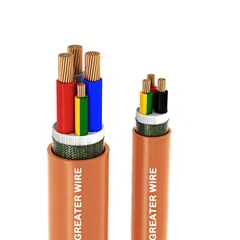
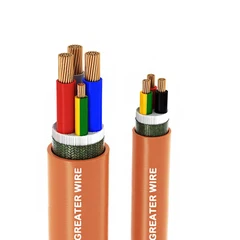

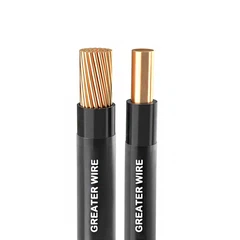
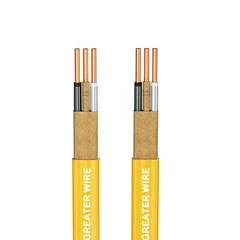
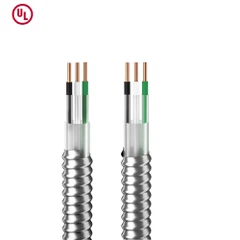
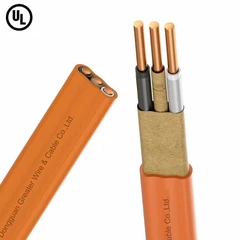
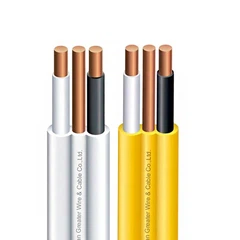
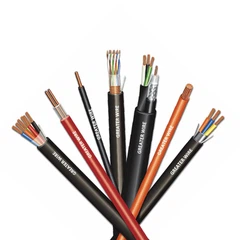
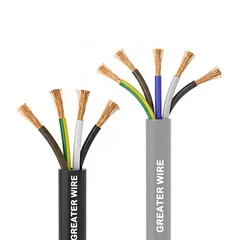
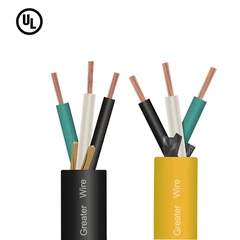
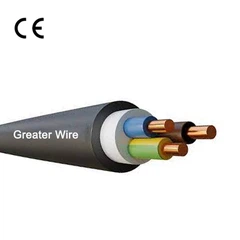

An AC90 cable data sheet is more than a list of conductor sizes and electrical ratings. For electrical contractors, distributors, engineers, and procurement teams, it is an important document for confirming whether a cable matches the project's installation conditions, electrical requirements, and Canadian certification expectations.
Before ordering or installing AC90 cable, contractors should check at least six areas: cable certification and standard, conductor material and size, voltage rating, insulation and temperature rating, armour and bonding construction, and permitted installation environment. They should also verify the manufacturer's product identification and ensure that the data sheet applies to the exact cable being purchased.
A cable that looks suitable based on its AWG size alone may still be unsuitable if its location rating, conductor configuration, or certification does not meet the project specification.

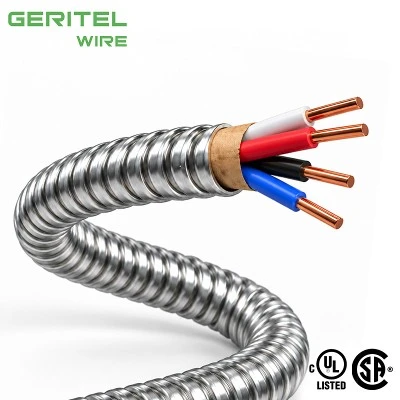
1. Confirm the Cable Type and Applicable Product Standard
Start by checking that the product is actually identified as Type AC90, rather than a similar-looking armoured cable.
CSA C22.2 No. 51 is the Canadian product standard covering armoured cable types including AC90 and ACWU90. The distinction is important: AC90 generally has interlocked metallic armour without an overall jacket, while ACWU90 has an overall jacket. These are different cable constructions with different application considerations.
webstore.ansi.org+1
A data sheet should clearly identify:
Cable type: AC90.
Manufacturer and product series or part number.
Applicable CSA product standard.
Certification or approval information.
The voltage and conductor configurations covered by the product.
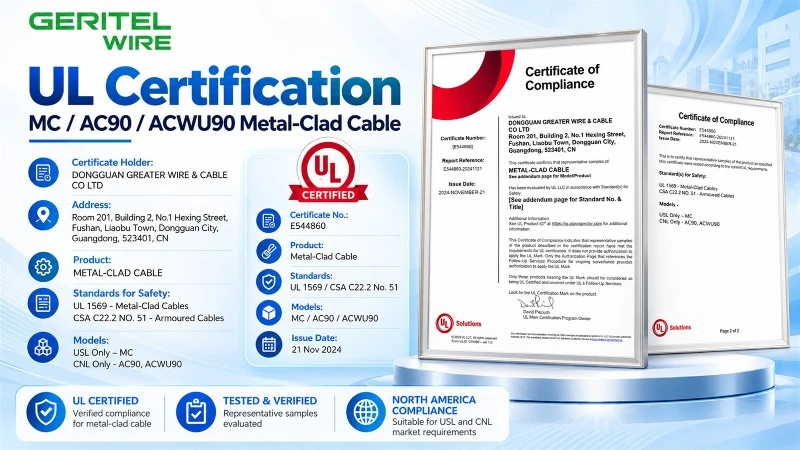
What contractors should verify: The standard reference alone is not proof that the specific cable being purchased is certified. Check the actual product marking, certification mark, and certification scope. If a project requires a specific certification organization, confirm that requirement rather than assuming that every reference to a CSA standard means the product carries a CSA certification mark. Certification marks and their scope matter for approval of electrical products in Canada.
ESA+1
2. Check Conductor Material, Size, and Number of Conductors
The conductor information determines whether the cable can meet the electrical design and connect correctly to the equipment.
|
Data-sheet item |
What to check |
Why it matters |
|---|---|---|
|
Conductor material |
Copper or aluminum |
Affects conductor properties and connector compatibility |
|
Conductor size |
AWG or kcmil |
Must match the engineered circuit and applicable ampacity requirements |
|
Number of conductors |
2C, 3C, or 4C, for example |
Must match the circuit configuration |
|
Conductor stranding |
Solid or stranded; strand class if stated |
Affects termination and handling requirements |
|
Colour identification |
Phase and neutral identification |
Helps ensure correct circuit identification |
|
Bonding conductor |
Material, size, and construction |
Must meet the installation's bonding requirements |
Copper vs. aluminum
Copper and aluminum AC90 cables are not automatically interchangeable simply because they have the same nominal conductor size. The designer must consider the required ampacity, conductor characteristics, termination equipment, and applicable code requirements.
For aluminum conductors, terminals and splicing connectors must be identified as suitable for aluminum conductors. Where copper and aluminum are joined, use connectors specifically rated for that combination and follow the manufacturer's preparation and installation instructions.
Check the bonding conductor separately
Do not overlook the bonding conductor when reviewing a cable data sheet. It is not simply another phase conductor. Its purpose and size are part of the cable's grounding and bonding arrangement.
Confirm its material, size, and whether it is bare or insulated. These details should match the product documentation and the project's bonding design.
3. Verify Voltage Rating and Temperature Rating
Voltage and temperature ratings are among the most visible specifications on an AC90 data sheet, but they must be interpreted correctly.
Voltage rating
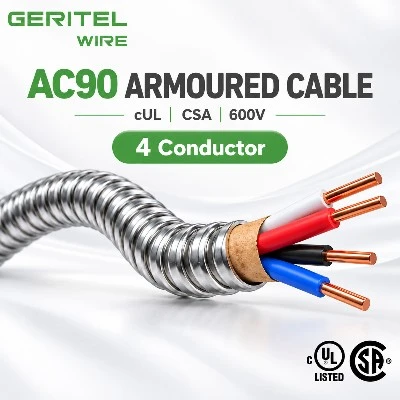
Many common AC90 products are rated 600 V. For example, Nexans lists its AC90 product as 600 V, while GERITEL WIRE's published AC90 product specifications also identify a 600 V rating.
AC90+1
Contractors should check that the cable voltage rating is suitable for the system and project specification. Do not assume that all armoured cables have the same voltage rating.
Temperature rating
A typical AC90 product may have a 90°C conductor insulation temperature rating. However, this does not automatically mean that the circuit can always be sized using the 90°C ampacity column.
Under the 2024 Canadian Electrical Code, Rule 4-004 addresses conductor ampacity, while Rule 4-006 addresses temperature limitations at equipment terminations. The applicable ampacity depends on factors such as conductor material and size, installation conditions, ambient temperature, conductor grouping, and equipment termination ratings.
StudyLib+1
Check the data sheet for:
Maximum conductor operating temperature.
Minimum recommended installation temperature.
Any separate cold-bend or cold-impact ratings.
Whether the insulation rating is specified for dry locations, wet locations, or both.
A 90°C insulation rating is a cable material rating, not a universal permission to use 90°C ampacity at every termination.
4. Review the Insulation and Armour Construction
The construction section tells contractors what the cable is physically made of. It also helps determine whether the cable is compatible with the installation method and accessories.
600V AC90-12/2 X 150m Type AC90 Armored Cable - Electric Cable and AC Bx Cable
m.made-in-china.com
Insulation material
Many AC90 products use cross-linked polyethylene (XLPE) insulation, often identified with the Canadian conductor designation RW90 or XL. However, confirm the actual insulation type in the data sheet rather than assuming all AC90 products use identical materials.
Check:
Insulation material.
Insulation type designation.
Insulation temperature rating.
Insulation thickness, if specified.
Conductor colour identification.
Armour material and type
AC90 commonly uses interlocked aluminum armour, although some product ranges offer galvanized steel interlocked armour.
The data sheet should identify the armour material and construction. This information matters for cable weight, flexibility, handling, connector compatibility, and the installation's mechanical requirements.
Do not assume that aluminum-armoured and steel-armoured versions have identical dimensions or weights.
Bonding conductor construction
Check whether the bonding conductor is bare copper, bare aluminum, or another specified construction. Confirm that its size and configuration are consistent with the exact cable part number.
The data sheet should describe the complete cable assembly, not just the insulated conductors.
5. Confirm Where the Cable Is Actually Permitted to Be Installed
This is one of the most important parts of the data sheet because a cable can have suitable electrical ratings but still be unsuitable for the intended location.
Look for clearly stated application conditions, such as:
Open or exposed wiring.
Concealed wiring.
Cable tray installation.
Dry or wet locations.
Aboveground service entrance.
Ceiling air-handling spaces or environmental plenums, where specifically permitted.
Hazardous locations, where the exact product has the required certification.
Do not treat all AC90 products as having identical location ratings
Manufacturer specifications can differ. For example:
Nexans describes its referenced AC90 product as suitable for open and concealed wiring in dry locations only.
AC90
GERITEL WIRE's published AC90 product page identifies specific applications including cable trays and certain other installation conditions, while specifying its own product construction and ratings.
Greater Wire+1
These examples show why contractors must read the application section of the exact product data sheet. A general AC90 designation does not establish that every product is approved for wet locations, outdoor use, direct burial, or hazardous locations.
If a project requires a particular environment, look for an explicit rating or approval that covers that condition. If the data sheet is unclear, request written confirmation from the manufacturer and verify the applicable code requirements.
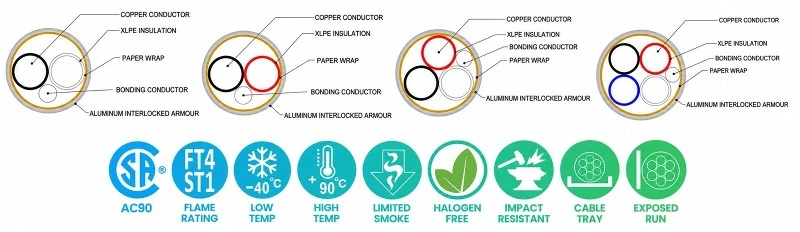
6. Check Flame, Smoke, and Halogen Performance Separately
Some AC90 data sheets include markings such as FT4, ST1, LSZH, or halogen-free. These terms describe different characteristics and should not be treated as interchangeable.
|
Marking or term |
What it indicates |
What it does not automatically establish |
|---|---|---|
|
FT4 |
Compliance with a specified cable flame-spread test |
Fire resistance or circuit integrity during a fire |
|
ST1 |
A limited-smoke classification under the relevant cable test standard |
Zero smoke or zero toxicity |
|
LSZH |
Low-smoke, zero-halogen material or product characteristics, as defined by the applicable specification |
A universal guarantee of low toxicity in every fire condition |
|
Halogen-free |
Halogen content is limited or absent according to the stated test or specification |
Flame performance or fire resistance by itself |
For example, GERITEL WIRE's published AC90 specifications identify CSA C22.2 No. 2556 and FT4-ST1 performance. Nexans also identifies FT4 and ST1 characteristics for its referenced AC90 product.
Greater Wire+1
Contractors should check the exact test standard and product marking. An FT4 rating is not the same as a fire-resistance rating, and it does not mean that a cable can maintain circuit operation during a fire.
If a project specification requires a particular flame or smoke performance, confirm that the exact cable model has been evaluated to the required test.
7. Review Cable Dimensions, Weight, and Installation Limits
Electrical ratings alone do not tell the installer whether the cable can be routed and installed properly.
The physical data is important for cable tray planning, connector selection, pulling calculations, and estimating installation labour.
|
Data-sheet item |
Why contractors need it |
|---|---|
|
Overall cable diameter |
Helps select compatible connectors and plan cable routing |
|
Diameter under armour |
May be relevant to construction and termination details |
|
Cable weight per unit length |
Helps calculate support and handling requirements |
|
Minimum bending radius |
Helps prevent damage during routing |
|
Maximum pulling tension |
Helps avoid excessive force during installation |
|
Installation temperature |
Helps determine whether special cold-weather handling is needed |
|
Reel length and packaging |
Helps plan delivery, pulling, and material quantities |
For example, GERITEL WIRE's published AC90 product information includes cable dimensions, weight, and minimum bending-radius information for listed conductor configurations.
Greater Wire+1
Why minimum bending radius matters
The minimum bending radius is the smallest bend the cable can safely accommodate under the manufacturer's stated conditions.
A cable bent too tightly may experience deformation of the armour, damage to conductor insulation, or stress on the internal assembly.
Do not use a generic bending-radius value for every AC90 cable. Different sizes and constructions can have different requirements.
Why cable weight matters
Cable weight affects how the cable is handled, supported, and installed. Larger conductors and different armour materials can change the overall weight substantially.
Contractors should use the weight listed for the exact cable configuration when planning supports and estimating installation requirements.
8. Check the Ampacity Table Carefully
Some AC90 data sheets include ampacity tables for different conductor sizes and materials. These tables are useful, but they must not be treated as universal allowable-current values.
For example, a manufacturer may provide separate 75°C and 90°C ampacity columns. The correct value for a project depends on the applicable CEC requirements and the actual installation conditions.
Under CEC Rule 4-004, ampacity selection and correction can depend on:
Conductor material and size.
Number of current-carrying conductors.
Ambient temperature.
Installation method and conditions.
Grouping and proximity to other cables.
Applicable ampacity tables and correction factors.
Rule 4-006 also addresses equipment termination temperature limitations. A 90°C insulation rating does not automatically allow the installer to use the 90°C ampacity value at equipment terminals.
StudyLib+1
Practical advice: Treat the manufacturer's ampacity table as product information, not a substitute for the circuit ampacity calculation required by the locally adopted CEC.
9. Verify the Exact Product Certification and Cable Marking
A data sheet may list CSA standards, certification marks, flame-test standards, and other compliance claims. Contractors should distinguish between a standard reference and evidence that the exact product is certified.
For example:
CSA C22.2 No. 51 is the Canadian product standard for armoured cables, including AC90 and ACWU90 constructions.
CSA C22.2 No. 38 covers thermoset-insulated wires and cables, which may be relevant to the insulation used in a particular product.
CSA C22.2 No. 2556 addresses electrical cables and their associated test requirements, including specified flame and smoke classifications.
webstore.ansi.org+1
The edition of a standard can also matter. CSA C22.2 No. 51:26 was published in 2026 and supersedes the 2020 edition. A data sheet may reference an earlier edition or simply identify the standard number without an edition. Contractors should check the project specification and confirm the applicable certification basis with the manufacturer or certification body.
Intertek Inform+1
Before approving a product, request or verify:
The complete product data sheet and part number.
The certification mark appearing on the product or packaging.
The certification file or listing information, where applicable.
The exact cable type, conductor sizes, and construction covered by the certification.
Any additional approvals required by the project or local authority.
A manufacturer's statement that a cable is "designed to meet" a standard should not automatically be treated as equivalent to third-party product certification.

10. A Practical AC90 Data Sheet Review Checklist
Contractors can use this checklist when reviewing a proposed AC90 cable before ordering or approving it for installation.
AC90 data sheet review
0/15 checked
Cable is clearly identified as Type AC90
Manufacturer, product series, and part number are confirmed
Applicable CSA product standard and certification are verified
Conductor material and size match the design
Number of conductors and colour identification are suitable
Bonding conductor material and size are confirmed
Voltage rating meets the project requirement
Insulation type and temperature rating are suitable
Armour material and construction are confirmed
Dry/wet-location and other application limits are checked
Flame and smoke ratings meet project specifications, if required
Overall diameter and cable weight are suitable
Minimum bending radius and pulling limits are reviewed
Ampacity is checked against the applicable CEC rules and installation conditions
Cable marking and certification documentation match the supplied product
Reset checklist
If any critical item is missing or unclear, do not assume that the product meets the project specification. Ask the manufacturer for clarification before placing the order.
Conclusion
A complete AC90 cable data sheet helps contractors confirm more than conductor size and voltage rating. It provides essential information about conductor material, insulation, bonding conductor, armour construction, installation environment, physical dimensions, ampacity, and product certification.
The most important practice is to review the exact product configuration and its stated application limits. Similar-looking AC90 cables from different manufacturers may have different construction details, environmental ratings, dimensions, and approvals. Contractors should also distinguish between cable product standards, certification evidence, and Canadian Electrical Code installation requirements.
By checking these details before procurement and installation, electrical professionals can reduce specification errors, avoid unsuitable substitutions, and select AC90 cable that matches the actual project requirements.
GERITEL WIRE: AC90 Cable Solutions for Your Project
Choosing the right AC90 cable starts with understanding its construction, electrical ratings, certification, and installation requirements. GERITEL WIRE supplies AC90 armoured cable solutions for Canadian commercial and industrial electrical applications, serving electrical distributors, contractors, OEM manufacturers, and procurement teams. Our product options include different conductor materials, sizes, and cable configurations to support a range of project specifications. Whether you are comparing cable data sheets or sourcing AC90 for an upcoming installation, our team can help you review product details and identify suitable options. Contact GERITEL WIRE with your technical requirements and quantity to discuss your project and request a quotation.
Dongguan Greater Wire & Cable Co., Ltd.
Tel/WhatsApp/Wechat: +86 136 6257 9592
Tel/WhatsApp/Wechat: +86 135 1078 4550
Email: manager01@greaterwire.com
Website: www.greaterwire.com