

























2. Compliance of MC cables with IEC standards
MC cables were initially widely used in the North American market, with their design primarily complying with the National Electrical Code (NEC) and Canadian Electrical Code (CEC), particularly UL 1569 certification. Therefore, whether MC cables comply with IEC standards requires a specific analysis of their design and testing standards.
1. Conductor compliance
According to IEC 60228, if the conductor of MC cable adopts the resistivity and size specified by IEC, it can meet the IEC standard. However, the conductors of most MC cables are produced according to the AWG (American Wire Gauge) standard, while IEC uses square millimeters (mm ²) as the unit, and there are some differences between the two.
2. Insulation and sheath materials
IEC 60502-1 has specific requirements for the thickness and temperature resistance of cable insulation materials (such as XLPE, PVC). Generally speaking, the insulation material of MC cables can meet this standard, but specific testing is required.
3. Fire resistance and low smoke characteristics
Standard MC cables typically use PVC insulation, while IEC 60332, IEC 60754, and IEC 61034 require cables to have good flame resistance and low smoke halogen-free characteristics in the event of a fire. If the sheath and insulation of MC cables are not specifically designed for low smoke and halogen-free, they may not meet these standards.
4. Mechanical protection performance
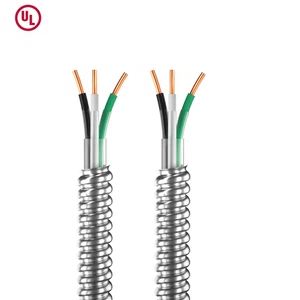
The metal sheath of MC cables provides additional mechanical protection, while IEC 60502 allows the use of armored cables. At this point, MC cables such as 12 2 armed wire, 4 wire MC cable, and 12 4 armed cable may comply with the requirements of IEC 60502.


3. The Application of MC Cable and the Importance of IEC Certification
Although MC cables are mainly designed according to UL 1569 and NEC 330 standards, some MC cable manufacturers also make their products comply with IEC standards in order to adapt to the international market. Here are several key application scenarios:
1.North American market: MC cables are widely used in commercial, industrial, and residential wiring and comply with NEC specifications.
2.European market: Due to the influence of standards such as IEC 60228 and IEC 60502-1, MC cables may need to adjust specifications or obtain additional certification.
3.Petroleum and chemical industry: In certain application scenarios required by IEC 60079 (explosion-proof cables), MC cables may require additional certification.
4.Rail transit and data centers: IEC 60332 and IEC 60754 low smoke and halogen-free standards are particularly important in these scenarios, and MC cables need to meet additional requirements.


MC cables have matured in the North American market and comply with UL 1569 and NEC 330 regulations. However, under the IEC system, the compliance of MC cables requires specific analysis:
Conductor size: If it complies with IEC 60228, it is compatible.
Insulation material: XLPE insulation can meet the requirements of IEC 60502-1.
Fire resistance and low smoke halogen-free performance: Standard MC cables may not comply with IEC 60332 IEC 60754,IEC 61034, But some models can meet the standard.
Mechanical protection: The metal sheath meets the relevant requirements of IEC 60502.
Therefore, MC cables are not completely non compliant with IEC standards, but require the selection of appropriate models based on specific application scenarios and standard requirements. For projects that require compliance with IEC standards, MC cables with corresponding IEC certification should be selected, or armored cables that comply with IEC 60502-1 and IEC 60332 should be considered.
In short, in the international market, companies and engineers should carefully compare the specific requirements of UL certification and IEC standards when choosing MC cables to ensure compliance and safety.

