



Basic Concept of Cable Flexibility
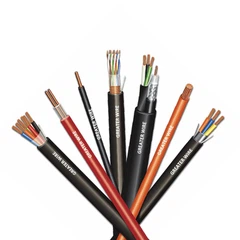
Cable flexibility generally refers to the ability of a cable to withstand bending, twisting, and repeated movement without suffering structural damage or performance degradation. A highly flexible cable can maintain mechanical and electrical stability even under small bending radii, reducing the risk of conductor breakage, insulation cracking, and premature failure. The arrangement of core wires plays a crucial role in determining how internal stresses are distributed within the cable, thereby exerting a significant influence on overall flexibility.

Common Core Wire Arrangements and Their Structural Characteristics
Parallel Arrangement
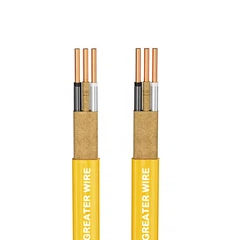
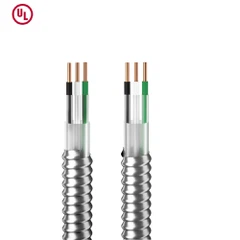
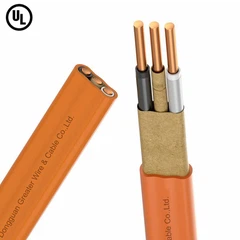
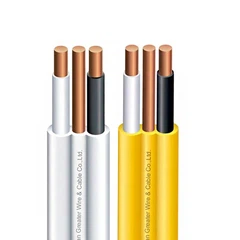
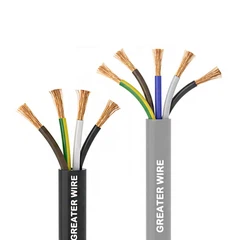
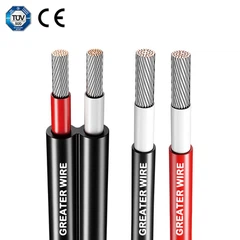
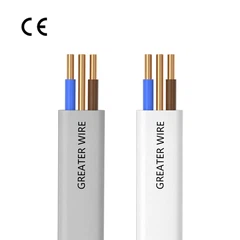
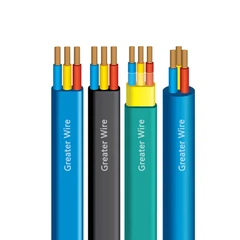
The parallel arrangement is the simplest form of core wire layout, where multiple conductors are placed side by side in the same direction. This structure is commonly found in flat cables and ribbon cables. Its advantages include a clear structure, simple manufacturing process, and controllable thickness, making it suitable for installations in confined spaces. However, during bending, the outer conductors experience significantly greater tensile stress than the inner ones, leading to uneven stress distribution. As a result, cables with parallel core arrangements generally exhibit limited flexibility and are more prone to fatigue damage under repeated bending conditions.
Twisted Arrangement
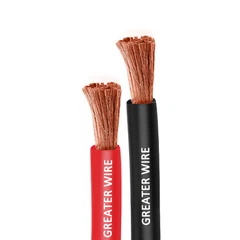
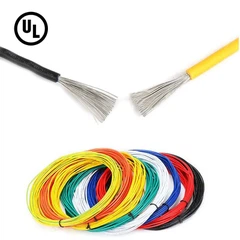
In a twisted arrangement, multiple core wires are helically twisted around one another with a defined lay length. This is the most widely used core wire arrangement in cable manufacturing. Twisting allows the core wires to alternately occupy different stress positions during bending and stretching, effectively dispersing mechanical stress. This significantly improves cable flexibility and extends service life. A shorter twisting pitch usually results in more uniform stress distribution and better flexibility, although it also increases manufacturing complexity and cost.
Concentric Layer Stranding
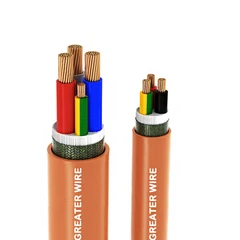
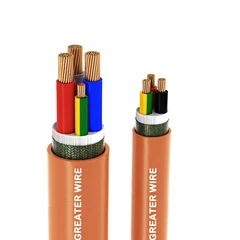
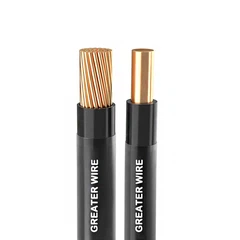
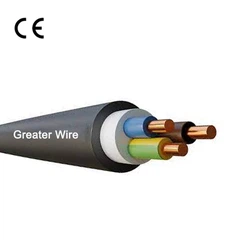
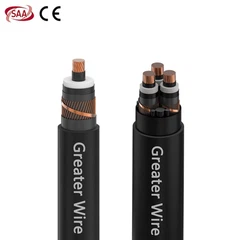
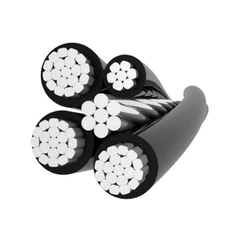
Concentric layer stranding involves arranging core wires in multiple layers around a central conductor in a symmetrical pattern. The number of wires and the twisting direction of each layer are carefully designed to maintain a round and stable structure. This arrangement provides good flexibility while also enhancing mechanical stability. It is widely used in medium- and high-grade power cables and control cables. Compared with simple twisting, concentric layer stranding offers superior resistance to torsion and better long-term reliability under repeated bending conditions.
Bunch Stranding and Composite Stranding
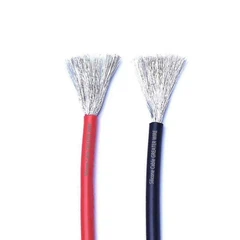
Bunch stranding refers to twisting multiple fine conductors into small bundles, which are then twisted together to form the final cable core. Composite stranding combines different stranding methods, such as varying lay lengths or twisting directions within the same cable. These advanced structures achieve high flexibility while improving fatigue resistance. They are particularly suitable for high-dynamic applications such as robotic cables, drag chain cables, and other continuously moving systems.

Mechanisms by Which Core Wire Arrangement Affects Flexibility
From a mechanical perspective, bending a cable generates tensile stress on the outer side and compressive stress on the inner side of the bend. A well-designed core wire arrangement ensures that these stresses are evenly distributed among the conductors, minimizing localized stress concentration. Twisted structures enable a "position rotation effect," whereby no single conductor remains in the highest-stress position for extended periods, thereby delaying metal fatigue. In addition, sufficient relative movement space between core wires reduces internal friction and energy loss, further enhancing cable flexibility.

Typical Application Scenarios of Different Core Wire Arrangements
Fixed Installation Applications
In fixed installation scenarios such as building wiring and power transmission systems, cables are typically installed once and experience little to no movement during operation. Flexibility requirements in these applications are relatively low. As a result, parallel arrangements or standard twisted structures are commonly used to reduce cost while meeting basic performance requirements.
Semi-Dynamic Applications
Semi-dynamic applications include internal wiring of industrial equipment and connections within control cabinets, where cables require a certain degree of bending capability but are not subjected to continuous motion. In such cases, concentric layer stranding or medium-pitch twisted structures are often selected to achieve a balance between flexibility, mechanical stability, and durability.
High-Dynamic Applications
In high-dynamic environments such as industrial robots, automated production lines, drag chain systems, and medical equipment, cables are exposed to long-term, high-frequency bending and torsional movements. These applications demand exceptional flexibility and fatigue resistance. Bunch-stranded or composite-stranded structures are typically employed, often in combination with highly flexible insulation and sheath materials, to ensure long service life and high reliability.

Comprehensive Considerations in Cable Design and Selection
In practical engineering applications, core wire arrangement should not be considered in isolation. It must be coordinated with factors such as conductor cross-sectional area, single-wire diameter, insulation thickness, and sheath structure. The combined use of fine conductors, multi-strand twisting, optimized lay lengths, and symmetrical designs enables cables to achieve optimal flexibility while maintaining required electrical performance. Therefore, during cable design and selection, engineers should carefully evaluate the specific application environment, motion characteristics, and service life requirements to determine the most appropriate core wire arrangement.


Core wire arrangement is a critical structural factor that determines cable flexibility. Parallel arrangements are simple but offer limited flexibility; twisted arrangements significantly enhance flexibility by dispersing mechanical stress; concentric layer stranding provides a strong balance between flexibility and structural stability; and bunch stranding and composite stranding are ideal solutions for applications requiring high flexibility and high reliability. With the rapid development of industrial automation and intelligent manufacturing, the demand for flexible cables continues to grow, making the rational design of core wire arrangements increasingly important in the future evolution of cable technology.
At Dongguan Greater Wire & Cable Co., Ltd., we understand that choosing the right wire and cable solutions is critical to the success and safety of your projects.
Our experienced pre-sales and after-sales teams provide:
Professional technical consultation
Accurate product selection and application guidance
Fast and responsive support throughout the entire project lifecycle
Whether you are working on small-scale installations or large industrial projects, we are committed to delivering reliable solutions and practical support tailored to your specific requirements.
Contact Us
Dongguan Greater Wire & Cable Co., Ltd.
📞 Tel / WhatsApp / WeChat
+86 135 1078 4550
+86 136 6257 9592
📧 Email
manager01@greaterwire.com
We look forward to supporting your next project with quality products, technical expertise, and dependable service.