

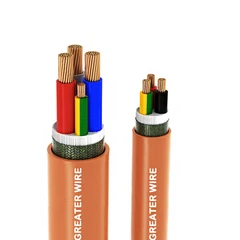
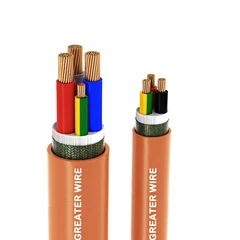

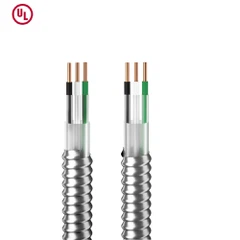
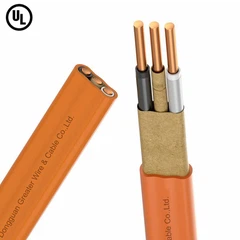
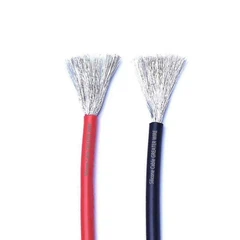
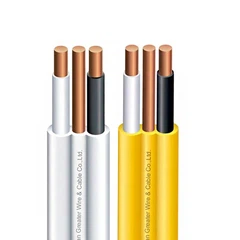
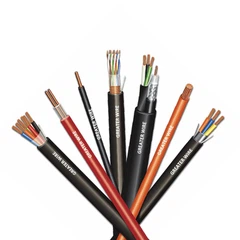
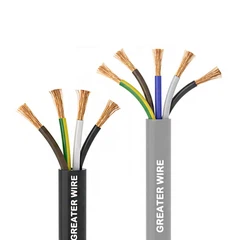
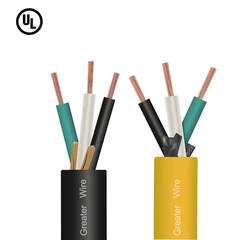
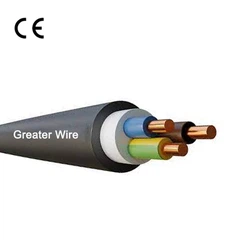

As automation, robotics, and high-speed signal systems continue to evolve, multi-core flexible cable designs are increasingly used to transmit power, control signals, and data within a single cable assembly. While this integration improves installation efficiency and space utilization, it also introduces a key technical challenge: crosstalk between adjacent cores.
Crosstalk can degrade signal quality, cause data errors, and compromise system reliability-especially in applications involving high-frequency or low-level control signals. This article explains the root causes of crosstalk in a flexible cable, the engineering methods used to control it, and how to select the right cable for specific applications.

Understanding Crosstalk in Flexible Cables
Crosstalk refers to unwanted electromagnetic coupling between adjacent conductors within the same cable. It typically occurs in two forms:
Capacitive coupling, caused by electric fields between conductors
Inductive coupling, caused by changing magnetic fields
In a multi-core flexible cable, frequent movement and bending can slightly alter conductor spacing, increasing the risk of crosstalk if the cable is not properly designed.

Importance of Crosstalk Control in Multi-Core Flexible Cables
Effective crosstalk control is critical for applications where:
Signal accuracy is essential
Control commands must be transmitted reliably
Multiple signal types coexist in one cable
Without proper control, even minor interference can result in unstable system behavior.

Conductor Arrangement and Twisting Techniques
Twisted Pair Structures
Twisting conductor pairs helps cancel electromagnetic fields.
Benefits:
Reduces both capacitive and inductive coupling
Improves noise immunity
Applications:
Encoder signals
Industrial communication lines
Twisted pair design is one of the most effective crosstalk control methods in a flexible cable.
Controlled Core Spacing
Maintaining consistent spacing between cores minimizes electric field interaction.
Design Measures:
Precision stranding
Use of fillers or separators
Stable geometry is especially important in dynamic applications.

Shielding Methods
Individual Core or Pair Shielding
Each signal core or pair can be shielded independently.
Advantages:
Maximum isolation between signals
Ideal for mixed signal types
Applications:
High-frequency data transmission
Sensitive analog signals
Overall Shielding
An overall foil or braided shield protects all cores collectively.
Advantages:
Cost-effective
Protects against external EMI
Limitations:
Less effective for internal crosstalk than individual shielding
Combined Shielding Structures
Foil + braid shielding combines high-frequency and mechanical protection.
This approach is common in high-performance flexible cable designs.

Insulation Material Selection
Low-Dielectric Insulation
Insulation materials with low dielectric constants reduce capacitive coupling.
Common Materials:
PE and foamed PE
TPE and elastomer compounds
These materials are particularly effective in high-frequency flexible cable applications.
Stable Dielectric Performance Under Movement
Flexible insulation must maintain electrical properties during repeated bending to prevent crosstalk variation.

Separation of Signal Types Within the Cable
In multi-core flexible cables carrying mixed signals:
Power and signal cores should be physically separated
Sensitive signals should be placed at the center of the cable
Power cores should be arranged symmetrically around them
This structural strategy significantly reduces interference.

Cable Geometry and Mechanical Stability
A symmetrical and round cable structure ensures:
Uniform stress distribution
Stable conductor positioning during motion
Mechanical stability directly contributes to consistent crosstalk control.

Typical Application Scenarios
Industrial Automation and Robotics
Multi-core flexible cables carry power, control, and feedback signals in moving systems.
Drag Chain Systems
Continuous motion requires stable conductor geometry and shielding.
Machine Vision and Sensors
High-frequency data lines require strict crosstalk control.
Medical Equipment
Low-noise signal transmission is essential for accurate diagnostics.

Applicable Regions and Standards
Europe
High demand for low-crosstalk flexible cable solutions
Compliance with IEC and EN standards
North America
Emphasis on signal integrity in industrial and data systems
Asia-Pacific
Rapid growth in automation and electronics manufacturing

How Should Choose the Right Flexible Cable?
To effectively control crosstalk, customers should consider:
Signal types and frequencies
Need for twisted pair or individual shielding
Movement conditions (static vs. continuous motion)
Environmental factors
Applicable regional standards
Choosing a flexible cable designed specifically for signal integrity reduces long-term risk and maintenance costs.


Crosstalk control in a multi-core flexible cable is achieved through:
Optimized conductor arrangement
Twisted pair design
Effective shielding strategies
Appropriate insulation materials
Stable mechanical construction
Applicable Regions
Europe
North America
Asia-Pacific and global markets
Recommendation
Please select multi-core flexible cables based on signal sensitivity, frequency, motion requirements, and regional standards to ensure reliable performance in complex systems.
At Dongguan Greater Wire & Cable Co., Ltd., we understand that choosing the right wire and cable solutions is critical to the success and safety of your projects.
Our experienced pre-sales and after-sales teams provide:
Professional technical consultation
Accurate product selection and application guidance
Fast and responsive support throughout the entire project lifecycle
Whether you are working on small-scale installations or large industrial projects, we are committed to delivering reliable solutions and practical support tailored to your specific requirements.
Contact Us
Dongguan Greater Wire & Cable Co., Ltd.
📞 Tel / WhatsApp / WeChat
+86 135 1078 4550
+86 136 6257 9592
📧 Email
manager01@greaterwire.com
We look forward to supporting your next project with quality products, technical expertise, and dependable service.