

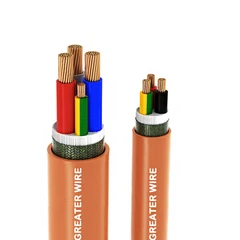
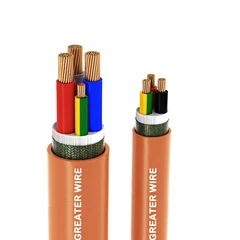

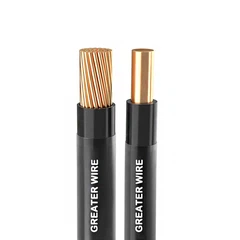
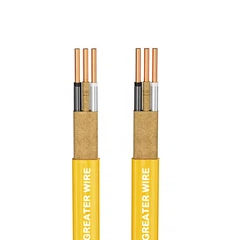
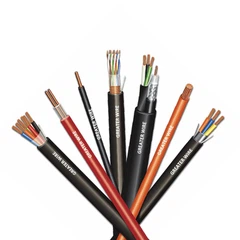
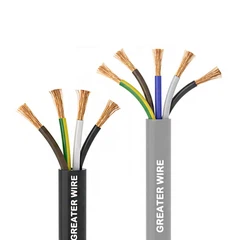
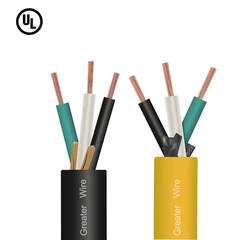
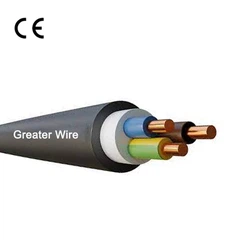
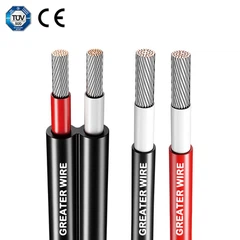

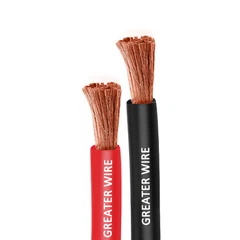
Cable tray systems and industrial machine tool wiring account for most heavy-duty XHHW-2 wire applications in manufacturing plants, metalworking workshops and automated production lines. Unlike simple indoor branch circuits, these two scenarios face tight bundling, continuous motor load vibration, heat buildup and strict NEC sizing limitations under NEC Article 310. Many installers pick the wrong strand construction, incorrect AWG gauge or unapproved conductor material, leading to overheating, loose terminals and failed electrical inspections.
This technical guide focuses on core practical products and code rules. We break down usage rules for 8 AWG Copper XHHW-2 Wire, 6 AWG Copper XHHW-2 Wire, dedicated Copper XHHW-2 Wire for Machine Tool Wiring, tray-rated Copper XHHW-2 Wire for Cable Tray, flexible Class B Stranded Copper XHHW-2 Wire, compact pull-friendly Class C Stranded Copper XHHW-2 Wire, and code-regulated NEC Article 310 AA8000 Aluminum XHHW-2 Wire. We also clarify strand type differences, tray fill limits, machine vibration resistance, and key copper-aluminum sizing gaps required by NEC 310.

1. Core Code Foundation: NEC Article 310 Governs All XHHW-2 Wiring
NEC Article 310 sets uniform ampacity tables, sizing deration, conductor material rules and installation limits for every XHHW-2 wire used in cable trays and machine tool circuits.
All copper XHHW-2 wire including Class B and Class C stranded types follows the 90°C ampacity table of NEC 310.15(B)(16).
NEC Article 310 AA8000 Aluminum XHHW-2 Wire has separate ampacity values; installers must upsize aluminum wire 2–4 AWG to match the current capacity of equivalent copper wire.
Any wire bundled densely in cable trays or running continuous motor loads requires mandatory ampacity deration per NEC 310 temperature and bundling factors, whether copper or AA8000 aluminum.
2. Class B vs Class C Stranded Copper XHHW-2 Wire: Key Differences for Tray & Machine Use
Strand construction directly impacts conduit pulling, vibration resistance and terminal crimp performance, the two most common options for industrial wiring:
2.1 Class B Stranded Copper XHHW-2 Wire
Class B Stranded Copper XHHW-2 Wire is standard multi-strand building wire with moderate flexibility.
Advantages: Low cost, widely stocked, good rigidity for straight cable tray horizontal runs, stable crimp on standard lugs.
Best fit: Long straight cable tray distribution branches, static power feeders with little movement.
Limitation: Not ideal for frequent vibration near machine motors; repeated flex will fatigue conductors faster.
2.2 Class C Stranded Copper XHHW-2 Wire
Class C Stranded Copper XHHW-2 Wire uses extra fine compacted strands for superior flexibility.
Advantages: Excellent vibration resistance, tight bend radius for machine tool connection elbows, easier pulling through multiple tray offsets and conduit bends.
Best fit: Copper XHHW-2 Wire for Machine Tool Wiring, vertical tray risers with many directional changes, equipment jumpers between fixed cabinets and moving machinery.
Shared specs with Class B: Same 90°C wet/dry rating, identical ampacity for the same AWG size, fully approved as Copper XHHW-2 Wire for Cable Tray.

3. Common Copper Gauges for Industrial Layouts: 6 AWG & 8 AWG
3.1 8 AWG Copper XHHW-2 Wire
8 AWG Copper XHHW-2 Wire carries 40A base ampacity at 90°C, the go-to medium-small gauge for auxiliary machine power and secondary tray branches.
Machine tool use: Small conveyor motors, hydraulic pump power, control cabinet auxiliary feeds.
Cable tray use: Secondary distribution branches running short to medium distances.
Available in both Class B and Class C stranded versions; pick Class C for vibrating machine connections.
3.2 6 AWG Copper XHHW-2 Wire
6 AWG Copper XHHW-2 Wire offers 55A baseline ampacity for heavier continuous industrial loads.
Machine tool use: Main spindle motors, large air compressors, multi-axis machine main power feeds, core application for Copper XHHW-2 Wire for Machine Tool Wiring.
Cable tray use: Primary sub-panel feeders running long horizontal tray spans across workshop floors.
Ideal for densely bundled tray sections; higher ampacity reserve offsets deration from multiple grouped conductors.
4. Specialized Application Wire Types
4.1 Copper XHHW-2 Wire for Cable Tray
Copper XHHW-2 Wire for Cable Tray is CT-rated per UL 1685, certified for mass bundled open tray installation under NEC Article 392 and NEC Article 310.
Eligible gauges cover 6 AWG Copper XHHW-2 Wire, 8 AWG Copper XHHW-2 Wire, plus larger feeder sizes.
Both Class B Stranded Copper XHHW-2 Wire and Class C Stranded Copper XHHW-2 Wire are CT tray qualified.
Must follow tray fill ratio limits and ampacity deration when grouping more than three current-carrying conductors.
4.2 Copper XHHW-2 Wire for Machine Tool Wiring
Copper XHHW-2 Wire for Machine Tool Wiring prioritizes vibration resistance and tight bending performance.
Standard choice: Class C Stranded Copper XHHW-2 Wire in 6 AWG and 8 AWG sizes to handle motor vibration and frequent equipment servicing disconnections.
Environmental rating: 90°C wet/dry XLPE insulation resists machine oil mist, coolant spray and factory dust.
Code note: When running machine power wire inside cable trays, it still complies with all rules for Copper XHHW-2 Wire for Cable Tray.
5. NEC Article 310 AA8000 Aluminum XHHW-2 Wire: Tray & Machine Limitations
NEC Article 310 AA8000 Aluminum XHHW-2 Wire is permitted for cable tray distribution feeders but has strict restrictions for machine tool wiring.
Sizing rule: For circuits that use 8 AWG Copper XHHW-2 Wire, upgrade to 4 AWG AA8000 aluminum; circuits requiring 6 AWG copper need 2 AWG aluminum to match ampacity.
Tray suitability: Cost-effective for long static main tray feeders with no vibration.
Machine tool restriction: Not recommended for Copper XHHW-2 Wire for Machine Tool Wiring applications. Aluminum alloy suffers accelerated terminal loosening under continuous motor vibration, even with bi-metal lugs.
Deration impact: Aluminum loses ampacity faster when bundled in cable trays, requiring an extra gauge upgrade beyond standard copper-to-aluminum upsizing.

6. Step-by-Step Selection Guide
Step 1: Identify installation type
Fixed straight cable tray branches: Choose Class B Stranded Copper XHHW-2 Wire
Machine tool power jumpers / multi-bend tray runs: Choose Class C Stranded Copper XHHW-2 Wire
Budget long static tray mains only: Consider NEC Article 310 AA8000 Aluminum XHHW-2 Wire
Step 2: Calculate load ampacity and pick gauge
30–40A auxiliary machine / secondary tray runs: Select 8 AWG Copper XHHW-2 Wire
40–55A main machine / primary sub-panel tray feeders: Select 6 AWG Copper XHHW-2 Wire
Step 3: Confirm certification matching location
Open metal tray layouts: Verify CT marking for Copper XHHW-2 Wire for Cable Tray
Machine motor connection points: Specify flexible Class C Copper XHHW-2 Wire for Copper XHHW-2 Wire for Machine Tool Wiring
Step 4: Adjust size for deration and conductor material
Multiple bundled wires in tray: Upsize copper wire one gauge
Switching to AA8000 aluminum: Upsize minimum two gauges per NEC Article 310 standards
7. Common Installation Mistakes to Avoid
Using rigid Class B Stranded Copper XHHW-2 Wire as Copper XHHW-2 Wire for Machine Tool Wiring, leading to cracked conductors from vibration fatigue.
Installing unrated wire in open trays instead of dedicated Copper XHHW-2 Wire for Cable Tray, violating NEC Article 392.
Replacing 6 AWG Copper XHHW-2 Wire with identical 6 AWG NEC Article 310 AA8000 Aluminum XHHW-2 Wire without upsizing, creating dangerous overheating.
Skipping ampacity deration when grouping multiple 8 AWG Copper XHHW-2 Wire inside a single cable tray.
Deploying AA8000 aluminum wire on machine spindle power circuits where constant vibration loosens aluminum terminals.
Conclusion
Designing safe, code-compliant cable tray and machine tool wiring starts with matching strand construction, wire gauge and conductor material to site conditions. For medium industrial motor and distribution loads, 6 AWG Copper XHHW-2 Wire and 8 AWG Copper XHHW-2 Wire are the most widely deployed sizes. Pick rigid Class B Stranded Copper XHHW-2 Wire for straight static tray runs, and flexible Class C Stranded Copper XHHW-2 Wire as reliable Copper XHHW-2 Wire for Machine Tool Wiring. All copper variants carry full CT certification as Copper XHHW-2 Wire for Cable Tray. If cost reduction is needed for long static trunk lines, follow sizing rules outlined in NEC Article 310 AA8000 Aluminum XHHW-2 Wire, but avoid aluminum on vibrating machine equipment circuits. Always apply NEC Article 310 ampacity deration and copper-aluminum gauge conversion rules to pass all electrical inspections.
Professional XHHW-2 Wire Manufacturer for Tray & Machine Tool Projects | Dongguan Greater Wire & Cable Co., Ltd.
We produce full-range copper and AA8000 aluminum XHHW-2 wire compliant with NEC Article 310 for industrial tray and machine wiring. Our copper stock includes 8 AWG Copper XHHW-2 Wire, 6 AWG Copper XHHW-2 Wire, flexible Class C Stranded Copper XHHW-2 Wire, standard rigid Class B Stranded Copper XHHW-2 Wire, CT-listed Copper XHHW-2 Wire for Cable Tray, and vibration-resistant Copper XHHW-2 Wire for Machine Tool Wiring. We also supply code-certified NEC Article 310 AA8000 Aluminum XHHW-2 Wire for static bulk distribution feeders. Free ampacity tables, strand selection guides and full UL certification documents available for North American electrical contractors.
Contact Us
Tel/WhatsApp/Wechat: +86 136 6257 9592
Tel/WhatsApp/Wechat: +86 135 1078 4550
Email: manager01@greaterwire.com
Website: www.greaterwire.com