

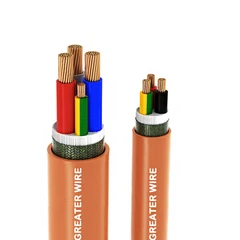
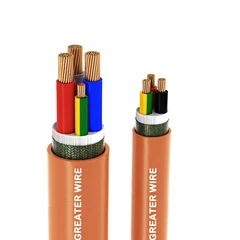

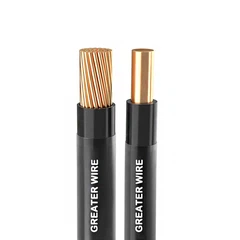
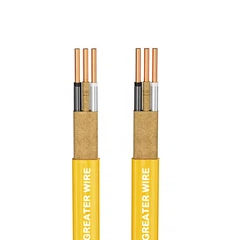
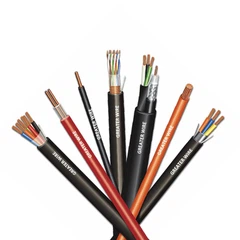
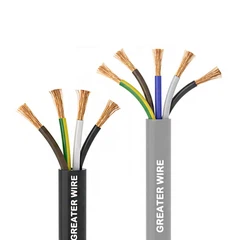
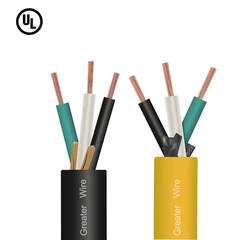
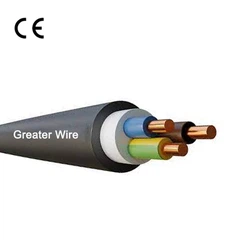
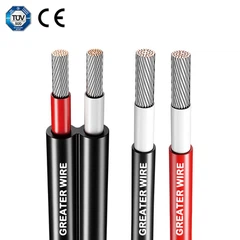

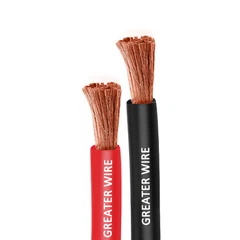
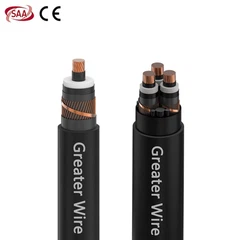
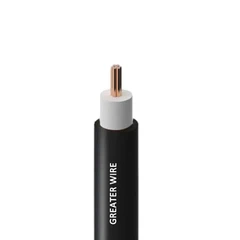
For electrical contractors and commercial construction subcontractors, conduit wiring performance doesn't just affect installation speed - it determines long-term callback costs and client satisfaction. Many teams default to low-cost building wire for raceway projects, only to encounter hidden insulation damage, chronic overheating issues and premature failure in underground concrete-encased runs. Designed explicitly for conduit and raceway applications, XHHW/XHHW-2 Wire for Conduit addresses the most frequent field pain points for both indoor commercial installations and underground infrastructure projects. Below we break down its field-proven benefits, size-specific use cases and code-aligned installation best practices.

1. Three Hidden Costs of Poor Conduit Wire Selection on Commercial Projects
Standard building wires work for short, simple runs, but they create consistent, unbudgeted costs on commercial jobs with long conduit paths, bundled conductors or underground placement.
1.1 Slow Pull Speeds and Hidden Insulation Damage on Extended Runs
Rigid conductors with rough insulation jackets create excessive drag during pulls through 100+ foot conduit runs, particularly routes with multiple 90-degree bends. This adds unplanned labor hours to every run, and more importantly, it often leaves micro-scratches and abrasions on the insulation that go undetected during visual inspections. These hidden defects degrade over time, leading to premature circuit failure and costly warranty callbacks long after the project is handed over.
1.2 Accelerated Aging and Nuisance Trips in Bundled Sealed Conduits
When multiple current-carrying conductors are routed together in a sealed raceway, heat has limited ability to dissipate. Conductors rated for 75°C quickly exceed their thermal threshold under sustained full load, which speeds up insulation breakdown and causes unexpected breaker trips. This issue is rarely accounted for in initial design, and fixing it after occupancy requires tearing out finished walls and disrupting business operations - an extremely expensive rework scenario.
1.3 Premature Breakdown from Moisture in Underground Conduit Runs
Even properly sealed underground conduit will eventually see condensation buildup and occasional water intrusion over its service life. Wire that is only rated for dry locations deteriorates rapidly when exposed to consistent moisture, causing ground faults and short circuits. Repairs to underground conduit wiring involve concrete demolition and extended power outages, making it one of the priciest service calls for facility maintenance teams.
2. How XHHW-2 Conduit Wire Delivers Better Field Performance and Lower Lifetime Costs
Built with XLPE thermoset insulation and flexible stranded copper construction, XHHW-2 conduit wire is purpose-built to resolve the exact issues above. Its advantages translate directly to faster installation, fewer defects and lower long-term ownership costs.
2.1 Low-Friction XLPE Insulation Cuts Pull Time and Reduces Abrasion Failures
The smooth, uniform XLPE insulation jacket creates significantly less friction against conduit walls compared to standard PVC/nylon constructions. This allows crews to pull longer runs with less force and fewer passes, even through sections with multiple elbows. Most importantly, the durable XLPE surface resists scuffing and nicking during installation, drastically reducing the number of hidden insulation defects that cause post-occupancy failures. For large commercial bids, this translates to faster project completion and fewer warranty callbacks.
2.2 90°C Continuous Rating Provides a Critical Safety Buffer for Bundled Conductors
With a 90°C continuous operating temperature rating, XHHW-2 has a far wider thermal safety margin than 75°C alternatives when installed in bundled sealed raceways. It can tolerate the natural heat buildup of multi-conductor runs without accelerated insulation degradation, lowering the risk of overheating failures and unplanned outages for facility owners. This higher base rating also gives engineers more headroom when applying ampacity derating factors for bundled circuits.
2.3 Wet-Location Construction Withstands Underground Moisture Intrusion
As a reliable wet location conduit wire, XHHW-2 features XLPE insulation that is inherently resistant to moisture absorption. It holds up to the condensation and periodic water seepage common in underground conduit wire installations, without the rapid insulation breakdown that plagues dry-only conductors. This long-term moisture resilience makes it the preferred specification for concrete-encased underground feeder circuits.
2.4 Flexible Stranded Copper Navigates Tight Bends Without Kinking
Flexible stranded copper conductors bend cleanly around conduit elbows and sharp angles, without kinking or jamming mid-pull. This flexibility is especially valuable on retrofit projects with existing raceway wire routes that have unforeseen bends or irregular layouts, cutting down on the number of stuck pulls that require rework and schedule delays.

3. Size-by-Size Specification Guide for Indoor and Underground Conduit Projects
Selecting the right conductor size for each application balances performance, material cost and code compliance. Below are the most widely used specifications for commercial and underground conduit work.
3.1 Indoor Commercial Conduit Installations
For standard branch circuits, lighting feeders and small distribution runs in commercial buildings, 6 AWG XHHW-2 and 4 AWG XHHW-2 are the go-to specifications, covering the majority of 600V low-voltage distribution requirements. For larger main feeder runs between distribution panels, 1/0 AWG XHHW-2 provides the current capacity needed for mid-sized commercial building loads.
Key Specification Reminder: Always calculate conduit fill percentage strictly in accordance with NEC Chapter 9 Tables, and apply required ampacity derating when 3 or more current-carrying conductors share a single conduit. Excessive fill does more than make pulling difficult - it creates a serious overheating hazard that compromises both safety and service life.
3.2 Underground Concrete-Encased Conduit Applications
For underground service entrances and site distribution circuits encased in concrete, moisture resistance and pullability are the top performance priorities. 250 kcmil Class B Stranded Copper XHHW-2 is the industry standard for high-capacity underground feeder runs: its flexible stranding handles long, uninterrupted conduit pulls with ease, while its wet-rated insulation stands up to the consistently damp underground environment.
4. XHHW/XHHW-2 vs. Other Conduit Wiring Options: When to Specify What
Understanding the tradeoffs between products helps you specify the right solution for each job, without overspending or leaving performance gaps.
· vs. THHN/THWN-2: THHN/THWN-2 is a budget-friendly choice for short, straightforward conduit runs with fluctuating loads. However, its PVC/nylon insulation cannot match the long-term abrasion resistance, thermal stability and moisture durability of XHHW-2's XLPE construction. For extended runs, underground installations and continuously loaded circuits, XHHW-2 delivers a lower total cost of ownership over the life of the building.
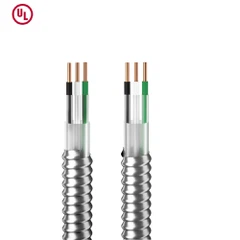
· vs. Armored Cables: Cables with aluminum interlocked armor or galvanized steel armor (Type MC) offer built-in mechanical protection for jobs where conduit is not being installed. Many armored cable assemblies use XHHW-2 conductors as their core. For projects where PVC jacket conduit is already in place, single-conductor XHHW-2 conduit wire is the more cost-effective choice and offers greater flexibility for on-site circuit configuration.
For pre-built multi-conductor sets such as 3/C or 4/C assemblies with a bare ground or insulated green ground, factory-assembled cables work well for standardized, repeatable circuits. For custom conduit layouts and project-specific circuit designs, single-conductor raceway wire remains the most adaptable solution.

5. Frequently Asked Questions
Q1: Can XHHW-2 conduit wire be installed in underground conduit?
A: Yes. XHHW-2 carries an official wet location rating, making it suitable for underground conduit runs where condensation and occasional water seepage are normal conditions. Keep in mind it must always be installed inside an approved protective conduit - it is not rated for direct burial without a raceway enclosure.
Q2: What is the maximum conduit fill allowed for XHHW/XHHW-2 conductors?
A: The maximum allowable fill percentage depends on the conduit material, conductor size and total number of conductors, and must be confirmed using NEC Chapter 9 Tables. As a standard industry rule of thumb, conduits containing 3 or more current-carrying conductors are limited to 40% cross-sectional fill to ensure adequate heat dissipation and reasonable pulling tension.
Q3: Is it acceptable to mix XHHW-2 and THHN/THWN-2 conductors in the same conduit?
A: Yes, as long as every conductor in the raceway has a temperature rating appropriate for the application, and total conduit fill complies with NEC requirements. Both products carry a 90°C wet/dry rating, so they are electrically compatible. Always base circuit ampacity calculations on the conductor with the lowest temperature rating in the bundle.
Q4: Do I need to apply ampacity derating to XHHW-2 when running multiple conductors in one conduit?
A: Yes. Mandatory ampacity derating is required per NEC regulations when 3 or more current-carrying conductors are installed in a single conduit or raceway. The derating factor is applied to the conductor's 90°C base ampacity. Correct derating prevents excessive heat buildup inside the raceway and preserves the full service life of the insulation.
If you are sourcing XHHW/XHHW-2 Wire for Conduit for commercial construction, underground infrastructure or facility retrofit projects, our technical sales team is ready to assist. Send over your project specifications, bill of materials or conduit layout details, and we will provide comprehensive datasheets, competitive pricing and a custom quote within 24 hours.
Dongguan Greater Wire & Cable Co., Ltd.
Tel/WhatsApp/Wechat: +86 136 6257 9592
Tel/WhatsApp/Wechat: +86 135 1078 4550
Email: manager01@greaterwire.com
Website: www.greaterwire.com