























With the global shift in energy structure, the photovoltaic (PV) industry has become one of the most important sectors in renewable energy. Whether in large-scale ground-mounted power plants or distributed rooftop solar systems, cables play a decisive role in ensuring safe and stable operation. PV power generation requires cables that can handle high voltage and current transmission while withstanding harsh conditions such as high temperatures, humidity, UV radiation, and long-term outdoor exposure.
Among the many types of cables, RHW-2 cable has gained popularity due to its superior performance and wide applicability. With its heat resistance, moisture resistance, UV stability, and direct burial suitability, RHW-2 is widely used in PV systems' DC side, AC side, energy storage, and power distribution. This article explores the application and installation specifications of RHW-2 cables in solar energy systems, compares them with other common cable types, and highlights the advantages they bring to real-world PV projects.
What is RHW-2 Cable?
RHW-2 is a type of cable certified under the UL (Underwriters Laboratories) standard, officially named Rubber-insulated Heat and Water-resistant cable, 90°C.
- R = Rubber insulation
- H = Heat resistant
- W = Water resistant
- -2 = Suitable for continuous operation at 90°C in wet and dry locations
RHW-2 typically uses cross-linked polyethylene (XLPE) insulation, which provides excellent thermal stability and electrical performance. Compared with traditional PVC-insulated cables, RHW-2 offers higher heat tolerance, better UV resistance, and reliable performance in damp or direct-burial conditions.
Key characteristics of RHW-2 cable:
- Voltage rating: 600V
- Temperature rating: 90°C in both dry and wet locations
- Installation methods: Direct burial, conduit, cable tray, or exposed outdoor installation
- Applications: PV DC cabling, inverter AC wiring, energy storage connections, power distribution systems

Applications of RHW-2 Cable in Solar Energy Systems
1.Ground-mounted PV plants
- In utility-scale projects, cables often need to carry power over long distances, mostly underground or outdoors. RHW-2's direct burial suitability, moisture resistance, and UV stability make it ideal for feeder circuits.
2.Rooftop solar systems
- Rooftop PV installations expose cables to strong sunlight and elevated temperatures. RHW-2's UV resistance and thermal stability ensure long-term reliability in rooftop wiring.
3.Energy storage systems
- Storage systems demand cables that can handle large current loads and high temperatures. RHW-2 is widely used between inverters and battery packs, ensuring stable and safe operation.
4.Combiner boxes and distribution panels
- RHW-2 is also suitable for connecting combiner boxes to distribution cabinets, ensuring safe performance in high-voltage DC environments.
RHW-2 Cable Specifications
| Size (AWG/kcmil) | Conductor | Voltage Rating | Temp Rating | Typical Applications |
|---|---|---|---|---|
| 14 – 10 AWG | Bare/Tinned Copper | 600V | 90°C | Internal wiring in combiner boxes, module-to-box connections |
| 8 – 2 AWG | Bare/Tinned Copper | 600V | 90°C | DC branch circuits, inverter input wiring |
| 1 AWG – 250 kcmil | Bare/Tinned Copper | 600V | 90°C | Inverter-to-panel connections, energy storage parallel wiring |
| 350 – 750 kcmil | Bare/Tinned Copper | 600V | 90°C | Transformer-to-main feeder, large plant power distribution |
| 1000 kcmil | Bare/Tinned Copper | 600V | 90°C | Utility-scale main loops, high-current transmission lines |
Applications of Different RHW-2 Cable Sizes
- Small sizes (14–10 AWG): Used for short-distance wiring inside combiner boxes or module-level connections. Flexible and easy to install.
- Medium sizes (8–2 AWG): Suitable for inverter DC inputs or AC outputs, handling medium currents in distributed systems.
- Large sizes (1 AWG–250 kcmil): Applied to main feeders between storage and inverters, or panel connections requiring higher current capacity.
- Extra-large sizes (350–1000 kcmil): Designed for utility-scale plants where long-distance, high-current transmission is needed.

Installation Specifications for RHW-2 Cable
RHW-2 cable installation follows UL standards and the NEC (National Electrical Code). Key requirements include:
1.Installation methods
- Direct burial without additional conduit protection
- Conduit and cable tray installations
- Exposed outdoor installations, with UV resistance
2.Environmental suitability
- Rated for continuous operation at 90°C in both dry and wet environments
- Maintains electrical integrity under high humidity and prolonged sun exposure
3.Bending radius
- Minimum bending radius = 8 × outer diameter to prevent insulation damage
4.Electrical performance
- Rated 600V, suitable for PV DC side and low-voltage AC side applications
5.Safety and fire resistance
- Meets flame-retardant requirements to reduce fire risks
Comparison Between RHW-2 and Other Common Cables
To better illustrate RHW-2's advantages, let's compare it with XHHW-2 cable:
| Feature | RHW-2 | XHHW-2 |
|---|---|---|
| Insulation | XLPE, optimized for wet/damp and direct burial | XLPE, mainly for building and industrial wiring |
| Temperature rating | 90°C | 90°C |
| UV resistance | Excellent | Excellent |
| Moisture resistance | Superior for long-term wet and underground use | Good, mainly used indoors or in conduit |
| Typical applications | PV DC cabling, storage, ground-mounted PV plants | Industrial distribution, commercial wiring |
👉 While both offer strong insulation and heat resistance, RHW-2 is tailored for PV and outdoor harsh conditions, whereas XHHW-2 is better suited to traditional building power distribution.
RHW-2 vs. Other Cables in Solar Energy Systems
Compared with THW, RHH, UL 4703, and others, RHW-2 offers clear advantages:
- Stronger weather resistance: Maintains insulation performance even under prolonged outdoor exposure.
- Longer service life: XLPE resists UV and thermal aging better than PVC-based alternatives.
- Higher reliability: Well-suited for PV high-voltage DC environments, reducing risks of insulation breakdown.
- Lower O&M costs: Extended lifespan reduces replacement and maintenance needs.
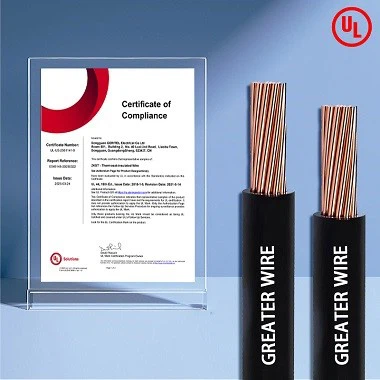
Our Advantages
-
We manufacture a complete range of UL-certified cables
We specialize in producing UL-listed wires, including THHN, THW, MC Cable, AC Cable, and more, meeting diverse market requirements.
-
Our cables fully comply with American market standards
All products are designed and tested under UL standards and NEC requirements, widely accepted across the U.S., Canada, and Latin America.
-
Our specifications cover a wide range of models
From small to extra-large sizes, single-core to multi-core, RHW-2 cables are available in complete series with sufficient stock.
-
We ensure strong delivery capability with fast lead times
Our production capacity supports both bulk and small orders, guaranteeing timely delivery.
-
We provide comprehensive service with professional technical support
Our engineering team offers end-to-end assistance, from product selection to installation guidance.
-
We have extensive international cooperation experience
With over a decade of export history, we serve clients in PV, power, construction, and multiple industries worldwide.
-
Our cables are UL-certified with guaranteed quality
All products undergo strict UL testing, ensuring safety, reliability, and compliance.
-
We offer customized solutions to meet diverse needs
Customization options include materials, sizes, lengths, colors, performance, markings, and packaging.
Company Information
Dongguan Greater Wire & Cable Co., Ltd.
- Tel/WhatsApp/WeChat: +86 135 1078 4550 / +86 136 6257 9592
- Email: manager01@greaterwire.com