







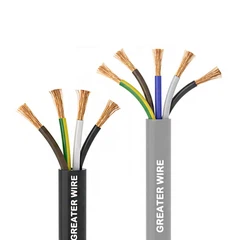
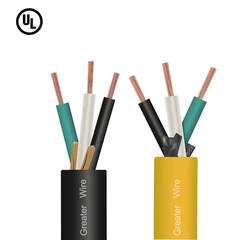
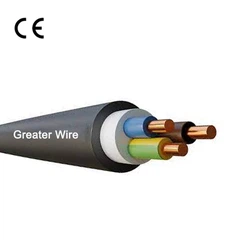
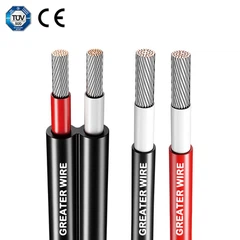


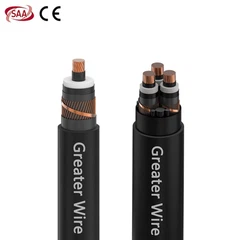
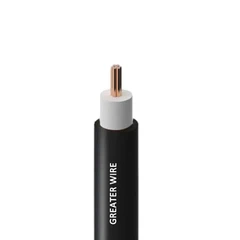

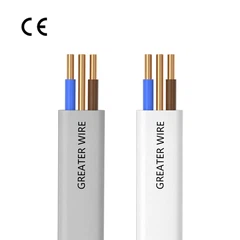
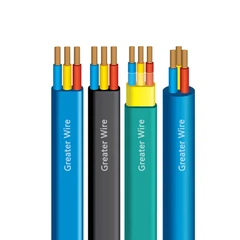
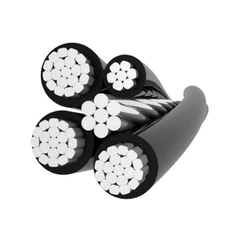
The main differences between medium voltage cables and low voltage cables are voltage level, structure, insulation layer thickness, purpose and application scenarios, as well as safety and installation maintenance.
Voltage level: The voltage level of medium voltage cables is usually between 3-35kV, while the voltage level of low voltage cables is 1kV and below. This means that MV cables are used to transmit medium voltage power, while LV cables are used to transmit lower voltage power.
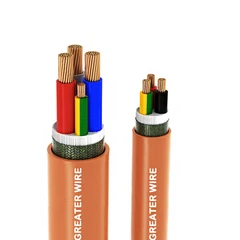
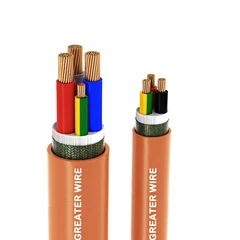
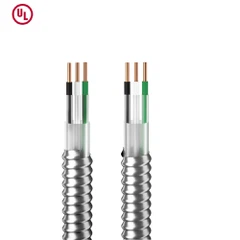
Structure: The structure of medium voltage wire is relatively complex, including conductors, insulation layers, sheaths, and filling materials. The structure of low-voltage cables is relatively simple, usually consisting of conductors, fillers, insulation layers, and protective sleeves. This indicates that the MV power cable has a more refined and complex internal structure to adapt to higher voltages and more complex transmission requirements.
Insulation layer thickness: The insulation layer of medium voltage cables is thicker to accommodate their higher voltage levels and transmission requirements. The insulation layer of low-voltage cables is relatively thin, generally within 3 millimeters.
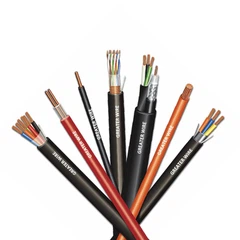
Usage and application scenarios: Medium voltage cables are widely used in power systems, municipal construction, underground railways, petrochemicals, communication networks, and other fields for transmitting electricity, signals, and data. Low voltage cables are mainly used for connecting low-power circuits such as electrical systems, household appliances, and control systems inside buildings, and are widely used in residential, commercial office buildings, and industrial parks.
Safety and installation maintenance: As medium voltage cables transmit electricity of medium voltage, their safety and installation maintenance are relatively lower compared to low-voltage cables. Although relevant safety standards and regulations still need to be followed, the potential risks in case of faults are relatively low. Due to the relatively low voltage transmitted, low-voltage cables have a lower risk of electric shock and arc flashover in case of faults, and installation and maintenance are relatively simple.
In summary, there are significant differences between medium voltage cables and low voltage cables in terms of voltage level, structure, insulation layer thickness, usage and application scenarios, as well as safety and installation maintenance. These differences make them suitable for different power transmission needs and scenarios.
