























Overhead power transmission systems are widely used around the world, especially in vast territories such as Australia. As an important power transmission method, Aerial Parallel Cable has become an indispensable part of the power system. With the growth of power demand and the continuous development of environment and technology, the design, materials and applications of parallel overhead lines have gradually diversified, and gradually developed into an efficient, safe and reliable power transmission solution. This article will explore the role, development trend, specific voltage model and application of parallel overhead lines in the Australian power system.
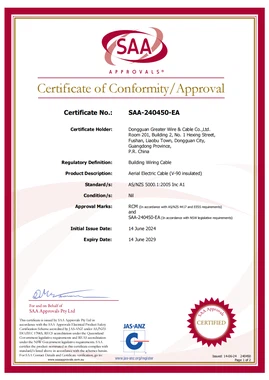


1. Basic concept of parallel overhead lines
Aerial Parallel Cable is an overhead power transmission line with multiple cable conductors installed side by side. Compared with a single overhead cable, the design of parallel overhead lines increases the capacity and stability of power transmission by arranging multiple conductors in parallel, and is widely used in power transmission systems in urban, industrial and rural areas. Parallel overhead lines not only have lower costs and higher durability, but also can adapt to different climatic conditions and geographical environments, which is particularly important in the vast land of Australia.

2. The role of parallel overhead lines in the Australian power system
2.1 The importance of power transmission
In Australia, parallel overhead lines are widely used for low voltage (0.6/1kV) and medium voltage (11kV, 33kV) power transmission. Due to its low installation cost and convenient maintenance, it is particularly suitable for power supply in rural, mountainous and remote areas. The simple laying of overhead cables not only reduces the cost of laying underground cables, but also can cross terrain that is not suitable for laying underground cables, providing a more reliable power supply.
The application of parallel overhead lines is usually concentrated in the following areas:
Urban power supply: In cities, overhead power lines are usually used for short-distance power distribution. Parallel overhead cables can be quickly laid between urban blocks to ensure a stable supply of power in cities.
Rural and remote areas: For remote areas and villages in Australia, the efficiency and low cost of overhead cables make them the main power transmission method. Power companies usually use overhead lines in these areas to reduce construction and maintenance costs.
Industrial use: In some heavy industrial areas, the demand for electricity is large, and parallel overhead cables can provide sufficient power support, especially for high-power consumption places such as mining areas and manufacturing plants.
2.2 Stability of the power system
The use of parallel overhead lines enhances the stability of the power system. Due to the parallel arrangement structure of the cables, compared with traditional single-core cables, parallel overhead lines can better share the load and avoid the risk of overloading a single cable. In addition, the high-temperature and corrosion-resistant materials used in parallel overhead lines enable them to operate continuously and stably under severe weather conditions, especially in hot and humid climates, to ensure the reliability of power supply.

3. Technical characteristics of parallel overhead lines
3.1 Voltage levels and models
Parallel overhead lines are usually divided into multiple models and specifications according to different voltage levels and application requirements. In Australia, common parallel overhead line models include 0.6/1kV, 11kV, 33kV, etc. Parallel overhead lines of different voltage levels are suitable for different power transmission needs.
0.6/1kV parallel overhead line: This cable is mainly used for low-voltage power transmission and is often used in residential, commercial buildings, and urban power distribution systems. 0.6/1kV parallel overhead lines generally use aluminum or copper conductors, and their insulation materials are usually polyethylene (PE) or cross-linked polyethylene (XLPE). This cable not only has high mechanical strength, but also has good UV resistance and high temperature resistance.
11kV parallel overhead line: This cable is mainly used for medium-voltage power transmission and is suitable for industrial areas, urban distribution networks, and transmission lines. 11kV parallel overhead lines need to have high insulation strength and usually use cross-linked polyethylene (XLPE) as the insulation material. For long-distance transmission, the application of 11kV parallel overhead lines is particularly important.
33kV parallel overhead lines: This cable is suitable for high-voltage power transmission and is often used in power transmission lines of power backbone networks. 33kV parallel overhead lines generally use copper conductors or aluminum alloy conductors, which can meet the requirements of long-distance power transmission. The insulation layer of this cable uses advanced materials to ensure its safety in high-voltage environments.
3.2 Insulation and sheath materials
The insulation materials of parallel overhead lines are crucial and directly related to the safety of power transmission. Common insulation materials include polyvinyl chloride (PVC), polyethylene (PE) and cross-linked polyethylene (XLPE). Among them, cross-linked polyethylene (XLPE) is widely used in medium and high voltage power transmission systems due to its superior resistance to high temperature, UV and chemical corrosion. The outer sheath of the cable is usually made of polyvinyl chloride (PVC) or polyethylene (PE), which can effectively prevent the cable from being affected by external environmental factors.
3.3 Mechanical strength and durability
The mechanical strength of the cable must also be considered when designing parallel overhead lines, especially the tensile strength in severe weather conditions. For example, in areas with strong winds, the cable needs to have sufficient tensile strength to prevent cable breakage or power outages caused by wind. In addition, overhead cables also need to be resistant to aging, UV radiation and chemical corrosion to ensure long-term stable operation.

4. Installation and maintenance of parallel overhead lines
4.1 Installation requirements
In Australia, the installation of parallel overhead lines must comply with strict national electrical safety standards. First, the laying of cables requires consideration of factors such as terrain, climate, and power load. Overhead cables need to be designed according to the length, load, and environmental conditions of the line, and their verticality and parallelism must be ensured during installation.
Secondly, the bending radius of overhead cables is an important parameter during installation. Excessive bending may cause damage to the cable insulation layer or degradation of cable performance. Therefore, the cable must be installed strictly in accordance with the design requirements to avoid bending the cable beyond the specified minimum radius.
4.2 Maintenance and inspection
The maintenance of parallel overhead cables mainly includes regular inspection of the cable insulation layer, outer sheath, and connection parts to ensure that the cable is free of cracks, wear, or corrosion. Cables with external mechanical damage should be repaired or replaced in a timely manner. At the same time, the brackets and suspension devices of overhead cables need to be checked regularly to ensure their stability to prevent the cables from loosening or breaking due to improper installation.

5. Development trend of parallel overhead lines
With the continuous growth of electricity demand in Australia and the rise of renewable energy, the technology and application of parallel overhead lines are also developing. In the future, parallel overhead lines will develop in the following directions:
Smart power grid: With the rise of smart grid technology, parallel overhead lines will be combined with smart sensors, monitoring systems and automation technology to improve the intelligence level of the power network. Through real-time monitoring and data analysis, intelligent operations such as fault warning and load scheduling can be realized to improve the stability and reliability of the power system.
Environmental protection and sustainable development: Future overhead cables will pay more attention to environmental protection and sustainability, use more environmentally friendly materials, and reduce carbon emissions in the cable production process. At the same time, the recycling rate of cables will gradually increase, promoting the power industry to move towards green development.
High-voltage and ultra-high-voltage power transmission: With the increase in demand for large-scale power transmission, the technology of high-voltage and ultra-high-voltage overhead cables will also gradually develop, and the application of parallel overhead lines in large-scale power transmission will become more common.