

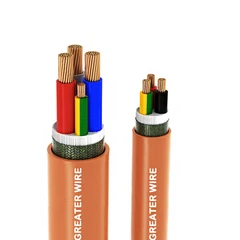
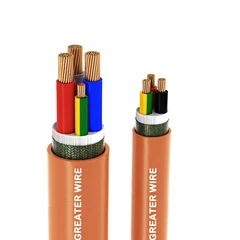

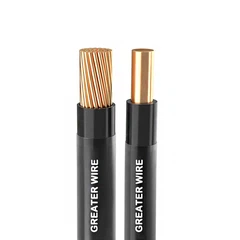
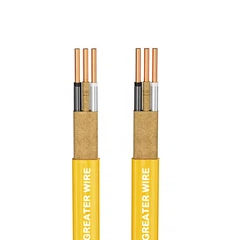
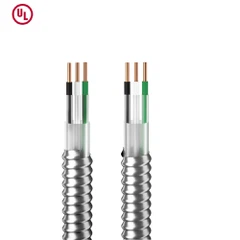
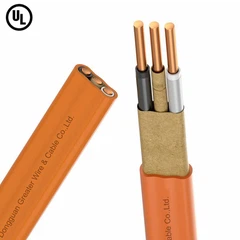
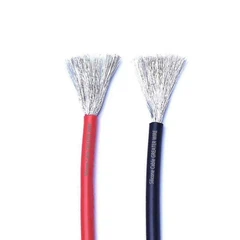
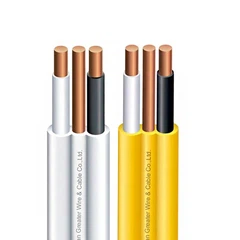
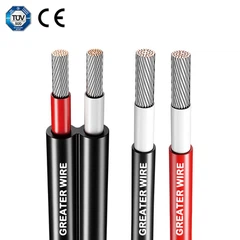

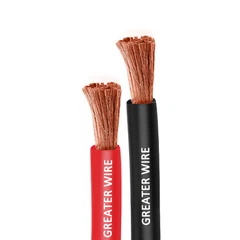
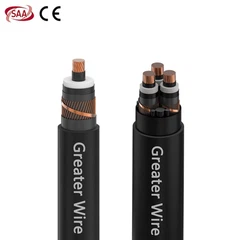
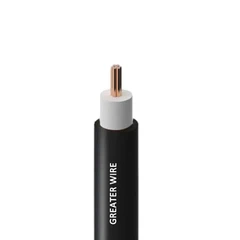
Basic requirements for insulation layer of MC cable
The insulation layer of MC cable needs to meet the following requirements:
Electrical insulation: able to withstand high voltage, prevent short circuit and leakage.
Heat resistance: Suitable for different temperature environments to prevent cable aging caused by overheating.
Chemical corrosion resistance: resistant to moisture, oil stains, and chemical substances.
Mechanical strength: capable of withstanding mechanical stresses such as compression and bending during installation and use.
Flame resistance: prevent fire from occurring or limit the spread of fire.


Common insulation materials for MC cables
1. Cross linked polyethylene (XLPE)
XLPE is currently one of the most common insulation materials for MC cables. It crosslinks the molecular structure of polyethylene (PE) through chemical or physical methods, improving its heat resistance and mechanical strength.
advantage:
Excellent temperature resistance, capable of withstanding a working temperature of 90 ° C and up to 250 ° C in a short period of time.
Low dielectric loss improves the energy efficiency of cables.
High mechanical strength, superior tensile strength and wear resistance.
Has excellent chemical corrosion resistance.
Disadvantages:
The price is relatively high.
Long term exposure to ultraviolet radiation may cause aging.
Application scenarios:
High voltage and medium voltage power cables.
An industrial environment with high heat resistance is required.
In situations where good mechanical performance is required, such as underground or humid environments.
2. Thermoplastic polyethylene (PE, Polyethylene)
PE is the most basic polyethylene material and has not undergone cross-linking treatment. Its main feature is superior dielectric performance, suitable for low-voltage cables.
advantage:
Low cost, economical and practical.
Low dielectric constant reduces power loss in cables.
Good flexibility, easy to lay.
Disadvantages:
Poor heat resistance, usually only able to work below 75 ° C.
The mechanical strength and chemical resistance are relatively low.
Application scenarios:
Low voltage MC cable.
An environment that requires good electrical insulation but no high temperature requirements.


3.Polyvinyl Chloride (PVC)
PVC is one of the most widely used insulation materials in MC cables, which is favored for its low cost, easy processing, and certain flame resistance.
advantage:
Good fire resistance and compliance with multiple fire prevention standards.
Strong chemical resistance, able to resist most acidic and alkaline solvents.
Cheap price and easy to produce.
Disadvantages:
The dielectric performance is not as good as XLPE and PE, making it suitable for low-voltage systems.
It is greatly affected by temperature and has average heat resistance (maximum working temperature of 75 ° C).
Long term use may release hydrogen chloride gas, which has a certain impact on the environment.
Application scenarios:
Low voltage cables (600V and below).
Internal wiring of residential and commercial buildings.
In situations where good chemical resistance is required.
4.Ethylene Propylene Rubber (EPR)
EPR is a high-performance rubber material with excellent elasticity, heat resistance, and water resistance, suitable for environments that require high weather resistance.
advantage:
Excellent high temperature resistance, capable of withstanding working temperatures above 90 ° C.
Low moisture absorption, suitable for humid or underwater environments.
Strong mechanical flexibility, suitable for moving cables or applications that require frequent bending.
Disadvantages:
The cost is relatively high.
The production process is complex and affects market supply.
Application scenarios:
High temperature, humid or corrosive environments, such as chemical factories or marine engineering.
Mobile cables or cables that require high flexibility.


Comparison of different insulation materials
| Insulation material | Maximum operating temperature | Dielectric properties | mechanical strength | Chemical resistance | cost |
| XLPE | 90℃ | excellent | excellent | excellent | high |
| PE | 75℃ | excellent | commonly | excellent | low |
| PVC | 75℃ | commonly | commonly | commonly | low |
| EPR | 105℃ | good | excellent | excellent | high |
Future Development Trends
With the continuous advancement of cable technology, the insulation material of MC cables is also being optimized, and the following trends may emerge in the future:
1.Environmentally friendly insulation materials, such as halogen-free low smoke (LSZH) materials, can reduce the release of harmful gases during fires.
2.Nanocomposites: improve heat resistance, aging resistance and mechanical properties by adding nano fillers.
3.Intelligent materials: capable of automatic repair in case of damage or overload, improving the service life of cables.

