

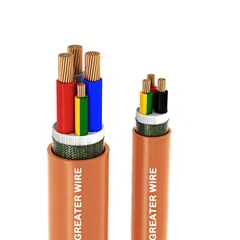
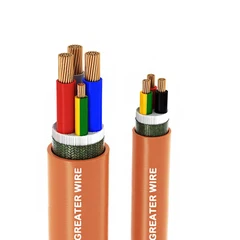

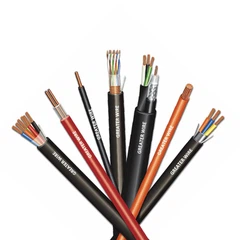
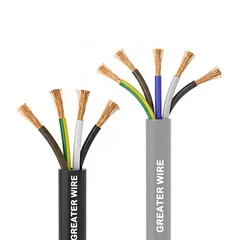
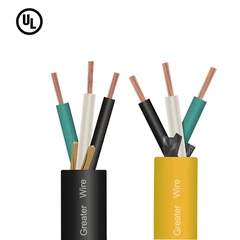
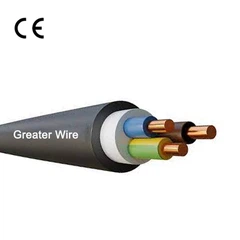
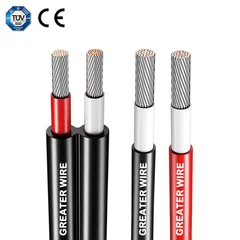

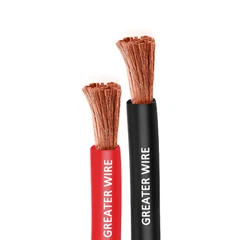
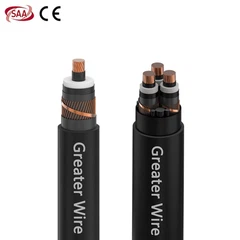
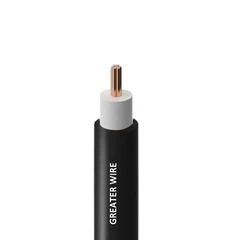
TC-ER cable is widely used in industrial control systems, manufacturing facilities, and cable-tray installations where dependable electrical performance and efficient wiring are essential. One important factor in its performance is the insulation surrounding each conductor. Different insulation materials offer different levels of electrical protection, temperature resistance, flexibility, and environmental durability.
For electrical contractors, equipment manufacturers, distributors, and procurement professionals, understanding these differences helps ensure the selected cable meets the requirements of the intended application. This guide explains the common insulated conductor types used in TC-ER cable, compares their key properties, and discusses important selection considerations for industrial and energy-related projects.


1. What Is an Insulated Conductor in TC-ER Cable?
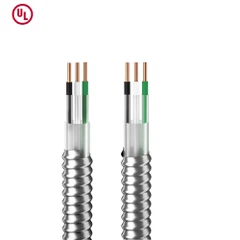
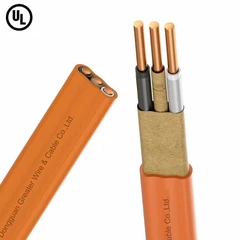
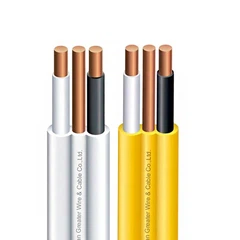
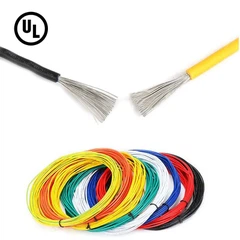
An insulated conductor consists of a conductive metal core, typically copper, surrounded by an electrically insulating material. The conductor carries electrical current or control signals, while the insulation helps prevent unintended electrical contact between conductors and surrounding components.
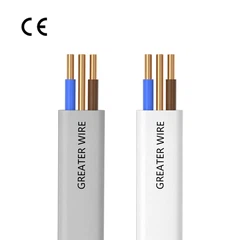
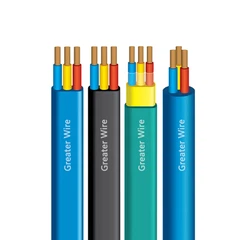
A typical TC-ER cable may contain several insulated conductors assembled together beneath an overall protective jacket. Depending on the product design, additional components may include fillers, shielding, binding tapes, and an equipment grounding conductor.
It is important to distinguish between three elements:
Conductor: The metal core that carries current or signals.
Conductor insulation: The material surrounding each individual conductor.
Outer jacket: The protective layer surrounding the assembled cable core.
These components perform different functions. For example, a cable may use XLPE conductor insulation with a PVC outer jacket. The insulation and jacket materials should therefore be evaluated separately when reviewing a technical datasheet.
The exact construction of TC-ER cable varies by manufacturer, conductor size, voltage rating, temperature rating, and applicable product listing.
2. Common Types of Insulated Conductors Used in TC-ER Cable
Several insulation materials are used in industrial tray and control cable designs. The most appropriate option depends on the electrical load, operating temperature, installation environment, and required product approvals.
2.1 PVC-Insulated Conductors
Polyvinyl chloride (PVC) is a widely used insulation material in industrial control cables because it offers a practical balance of electrical performance, manufacturing cost, and environmental resistance.
Common characteristics include:
Good electrical insulation properties
Resistance to moisture under specified conditions
Availability in a wide range of conductor sizes
Suitable performance for many general industrial applications
Compatibility with different cable construction designs
PVC formulations can vary considerably. Some are designed for improved flexibility, while others provide enhanced resistance to oil, abrasion, or particular chemicals.
However, PVC should not automatically be considered suitable for every temperature or environmental condition. Its performance depends on the specific compound and the finished cable's ratings.
PVC-insulated conductors are commonly found in general-purpose control cables used for factory equipment, control cabinets, and industrial automation.
2.2 PVC/Nylon-Insulated Conductors
Some industrial cable constructions use a combination of PVC insulation and a nylon outer layer around individual conductors.
The PVC layer provides the primary electrical insulation, while the nylon layer can improve resistance to abrasion and certain chemicals. It may also help reduce friction during installation.
Potential benefits include:
Improved resistance to certain oils and chemicals
Better surface durability during handling
Reduced friction when pulling conductors through suitable wiring spaces
Practical performance in specified industrial environments
PVC/nylon insulation is not a universal feature of TC-ER cable. Buyers should verify whether the particular cable includes this construction and confirm its temperature and environmental ratings.
The presence of a nylon layer also does not establish that the entire cable is oil-resistant or suitable for every chemical exposure. Those properties must be supported by the finished product's specifications and markings.
2.3 XLPE-Insulated Conductors
Cross-linked polyethylene (XLPE) is a thermoset insulation material used in various power and control cable designs.
Cross-linking changes the polymer structure, helping the insulation maintain its properties under specified thermal conditions. XLPE is often selected when an application requires higher temperature capability or particular electrical characteristics.
Common advantages may include:
Good dielectric properties
Good resistance to thermal deformation
Availability in designs rated for demanding operating temperatures
Suitability for specified wet or dry environments
Compatibility with certain industrial power and control cable constructions
The actual temperature rating depends on the complete cable design and its applicable listing. XLPE insulation alone does not establish a specific ampacity, voltage rating, or installation approval.
XLPE is worth considering for industrial applications where thermal performance is a priority, provided the finished TC-ER cable meets the relevant electrical and environmental requirements.
2.4 EPR-Insulated Conductors
Ethylene propylene rubber (EPR) is an elastomeric insulation material used in certain industrial and power cable designs.
Compared with many conventional thermoplastic insulation systems, EPR-based constructions can offer good flexibility and useful performance under demanding thermal and moisture conditions, depending on the formulation.
Potential characteristics include:
Good electrical insulation properties
Flexibility in appropriately designed cables
Resistance to moisture under specified conditions
Suitability for certain industrial power applications
EPR is not present in every TC-ER cable, and its use should not be assumed based on the cable's intended application. The manufacturer's technical documentation must identify the actual insulation material and its ratings.
For buyers evaluating EPR-insulated products, the most important questions are whether the complete cable is listed for the intended wiring method and whether its mechanical, electrical, and environmental performance meets the project specification.
3. Comparison of Common Conductor Insulation Materials
The following table provides a general comparison of insulation materials that may be encountered in industrial cable designs. It is not a guarantee that every material is available in every TC-ER construction.
| Insulation material | Typical strengths | Important considerations |
|---|---|---|
| PVC | Cost-effective, good electrical insulation, widely used | Temperature and chemical resistance depend on the formulation |
| PVC/nylon | Adds surface durability and resistance to certain chemicals | Confirm the complete construction and applicable ratings |
| XLPE | Good dielectric performance and thermal stability | Verify the finished cable's temperature and voltage ratings |
| EPR | Flexible in suitable constructions, good electrical properties | Availability and performance depend on the product design |
When comparing cables, buyers should prioritize documented performance over material names alone. Two products using the same insulation material may have different ratings because of differences in formulation, conductor size, jacket construction, and certification.

4. How Insulated Conductors Affect TC-ER Cable Performance
Conductor insulation is only one part of cable selection, but it has a direct impact on electrical safety and operating reliability.
4.1 Temperature Rating
The insulation system helps determine the cable's allowable operating temperature. Higher temperature ratings can be beneficial in industrial environments where conductors experience elevated temperatures.
However, the usable ampacity of a cable is not determined by insulation temperature alone. It also depends on conductor size, installation conditions, ambient temperature, grouping, and applicable electrical code requirements.
4.2 Electrical Insulation and Voltage Rating
The insulation must withstand the electrical stress associated with the intended circuit. A cable's voltage rating applies to the complete product and its approved use, not simply to the insulation material in isolation.
For this reason, a cable rated for a particular industrial control application should not automatically be used in a higher-voltage circuit or a different wiring system without confirming its suitability.
4.3 Moisture and Chemical Exposure
Factories, outdoor equipment areas, and energy installations may expose cables to moisture, oils, cleaning agents, or other chemicals.
The correct insulation and jacket combination can help protect the cable, but resistance to one substance does not imply resistance to all chemicals. Buyers should check the manufacturer's published environmental ratings.
4.4 Flexibility and Installation
Some insulation systems and conductor constructions are easier to handle than others. Stranded copper conductors, suitable insulation compounds, and an appropriately designed outer jacket can make routing and termination easier.
Nevertheless, standard TC-ER cable is generally intended for fixed installations rather than continuous-flex motion. Applications involving moving machine axes or repeated flexing may require a specifically designed flexible cable.
5. Selecting TC-ER Cable for Different Applications
The right conductor insulation depends on the equipment, electrical system, and installation environment. The following applications illustrate the considerations buyers should evaluate.
5.1 TC-ER Cable for Solar Power System
A TC-ER Cable for Solar Power System project requires careful identification of the circuit type. Solar installations may include photovoltaic DC circuits, inverter AC connections, equipment control circuits, monitoring systems, and auxiliary power wiring.
These circuits do not necessarily use the same cable construction.
TC-ER cable may be appropriate for certain qualifying industrial control or power connections associated with solar equipment when its listing, voltage rating, conductor configuration, and environmental ratings match the application.
However, TC-ER marking alone does not establish suitability for photovoltaic source circuits. PV source and output circuits generally require conductors and cables specifically permitted for those applications, such as appropriately listed PV wire or other code-compliant wiring methods.
For solar projects, verify:
Whether the circuit is DC photovoltaic wiring, AC power wiring, or control wiring
The system voltage and applicable temperature requirements
Outdoor sunlight, moisture, and environmental exposure ratings
The required product listing and applicable electrical code provisions
Compatibility with the inverter, connectors, and installation method
Selecting the cable by circuit function rather than by the overall solar project name helps prevent inappropriate substitutions.
5.2 TC-ER Cable for Battery Energy Storage System
A TC-ER Cable for Battery Energy Storage System applications may involve battery monitoring, control panels, HVAC equipment, auxiliary circuits, inverter interfaces, and other industrial wiring.
TC-ER cable can be considered for qualifying control and power connections where the complete product and installation meet applicable requirements.
Battery systems may contain high-voltage DC circuits, sensitive monitoring signals, and AC power circuits. Each circuit must be evaluated separately.
Important considerations include:
Voltage and temperature ratings
Compatibility with the intended DC or AC circuit
Insulation and jacket resistance to the actual environment
Shielding requirements for monitoring and communication signals
Applicable electrical code, equipment instructions, and product approvals
A general-purpose TC-ER cable should not be assumed suitable for battery interconnections or high-voltage DC power circuits simply because it is used elsewhere in an energy storage facility.

5.3 TC-ER Cable for Factory Wiring
TC-ER Cable for Factory Wiring is a common consideration in industrial environments where cable trays, machinery, and control equipment must be interconnected.
Depending on the application, PVC, PVC/nylon, or XLPE-insulated constructions may be suitable. The selection should reflect the expected operating temperature, exposure to oil or chemicals, and the required installation method.
For factory projects, consider:
The number and size of conductors
Whether the cable carries power, control signals, or both
Required sunlight, oil, or wet-location ratings
Potential interference from motors and variable-frequency drives
Mechanical protection and cable support requirements
A properly specified TC-ER cable can simplify certain fixed industrial wiring installations, but its exposed-run permission remains subject to the cable's qualification and applicable code conditions.
5.4 TC-ER Cable for Machinery
When selecting TC-ER Cable for Machinery, buyers should identify whether the cable is intended for fixed machine wiring, control circuits, auxiliary power, or moving components.
PVC and XLPE insulation may be appropriate for different fixed-wiring requirements, while shielding may be useful for noise-sensitive control circuits.
Machinery installations also require attention to vibration, abrasion, temperature, oil exposure, and routing around moving parts.
TC-ER cable should not automatically be used for continuous-flex applications. Cables installed on moving axes, robotic equipment, or cable carriers may require dedicated continuous-flex or robotic cable designs.
The machinery manufacturer's wiring requirements and applicable electrical standards should be reviewed before selecting a replacement cable.
5.5 TC-ER Cable for Control Panels
A TC-ER Cable for Control Panels application may involve connections between field devices, industrial controllers, sensors, and external equipment.
PVC-insulated multicore cable may be suitable for many general control circuits, while shielded constructions can help manage electromagnetic interference where sensitive signals are involved.
Before purchasing, confirm:
Conductor count and cross-sectional area or AWG size
Required voltage and temperature ratings
Shielding and grounding arrangements
Compatibility with terminal blocks and cable-entry hardware
Whether the cable is intended for internal panel wiring or external field wiring
A TC-ER cable's exposed-run listing does not automatically establish that it is suitable for every internal panel-wiring application. Panel wiring must also comply with the applicable equipment standard and installation requirements.
5.6 TC-ER Cable for VFD Drives
A TC-ER Cable for VFD Drives installation deserves particular attention because variable-frequency drives can generate high-frequency electrical noise and rapid voltage transitions.
Cable selection depends on whether the cable is installed on the drive's input side, output side, or in an associated control circuit.
For drive output circuits, an appropriately engineered VFD cable may offer features such as:
Conductors and insulation designed for the intended drive output
Shielding to help control electromagnetic interference
Symmetrical grounding conductors or other specified grounding arrangements
A jacket suited to the installation environment
Not every TC-ER cable is designed for inverter output service. A standard TC-ER designation alone does not guarantee suitability for VFD applications.
Where the project requires a VFD-specific cable, verify the manufacturer's stated compatibility with the drive system, shielding and grounding configuration, voltage rating, and installation requirements.
6. How to Choose the Right Insulated Conductor Type
Before requesting a quotation, buyers should prepare a basic technical specification. This reduces uncertainty and helps suppliers recommend a suitable construction.
Use the following checklist:
Define the circuit: Identify whether the cable carries power, control signals, instrumentation signals, or drive output.
Confirm electrical requirements: Specify conductor size, voltage rating, and required temperature rating.
Select the insulation system: Compare PVC, PVC/nylon, XLPE, or other documented options against actual operating conditions.
Evaluate environmental exposure: Identify moisture, sunlight, oil, chemicals, abrasion, and temperature extremes.
Determine shielding requirements: Consider nearby motors, VFDs, switching equipment, and sensitive signals.
Verify the installation method: Confirm whether the cable will be installed in a tray, in an approved exposed run, inside equipment, or through another wiring method.
Check certifications and markings: Verify the applicable product listing, environmental ratings, and local code requirements.
In North American projects, UL 1277 is an important standard for electrical power and control tray cables. Buyers should verify the specific cable's listing and exposed-run marking rather than assuming that all tray cables qualify for TC-ER installations.
For international projects, confirm the standards and approvals required in the destination market. UL, CSA, IEC, and AS/NZS requirements are not automatically interchangeable.


7. Conclusion
The type of insulation used around TC-ER cable conductors affects electrical performance, thermal capability, environmental resistance, and installation suitability. PVC, PVC/nylon, XLPE, and EPR offer different advantages, but the best choice depends on the complete cable design and the requirements of the circuit.
For solar power systems, battery energy storage, factory wiring, machinery, control panels, and VFD installations, buyers should begin by identifying the circuit function and verifying the cable's ratings, construction, listing, and environmental approvals. This approach helps avoid unsuitable substitutions and supports safer, more reliable industrial wiring.
8. Find the Right Industrial Cable Solution with GERITEL WIRE
GERITEL WIRE supports B2B buyers seeking wire and cable solutions for industrial automation, machinery, control panels, and energy-related applications. Whether your project requires specific conductor insulation, multicore or shielded constructions, or defined electrical and environmental ratings, our team can help review your technical requirements and identify suitable product options. We understand the importance of matching cable construction to the actual circuit, installation method, and applicable standards. Contact GERITEL WIRE to discuss your project specifications, request product information, or obtain a quotation for your next sourcing requirement.
Dongguan Greater Wire & Cable Co., Ltd.
Tel/WhatsApp/Wechat: +86 136 6257 9592
Tel/WhatsApp/Wechat: +86 135 1078 4550
Email: manager01@greaterwire.com
Website: www.greaterwire.com
Tighten the application section