

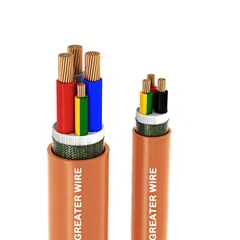
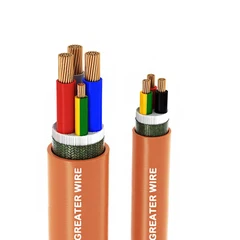

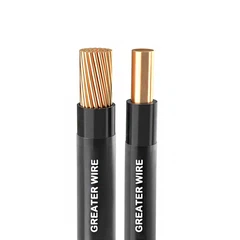
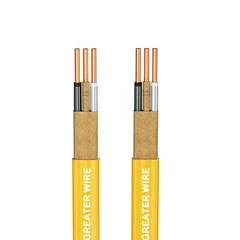
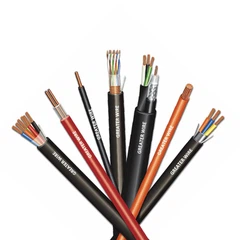
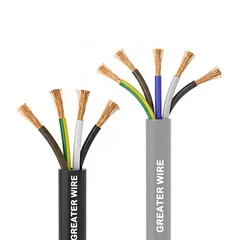
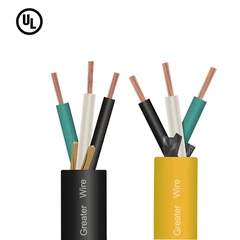
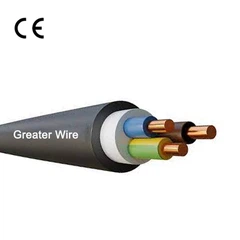
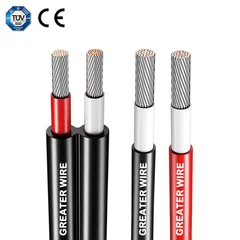

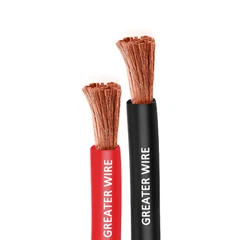
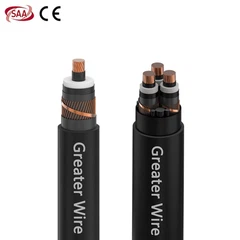
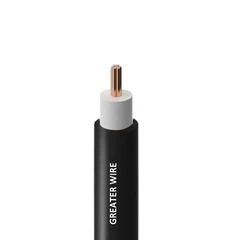
TC-ER control cable is widely used in industrial automation, manufacturing facilities, and commercial electrical installations where reliable control wiring and efficient cable routing are essential. Its construction can vary according to conductor size, insulation material, shielding requirements, core configuration, and outer jacket properties.
Understanding these differences helps electrical contractors, equipment manufacturers, distributors, and project buyers select the right cable for their applications. This guide explains the common constructions of TC-ER control cable, how the main components work, and what to consider when comparing TC-ER with other industrial cable types.
1. What Is TC-ER Control Cable?
TC-ER stands for Tray Cable–Exposed Run. It is a tray cable type permitted for certain exposed wiring applications when the cable is specifically listed and marked for exposed-run use and installed in accordance with applicable electrical codes.
Unlike standard tray cable, which generally has more restricted installation permissions outside cable trays, qualified TC-ER cable can be used for certain exposed runs between cable trays and equipment without requiring an additional raceway throughout the entire run.
The exact permissions depend on the applicable edition of the National Electrical Code (NEC), the cable's listing, and the installation conditions.
Common applications include:
Industrial machinery and production lines
Control panels and electrical cabinets
Factory automation systems
Connections between cable trays and industrial equipment
Fixed power and control wiring in suitable commercial and industrial environments
TC-ER cable is available in different constructions to meet electrical, mechanical, and environmental requirements. Choosing the right version requires more than checking the number of conductors or the nominal voltage rating.


2. Common Constructions of TC-ER Control Cable
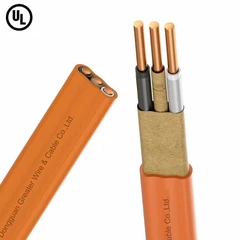
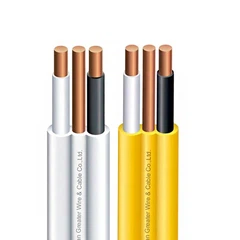
A typical TC-ER control cable consists of insulated copper conductors assembled into a cable core and protected by an outer jacket. Depending on the design, it may also include fillers, binding tapes, shielding, and an equipment grounding conductor.
2.1 Stranded Copper Conductor Construction
The conductor carries electrical current or control signals. Copper is widely used because of its electrical conductivity and suitability for industrial wiring.
Common conductor options include:
Solid copper conductors: A single solid wire, generally suited to applications where the cable design and installation conditions permit a less flexible conductor.
Stranded copper conductors: Multiple smaller copper wires twisted together to improve flexibility and ease of handling.
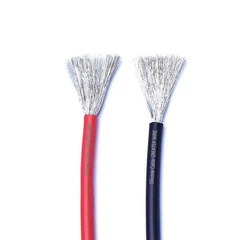
Tinned copper conductors: Copper strands coated with tin to improve resistance to oxidation and support certain environmental or manufacturing requirements.
Stranded copper is common in industrial control cable because it is easier to route through equipment and around installation obstacles than a comparable solid conductor.
The required conductor size depends on current, voltage drop, circuit protection, conductor temperature ratings, and applicable electrical codes. Control circuits and power circuits may require different conductor sizes even when they are installed in the same facility.
2.2 PVC-Insulated TC-ER Cable
Polyvinyl chloride (PVC) is a widely used insulation and jacket material in industrial cable designs.
PVC-insulated TC-ER cable may offer:
Good electrical insulation properties
Practical manufacturing cost
Resistance to moisture under specified conditions
Suitable flexibility for fixed industrial installations
Availability in multiple conductor sizes and core configurations
Some constructions use a nylon layer over PVC insulation. This combination can improve resistance to certain chemicals and abrasion and may help reduce friction during installation.
However, PVC formulations vary. Temperature ratings, oil resistance, sunlight resistance, and flame performance must be verified against the actual product specification rather than assumed from the material name alone.
2.3 XLPE-Insulated TC-ER Cable
Cross-linked polyethylene (XLPE) is another common insulation material for industrial tray cable.
Compared with conventional PVC insulation, appropriately formulated XLPE can provide higher temperature capability and favorable electrical properties. It is often selected where the cable design requires a higher conductor temperature rating or specific electrical and mechanical performance.
Typical features may include:
Good electrical insulation performance
Resistance to thermal deformation
Suitability for specified wet or dry locations
Compatibility with particular industrial power and control applications
The finished cable's temperature rating depends on the complete construction and applicable listing. XLPE insulation alone does not establish that a cable is suitable for exposed-run installation.
2.4 Unshielded TC-ER Control Cable
An unshielded construction contains insulated conductors, with fillers or binding materials where needed, and an outer protective jacket. It does not include a dedicated electromagnetic shield.
Its main advantages are a relatively simple construction, smaller overall diameter in many designs, and easier handling.
Typical applications include:
Conventional industrial control circuits
General machine wiring
Control panel connections
Equipment installations where electromagnetic interference is not a significant concern
Unshielded cable can be a cost-effective option for electrically quiet environments. However, installers should evaluate nearby variable-frequency drives (VFDs), motors, switching equipment, and other potential sources of electrical noise before selecting it for sensitive control signals.
2.5 Shielded TC-ER Control Cable
Shielded TC-ER cable incorporates an additional conductive layer to help reduce electromagnetic interference (EMI).
Common shielding arrangements include:
Overall foil shielding: A foil layer surrounds the assembled conductors, often with a drain wire to support electrical termination of the shield.
Overall braided shielding: A woven metallic braid surrounds the conductors and provides a conductive shielding path.
Combined shielding: Certain designs use foil and braid together to address more demanding interference-control requirements.
Shielding can improve signal reliability in suitable installations, particularly around industrial drives, motors, and automated production equipment.
Nevertheless, a shield does not automatically eliminate interference. Performance also depends on cable routing, separation from power conductors, grounding and bonding practices, connector selection, and the electrical characteristics of the system.
Shielding should be specified according to the actual signal type and interference environment rather than added to every cable by default.
2.6 Multicore and Pair-Based Constructions
TC-ER control cable is available in multiple core configurations. The appropriate arrangement depends on the number and type of circuits the cable must carry.
Common configurations include:
Multicore cable: Several insulated conductors are assembled under one outer jacket. This arrangement is suitable for many general control and equipment-wiring applications.
Twisted-pair cable: Two conductors are twisted together to help reduce certain forms of electromagnetic interference. Pair-based designs may be useful for instrumentation or signal circuits when the product is designed and approved for the intended application.
Multicore shielded cable: Several conductors share an overall shield. This can simplify routing where multiple control circuits need common protection against external interference.
Individually shielded pairs with an overall shield: Certain specialized designs provide additional separation between signal pairs and external noise.
Not every pair-based or instrumentation cable is a TC-ER cable. The product must carry the appropriate listing and marking for the intended installation.
2.7 Outer Jacket and Mechanical Protection
The outer jacket protects the cable core against environmental and mechanical exposure.
Common jacket materials include PVC and chlorinated polyethylene (CPE), depending on the design and intended service conditions.
Relevant jacket properties may include:
Oil resistance
Sunlight and UV resistance
Moisture resistance
Flame performance
Abrasion and impact resistance
Low-temperature flexibility
These properties are not universal across all TC-ER cables. Buyers should check the manufacturer's technical data for the specific product, including any applicable sunlight-resistant, oil-resistant, or direct-burial markings.
Some TC-ER cable designs are engineered to meet specified crush and impact performance requirements associated with exposed industrial installations. This does not mean that every TC-ER product provides the same level of mechanical protection or can replace armored cable in every application.
3. Typical TC-ER Cable Construction at a Glance
| Construction element | Common options | Main purpose |
|---|---|---|
| Conductor | Bare copper, tinned copper; solid or stranded where offered | Conducts power or control signals |
| Insulation | PVC, PVC/nylon, XLPE | Provides electrical insulation |
| Core arrangement | Multicore, twisted pairs, specialized grouped conductors | Organizes circuits for the application |
| Shield | Unshielded, foil, braid, or combined shield | Helps control electromagnetic interference |
| Fillers and tapes | Synthetic fillers and binding tapes, where needed | Improve core shape and assembly |
| Outer jacket | PVC, CPE, or other specified compounds | Protects against environmental and mechanical exposure |
| Grounding conductor | Included where specified by the cable design | Provides an equipment grounding path when properly installed |
This table describes common construction options, not a universal specification. Actual materials, layer order, conductor count, and ratings depend on the cable design and its listing.
4. TC-ER Cable Standards UL1277: What Buyers Need to Know
TC-ER Cable Standards UL1277 is an important keyword for buyers researching North American industrial cable. UL 1277 is the standard associated with electrical power and control tray cables. A product's suitability for exposed-run installation depends on its applicable listing and markings, not merely on a manufacturer's claim that it meets selected construction requirements.
When reviewing a cable specification, buyers should verify:
The product is listed and marked for the intended cable type and use.
The voltage and temperature ratings meet the project requirements.
Required sunlight, oil, wet-location, or other environmental ratings are explicitly identified.
The cable's conductor size and construction are appropriate for the circuit.
Any required flame-test performance is documented.
The installation complies with the applicable NEC edition and local authority requirements.
UL 1277 addresses cable construction and performance requirements; it does not independently authorize every installation configuration. The NEC and the authority having jurisdiction determine how a listed product may be installed in a particular location.
For projects outside North America, buyers should also verify the local approval framework. UL listing should not automatically be treated as equivalent to IEC, CSA, or AS/NZS certification.

5. TC-ER Cable Exposed Run Meaning and Installation Considerations
The TC-ER Cable Exposed Run Meaning is straightforward: the cable is specifically qualified for certain exposed wiring installations beyond ordinary cable-tray use.
The exposed-run designation does not mean the cable can be installed anywhere without protection or support.
5.1 Where Can TC-ER Cable Be Installed?
Depending on the product listing and applicable code, suitable applications may include:
Installation in approved cable trays
Certain exposed runs from trays to equipment
Fixed wiring along suitable industrial structures
Connections to control panels and machinery
Outdoor use, direct burial, wet-location use, and hazardous-location applications require specific verification. A TC-ER designation alone does not establish approval for all these conditions.
5.2 Support and Mechanical Protection
Under applicable NEC provisions, certain exposed-run installations are subject to a maximum 6 ft (1.8 m) unsupported length exception when the specified conditions are met. This is not a blanket rule permitting every exposed cable to remain unsupported for 6 ft.
The actual installation must follow the relevant code provisions, cable listing, and support requirements. Longer runs and other installation arrangements may require additional support or protection.
Installers should also observe the manufacturer's minimum bending radius, avoid damaging the jacket, secure the cable appropriately, and prevent contact with sharp edges or moving machinery.
5.3 Practical Selection Checklist
Before specifying a TC-ER control cable, confirm:
Electrical requirements: Voltage, current, conductor size, and circuit protection.
Installation method: Cable tray, exposed run, raceway, or another permitted arrangement.
Environmental conditions: Temperature, moisture, sunlight, oil, and chemicals.
Signal integrity: Whether shielding or twisted pairs are required.
Mechanical requirements: Impact, crush, abrasion, and vibration exposure.
Compliance: Product listing, required markings, and local electrical code.
6. TC-ER Cable vs MC Cable
The TC-ER Cable vs MC Cable comparison is particularly important when planning exposed industrial wiring.
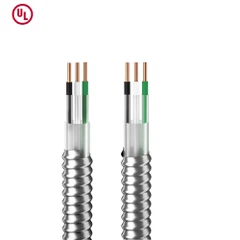
MC cable, or Metal-Clad cable, incorporates a metallic armor layer that provides mechanical protection and forms part of a cable construction specifically evaluated for its intended use. TC-ER cable generally relies on its insulated conductors and protective outer jacket rather than a continuous metal armor layer.
| Feature | TC-ER cable | MC cable |
|---|---|---|
| Basic construction | Insulated conductors under a protective jacket | Conductors protected by a metallic armor construction |
| Exposed installation | Permitted for qualifying products and installations | Permitted when the specific MC product and installation meet applicable requirements |
| Mechanical protection | Depends on cable design and listing | Metallic armor provides a distinct form of mechanical protection |
| Routing and handling | Often easier to route in suitable industrial installations | Handling depends on armor type and cable construction |
| Common applications | Tray wiring and certain exposed equipment connections | Applications requiring an approved metal-clad wiring method |
| Key purchasing consideration | Confirm TC-ER listing, markings, and installation conditions | Confirm MC listing, armor construction, and installation conditions |
Neither type is universally better. TC-ER may be advantageous where a qualifying exposed-run tray cable simplifies installation, while MC may be more suitable where the project specification or wiring method calls for metal-clad cable.
Always check the required wiring method and applicable code before substituting one for the other.

7. TC-ER Cable vs Tray Cable
The TC-ER Cable vs Tray Cable distinction is primarily about permitted installation use.
TC cable is designed for qualifying cable-tray applications. TC-ER identifies a cable that has also been evaluated and marked for applicable exposed-run use.
| Feature | Standard TC cable | TC-ER cable |
|---|---|---|
| Cable-tray installation | Permitted when the product and installation meet applicable requirements | Permitted when the product and installation meet applicable requirements |
| Exposed-run use outside trays | Not automatically permitted | Permitted for qualifying exposed-run applications |
| Product verification | Check the Type TC listing and ratings | Check the Type TC-ER listing and ratings |
| Mechanical and environmental performance | Depends on the specific construction | Depends on the specific construction and listing |
| Selection priority | Confirm the permitted wiring method | Confirm the exposed-run qualification and installation conditions |
A standard TC cable should not be assumed suitable for an exposed run merely because its insulation and jacket appear similar to those of a TC-ER product. The relevant qualification and markings are critical.
8. TC-ER vs TC Cable Difference
The TC-ER vs TC Cable Difference can be summarized as an additional permitted use rather than an entirely different basic cable structure.
Both types may use similar copper conductors, insulation systems, fillers, and outer jackets. Their exact constructions can vary by manufacturer and application.
The important distinction is that TC-ER cable has the applicable qualification for exposed-run installations, subject to the relevant code conditions. Standard TC cable does not automatically carry that permission.
When comparing two products, check the printed cable legend and technical datasheet rather than relying on the product title alone. Confirm the voltage rating, temperature rating, conductor configuration, environmental properties, and certification details before placing an order.
9. Choosing the Right TC-ER Control Cable Construction
The best construction depends on the operating environment, electrical requirements, and installation method.
For general machine control, a multicore unshielded cable may be sufficient where electrical noise is limited. For installations around VFDs, large motors, or sensitive signals, a suitable shielded design may offer better interference control. PVC and XLPE insulation should be compared according to their specified temperature, electrical, and environmental performance rather than price alone.
Procurement teams should request a complete datasheet that identifies the conductor material and size, insulation and jacket materials, shielding configuration, voltage and temperature ratings, applicable listings, and environmental approvals.
For international projects, it is equally important to distinguish North American Type TC-ER requirements from IEC-based or AS/NZS-based cable specifications. A cable that is suitable for one market is not automatically approved for another.


10. Source Your TC-ER Control Cable from GERITEL WIRE
Selecting the right TC-ER control cable construction can help simplify industrial wiring, support reliable equipment operation, and reduce unnecessary installation costs. GERITEL WIRE supports B2B buyers seeking industrial wire and cable solutions for machinery, automation, control panels, and cable-tray applications. Whether your project requires multicore or shielded constructions, specific conductor sizes, or defined insulation and jacket properties, our team can help you review your requirements and identify suitable options. Contact GERITEL WIRE to discuss your application, technical specifications, and sourcing needs, and request product information or a quotation for your next project.
Dongguan Greater Wire & Cable Co., Ltd.
Tel/WhatsApp/Wechat: +86 136 6257 9592
Tel/WhatsApp/Wechat: +86 135 1078 4550
Email: manager01@greaterwire.com
Website: www.greaterwire.com