


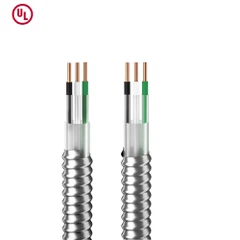
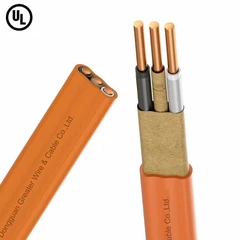
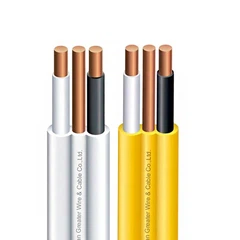

AC90 armour can become damaged during cable pulling when the cable is exposed to excessive pulling tension, sharp bends, rough contact surfaces, improper handling, or unsuitable installation tools. Although AC90 cable uses interlocked metal armour to provide mechanical protection, this construction does not make it resistant to every pulling force or installation mistake.
In Canadian commercial, residential, and industrial electrical projects, damaged armour can affect the cable's mechanical protection, bonding continuity, and overall installation reliability. The problem is particularly important when contractors route AC90 through congested building spaces, around structural obstacles, or along long cable runs.
Understanding why AC90 armour gets damaged during installation helps electrical contractors prevent unnecessary cable replacement, reduce project delays, and maintain compliance with applicable Canadian Electrical Code requirements.

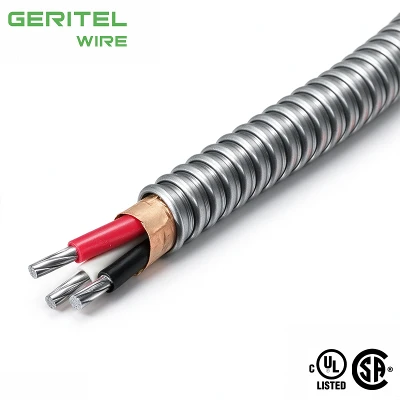
1. What Is AC90 Armour and How Does It Protect the Cable?
600V AC90-12/2 X 150m Type AC90 Armored Cable - Electric Cable and AC Bx Cable
m.made-in-china.com
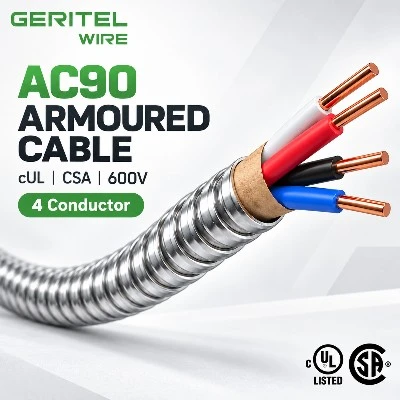
AC90 is a Canadian armoured electrical cable commonly used in commercial, residential, and certain industrial building installations.
A typical AC90 cable contains insulated conductors, a bonding conductor, and interlocked metallic armour. The armour surrounds the internal cable components and provides mechanical protection during normal handling, installation, and service.
1.1 Interlocked Metal Armour
The armour of conventional AC90 cable is typically made from interlocked aluminum strips formed into a flexible protective covering.
Unlike a solid metal tube, interlocked armour consists of connected metal sections that allow the cable to bend while maintaining its protective structure.
This construction offers several advantages:
Provides mechanical protection for insulated conductors.
Allows flexible routing around suitable building structures.
Helps protect internal components against incidental physical contact.
Makes the cable easier to install than some rigid protective systems.
However, interlocked armour has mechanical limitations. Excessive pulling force, crushing, sharp bending, or repeated twisting can distort its profile and damage the interlocking structure.
1.2 Internal Conductors and Bonding Conductor
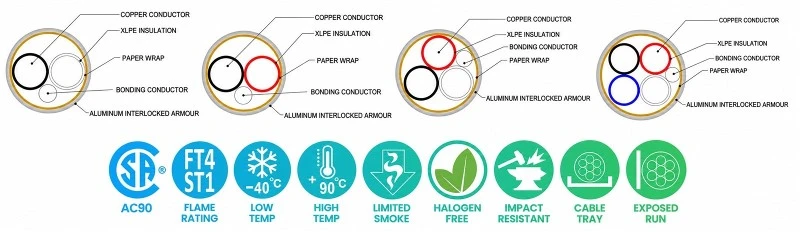
AC90 commonly uses copper conductors with RW90 XLPE insulation, although aluminum conductor options are also available in some product ranges.
A bonding conductor is incorporated into the cable assembly to provide an electrical bonding path.
During installation, contractors must protect both the insulated conductors and the bonding arrangement. Armour damage should never be treated as purely cosmetic without checking whether the cable's bonding and internal components have also been affected.
1.3 Why Armour Condition Matters
Damaged armour can create several installation problems:
Reduced mechanical protection.
Distorted cable geometry.
Difficulty installing approved connectors.
Potential damage to internal insulation.
Possible impairment of bonding continuity.
Increased risk of premature cable replacement.
For this reason, contractors should inspect AC90 armour before, during, and after cable pulling.
2. What Are the Main Reasons AC90 Armour Gets Damaged During Cable Pulling?
Several installation conditions can cause AC90 armour to become deformed, scratched, opened, or separated.
2.1 Excessive Pulling Tension
On the Job with Knobelsdorff Electric: Contractor Maximizes Efficiency with Wire Pulling Solutions | Van Meter Inc.
vanmeterinc.com
Excessive pulling tension is one of the most common reasons for cable damage during installation.
When contractors pull AC90 through a long or restricted route, friction between the cable and surrounding surfaces increases the force required to move it.
If the pulling force exceeds the manufacturer's recommended limit, the cable may experience:
Stretching or distortion of the armour.
Separation or opening of interlocked sections.
Damage to the cable's overall shape.
Excessive stress on internal conductors.
Pulling tension can increase significantly when a cable route contains multiple bends, tight corners, or rough surfaces.
Prevention: Plan the cable route before pulling, reduce unnecessary bends, use suitable pulling equipment, and follow the manufacturer's maximum pulling tension where specified.
2.2 Bending the Cable Too Tightly
AC90 Acwu Bx Cable 14/2 12/2 14/3 AWG Al Aluminum Interlocked Armour Cable with cUL C-S-a Certificate for Canada - Armored Cable and Building Wire for Canada
m.made-in-china.com
AC90 is flexible, but it is not designed to withstand unlimited bending.
When a contractor bends the cable around a corner with a radius smaller than the manufacturer's permitted minimum, the interlocked armour can become distorted.
Potential damage includes:
Flattening of the armour.
Opening or separation between interlocked sections.
Localized deformation.
Excessive stress on the internal conductors.
Repeated bending and straightening can also weaken the armour structure.
Prevention: Follow the cable manufacturer's minimum bending radius. Use gradual curves instead of sharp corners, particularly near junction boxes and equipment connections.
2.3 Pulling the Cable Across Sharp Edges
Southwire 10/3 x 250 ft. Solid CU MC (Metal Clad) Armorlite Cable 68584201 - The Home Depot
homedepot.com
Sharp metal edges are another common source of armour damage.
During installation, AC90 may contact:
Unfinished metal framing.
Sharp-edged cable tray sections.
Rough conduit openings.
Unprotected structural openings.
Metal brackets and equipment enclosures.
As the cable moves across these surfaces, repeated friction can scratch, cut, or deform the aluminium armour.
Even relatively short contact with a sharp edge can create localized damage if pulling tension is high.
Prevention: Inspect the cable route before installation. Install suitable bushings, edge protection, or other approved protective accessories wherever the cable may contact sharp surfaces.
2.4 Using Incorrect Pulling Tools or Gripping Methods
KELLEMS Selector
hciapps.hubbell.com
Incorrect pulling tools can concentrate force on a small section of AC90 armour.
Examples include:
Using unsuitable clamps or gripping devices.
Applying excessive pressure with mechanical pulling equipment.
Attaching pulling accessories incorrectly.
Pulling the cable using the armour alone when the product instructions do not permit it.
Using tools with sharp contact surfaces.
Because AC90 has a flexible interlocked armour structure, concentrated pressure can deform individual armour sections.
Prevention: Use pulling accessories compatible with the cable diameter and construction. Follow manufacturer instructions for the approved pulling method and attachment point.
2.5 Twisting the Cable During Installation
Twisting can occur when installers pull AC90 around multiple corners or attempt to correct cable positioning while the cable is under tension.
Excessive twisting may cause:
Distortion of the interlocked armour.
Uneven stress along the cable.
Kinking near connection points.
Damage to the cable's internal arrangement.
Prevention: Keep the cable properly aligned during pulling. Avoid uncontrolled rotation, and use appropriate handling methods to maintain the cable's natural orientation.
3. What Does Damaged AC90 Armour Look Like?
Not all armour damage is immediately obvious. Some defects are visible during installation, while others may only become apparent when the cable is inspected before termination.
The following are common warning signs.
China CSA AC90 BX Cable Aluminum Conductor PVC Or XLPE/AIA 600V Manufacturers Suppliers Factory
MC Cable Al Armored Price Per Pound Today | Scrap Copper Prices WMR
600volts AA-8030 Aluminum Alloy Conductor 3 Core 250mcm 500mcm Metal Clad Cable Type Mc Cable with UL Certificate - 2026 Mc Cable, Aluminum Mc Cable price | Made-in-china.com
BX Cable: What It Is and How to Use It
FM 5-424: Theater of Operations Electrical Systems - Cable Wiring
TECK90 Vs ACWU90 Cable: What's The Difference? - News
Interlocked Armor Metal Clad Cable Copper or Aluminum Conductor Mc Cable (10 12 14 AWG) - Mc Cable and Metal Clad Cable
Cable Armour Damaged in No-Load Condition [Analysis] [Pictures Attached] | Eng-Tips
3.1 Flattened Armour
Flattening occurs when the cable is squeezed by excessive pressure or compressed against a hard surface.
This can change the cable's cross-sectional shape and potentially affect the protection provided to internal conductors.
3.2 Open or Separated Armour
Interlocked armour sections may become separated or distorted when the cable is pulled under excessive tension or bent too sharply.
This is particularly concerning because the armour may no longer provide the intended mechanical protection.
3.3 Scratched or Cut Armour
Scratches can result from contact with sharp metal edges, rough surfaces, or unsuitable pulling equipment.
A superficial mark does not necessarily mean the cable must be replaced, but cuts, deep gouges, or exposed internal components require further assessment.
3.4 Kinked or Permanently Deformed Cable
A kink indicates that the cable has been bent beyond its acceptable handling limits or subjected to localized mechanical stress.
Contractors should not assume that a kink can be corrected simply by straightening the cable. The internal conductors and bonding arrangement may also have been affected.
4. How Does Armour Damage Affect AC90 Cable Performance?
The consequences depend on the location, depth, and severity of the damage.
4.1 Reduced Mechanical Protection
The main function of AC90 armour is to protect the insulated conductors against mechanical damage.
If the interlocked structure becomes flattened, separated, or severely distorted, its protective performance may be compromised.
This can leave the internal components more vulnerable to subsequent installation damage or physical contact.
4.2 Potential Damage to Conductor Insulation
Why do wires and cables get hot when they are running? - Foshan Yuejiaxin Wire & Cable Co., Ltd.
simsheng.com
Severe armour deformation may transfer mechanical pressure to the insulated conductors.
Potential consequences include:
Scratched or compressed insulation.
Localized insulation deformation.
Damage to conductor insulation near sharp armour edges.
Reduced electrical insulation integrity.
However, visible armour damage does not automatically prove that conductor insulation has failed. Appropriate inspection and testing are necessary to determine the actual condition.
4.3 Possible Bonding Problems
The armour and bonding conductor form part of the cable's electrical bonding arrangement.
Depending on the cable design and extent of damage, deformation may affect the armour's electrical continuity or the bonding conductor.
This is particularly important at cable connectors and termination points.
Contractors should verify that the complete bonding path remains intact and that approved connectors are correctly installed.
4.4 Installation and Maintenance Costs
Damaged AC90 can create additional project expenses, including:
Cable replacement.
Additional installation labour.
Delayed electrical commissioning.
Repeat inspection and testing.
Additional material procurement.
Preventing damage during the initial pulling operation is generally more economical than correcting a defective installation later.
5. How Can Contractors Prevent AC90 Armour Damage During Cable Pulling?
Preventing damage starts before the cable is removed from its packaging.
The following practices can help protect AC90 during installation.
5.1 Plan the Cable Route Before Pulling
Method Statement for Electrical Installation: UK Guide | SwiftRMS | swiftRMS
swiftrms.co.uk
Review the entire cable route before installation.
Identify:
Tight corners and bends.
Sharp metal edges.
Narrow openings.
Potential friction points.
Cable support locations.
Junction boxes and termination positions.
Where possible, simplify the route to reduce unnecessary changes in direction.
A well-planned route reduces friction and helps prevent excessive pulling tension.
5.2 Maintain the Manufacturer's Minimum Bending Radius
Every AC90 product has specific bending requirements.
The minimum bending radius depends on the cable construction, overall diameter, and manufacturer instructions.
Do not assume that all AC90 cables have the same bending radius.
A cable with a larger conductor configuration or overall diameter may require a different bending allowance.
Contractors should consult the product datasheet and installation instructions before routing the cable around corners or through confined spaces.
5.3 Use Suitable Cable Pulling Equipment
Con Lăn Kéo Cáp Điện Bánh Nhôm Giá Rẻ, Chính Hãng
thietbiantoanminhkien.com
Appropriate equipment can help reduce mechanical stress during cable pulling.
Depending on the installation, useful equipment may include:
Cable rollers.
Cable pulling grips.
Suitable pulling accessories.
Mechanical pulling equipment with controlled tension.
Protective sleeves or edge guards.
The selected equipment must be compatible with the cable construction and diameter.
Avoid applying excessive clamping pressure or concentrating pulling force on a small section of the armour.
5.4 Protect Sharp Edges and Contact Surfaces
Before pulling, inspect all openings and surfaces along the cable route.
Install suitable protective accessories where necessary, such as:
Approved cable bushings.
Edge guards.
Cable rollers.
Smooth protective sleeves.
Suitable cable supports.
These measures reduce friction and prevent localized abrasion or cutting.
5.5 Avoid Twisting and Sudden Pulling Movements
Maintain controlled cable movement throughout the installation.
Avoid:
Sudden pulling force increases.
Uncontrolled cable rotation.
Pulling around corners without adequate support.
Repeated bending and straightening.
Dragging cable across rough surfaces.
Where long cable runs or complicated routing are involved, a coordinated pulling team can help maintain consistent movement and communication.
5.6 Inspect the Cable Before and After Installation
Bridgeport SB-386NM 2 IN Non-Metallic Split Bush, Box of 10 - NSI Industries
nsiindustries.com
Inspect AC90 at several stages:
Before installation, check the cable for transportation or storage damage.
During pulling, watch for unusual resistance or visible deformation.
After pulling, inspect bends, contact points, and termination areas.
Before energization, verify the condition of the cable and its connections.
If significant damage is found, do not simply cover it with tape or attempt an improvised repair.
The damaged section should be evaluated by a qualified electrical professional, following the manufacturer's instructions and applicable code requirements.
6. What Should Contractors Do If AC90 Armour Is Already Damaged?
If damage is discovered during cable pulling, contractors should stop the installation and assess the affected section before continuing.
The appropriate response depends on the severity and location of the damage.
6.1 Minor Surface Scratches
Minor surface marks may not affect the cable's electrical performance or mechanical integrity.
However, contractors should check whether the aluminium armour has been cut, deeply gouged, or exposed to conditions that could compromise its protective function.
A superficial scratch should not automatically be treated as a cable failure, but it should be documented and assessed.
6.2 Flattened or Deformed Armour
Flattened armour requires closer inspection because the deformation may extend beyond the visible outer layer.
Contractors should check:
Whether the interlocked sections remain properly engaged.
Whether the cable has developed a permanent kink.
Whether the internal conductors have been compressed.
Whether the bonding conductor remains intact.
Whether the cable can accept the specified connector correctly.
If the damage affects the cable's construction or approved installation condition, replacement may be necessary.
6.3 Separated or Open Armour
Separated interlocked armour is a more serious concern.
It may indicate that the cable has experienced excessive pulling tension, improper gripping, or severe bending.
Do not assume that manually closing the armour will restore the original cable performance.
The affected section should be evaluated against the manufacturer's repair instructions and applicable requirements. If the cable cannot be restored through an approved repair method, replacement is the safer approach.
6.4 Damaged Internal Insulation or Bonding Conductor
If inspection identifies damaged conductor insulation or a compromised bonding conductor, the cable should not be energized until the issue has been properly assessed and resolved.
Electrical testing may be necessary, but a satisfactory continuity or insulation-resistance result alone does not prove that mechanically damaged armour is acceptable.
Practical recommendation: Do not conceal damaged AC90 behind ceilings, inside walls, or above cable trays before the inspection and acceptance process is complete.
7. AC90 Cable Pulling: A Practical Installation Checklist
The following checklist can help contractors reduce the likelihood of armour damage during installation.
AC90 installation inspection checklist
0 of 11 completed
0%
Check the cable reel and cable surface for transportation damage.
Confirm the cable size and construction against the project specification.
Review the cable manufacturer's pulling and handling instructions.
Measure the cable route and identify tight bends or sharp edges.
Confirm the minimum bending radius for pulling and final positioning.
Select pulling grips and accessories compatible with the cable.
Protect openings, corners, and other potential abrasion points.
Keep pulling tension controlled and avoid sudden force increases.
Prevent twisting, kinking, and uncontrolled cable rotation.
Inspect the armour, conductors, and bonding arrangement after pulling.
Verify approved connectors and terminations before energization.
Reset checklist
This checklist is a practical installation aid, not a substitute for manufacturer instructions or electrical inspection requirements.

8. Frequently Asked Questions About AC90 Armour Damage
Q1: Can AC90 armour become loose during cable pulling?
Yes. Excessive pulling force, unsuitable gripping methods, or incorrect cable handling can cause interlocked armour to separate or move relative to the internal cable assembly.
The pulling method should follow the specific manufacturer's instructions.
Q2: Can AC90 cable be pulled through a conduit?
The installation method must first be permitted for the particular cable and application. AC90 is commonly installed as an armoured wiring method rather than as a general-purpose conductor assembly for pulling through conduit.
Where a raceway installation is proposed, contractors must verify the applicable CEC requirements, cable manufacturer's instructions, raceway dimensions, pulling tension, and sidewall pressure.
Q3: What is the minimum bending radius for AC90?
The minimum bending radius depends on the cable's construction and the installation stage.
For example, Nexans' Canadian installation guidance lists a minimum bending radius of 10.5 times the overall cable diameter under tension and 7 times the diameter for final positioning for its AC90 product guidance. These figures should not be applied universally to every manufacturer's cable. Always confirm the exact product instructions.
nexans.ca+1
Q4: Does a small scratch mean AC90 cable must be replaced?
Not necessarily. A superficial surface mark may not compromise the cable.
However, deep cuts, flattened armour, separated interlocking sections, or suspected internal damage require assessment before installation acceptance.
Q5: Can damaged AC90 armour be repaired with electrical tape?
Electrical tape should not be treated as a general repair for damaged interlocked armour.
Any repair must follow an approved method compatible with the cable construction and applicable requirements. Severe damage may require replacement.
Q6: Why is AC90 more difficult to pull around tight corners than some unarmoured wires?
AC90 has a metallic interlocked armour structure that makes the cable mechanically different from individual insulated conductors.
When the cable passes around a bend under tension, friction and sidewall pressure can increase. The armour can become distorted if the bending radius is too small or the pulling force is excessive.
This is why armoured cable installation requires particular attention to bend geometry and pulling methods.
9. Conclusion: How to Protect AC90 Armour During Cable Pulling
AC90 armour damage during cable pulling is usually associated with excessive pulling tension, tight bends, sharp contact surfaces, unsuitable gripping tools, and poor cable handling.
Although interlocked aluminum armour provides mechanical protection, it still has defined installation limits. Contractors should plan the cable route carefully, follow the manufacturer's minimum bending radius and pulling instructions, use suitable installation accessories, and inspect the cable after pulling.
For electrical distributors and project procurement teams, selecting a cable with appropriate construction and reliable technical documentation is equally important.
Preventing armour damage before it happens is more efficient than replacing defective cable after installation.
GERITEL WIRE – Supporting Reliable AC90 Cable Installations
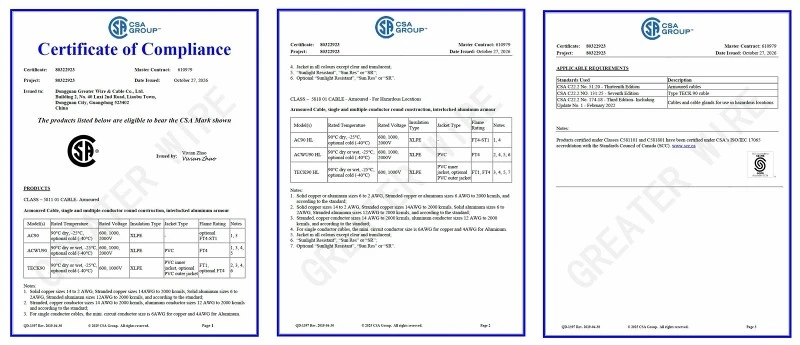
Reliable AC90 cable performance starts with appropriate product specifications and careful installation. GERITEL WIRE supports electrical distributors, contractors, OEM manufacturers, and industrial buyers sourcing armoured cable solutions for Canadian electrical projects. Whether you require copper or aluminum conductors, different AWG sizes, or specific AC90 cable configurations, our team can help review your technical requirements and discuss suitable supply options. Contact GERITEL WIRE to request product specifications, discuss your cable requirements, and explore manufacturing solutions for your next commercial or industrial wiring project.
Dongguan Greater Wire & Cable Co., Ltd.
Tel/WhatsApp/Wechat: +86 136 6257 9592
Tel/WhatsApp/Wechat: +86 135 1078 4550
Email: manager01@greaterwire.com
Website: www.greaterwire.com
Technical Research References
The article draws on manufacturer installation guidance and Canadian cable product documentation:
1. Nexans Canada – AC90 Product Specifications: Construction, interlocked aluminum armour, conductor configuration, and approved applications.
AC90+1
2. Nexans – Installation 101 Webinar: Minimum bending-radius guidance for AC90, ACWU90, and other Canadian armoured cable types.
nexans.ca
3. Southwire – Cable Installation Guide: Cable pulling preparation, maximum pulling tension, bending radius, sidewall pressure, and handling practices.
southwire.com
4. CSA C22.1:24 – Canadian Electrical Code, Rule 12-902: Requirements and considerations concerning pulling armoured cables into raceways, including pulling tension, sidewall bearing pressure, and minimum bending radius.
philtech.ca
5. IEEE Std 1185 – Recommended Practice for Cable Installation: Guidance on gripping armoured cable, controlling pulling forces, and preventing armour separation.
AnyFlip