

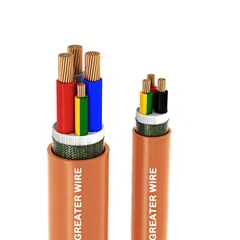
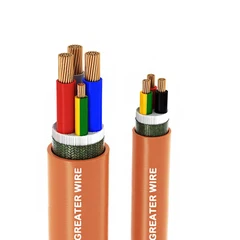

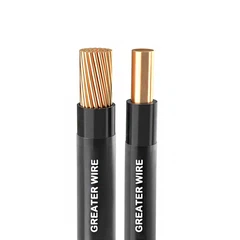
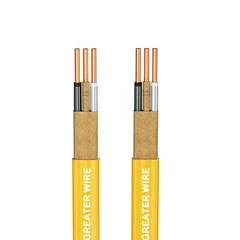
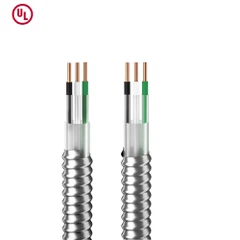
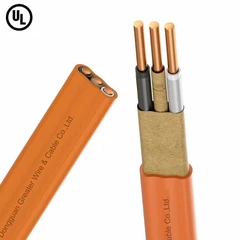

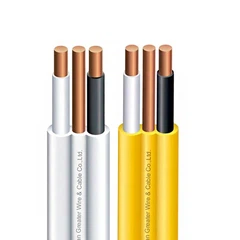
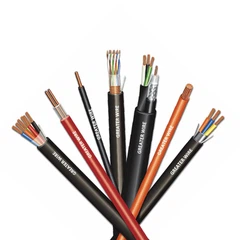

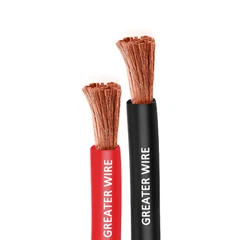
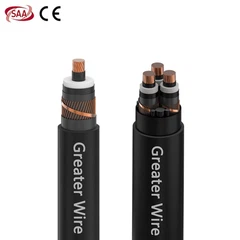
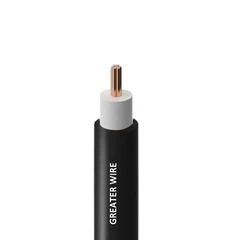
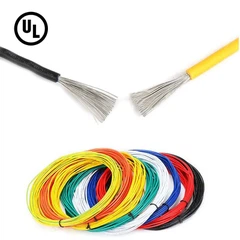
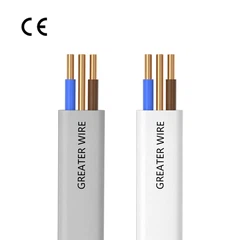
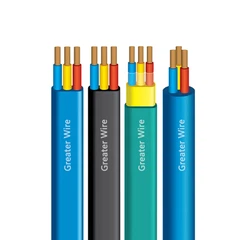
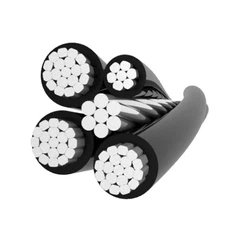
AC90 cable is often a practical alternative to installing individual insulated wires inside a conduit, particularly in Canadian commercial, residential, and certain industrial building projects. The main advantage is that AC90 combines insulated conductors, a bonding conductor, and flexible interlocked metal armour in one factory-assembled cable. This can simplify cable routing and reduce the need to install a separate raceway system.
However, AC90 is not automatically a better choice than individual wires in conduit. The right option depends on the installation environment, mechanical protection requirements, wiring route, project cost, and applicable Canadian Electrical Code (CEC) requirements.
For electrical contractors, distributors, and procurement managers, understanding when to choose AC90 and when to retain a conduit system can help improve installation efficiency without compromising electrical safety or code compliance.

1. What Is the Difference Between AC90 Cable and Individual Wires in Conduit?
Before comparing their applications, it is useful to understand how these two wiring methods are constructed.
1.1 AC90 Cable Construction
cUL Certification RW90 Xhhw-2 PVC Jacket Teck90 Acwu90 Cable 14/3 12/3 600V - Teck 90 Cable and AC90 Cable
huatongcables.en.made-in-china.com
AC90 is a Canadian armoured cable type generally manufactured to CSA C22.2 No. 51.
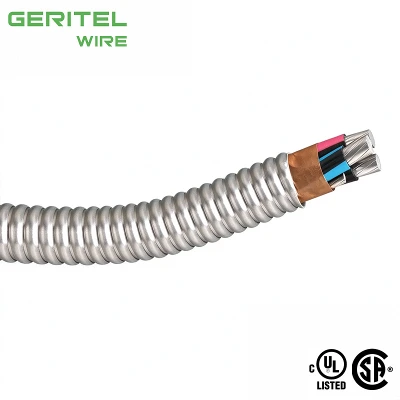
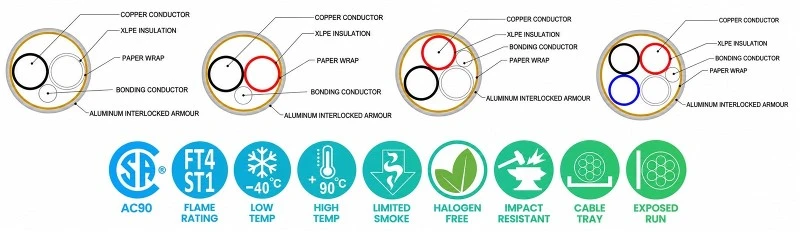
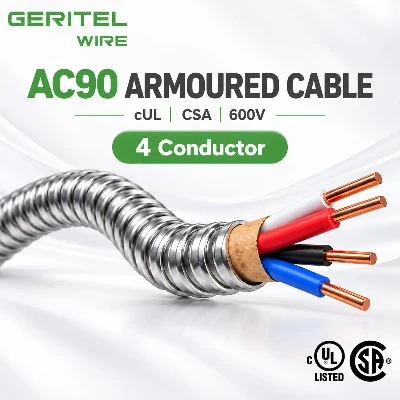
A typical AC90 cable includes:
Insulated conductors: Usually copper conductors with RW90 XLPE insulation.
Bonding conductor: Provides an electrical bonding path for fault-current protection.
Interlocked metal armour: Typically aluminum armour that surrounds the internal cable components and provides mechanical protection.
These components are assembled into one cable, so contractors do not need to pull each insulated conductor separately through a conduit for an installation where AC90 is permitted.
1.2 Individual Wires in Conduit
電線管占有率計算機
conduitfill-calculator.com
An individual-wire-in-conduit installation uses separate insulated conductors installed inside a protective raceway.
For example, a typical circuit may include:
One insulated phase conductor.
One insulated neutral conductor, where required.
A bonding or grounding conductor, where required by the wiring method.
The conduit provides a physical enclosure and a defined routing path. Individual conductors can be pulled through the raceway during installation, provided the selected wire types and raceway system are approved for the application.
In Canada, common conductor designations include RW90 and other approved building-wire types. THHN/THWN-2 is a familiar designation in the US market, but it should not be assumed interchangeable with Canadian-certified RW90 wire.
1.3 Key Construction Differences
|
Comparison |
AC90 Cable |
Individual Wires in Conduit |
|---|---|---|
|
Construction |
Factory-assembled cable |
Separate insulated conductors |
|
Mechanical protection |
Interlocked metal armour |
Separate raceway |
|
Installation |
Cable routed and secured |
Conductors pulled through conduit |
|
Bonding |
Cable includes a bonding conductor |
Depends on approved raceway and bonding arrangement |
|
Routing flexibility |
Flexible cable assembly |
Raceway route must be installed first |
|
Conductor replacement |
Usually requires replacing or rerouting cable |
Individual conductors may be replaceable |
|
Environmental suitability |
Conventional AC90 is generally for dry locations |
Depends on conductor and raceway ratings |
The key distinction is that AC90 integrates conductors and armour into one product, while conduit installations use a separate raceway and individual conductors.
2. When Should You Choose AC90 Instead of Conduit?
AC90 is most attractive when the project requires a relatively straightforward wiring route, the installation is in a permitted dry location, and the cable's factory-assembled construction can reduce installation work.
The following situations are particularly suitable.
2.1 When You Want to Reduce Installation Steps
One of the main reasons to choose AC90 is to simplify the wiring process.
With individual wires in conduit, contractors generally need to:
Measure and plan the conduit route.
Install conduit, fittings, connectors, and supports.
Pull individual conductors through the completed raceway.
Make the required bonding and electrical connections.
With AC90, the conductors and metal armour are already assembled. Contractors can route, support, secure, and terminate the cable using the appropriate approved fittings.
This can reduce the number of separate installation operations, especially where many relatively short branch circuits are involved.
However, actual labour savings depend on the route, cable size, number of circuits, accessibility, and local labour costs. AC90 is not necessarily cheaper for every project.
2.2 When Wiring Routes Are Relatively Short and Direct
EmergenServe | Licensed Electricians in Charleston, SC
emergenserve.com
AC90 is often a good option for relatively short or direct wiring routes in commercial and residential buildings.
Examples include:
Connections between distribution panels and nearby electrical equipment.
Lighting circuits above suspended ceilings.
Branch circuits routed through building framing.
Electrical connections in apartment buildings.
Wiring between junction boxes and electrical devices.
In these situations, installing a complete conduit system may introduce additional work without providing a significant practical advantage.
AC90's flexible armour can make it easier to route around suitable building structures, although minimum bending radius and support requirements must still be followed.
2.3 When Mechanical Protection Is Required
AC90 combines insulated conductors with interlocked metal armour.
This construction provides mechanical protection without requiring a separately installed conduit for applications where AC90 is an approved wiring method.
It is useful in locations where cables may be exposed to incidental physical contact during building operation or maintenance.
For example, commercial electrical installations may contain wiring routed through accessible ceiling spaces or along building structures.
Nevertheless, interlocked armour should not be treated as protection against every type of impact, crushing force, or severe mechanical damage. Where the project involves substantial physical hazards, a more robust raceway or another approved cable construction may be necessary.
2.4 When Multiple Branch Circuits Need Straightforward Routing
AC90 can be convenient for projects involving multiple independent branch circuits.
Each cable can be manufactured with the required number and size of conductors, making circuit identification and installation planning relatively straightforward.
For example, an apartment building may require separate cable runs for lighting, receptacles, and other electrical loads.
Using appropriately specified AC90 assemblies can simplify material handling and reduce the need to manage several individual conductor reels for every circuit.
However, contractors must still check conductor ampacity, grouping and adjustment requirements, circuit identification, and available installation space.
2.5 When the Project Requires a Factory-Assembled Cable
Another reason to select AC90 is procurement and material control.
Instead of sourcing individual conductors, bonding components, and a separate raceway system for every suitable circuit, buyers can specify a complete cable assembly.
This may simplify:
Bill-of-material preparation.
Cable identification and ordering.
Material storage and handling.
Project quantity estimation.
Installation scheduling.
For electrical distributors and procurement managers, this can make AC90 a convenient option for standardized building wiring projects.
3. When Should You Keep Individual Wires in Conduit?
Despite AC90's advantages, individual wires in conduit remain preferable in several important situations.
3.1 When the Installation Environment Is Wet or Outdoors
Conduit & Fittings 101 (Canada): EMT, Connectors & Types – Maple Electric Supply
mapleelectricsupply.ca
Conventional AC90 is generally approved for dry locations only.
If the wiring route involves outdoor exposure, wet areas, or underground installations, standard AC90 should not be selected simply because it has metal armour.
In these situations, an appropriately rated raceway with suitable conductors, or another approved cable type, may be more appropriate.
For Canadian projects, ACWU90 and TECK90 are examples of alternative armoured cable families designed for applications that can include wet locations, subject to their individual approvals and installation requirements.
AC90+2
3.2 When Future Conductor Replacement Is Important
One major advantage of conduit is that individual conductors can often be removed and replaced without replacing the entire wiring route.
This is particularly valuable in:
Industrial facilities with changing equipment requirements.
Buildings designed for future electrical expansion.
Installations where circuit modifications are expected.
Projects where maintenance access is a priority.
With AC90, the conductors are enclosed within the cable assembly. Replacing a damaged or outdated conductor generally means replacing the cable run rather than pulling out one individual wire.
Therefore, conduit may offer better long-term flexibility when future circuit changes are anticipated.
3.3 When Complex Routing Requires a Dedicated Raceway
Conduit Pathways and Equipment Integration: Early Electrical Coordination
recoreelectric.com
Some installations have complicated routing requirements, including numerous bends, equipment transitions, and multiple distribution points.
A conduit system can provide a defined and organized pathway for individual conductors.
It may also be easier to adapt when equipment locations change or when new circuits need to be added, provided the raceway has sufficient capacity and complies with applicable code requirements.
By comparison, adding circuits to an existing AC90 installation usually requires additional cable runs and associated supports and terminations.
3.4 When Special Environmental or Mechanical Protection Is Required
Some industrial environments require protection beyond the capabilities or approvals of standard AC90.
Examples include:
Areas exposed to corrosive substances.
Wet or frequently washed-down areas.
Locations with significant impact or crushing risks.
Hazardous classified locations.
Outdoor installations exposed to sunlight and weather.
A properly specified conduit system may be more suitable, although the raceway, conductor insulation, fittings, seals, and bonding arrangements must all be appropriate for the environment.
The important point is to select a complete approved wiring method, rather than assuming that either AC90 or conduit is suitable for every industrial application.
4. AC90 vs. Individual Wires in Conduit: Cost and Installation Comparison
The choice between AC90 and conduit should consider the total installed cost, not simply the purchase price of the cable or wire.
|
Cost or performance factor |
AC90 cable |
Individual wires in conduit |
|---|---|---|
|
Material purchasing |
Complete cable assembly |
Separate wires, conduit, and fittings |
|
Installation operations |
Generally fewer separate steps |
Raceway installation followed by wire pulling |
|
Labour requirements |
May be lower on straightforward routes |
Depends on conduit complexity and pulling conditions |
|
Mechanical protection |
Integrated metal armour |
Provided by the selected raceway |
|
Circuit modifications |
Usually requires additional cable runs |
Individual conductors may be replaced or added |
|
Routing flexibility |
Flexible cable assembly |
Raceway provides a defined pathway |
|
Wet-location suitability |
Standard AC90 is generally unsuitable |
Depends on complete system ratings |
|
Long-term maintenance |
Cable replacement may be required |
Individual conductor replacement may be possible |
Which Option Is More Economical?
AC90 may offer a cost advantage when:
The wiring route is relatively short and uncomplicated.
Many branch circuits require similar installation methods.
Labour costs are significant.
Separate conduit installation would add unnecessary work.
The project is located in a suitable dry environment.
Individual wires in conduit may be more economical when:
A raceway system is already installed.
Future circuit modifications are expected.
The routing is complex.
Existing conduit can be reused.
Environmental conditions require a particular raceway system.
There is no universal cost winner. A reliable comparison should include cable or conductor prices, conduit and fitting costs, installation labour, supports, termination accessories, and future maintenance.
5. How to Choose Between AC90 and Conduit for a Canadian Project
For contractors and electrical procurement professionals, the following checklist can help determine which wiring method is more appropriate.
|
Selection question |
AC90 may be suitable |
Conduit may be preferable |
|---|---|---|
|
Is the installation in a dry location? |
Yes |
Also suitable if approved |
|
Is the wiring route relatively straightforward? |
Yes |
Not necessarily required |
|
Is integrated mechanical protection needed? |
Yes |
Yes, through a suitable raceway |
|
Will individual conductors need replacement? |
Less convenient |
Generally more convenient |
|
Is future circuit expansion expected? |
Additional cable runs may be needed |
Easier if spare raceway capacity exists |
|
Is the installation exposed to moisture? |
Standard AC90 is unsuitable |
With appropriately rated components |
|
Is the route highly complex? |
Depends on cable routing limitations |
Often preferable |
Five Technical Checks Before Ordering
Before purchasing AC90, confirm the following specifications:
1. Conductor size: Select the appropriate AWG or kcmil size according to load calculations and applicable ampacity requirements.
2. Number of conductors: Confirm the required phase, neutral, and bonding arrangements.
3. Conductor material: Choose copper or aluminum according to electrical requirements and termination compatibility.
4. Cable ratings: Verify voltage, conductor temperature, flame performance, and other required product markings.
5. CSA certification and installation approval: Confirm that the specific AC90 construction is certified for the intended application and complies with the applicable edition of CSA C22.1, Canadian Electrical Code, Part I, and local amendments.
AC90 products are commonly manufactured to CSA C22.2 No. 51. However, product certification alone does not establish that every installation method is permitted. The applicable CEC rules and manufacturer instructions must also be followed.
webstore.ansi.org+1
6. Final Recommendation: AC90 or Individual Wires in Conduit?
AC90 is often the more convenient choice for straightforward commercial and residential branch-circuit installations in permitted dry locations. Its factory-assembled construction combines insulated conductors and metal armour, potentially reducing installation steps and simplifying material handling.
Individual wires in conduit are generally preferable when future conductor replacement, circuit expansion, complex routing, or specific environmental protection requirements are important.
For Canadian electrical projects, the decision should not be based on installation speed or initial material price alone. Contractors and procurement teams should evaluate the complete wiring system, including environmental conditions, mechanical protection, electrical ratings, maintenance requirements, and Canadian code compliance.
Choosing the appropriate wiring method at the specification stage can help avoid unnecessary installation costs and future modifications.

GERITEL WIRE – Supporting Your Canadian Armoured Cable Requirements
Choosing between AC90 cable and individual wires in conduit requires a clear understanding of project conditions, installation requirements, and product specifications. GERITEL WIRE supports electrical distributors, contractors, and OEM customers sourcing armoured cable solutions for the Canadian market. Whether your project requires copper or aluminum conductors, different conductor sizes, or specific cable configurations, our team can help you review technical requirements and explore suitable supply options. Contact GERITEL WIRE to discuss your AC90 cable specifications, request product information, and find a cable solution that matches your project needs.
Dongguan Greater Wire & Cable Co., Ltd.
Tel/WhatsApp/Wechat: +86 136 6257 9592
Tel/WhatsApp/Wechat: +86 135 1078 4550
Email: manager01@greaterwire.com
Website: www.greaterwire.com