

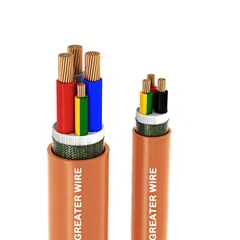
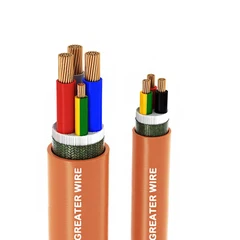

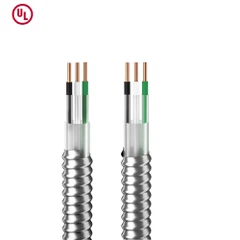
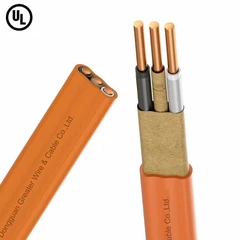
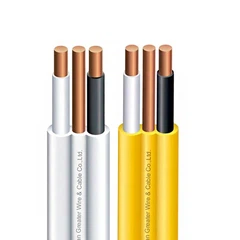

AC90 cable is a type of armoured electrical cable widely used in Canadian commercial, industrial, and residential building installations. It combines insulated electrical conductors, a bonding conductor, and flexible interlocked metal armour in one factory-assembled cable. Its metal armour provides mechanical protection and can simplify installation by reducing the need for separate conduit and individual wire pulling.
In Canada, AC90 is commonly selected for exposed or concealed wiring in dry locations, including commercial buildings, apartment complexes, electrical distribution systems, and industrial facilities. However, its suitability depends on the installation environment, cable certification, conductor specifications, and applicable Canadian Electrical Code requirements. Understanding its construction and permitted applications helps electrical contractors, distributors, and procurement professionals select the correct cable for each project.


1. What Is AC90 Cable?
AC90 is a Canadian-designated type of armoured cable manufactured in accordance with CSA C22.2 No. 51, the standard covering armoured cables.
It is designed to provide electrical insulation and mechanical protection within a single cable assembly. Unlike conventional building wire, which generally requires a separate raceway or protective enclosure depending on the installation, AC90 incorporates flexible metal armour around its insulated conductors.
The number "90" refers to the maximum conductor operating temperature of 90°C under the applicable product rating. It does not mean that the cable can be installed in every environment with an ambient temperature of 90°C.
Most conventional AC90 products are rated at 600 volts and use cross-linked polyethylene (XLPE) insulation, commonly identified as RW90.
Main Applications of AC90 Cable
AC90 is commonly used for:
Commercial building branch circuits and power distribution.
Residential apartment electrical wiring.
Industrial building electrical installations.
Lighting and general-purpose power circuits.
Exposed and concealed wiring in dry locations.
Certain cable tray installations where the applicable product approval permits them.
Its combination of electrical performance and mechanical protection makes it a practical option for many above-ground building wiring projects in Canada.
2. How Is AC90 Cable Constructed?
Understanding AC90 construction helps buyers distinguish it from other Canadian armoured cable types.
Typical AC90 cable construction - actual designs vary by manufacturer and conductor configuration.
14-4 CU BLACK/WHITE/RED/BLUE AL ARMOR CSA AC90 600V 246 FT | Southwire
southwire.com
A typical AC90 cable contains the following components:
2.1 Conductors
AC90 cables are available with copper or aluminum conductors, depending on the manufacturer's product range.
Copper conductors offer high electrical conductivity and are commonly used in building branch circuits. Aluminum conductors can provide a lighter-weight and potentially more economical option for larger electrical distribution applications.
Conductors may be solid or stranded, depending on their size and cable design.
2.2 Insulation
The conductors are generally insulated with cross-linked polyethylene (XLPE), identified as RW90 under Canadian wire designations.
This insulation provides electrical isolation and supports a maximum conductor operating temperature of 90°C, subject to the applicable installation and termination requirements.
2.3 Bonding Conductor
A bare copper or aluminum bonding conductor is included in the cable assembly.
Its purpose is to provide an electrical bonding path and help establish a low-impedance fault-current path back to the electrical source.
The bonding conductor is an important component of the cable's grounding and fault-protection arrangement. It should not be confused with the insulated circuit conductors.
2.4 Interlocked Metal Armour
The outer layer consists of flexible interlocked metal armour, typically aluminum.
This armour protects the internal conductors against mechanical damage during transportation, installation, and normal service.
It also provides the cable with its characteristic flexibility, making it easier to route around building structures than some rigid raceway systems.
3. Where Is AC90 Cable Commonly Used in Canada?
AC90 is particularly useful in building installations where mechanical protection is required and the wiring route is suitable for an armoured cable.
3.1 Commercial Buildings
Canada Market Hot Sale Cables AC90 Acwu90 Teck90 Nmwu 90 12/2 14/2 - AC90 12/2 and AC90 Building Wire
m.made-in-china.com
Commercial buildings are among the common application environments for AC90.
Typical uses include:
Office lighting circuits.
Receptacle and general-purpose power circuits.
Electrical connections to building equipment.
Branch circuit distribution.
Wiring routed above suspended ceilings.
Its integrated armour can reduce the need for separate conduit in suitable installations, helping contractors simplify cable routing and installation work.
3.2 Residential and Apartment Buildings
Hot Copper Round Wire Bx 3c6 Cu 12/2 AC90 14/2 Armoured Cable - 2026 AC90 Cable, AC90 Wire price | Made-in-china.com
huatongcables.en.made-in-china.com
AC90 can also be used in residential construction, particularly in multi-unit apartment buildings.
Typical applications include branch circuit wiring, lighting systems, and connections to electrical distribution equipment.
Its armoured construction provides additional mechanical protection in areas where wiring may be exposed to physical contact during construction or building maintenance.
3.3 Industrial Buildings
Commercial Electrical Contractor in Toronto | Ontime Electric
ontime-electric.ca
In industrial buildings, AC90 may be used for suitable power and lighting circuits, control-related power supplies, and connections to building electrical equipment.
However, it is not automatically suitable for every industrial environment. Installations involving moisture, chemical exposure, hazardous locations, or significant mechanical stress may require a different cable type with specific environmental approvals.
3.4 Cable Tray Installations
Some AC90 products are approved for installation in specified cable tray arrangements, including ventilated cableways.
This can make AC90 useful in commercial and industrial electrical distribution systems where cables need to follow organized routing paths.
However, tray suitability should never be assumed solely because a cable has metal armour. Buyers should verify the manufacturer's certification and installation instructions for the specific product.

4. What Are the Installation Limitations of AC90 Cable?
Although AC90 is a versatile armoured cable, it is not designed for every installation environment.
Understanding its limitations is essential when selecting cables for Canadian electrical projects.
4.1 Dry Locations Only
Conventional AC90 cable is generally intended for exposed or concealed wiring in dry locations.
It should not automatically be specified for damp or wet locations, outdoor installations exposed to weather, or underground applications.
For example, Noramco and Nexans both identify their standard AC90 products as suitable for dry-location installations only.
Noramco+1
4.2 Not Automatically Suitable for Direct Burial
The interlocked metal armour provides mechanical protection, but this does not automatically make AC90 suitable for direct burial.
Underground installations require cables specifically approved for the relevant environmental conditions. Depending on the project, ACWU90 or another appropriately certified cable may be more suitable.
4.3 Hazardous Locations Require Special Verification
Standard AC90 should not be assumed suitable for hazardous locations.
If a project involves flammable gases, combustible dust, or other classified environments, the cable must have the appropriate certification and be permitted by the applicable electrical code.
4.4 Installation Temperature and Bending Requirements
Although some AC90 products carry a minimum temperature rating of -40°C, this does not necessarily mean they can be installed at that temperature without special handling.
Contractors should check the manufacturer's minimum installation temperature, minimum bending radius, pulling tension, and handling instructions before installation.
5. AC90 vs. ACWU90 vs. TECK90: What Is the Difference?
These three cable types are used in Canadian electrical installations, but their construction and application boundaries are different.
|
Cable type |
Main construction |
Typical application |
|---|---|---|
|
AC90 |
XLPE-insulated conductors with interlocked metal armour |
Dry-location building wiring |
|
ACWU90 |
XLPE-insulated conductors with armoured construction and an overall moisture-resistant jacket |
Applications including wet locations and outdoor environments, subject to product approval |
|
TECK90 |
Insulated conductors, metallic armour and an overall outer jacket |
Industrial power and control installations, including approved demanding environments |
The most important distinction is environmental suitability.
AC90 is commonly selected for dry indoor wiring. ACWU90 offers additional environmental protection through its overall jacket, while TECK90 is designed for a broader range of industrial applications.
However, not every product within these cable categories has identical approvals. Buyers should always review the individual product datasheet rather than selecting a cable based on its type designation alone.
AC90+1
6. How to Select the Right AC90 Cable for a Canadian Project
For electrical distributors, contractors, and procurement managers, selecting AC90 involves more than choosing a conductor size.
The following factors should be considered before placing an order.
1. Conductor material: Determine whether copper or aluminum conductors are appropriate for the electrical load, installation conditions, and termination equipment.
2. Conductor size: Select the correct AWG or kcmil size based on calculated load, allowable ampacity, installation conditions, and applicable Canadian Electrical Code requirements.
3. Number of conductors: Identify whether the application requires two, three, or four insulated conductors, together with the appropriate bonding conductor.
4. Voltage and temperature ratings: Confirm the required voltage rating, typically 600V for conventional AC90, and verify the 90°C conductor temperature rating.
5. CSA certification: Check that the product is certified and marked for its intended Canadian application. CSA C22.2 No. 51 is an important product standard for AC90 armoured cable.
6. Installation environment: Confirm that the installation is suitable for AC90, particularly regarding dry-location requirements, cable tray use, mechanical protection, and installation temperature.
7. Project documentation: Request technical datasheets, certification information, construction details, and relevant test reports from the supplier.
These checks help reduce specification errors and ensure that the selected cable matches the actual project requirements.

7. Conclusion: Is AC90 Cable the Right Choice?
AC90 cable is a practical solution for many Canadian electrical installations, particularly commercial buildings, residential apartments, and industrial facilities requiring exposed or concealed wiring in dry locations.
Its insulated conductors, bonding conductor, and flexible interlocked metal armour combine electrical functionality with mechanical protection. However, AC90 is not a universal replacement for conduit, ACWU90, or TECK90. Its permitted applications depend on the specific product certification and installation requirements.
For electrical contractors, distributors, and project buyers, understanding these differences is essential to selecting the right armoured cable, controlling installation costs, and meeting Canadian electrical requirements.


GERITEL WIRE – Your AC90 Cable Supply Partner
Selecting the right AC90 cable is essential for reliable electrical installations and long-term project performance. GERITEL WIRE provides Canadian-market armoured cable solutions designed to meet the requirements of commercial, residential, and industrial wiring projects. Whether you are sourcing copper or aluminum conductor AC90 cables, evaluating different conductor configurations, or looking for a reliable cable manufacturing partner, our team can help you review product specifications and identify suitable solutions. Contact GERITEL WIRE to discuss your cable requirements, request technical information, and explore supply options for your next Canadian electrical project.
Dongguan Greater Wire & Cable Co., Ltd.
Tel/WhatsApp/Wechat: +86 136 6257 9592
Tel/WhatsApp/Wechat: +86 135 1078 4550
Email: manager01@greaterwire.com
Website: www.greaterwire.com
Research references
The technical discussion above draws on Canadian-market manufacturer and distributor documentation:
Nexans – AC90 Product Specifications.
Noramco – AC90 600V Technical Details.
Nexans – Armoured Wire & Cable Information Sheet.
GERITEL WIRE – AC90 Aluminum Cable Product Information.
Editorial note: The article distinguishes conventional dry-location AC90 from other armoured cable types. Before publication, product-specific CSA certification and the applicable provincial or territorial adoption of the Canadian Electrical Code should be checked. Manufacturer specifications should take precedence over general descriptions when confirming permitted applications.