

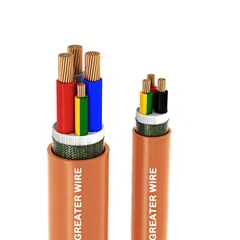
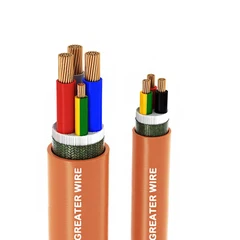

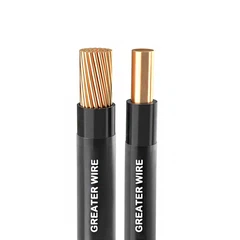
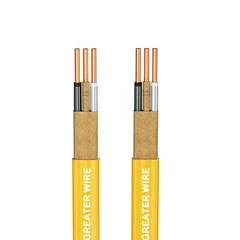
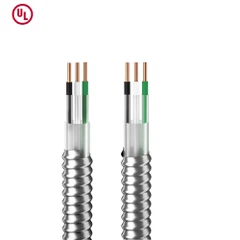
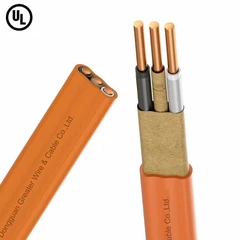
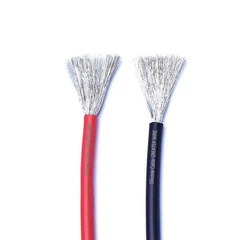
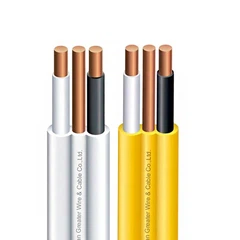
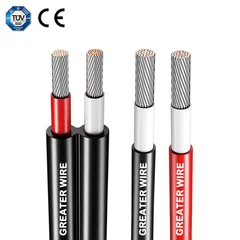

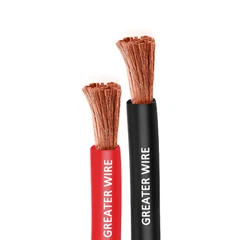
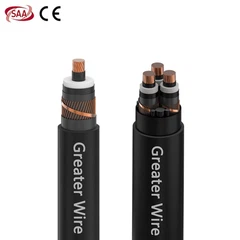
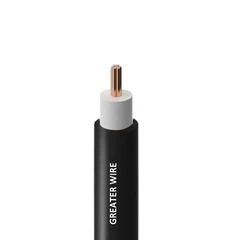
When specifying TC-ER cable for industrial power distribution or control systems, buyers often need to choose between bare copper and tinned copper conductors. Both use copper as the primary conducting material, but tinned copper has a thin layer of tin on the conductor surface. This coating can improve resistance to certain forms of surface corrosion, making it worth considering for demanding environments.
So, which option is better for your project? The answer depends on the installation environment, electrical requirements, expected service life, and budget. This guide compares the two conductor types and explains what industrial buyers should verify before ordering XLPE Tray Cable or other TC-ER products.
1. What Is Bare Copper in TC-ER Cable?
Bare copper is copper conductor material without a metallic coating. It is widely used in industrial power cables because copper offers high electrical conductivity, good ductility, and established manufacturing processes.
In a typical TC-ER cable, stranded bare copper conductors are covered with electrical insulation, assembled into a cable core, and protected by an overall jacket. Depending on the design, the cable may also include a grounding conductor, shielding, fillers, or other components.
Advantages of bare copper
High electrical conductivity: Copper provides excellent conductivity for power and control circuits.
Cost efficiency: Without an additional tin-plating process, bare copper may be the more economical choice.
Wide availability: Bare copper is common in industrial cable constructions and a broad range of conductor sizes.
Established termination practices: Bare copper is compatible with many standard copper-rated terminals and connectors when used according to their instructions.
Bare copper is often a practical option for controlled indoor environments and other installations where the conductor's corrosion resistance meets the application requirements.
Limitations of bare copper
Bare copper can oxidize when exposed to air and moisture. In more corrosive environments, surface degradation may become a concern, particularly at exposed conductor ends and connection interfaces.
However, copper oxidation does not automatically mean that the entire conductor will fail or that its current-carrying capacity will immediately decline. The effect depends on the environment, the condition of the conductor, and the quality of the electrical connection.
Bare copper may be entirely suitable for a properly designed cable installation. The decision should be based on actual environmental conditions rather than an assumption that uncoated copper is inherently unsuitable for industrial use.


2. What Is Tinned Copper in TC-ER Cable?
Tinned copper is copper conductor material coated with a thin layer of tin. The underlying conductor remains copper; tin is the surface coating rather than a replacement for the copper core.
The coating can reduce direct exposure of the copper surface to moisture and certain corrosive agents. It may also help maintain a more stable conductor surface in environments where oxidation or corrosion is a concern.
Tinned copper is used in some industrial power, control, instrumentation, and other specialized cable constructions. Its suitability depends on the conductor design and the requirements of the complete cable.
Advantages of tinned copper
Improved surface corrosion resistance: The tin coating can help protect copper under suitable environmental conditions.
Useful in humid environments: It may be advantageous where moisture exposure makes surface corrosion more likely.
Potential benefits at conductor interfaces: Tin-plated conductors can be useful in compatible termination systems, subject to connector instructions and applicable requirements.
Availability for specialized cable designs: Some manufacturers offer tinned conductors for applications with particular environmental or construction requirements.
Limitations of tinned copper
Tinned copper may cost more because the conductor requires an additional plating process. Its performance also depends on coating quality, coverage, thickness, and the actual exposure conditions.
The tin layer does not make the cable immune to corrosion. It does not guarantee compatibility with every chemical, prevent moisture from entering a poorly sealed cable, or eliminate the need for suitable terminations.
Buyers should also avoid assuming that tinned copper has a higher current rating than bare copper of the same nominal size. The complete cable's ampacity depends on conductor dimensions, insulation temperature rating, installation conditions, and applicable electrical requirements-not simply on whether the conductor is tinned.
3. Bare Copper vs Tinned Copper: Key Differences
The most important distinction is the presence of the tin coating, which can influence corrosion behavior and purchasing cost. Electrical performance and installation suitability must still be evaluated for the complete cable.
| Comparison factor | Bare copper | Tinned copper |
|---|---|---|
| Conductor base material | Copper | Copper |
| Surface coating | None | Thin tin coating |
| Electrical conductivity | High | The tin surface has lower conductivity than copper, but the coating is thin; overall cable resistance depends on the complete conductor design |
| Surface corrosion resistance | Copper can oxidize when exposed to air and moisture | Tin coating can help protect the copper surface under suitable conditions |
| Relative material cost | Often lower | May be higher because of the additional plating process |
| Availability | Widely used in general industrial cable constructions | Available in selected industrial and specialized constructions |
| Termination compatibility | Must match the connector and conductor specifications | Must also match the connector and conductor specifications; verify compatibility with tinned conductors |
| Typical selection priority | Cost-effective conductivity where corrosion resistance is adequate | Enhanced surface protection where justified by the environment |
| Certification implications | Must meet the complete cable's applicable requirements | Must meet the same applicable requirements for the selected cable type; tin plating alone does not establish certification |
For many ordinary industrial installations, bare copper is an appropriate and economical choice. Where moisture or corrosive exposure is a meaningful concern, tinned copper may justify its additional cost.
Neither option is universally superior. The correct choice depends on the expected environment, conductor specification, cable construction, termination system, and project requirements.

4. Does Tinned Copper Improve TC-ER Cable Performance?
Tinning can improve one aspect of conductor performance: resistance to certain forms of surface corrosion. It does not automatically improve every electrical, mechanical, or environmental characteristic of the cable.
Electrical conductivity and ampacity
Copper is the principal current-carrying material in both conductor types. Although tin is less electrically conductive than copper, the coating is thin, so its effect on the overall conductor resistance is generally small when the conductor is properly manufactured.
Buyers should compare specified conductor resistance, conductor size, ampacity, and temperature ratings rather than assuming that one conductor type can carry more current solely because it is bare or tinned.
For a large conductor such as 500 kcmil Tray Cable, the required ampacity must be determined from the applicable code, conductor insulation rating, ambient temperature, installation method, and other relevant conditions. The tin coating does not independently determine the permissible current.
Corrosion and service life
Tinned copper may be advantageous where the conductor surface is exposed to humid or corrosive conditions. However, the benefit depends on the severity and type of exposure.
The conductor inside an intact, properly manufactured cable is generally protected by insulation and the outer jacket. Corrosion concerns may arise at terminations, damaged insulation, poorly sealed entries, or locations where the conductor is otherwise exposed.
For this reason, choosing tinned copper should be part of a broader assessment that includes jacket suitability, sealing, termination hardware, maintenance practices, and environmental exposure.
Mechanical and installation performance
Tinning does not automatically make a conductor more flexible, more resistant to crushing, or suitable for exposed installation. Flexibility depends substantially on conductor stranding, material condition, cable construction, and the intended bending requirements.
Likewise, a tinned conductor does not remove the need to follow the cable's minimum bending radius, pulling limits, support requirements, or applicable installation rules.
5. Which Conductor Is Better for Different Industrial Applications?
The following examples illustrate how to approach the decision. They are general selection guidelines, not universal rules for every cable product.
| Application | What to consider | Possible selection approach |
|---|---|---|
| General indoor factory wiring | Normal humidity, conductor ratings, and installation cost | Bare copper may be appropriate when its properties meet the requirements |
| Humid industrial locations | Moisture exposure, cable integrity, and termination protection | Consider tinned copper if its documented corrosion benefits are relevant |
| Chemical processing facilities | Specific chemicals, concentration, temperature, and contact duration | Verify material compatibility; tinning alone is not sufficient |
| Outdoor cable routes | Jacket weather resistance, moisture protection, temperature, and terminations | Assess the complete cable and installation rather than relying on conductor plating |
| Large power distribution circuits | Ampacity, conductor resistance, termination ratings, and installation conditions | Choose by electrical and code requirements; plating is a secondary factor |
| Multiconductor control circuits | Signal requirements, conductor identification, shielding, and environmental exposure | Specify the required construction and evaluate whether tinned conductors provide a meaningful benefit |
For an 8 Conductor Tray Cable used in industrial control equipment, for example, the number of conductors does not determine whether bare or tinned copper is preferable. The decision depends on the electrical function of the circuits, the environment, conductor size, and the product's construction.
Where the cable operates in a demanding environment, buyers should identify the actual risks before requesting a tinned conductor option. This avoids paying for a feature that may offer little practical benefit in the intended installation.

6. Does UL 1277 Require Bare or Tinned Copper?
UL 1277 is titled Electrical Power and Control Tray Cables with Optional Optical-Fiber Members. Its scope covers specified power and control cable constructions using copper, aluminum, or copper-clad aluminum current-carrying conductors, together with the other components defined by the standard.
The standard's scope does not mean that every cable listed under UL 1277 uses the same conductor material or plating. A specific product's construction must be verified through its listing and technical documentation.
For TC-ER cable buyers, several points are important:
Bare copper and tinned copper should be treated as conductor construction options, not as independent proof of cable approval.
Tin plating alone does not establish that a cable meets UL 1277 or qualifies as Type TC-ER.
The complete cable must meet the applicable construction, testing, marking, and certification requirements.
The product's listing and markings must support the intended installation under the applicable electrical code.
For North American projects, verify the precise cable designation, voltage and temperature ratings, conductor configuration, environmental markings, and certification records.
For Canadian, IEC-based, Australian, and New Zealand projects, check the standards and approvals required in the destination market. A UL listing does not automatically establish compliance with every other national certification system.
7. How to Specify Bare or Tinned Copper When Buying TC-ER Cable
A clear technical specification helps suppliers quote comparable products and reduces the risk of receiving a cable that does not meet the project's needs.
Before requesting a quotation, define the following.
Electrical requirements
Conductor material and nominal size.
Number of conductors and whether an equipment grounding conductor is required.
Rated voltage and conductor temperature rating.
Current-carrying requirements and applicable installation conditions.
Shielding or other circuit-specific requirements.
Conductor construction
Bare or tinned copper, as required.
Stranding class and conductor flexibility requirements.
Conductor resistance or other relevant electrical limits.
Compatibility with the intended terminals and connectors.
Cable construction and environment
Insulation material, such as XLPE where specified.
Overall jacket material and required environmental properties.
Wet-location, sunlight-resistance, oil-resistance, or chemical-resistance requirements, where applicable.
Required flame-test performance.
Installation method, including tray installation and any permitted exposed-run use.
Certification and documentation
Required cable type and certification.
Applicable standards and destination-market approvals.
Manufacturer's datasheet and product-specific certification documentation.
Consistency between the approved specification, quotation, and delivered cable markings.
For a buyer sourcing XLPE Tray Cable, specifying XLPE insulation does not by itself establish whether the conductor is bare or tinned, what jacket is used, or whether the cable is listed as TC-ER. These details should be stated and verified separately.


8. Difference between TC-ER and MC Cable: Does Conductor Plating Matter?
The Difference between TC-ER and MC Cable is primarily a matter of cable construction, listing, and permitted installation-not whether the copper conductors are bare or tinned.
Type TC-ER is a tray cable designation that permits certain exposed-run installations when the applicable conditions are met. MC cable incorporates a metallic covering and has its own construction and installation requirements.
| Comparison point | TC-ER cable | MC cable |
|---|---|---|
| Basic construction | Insulated conductors under an overall jacket; construction varies by product | Insulated conductors within a metallic covering; construction varies by product |
| Installation considerations | Must comply with the applicable Type TC-ER requirements | Must comply with the applicable MC cable requirements |
| Mechanical protection | Depends on cable construction and installation conditions | Metallic covering provides a form of mechanical protection, subject to product type |
| Conductor material | May use specified copper conductor constructions, including bare or tinned options where offered | Depends on the particular MC product specification |
| Conductor plating | Does not determine whether the product qualifies as TC-ER | Does not determine whether the product qualifies as MC cable |
A buyer should not assume that a tinned-copper TC-ER cable is equivalent to MC cable, or that bare-copper TC-ER cable is inherently less suitable. The complete product type, mechanical protection, installation rules, and certification must match the application.
9. Frequently Asked Questions
Is tinned copper more conductive than bare copper?
No. Copper is more electrically conductive than tin. Because the tin coating is thin, its effect on overall conductor resistance is generally small. Compare the specified conductor resistance and electrical ratings rather than assuming either construction has a higher ampacity.
Does every TC-ER cable use bare copper conductors?
No. Conductor construction varies by manufacturer and product. Some TC-ER cables use bare copper, while other products may offer tinned copper conductors. Confirm the exact construction in the technical datasheet and listing information.
Is tinned copper always better for outdoor cable?
Not necessarily. Tinning may improve resistance to certain forms of surface corrosion, but outdoor suitability also depends on insulation, jacket properties, sealing, temperature ratings, and the installation environment.
Can tinned copper be used with standard copper terminals?
Compatibility depends on the terminal's ratings and manufacturer's instructions. Confirm that the terminal is suitable for the conductor type, size, stranding, and surface condition, and follow the specified preparation and termination procedure.
Should buyers specify tinned copper for every large conductor?
No. For a large conductor such as 500 kcmil, the primary considerations include ampacity, resistance, insulation rating, termination compatibility, and installation conditions. Specify tinned copper when its environmental or construction benefits justify the additional cost.
Conclusion
Bare copper and tinned copper can both be suitable for TC-ER cable. Bare copper is widely used and often offers a cost-effective solution where its corrosion resistance meets the application requirements. Tinned copper adds a protective tin layer that can be beneficial in certain humid or corrosive environments, but it does not automatically increase ampacity, establish cable certification, or make the complete cable suitable for every outdoor or industrial application.
For B2B buyers, the best decision comes from evaluating the actual environment, conductor specification, termination system, and applicable standards. A precise product specification helps ensure that the selected cable meets the project's electrical, environmental, and procurement requirements.
Technical References
UL Standards & Engagement, UL 1277 - Electrical Power and Control Tray Cables with Optional Optical-Fiber Members.
UL Solutions, Wire and Cable Application Guide.
Northwire, The Engineer's Guide to Custom Cable Design.
Source TC-ER Cable Solutions with GERITEL WIRE
Selecting the right conductor is an important part of building a reliable industrial cable specification. GERITEL WIRE supports B2B buyers sourcing power and control cables by helping clarify conductor materials, insulation options, cable configurations, environmental requirements, and destination-market specifications. Whether your project calls for XLPE Tray Cable, a large power conductor, or an 8 Conductor Tray Cable for industrial equipment, sharing your application details and required approvals helps streamline technical review and quotation. As a TC-ER Cable Manufacturer and Tray Cable Exporter resource for cable sourcing discussions, GERITEL WIRE welcomes inquiries from distributors, contractors, and OEMs seeking product information and solutions tailored to their project requirements.
Dongguan Greater Wire & Cable Co., Ltd.
Tel/WhatsApp/Wechat: +86 136 6257 9592
Tel/WhatsApp/Wechat: +86 135 1078 4550
Email: manager01@greaterwire.com
Website: www.greaterwire.com