

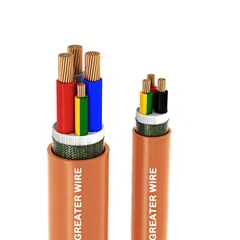
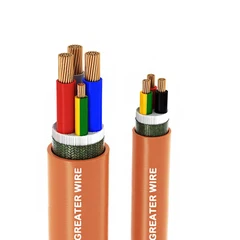

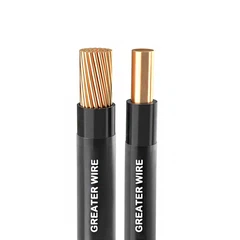
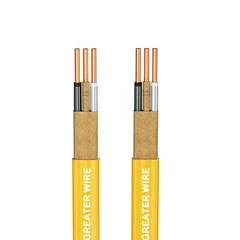
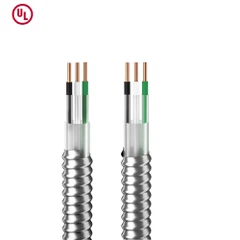
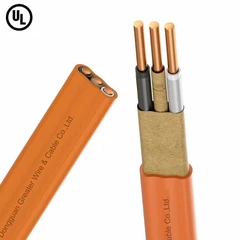
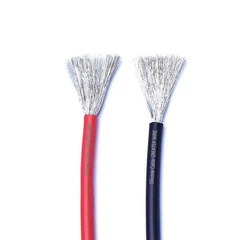
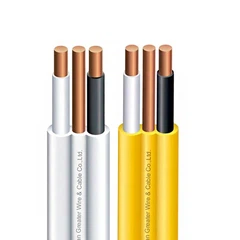
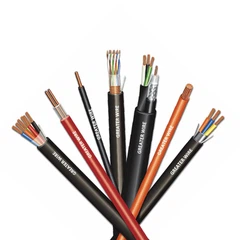
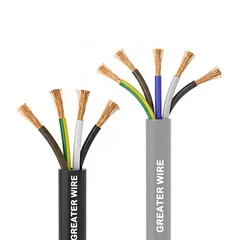
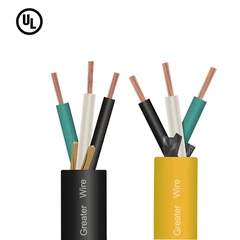
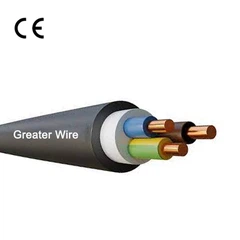
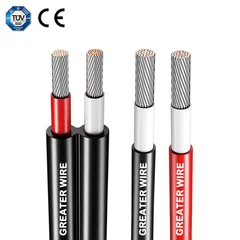

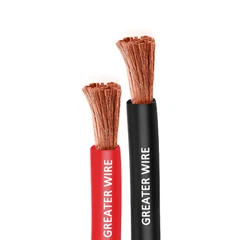
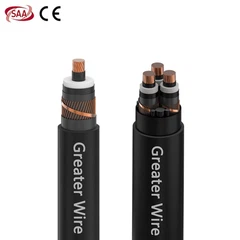
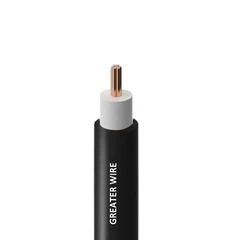
TC-ER cable is widely used in North American industrial electrical installations because it combines multiple insulated conductors within a protective outer jacket and, when appropriately listed, allows certain exposed-run installations outside cable trays. Understanding its internal components helps electrical contractors, equipment manufacturers, distributors, and procurement teams select the right cable for their applications.
From the copper conductor to the insulation, fillers, binding materials, and outer jacket, each component plays a specific role in electrical performance, mechanical protection, and installation suitability.
This guide explains the main components of TC-ER cable, how THHN conductor insulation works, and what buyers should verify when sourcing Industrial Power Cable for industrial power and control systems.
1. What Is TC-ER Cable?
TC-ER stands for Tray Cable–Exposed Run. It describes a tray cable that has the required qualification for certain exposed-run installations under applicable North American electrical codes.
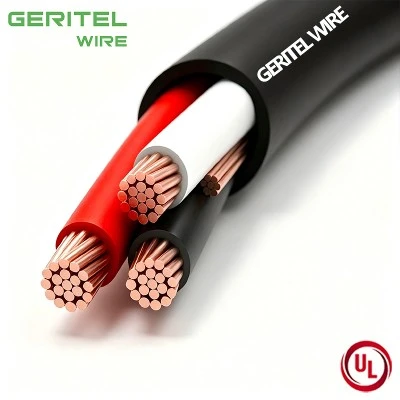
A typical TC-ER power cable contains several insulated conductors assembled into one cable and protected by an overall jacket. Depending on the product, it may also include a grounding conductor, fillers, binder tape, shielding, or other optional components.
TC-ER cables are commonly used in:
Industrial power distribution systems.
Factory automation and production equipment.
Motor control centers and electrical cabinets.
Fixed equipment connections outside cable trays, where permitted.
Industrial control and machinery wiring.
The exact construction depends on conductor size, number of cores, voltage rating, temperature rating, and application requirements.
It is important to distinguish the cable's construction from its installation qualification. TC-ER identifies a qualifying cable application; it does not specify one universal conductor material, insulation system, or jacket compound.

2. Main Components of TC-ER Cable
Most conventional copper TC-ER power cables use a construction similar to the following. Individual products may differ, so the manufacturer's datasheet and cable markings remain the definitive references for a particular model.
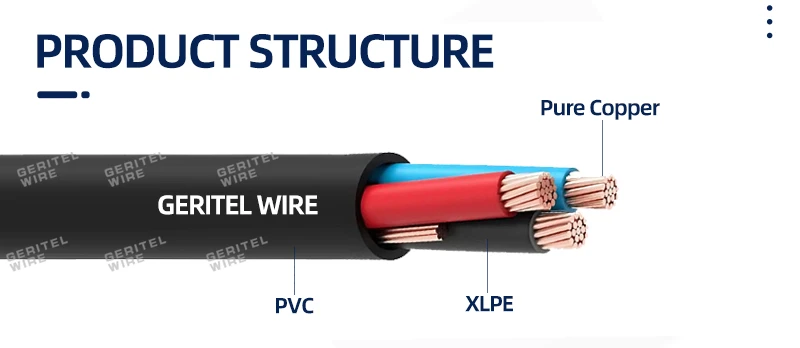
Typical cable structure: copper conductors → primary insulation → optional fillers and binder tape → overall jacket.
2.1 Conductor: The Current-Carrying Core
The conductor is the metallic component that carries electrical current. In many industrial TC-ER power cables, the conductors are made from annealed copper, although listed products using aluminum conductors are also available.
Copper is widely used because it offers good electrical conductivity, established termination practices, and suitable mechanical properties for many industrial wiring applications.
Common conductor options include:
Solid conductor: one solid metal wire, used in some smaller-wire applications where the product design permits it.
Stranded conductor: multiple smaller wires twisted together to form a conductor.
Compressed or compact stranded conductor: a stranded conductor processed to reduce its overall diameter.
Many larger TC-ER power cables use stranded conductors because this construction is practical for manufacturing, pulling, and terminating industrial cable.
The conductor's material, size, stranding class, and resistance affect electrical performance and installation characteristics. These properties must match the project's design and applicable electrical code.
2.2 Insulation: The Electrical Barrier
Insulation surrounds each conductor and prevents unintended electrical contact with other conductors or surrounding materials.
The insulation system must meet the required voltage, temperature, and environmental performance for the cable's intended application.
Common insulation constructions in TC-ER power cable include:
PVC-based insulation systems.
PVC insulation with a nylon outer layer.
Cross-linked polyethylene (XLPE) insulation in other cable designs.
The appropriate material depends on the product's listing and specifications. Buyers should not assume every TC-ER cable uses the same insulation.
2.3 Fillers: Maintaining Cable Shape
Fillers are materials placed between insulated conductors when needed. They help the assembled cable maintain a consistent shape and can support a more uniform overall cross-section.
Depending on the cable design, fillers may be made from polypropylene, paper-based materials, or other suitable compounds.
Fillers are not always necessary. Their use depends on conductor count, conductor size, cable geometry, and manufacturing requirements.
2.4 Binder Tape: Holding the Assembly Together
Binder tape is wrapped around the assembled conductors or cable core to help hold the components in position before the overall jacket is applied.
It can support a stable cable structure during manufacturing and handling. Depending on the design, manufacturers may use polyester tape or other suitable binding materials.
Binder tape is not the same as conductor insulation, and it should not be treated as the cable's primary electrical protection.
2.5 Overall Jacket: The External Protective Layer
The overall jacket is the outermost layer of the cable. It protects the assembled core against handling, abrasion, and other environmental or mechanical influences covered by the product's design and listing.
PVC is a common jacket material in conventional TC-ER power cables. Other products may use compounds selected for particular requirements.
The jacket can also carry printed information such as:
Manufacturer or brand.
Conductor size and quantity.
Conductor insulation type.
Cable type designation, such as TC-ER.
Voltage rating.
Applicable environmental markings.
Certification or listing information.
Sequential footage or length markings, where provided.
The jacket's appearance or thickness alone does not establish the cable's certification or installation permissions. Buyers should check the complete product marking and datasheet.
2.6 Grounding Conductor: An Important Optional Component
Many multiconductor TC-ER power cables include a grounding conductor in addition to the insulated circuit conductors.
The grounding conductor provides a path for fault current as part of the equipment grounding system, helping protective devices operate under fault conditions.
It may be bare copper or insulated copper, depending on the cable construction and specification. Some cable designs do not include a grounding conductor, so the required configuration must be confirmed before ordering.
The grounding conductor is not the same as a normal current-carrying phase conductor. Its size and installation must satisfy the applicable electrical code and equipment requirements.
2.7 Shielding and Drain Wire: Optional Signal Protection
Some TC-ER control cables include shielding to reduce the effects of electromagnetic interference on sensitive control or instrumentation circuits.
Shielding may use foil, braided metal, or another construction specified for the product. A drain wire may be included with certain foil-shielded designs to facilitate shield termination.
These components are application-dependent and are not present in every TC-ER power cable.
Shielding should be selected based on the electrical environment, signal type, grounding strategy, and equipment manufacturer's recommendations. It does not automatically make a cable suitable for every high-noise environment.
3. Understanding THHN Insulation in TC-ER Cable
THHN stands for thermoplastic, high-heat-resistant, nylon-coated insulation. It is a recognized conductor type under UL 83 and is commonly used in North American electrical wiring.
A THHN Cable product may refer to insulated conductors or, in commercial descriptions, a complete cable assembly containing THHN-type conductors. For accurate purchasing, it is important to distinguish the individual conductor designation from the listing of the finished multiconductor cable.
3.1 PVC and Nylon: How Do They Work Together?
In a typical PVC/nylon conductor construction, the PVC layer provides the primary electrical insulation, while the nylon overlay adds a protective surface layer.
The two materials serve complementary functions:
PVC insulation: Provides electrical isolation and contributes to the specified thermal and mechanical performance.
Nylon overlay: Adds a protective layer and can improve resistance to certain surface-abrasion and chemical exposures, depending on the specific construction.
The actual performance depends on the listed conductor type and product specifications. A nylon overlay does not make a conductor universally resistant to all chemicals, oils, or installation conditions.
3.2 THHN Wire vs. a Complete Tray Cable
THHN Wire generally refers to an individual insulated conductor, whereas a complete tray cable contains multiple conductors assembled within a common outer jacket.
For example, several THHN-type insulated conductors can be assembled into a listed TC-ER power cable. However, individual THHN conductors cannot simply be grouped together and assumed to have the same installation permissions as a complete TC-ER cable.
The finished assembly must meet the requirements of its applicable product standard and carry the appropriate identification.
3.3 What Is THHN Copper Cable?
THHN Copper Cable is a common search term for cable products using copper conductors with THHN-type insulation. The exact product may be an individual conductor or part of a multiconductor cable assembly.
When evaluating this type of product, buyers should confirm:
Whether the conductor is copper or aluminum.
The conductor size and stranding class.
Whether the insulation is marked THHN, THWN-2, or another type.
The voltage and temperature ratings.
Whether the complete cable is listed as TC or TC-ER.
These details are particularly important when a product is intended for industrial power distribution rather than general building wiring.
3.4 What Is THHN Tray Cable?
THHN Tray Cable commonly describes a tray cable assembly incorporating THHN-type insulated conductors beneath an overall jacket.
This description does not replace the official cable type marking. For example, a finished product may be identified as Type TC-ER, with THHN/THWN-2 conductors, a 600V rating, and additional environmental markings.
The complete product listing determines the permitted applications. A conductor's THHN designation alone does not establish that the finished assembly is suitable for cable trays or exposed runs.
3.5 What Does TC-ER THHN Cable Mean?
TC-ER THHN Cable typically refers to a Type TC-ER assembly using THHN-type insulated conductors. Some products use dual-rated THHN/THWN-2 conductors, which may provide additional wet-location capability within the limits of the applicable listing.
The terminology combines two different types of information:
TC-ER: Identifies the finished cable's type and exposed-run qualification.
THHN: Identifies the individual conductor insulation type.
A cable described this way may also include fillers, a grounding conductor, binder tape, and a PVC jacket. The precise construction and ratings vary by manufacturer and product.
4. How the Components Work Together
The components of a TC-ER cable perform different but complementary functions.
| Component | Primary Role | Key Purchasing Consideration |
|---|---|---|
| Copper or aluminum conductor | Carries electrical current | Material, size, stranding, and electrical design |
| Primary insulation | Electrically isolates each conductor | Insulation type, voltage, and temperature ratings |
| Nylon overlay, when specified | Adds a protective surface layer | Exact conductor designation and construction |
| Fillers | Support cable geometry | Conductor count and overall cable design |
| Binder tape | Holds the cable core together | Product-specific construction |
| Grounding conductor, when included | Provides an equipment grounding path | Material, size, and required configuration |
| Shield and drain wire, when included | Help manage electromagnetic interference | Signal requirements and termination method |
| Overall jacket | Protects the assembled cable | Material, environmental ratings, and mechanical requirements |
No single component determines the suitability of the entire cable. The conductor, insulation, assembly, jacket, and listing must work together to meet the application's requirements.
5. How to Select the Right TC-ER Cable
For electrical contractors, OEMs, distributors, and industrial buyers, cable selection should begin with the installation requirements rather than the product name alone.
5.1 Confirm the Electrical Requirements
Identify the system voltage, conductor size, number of conductors, expected current, and required temperature rating.
Ampacity must be determined using the applicable code and installation conditions, including conductor grouping, ambient temperature, terminal limitations, and other relevant factors.
5.2 Check the Installation Environment
Determine whether the cable will be installed indoors, outdoors, in a wet location, in a cable tray, or in an exposed run outside the tray.
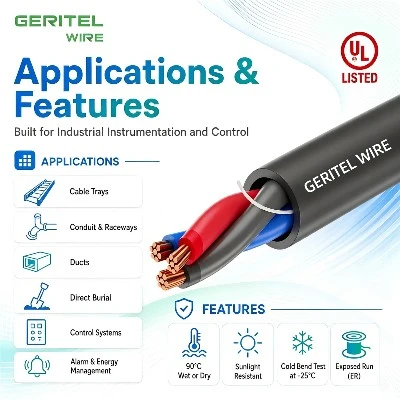
If direct burial, sunlight resistance, oil resistance, or hazardous-location suitability is required, verify the corresponding product markings and approvals separately. The TC-ER designation does not automatically provide every environmental qualification.
5.3 Verify the Applicable Standards
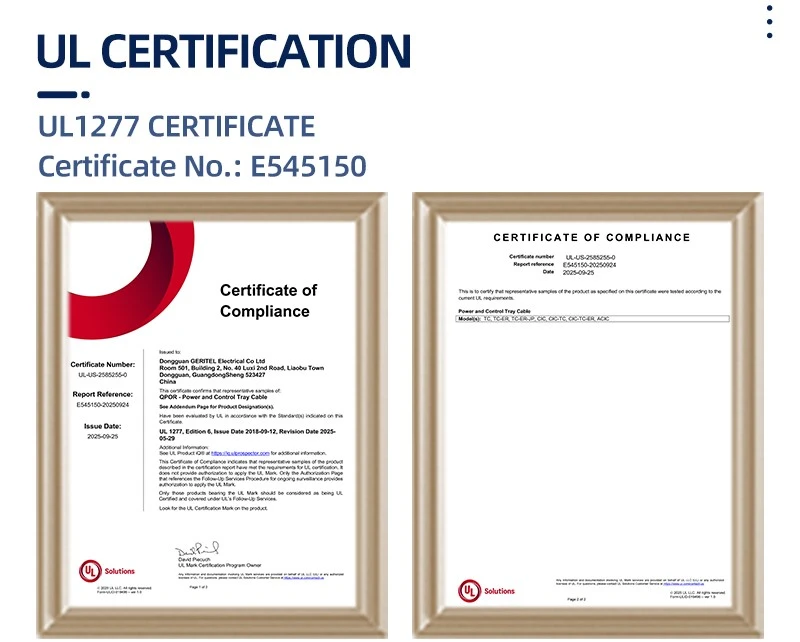
For North American projects, UL 1277 covers electrical power and control tray cables, while NEC requirements govern their permitted installation and use.
Individual THHN conductors are covered by UL 83 within its scope. However, a conductor-level designation does not replace the requirements for the finished tray cable assembly.
Canadian and international projects may have different certification and installation requirements. UL, CSA, IEC, and AS/NZS approvals should not be assumed interchangeable.
5.4 Request Complete Technical Documentation
Before placing an order, request a datasheet showing the cable's construction, conductor details, voltage and temperature ratings, applicable certifications, and required environmental markings.
Where a specific installation is involved, confirm the requirements with the project engineer and the authority having jurisdiction.
6. Frequently Asked Questions
Q1: What are the main components of TC-ER cable?
The main components typically include conductors, individual conductor insulation, an overall jacket, and, where needed, fillers and binder tape. Depending on the design, the cable may also include a grounding conductor, shielding, and a drain wire.
Q2: Does every TC-ER cable use THHN conductors?
No. TC-ER cable can use different conductor insulation systems, depending on the product design and listing. Always check the datasheet and cable markings.
Q3: Is THHN the same as TC-ER?
No. THHN identifies a conductor insulation type, while TC-ER identifies a finished tray cable with an exposed-run qualification. They describe different aspects of a cable product.
Q4: Does a nylon layer replace the overall cable jacket?
No. In a typical PVC/nylon construction, the nylon layer is part of the individual conductor insulation system. The complete multiconductor cable has a separate overall jacket.
Q5: Does TC-ER cable always include a grounding conductor?
No. Grounding conductors are included when specified by the particular cable construction. Buyers should confirm the required conductor count and grounding configuration.
Q6: Can all TC-ER cables be installed outdoors or underground?
No. Outdoor and underground suitability depends on the specific product's environmental ratings and listing. Sunlight resistance, wet-location suitability, and direct-burial approval must be verified separately.
Q7: How can buyers identify the correct cable construction?
Review the complete product marking and manufacturer's datasheet. Confirm the conductor material and size, insulation type, voltage rating, TC-ER qualification, grounding configuration, environmental ratings, and required certifications.

7. Conclusion: Understanding TC-ER Cable Construction
TC-ER cable is a complete electrical cable assembly whose performance depends on more than its conductor material or insulation type. Conductors carry current, insulation provides electrical separation, fillers and binder tape support the assembly where needed, and the outer jacket protects the finished cable. Grounding conductors and shielding may be added to meet specific application requirements.
Understanding the distinction between THHN conductor insulation and the TC-ER cable designation helps buyers specify products more accurately and avoid assuming that a component rating automatically applies to the finished assembly.
At GERITEL WIRE, we understand that reliable industrial cable selection starts with the right construction, clear technical specifications, and verified application requirements. Dongguan Greater Wire & Cable Co., Ltd. supports B2B customers seeking cable solutions for industrial power distribution, equipment wiring, and control applications. Whether you need copper conductors, PVC/nylon insulation, customized conductor configurations, or TC-ER cable options, our team can help you review relevant specifications and identify suitable products for your project. Contact GERITEL WIRE to discuss your requirements, request technical documentation, and explore cable solutions tailored to your application.
Dongguan Greater Wire & Cable Co., Ltd.
Tel/WhatsApp/Wechat: +86 136 6257 9592
Tel/WhatsApp/Wechat: +86 135 1078 4550
Email: manager01@greaterwire.com
Website: www.greaterwire.com