

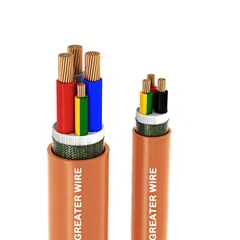
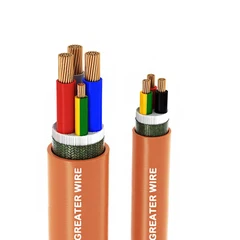

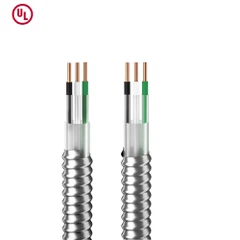
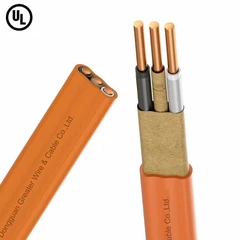
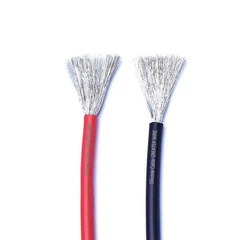
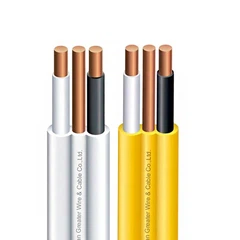
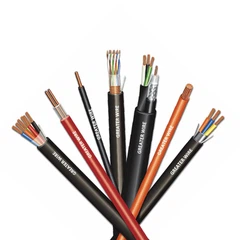
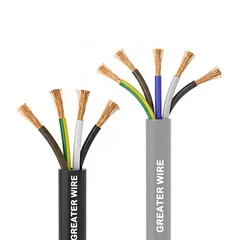
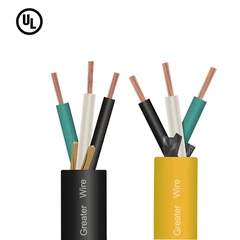
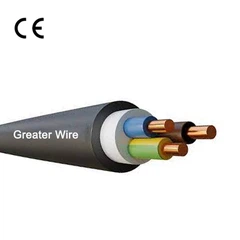
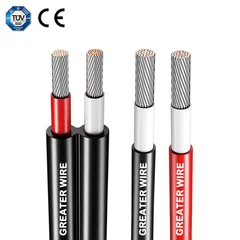

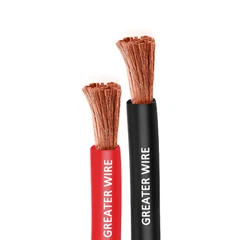
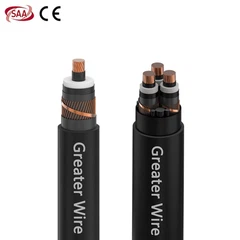
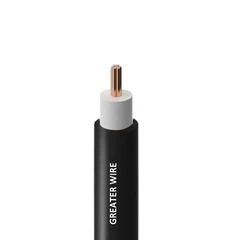
Choosing the right conductor material is an important step when specifying tray cables for industrial power distribution, machinery, and control systems. The conductor affects electrical resistance, current-carrying performance, cable weight, installation requirements, and overall project cost. In Type TC-ER cable, copper is a common conductor material, although other materials may be available in specific listed constructions.
This guide explains the conductor materials used in TC-ER cable, how copper compares with aluminum, and what buyers should check when sourcing cable for industrial applications. It also clarifies how THHN insulation relates to the complete cable assembly and why material selection must be based on the cable's certified specifications and intended installation.

1. What Is the Conductor in TC-ER Cable?
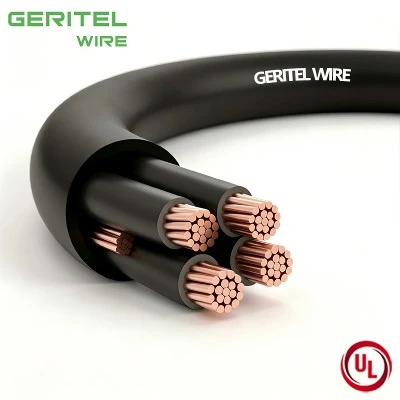
A conductor is the metallic core inside a cable that carries electrical current. In a typical multi-conductor TC-ER cable, each insulated conductor carries a circuit, while an additional conductor may be included for equipment grounding.
TC-ER stands for Tray Cable–Exposed Run. In the North American market, Type TC-ER cable is used in applications permitted by the applicable electrical code and the cable's listing, including qualifying cable-tray installations and certain exposed runs. Many products are rated at 600 V, but buyers should always verify the voltage rating on the specific product.
The conductor material is only one part of the cable construction. A complete TC-ER cable may include:
Conductors: Commonly stranded copper in many commercial constructions.
Individual insulation: Often PVC with a nylon outer layer in THHN/THWN-type constructions.
Fillers and binding tape: Used as needed to maintain the cable's shape and organize its conductors.
Overall jacket: Commonly PVC, selected to meet the cable's applicable performance and environmental requirements.
Grounding conductor: Included in some designs to provide an equipment-grounding path.
For example, Southwire specifies certain 600 V Type TC-ER products with stranded bare copper conductors, PVC-and-nylon insulation, and an overall PVC jacket. The exact construction varies by product and conductor size. Southwire product specifications
2. Copper Conductors: A Common Choice for TC-ER Cable
Copper is widely used in industrial power and control cables because it combines good electrical conductivity with flexibility and well-established termination practices.
2.1 Electrical conductivity
Copper has high electrical conductivity, which helps limit conductor resistance and resistive heating when the cable is correctly sized and installed. The actual current-carrying capacity depends on several factors, including conductor size, insulation temperature rating, ambient temperature, the number of current-carrying conductors, and installation conditions.
For buyers specifying THHN Copper Conductors Tray Cable, the key point is that copper conductors and THHN-type insulation describe different aspects of the product: copper identifies the conductor metal, while THHN identifies an insulation type associated with the individual insulated conductor.
2.2 Stranded construction and flexibility
Many TC-ER cables use stranded copper conductors rather than solid conductors. A stranded conductor consists of multiple smaller wires twisted together. Depending on strand class and conductor size, this construction can make cable easier to handle and install than a comparable solid conductor.
Stranding does not automatically make every cable suitable for continuous flexing or repeated movement. If the cable will be used on moving machinery, cable carriers, or vibration-prone equipment, verify that the manufacturer specifically approves the construction for that duty.
2.3 Connection reliability
Copper conductors are commonly used with compatible copper-rated terminals and connectors. Correct conductor preparation, terminal selection, tightening torque, and installation practices remain essential.
Do not assume that every terminal accepts every conductor material or size. Always follow the equipment and connector manufacturers' instructions.
3. Can Aluminum Conductors Be Used in TC-ER Cable?
Aluminum is used in many electrical power-distribution applications because it is lighter than copper and can offer a lower initial conductor-material cost. However, aluminum is not interchangeable with copper on a one-to-one size basis.
Some cable constructions may be available with aluminum conductors, but availability and acceptance depend on the particular product design, applicable listing, conductor size, and installation rules. Do not assume that a TC-ER cable is aluminum simply because aluminum is used in other types of power cable.
Copper vs. aluminum conductors
| Factor | Copper | Aluminum |
|---|---|---|
| Electrical conductivity by equal cross-sectional area | Higher | Lower |
| Weight | Heavier | Lighter |
| Conductor sizing | Often permits a smaller conductor for a given design requirement | May require a larger cross-sectional area for comparable electrical performance |
| Terminations | Requires terminals suitable for the conductor and application | Requires terminals specifically suitable for aluminum or the approved conductor combination |
| Procurement considerations | Check copper grade, stranding, size, and certification | Verify that the exact cable construction is available, listed, and accepted for the intended use |
When should buyers consider aluminum?
Aluminum may be worth evaluating for suitable power-distribution projects where weight and conductor cost are important. However, the decision must be based on the complete electrical design, not material price alone.
Before ordering aluminum-conductor TC-ER cable, confirm:
The manufacturer offers the required TC-ER construction with aluminum conductors.
The product listing and applicable codes permit the intended installation.
The conductor size and ampacity meet the design requirements.
Terminals and connectors are rated for the actual conductor material.
The installation instructions and any required preparation or termination practices are followed.
If the product documentation specifies copper conductors, an aluminum substitute should not be assumed acceptable.

4. How THHN Insulation Relates to TC-ER Cable
THHN is an insulation designation for individual conductors, not a conductor-metal designation and not, by itself, a complete cable-tray rating. THHN conductors are commonly constructed with thermoplastic insulation and a nylon outer layer. Depending on the product marking, THHN is associated with a 90°C rating for dry locations.
A complete TC-ER cable may use insulated conductors marked THHN or THHN/THWN-2, together with fillers, binding materials, and an overall jacket. Other constructions may use different insulation types.
The distinction matters when evaluating products marketed as 600V THHN Cable. The phrase may describe a cable assembly containing THHN-insulated conductors, but buyers should verify the full product designation, voltage rating, temperature ratings, and cable listing rather than relying on the phrase alone.
THHN, THWN-2, and location ratings
THHN alone does not establish that a conductor is suitable for wet locations. THWN-2 indicates additional wet-location performance, subject to the applicable product standard and marking. Many industrial cable products use dual THHN/THWN-2 markings, but this must be verified on the actual product.
Likewise, Dry Location THHN Cable is a useful descriptive phrase, not a substitute for checking the full marking and application approval. The conductor's temperature rating is not the same as the overall cable's complete set of environmental or installation permissions.
PVC and nylon insulation
PVC provides the primary thermoplastic insulation in many THHN constructions, while the nylon layer contributes additional surface protection and resistance to certain oils and chemicals. The performance of the finished conductor depends on the complete construction and applicable test requirements.
For this reason, PVC Nylon Industrial Wire is a useful way to describe a material combination, but it should not be treated as a universal specification. Confirm the actual insulation type and certification for the cable being purchased.
5. How to Select the Right Conductor Material
For distributors, contractors, OEMs, and industrial procurement teams, selecting the conductor material should begin with the application and the governing electrical requirements.
Step 1: Confirm the cable's purpose
Determine whether the cable will carry power, control signals, or both. Check the equipment requirements, system voltage, number of conductors, and whether an equipment-grounding conductor is required.
Step 2: Verify conductor size and ampacity
Conductor size must be selected according to the applicable code, load, installation conditions, and temperature limitations. Do not select cable solely by matching the conductor size of another product with a different construction.
Step 3: Check the complete cable listing
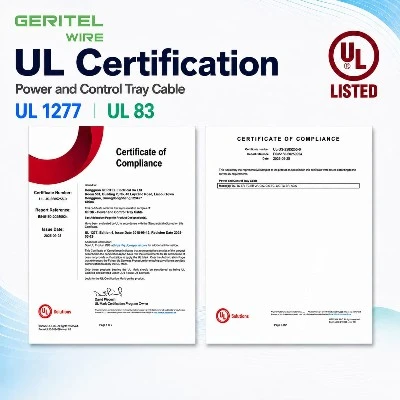
For North American projects, confirm the relevant Type TC or TC-ER designation and applicable product standards, such as UL 1277 where specified. Also verify any required sunlight resistance, direct-burial suitability, flame performance, or other project-specific approvals. These features are not automatically provided by the conductor metal or THHN marking alone.
Step 4: Review terminals and installation conditions
Ensure that terminals, connectors, and equipment are suitable for the selected conductor material and size. Account for ambient temperature, grouping, tray fill, routing, bending radius, and the installation method.
Step 5: Request documentation before purchase
Ask the supplier for the product datasheet, construction details, conductor material, strand class, voltage and temperature ratings, applicable certifications, and installation limitations. This helps prevent confusion between individual THHN building wire and a complete listed tray-cable assembly.
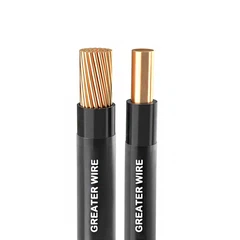
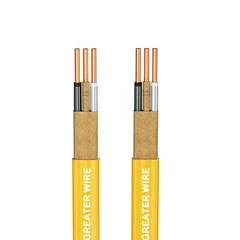
A THHN Building Wire Tray Cable description may combine terms that refer to different product categories. THHN building wire is generally an individual insulated conductor; tray cable is a complete cable assembly designed and listed for specified applications. A TC-ER product may incorporate THHN-insulated conductors, but the complete assembly must independently meet the requirements for its intended use.
Similarly, General Purpose THHN Cable is a broad marketing description rather than a precise certification category. Always confirm whether the item is individual building wire or a multi-conductor cable, and check the exact product markings before placing an order.

6. Frequently Asked Questions
Is copper the only conductor material used in TC-ER cable?
No. Copper is common in many TC-ER constructions, while other conductor materials may be available in specific products. Confirm the actual conductor material and listing in the manufacturer's datasheet.
Are stranded copper conductors better than solid conductors?
Stranded conductors can be easier to handle and install in many cable assemblies. However, the appropriate strand class depends on the cable design and application. Stranded construction does not automatically qualify a cable for continuous flexing.
Does THHN mean the conductor is made of copper?
No. THHN describes an insulation type, not the metal used for the conductor. The conductor material must be identified separately in the product specification or marking.
Can THHN building wire be used as a substitute for TC-ER cable?
Not automatically. Individual building wire and complete tray cable are different product categories. A conductor's THHN marking alone does not establish that the finished installation meets Type TC-ER requirements.
What should I request when sourcing TC-ER cable?
Request a datasheet that identifies conductor material and size, strand class, insulation type, overall jacket, voltage and temperature ratings, certification or listing, and permitted installation conditions. Confirm any project-specific requirements before approving a substitute.
Conclusion
Copper is a common conductor choice for TC-ER cable because of its electrical conductivity, established connection practices, and availability in stranded constructions. Aluminum may be suitable for certain applications when the exact cable construction, conductor sizing, terminals, listing, and installation rules permit it. Most importantly, conductor material and THHN insulation are separate specifications: neither one alone determines whether a complete cable is suitable for a tray or exposed-run installation. Buyers should verify the full product documentation, applicable standards, and project requirements before ordering.
At GERITEL WIRE, we understand that dependable industrial cable sourcing starts with clear specifications and a suitable product construction. Dongguan Greater Wire & Cable Co., Ltd. supports B2B customers seeking cable solutions for industrial power distribution, equipment wiring, and control applications. Whether your project requires copper conductors, PVC-and-nylon insulation, or a particular TC-ER cable configuration, our team can help you review technical requirements and identify suitable options. Contact GERITEL WIRE to discuss your application, request product documentation, and explore cable solutions aligned with your project's electrical and installation needs.
Dongguan Greater Wire & Cable Co., Ltd.
Tel/WhatsApp/Wechat: +86 136 6257 9592
Tel/WhatsApp/Wechat: +86 135 1078 4550
Email: manager01@greaterwire.com
Website: www.greaterwire.com
Technical references for editorial verification
Southwire, 600 V Type TC-ER Power Cable - THHN/THWN-2 construction. This specification identifies stranded copper conductors, PVC/nylon insulation, grounding conductor options, and an overall PVC jacket.
Southwire Cable Tech Support
Southwire, 600 V Type TC-ER Control Cable - THHN/THWN construction. This specification provides an example of conductor stranding and a PVC/nylon insulation system in a control-cable construction.
Southwire Cable Tech Support
Prysmian, AUTO-FLEX TCP Flexible TC-ER Cable. This product reference describes copper conductors, THHN/THWN insulation, and TC-ER applications.
Prysmian