























Solar energy continues to gain traction as one of the most effective and environmentally friendly sources of power. The backbone of any solar power system, from small rooftop setups to large commercial installations, lies in the wiring - specifically, the solar cable and solar wire. These components are responsible for transmitting the electrical power generated by solar panels to inverters, battery storage, and the electrical grid.
Selecting the right solar cable and solar wire is crucial for ensuring the safety, efficiency, and longevity of a solar power system. One common question that arises during the design and installation of solar systems is about the ampacity - that is, the current carrying capacity - of different cable sizes. Specifically, many people wonder: Can a 6mm solar cable handle 40A?
In this article, we will answer that question and explore important factors to consider when selecting the appropriate solar cable for your system, including the size, material, insulation, and other critical considerations.
What is a Solar Cable?
A solar cable is a specialized electrical cable designed for use in solar power systems. These cables are engineered to handle the unique demands of solar energy systems, such as exposure to ultraviolet (UV) radiation, high temperatures, moisture, and physical wear. The primary function of a solar cable is to transmit the electrical current generated by solar panels to other system components, such as inverters, charge controllers, and batteries.
Solar cables are typically designed with high-quality copper or aluminum conductors to ensure efficient power transmission. They are insulated with durable materials, such as cross-linked polyethylene (XLPE) or ethylene tetrafluoroethylene (ETFE), that provide UV protection and resistance to environmental stress.
Solar cables are often color-coded (e.g., red for positive and black for negative) to clearly indicate polarity and reduce the risk of installation errors.

What is Solar Wire?
Solar wire refers to the individual wires inside the solar cable that conduct electrical current. The wire's primary role is to carry the electrical energy generated by the solar panels. Solar wires are made of copper or aluminum, and the wire gauge - the thickness of the wire - is critical in determining the amount of current the wire can safely carry.
The wire's size (gauge) plays a major role in selecting the correct solar cable. The thickness of the wire is measured in square millimeters (mm²), which indicates the cross-sectional area of the wire. The larger the cross-sectional area, the greater the amount of current the wire can safely conduct without overheating.

Can a 6mm Solar Cable Handle 40A?
The question of whether a 6mm solar cable can handle 40A (amperes) is a crucial one, particularly when designing a solar system that will produce a high amount of current. The short answer is that it depends on several factors, including the insulation material, ambient temperature, and whether the cable is copper or aluminum.
1. Current-Carrying Capacity (Ampacity)
To determine if a 6mm solar cable can carry 40A, we first need to understand the cable's ampacity, which refers to the maximum amount of current the cable can safely carry without overheating. For a 6mm² solar cable:
Copper Conductors: Copper is a superior conductor of electricity compared to aluminum, meaning it has a higher ampacity for the same size. A 6mm² copper solar cable can typically handle around 40 to 47 amps under standard conditions.
Aluminum Conductors: While aluminum cables are less conductive than copper, they can still handle a significant amount of current. A 6mm² aluminum solar cable can handle around 30 to 35 amps.
Thus, a 6mm² copper solar cable is generally capable of handling 40A, but an aluminum version would be on the lower end of this range.
2. Insulation Material and Type
The insulation around the wire significantly impacts the cable's current-carrying capacity. Solar cables use specialized insulation materials to withstand extreme temperatures, UV radiation, and moisture. The most common insulation materials used in solar cables are:
Cross-Linked Polyethylene (XLPE): XLPE insulation is known for its high-temperature resistance, often up to 90°C or higher. This means that the cable can carry more current at higher temperatures without risk of overheating.
Ethylene Tetrafluoroethylene (ETFE): ETFE is another high-performance insulation material used in solar cables. It offers excellent resistance to UV radiation and high temperatures, making it ideal for outdoor applications.
The insulation material's temperature rating determines how much current a cable can carry at a given temperature. For example, a 6mm² copper solar cable with XLPE insulation might have a higher ampacity in cooler environments compared to one with less durable insulation.
3. Ambient Temperature
The ambient temperature - or the temperature surrounding the cable - affects its performance. Higher temperatures can reduce the cable's ability to carry current. Solar cables are rated for use within a certain temperature range, typically from -40°C to +90°C.
If the cable is exposed to extremely high temperatures (e.g., 40°C or more), its current-carrying capacity may be reduced. In such cases, it may be necessary to choose a thicker cable or take steps to mitigate the temperature's effects, such as installing the cables in shaded areas or using thermal management techniques.

Additional Factors to Consider When Selecting Solar Cable and Solar Wire
When choosing a solar cable or solar wire for your solar panel system, there are several other important factors to consider to ensure the cable is both efficient and safe:
1. System Voltage
Solar power systems typically operate at low voltage (e.g., 12V, 24V, 48V) or higher voltages (e.g., 600V, 1000V, or 1500V for large commercial systems). The voltage rating of the cable must match or exceed the voltage of your system. Higher voltage systems typically require cables with thicker insulation, which can also affect the current carrying capacity.
A 6mm² cable is often suitable for residential solar systems operating at voltages up to 600V. However, for systems with voltages above 600V, you might need cables rated for higher voltages.
2. Cable Length and Voltage Drop
The length of the solar cable also affects the system's performance. As the cable length increases, the electrical resistance increases, causing a voltage drop. This can result in power loss and reduced efficiency. The longer the distance between the solar panels and the inverter or battery storage, the larger the wire gauge may need to be to minimize voltage drop.
For shorter distances (less than 10 meters), a 6mm² solar cable should be sufficient for a 40A load. However, for longer distances (greater than 10 meters), a thicker cable (e.g., 10mm²) might be necessary to reduce the voltage drop and maintain system efficiency.
3. Safety Considerations
Safety is a crucial aspect of any electrical installation. Solar cables must be rated for the expected electrical load to prevent overheating and potential fire hazards. Overloaded cables can lead to significant safety risks, including melting of the insulation, electrical fires, and system failure.
Always ensure that the solar cable selected can safely handle the system's current requirements, with a margin of safety. For a 40A load, using a 6mm² copper solar cable with high-quality insulation and proper installation practices will ensure safe operation.
4. UV Resistance and Durability
As solar systems are typically installed outdoors, the cables are exposed to harsh environmental conditions, including UV radiation, moisture, and temperature fluctuations. Choosing UV-resistant solar cables ensures that the wire will not degrade quickly when exposed to sunlight, which can significantly shorten the lifespan of the cable.
5. Certifications
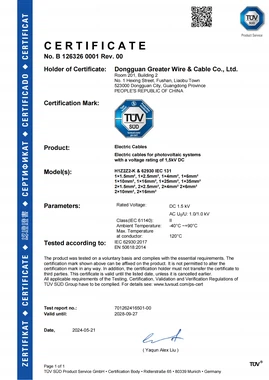
When selecting solar cables, always check for relevant certifications to ensure the cable meets safety and performance standards. The most common certification for solar cables is TÜV (Technischer Überwachungsverein), a German standard that ensures the cables meet international quality and safety regulations. TÜV-certified cables offer assurance that they are suitable for use in solar systems, providing durability, UV resistance, and high-temperature performance.