


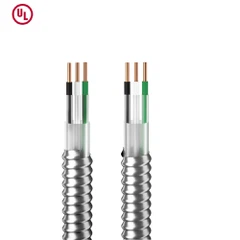
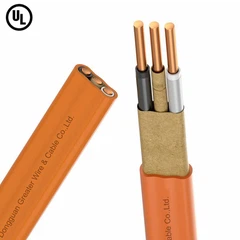
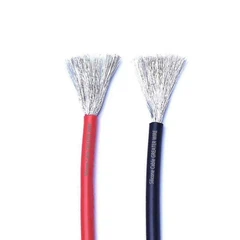
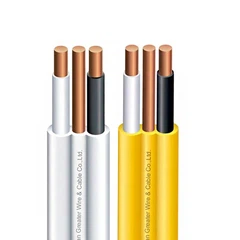
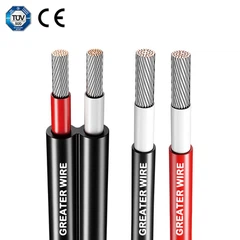

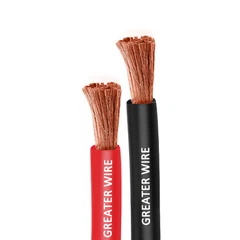
The choice of cable size in a solar photovoltaic (PV) system is critical for ensuring efficiency, safety, and longevity. A 1.5 mm² solar cable, while suitable for some applications, may not be the best fit for all solar installations. This article explores the conditions under which a 1.5 mm² solar cable can be used, focusing on its characteristics, compliance with standards like H1Z2Z2-K and PV1-F, and its role in photovoltaic systems.

Understanding Solar Cables and Standards
Solar Cable Overview:
A solar cable is a specialized wire designed to carry direct current (DC) from photovoltaic panels to inverters or batteries. Unlike conventional electrical cables, solar cables must endure high temperatures, UV exposure, and harsh environmental conditions.
Key Standards:
H1Z2Z2-K:
A European standard under EN 50618 for solar cables.
Designed for high-performance applications, supporting up to 1.5 kV DC.
Features enhanced thermal and mechanical durability with cross-linked polyethylene (XLPE) insulation.
PV1-F:
An older but widely recognized standard for photovoltaic cables.
Rated for up to 1.0 kV DC.
Offers halogen-free, flame-retardant insulation.
Both standards ensure solar cables meet stringent requirements for safety, efficiency, and longevity.

Features of a 1.5 mm² Solar Cable
A 1.5 mm² solar cable has a cross-sectional area of 1.5 mm², which determines its current-carrying capacity and resistance to voltage drop. It typically exhibits the following characteristics:
Current Capacity:
Suitable for low-current applications, generally up to 15A under optimal conditions.
Voltage Compatibility:
PV1-F cables support systems up to 1.0 kV DC.
H1Z2Z2-K cables can handle up to 1.5 kV DC, making them more versatile.
Durability:
UV-resistant, weatherproof, and capable of operating in temperatures from -40°C to +120°C.
Applications:
Primarily used in small-scale solar systems or as part of auxiliary components like monitoring equipment or low-power connections.

When Can You Use a 1.5 mm² Solar Cable?
1. Low-Power Systems
A 1.5 mm² cable is best suited for low-power solar setups, such as:
Small residential installations with a capacity below 1 kW.
Standalone solar-powered devices like garden lights or small pumps.
Reasoning:
The low current and short cable runs in these systems minimize energy loss and ensure safe operation within the cable's capacity.
2. Short Cable Runs
For solar installations where the cable length is minimal (e.g., less than 10 meters), a 1.5 mm² cable can suffice. Short distances reduce resistance and voltage drop, allowing the cable to deliver power efficiently.
Examples:
Connecting panels within a small array.
Linking panels to nearby junction boxes.
3. Monitoring and Auxiliary Equipment
In photovoltaic systems, not all components require high-power cables. A 1.5 mm² solar cable is suitable for connecting:
Monitoring devices and sensors.
Auxiliary equipment that does not draw significant current.
Standards Compliance:
Ensure that the 1.5 mm² cable meets H1Z2Z2-K or PV1-F standards for durability and safety in outdoor environments.
4. Low Voltage Systems
In solar systems with lower voltage (e.g., 12V or 24V setups), a 1.5 mm² cable can handle the current without exceeding safety limits. These systems are commonly found in off-grid applications.
Caveat:
Always calculate the expected current and voltage drop to confirm that the cable is adequate for the system's requirements.

Limitations of Using a 1.5 mm² Solar Cable
While a 1.5 mm² cable is viable in specific situations, it has notable limitations that make it unsuitable for many larger or more complex solar installations:
High Current Demand:
Larger solar systems produce higher currents that exceed the safe carrying capacity of a 1.5 mm² cable. Using an undersized cable can lead to overheating and energy loss.
Voltage Drop:
For longer cable runs, the resistance of a 1.5 mm² cable causes significant voltage drop, reducing system efficiency.
Future Expansion:
Small cables may not support future upgrades or expansions to the solar system.
Regulatory Compliance:
Local codes and standards often mandate larger cables for safety and reliability, especially in grid-connected systems.

Comparing 1.5 mm² Cables with Larger Sizes
1. 4 mm² vs. 1.5 mm²
4 mm² Solar Cable: Suitable for medium-sized systems and longer cable runs with higher current demands.
1.5 mm² Solar Cable: Best for low-power, short-distance applications.
2. 6 mm² or Larger
Required for large-scale installations where high current and long distances are involved.

How to Determine the Right Cable Size
Step 1: Calculate Current and Voltage
Use the formula:
I=P/V,where I is current, P is power, and V is voltage.
Step 2: Assess Voltage Drop
Voltage drop should not exceed 3% of the system voltage. Use the formula:
Vdrop=I×R×L, where R is cable resistance, and L is length.
Step 3: Match Standards
Ensure cables meet H1Z2Z2-K or PV1-F standards for your application.
Step 4: Factor in Environmental Conditions
For outdoor use, prioritize cables with UV resistance, waterproofing, and durability.