

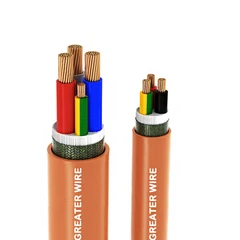
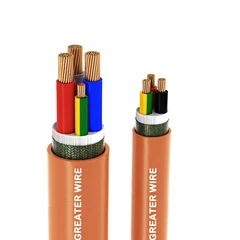

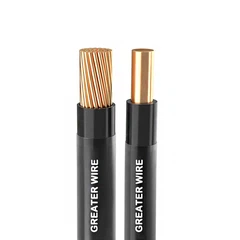
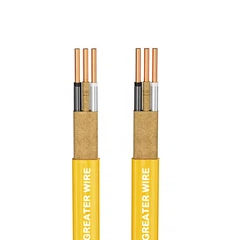
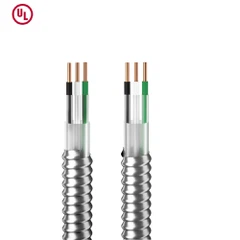
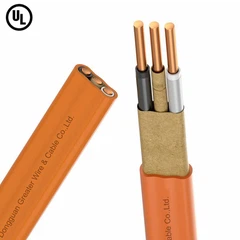
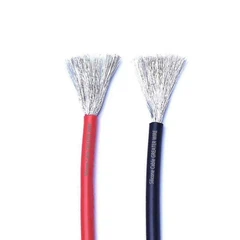
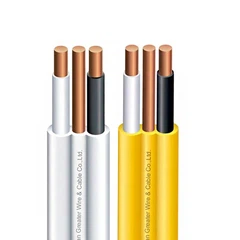
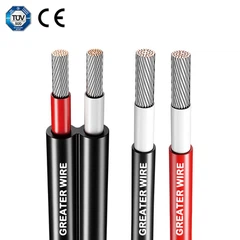

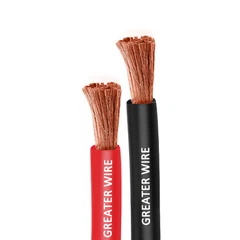
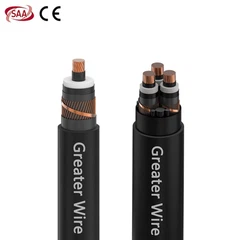
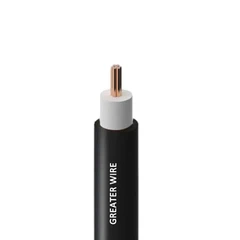
As the global demand for renewable energy grows, solar energy, as a clean and sustainable form of energy, has become the preferred power source for many homes, commercial and industrial buildings. Solar photovoltaic systems (PV systems) convert solar energy into electrical energy through solar panels, providing users with green energy. However, when building a solar energy system, it is crucial to choose the right cable. Solar cable plays a vital role in the system. It is responsible for connecting key components such as solar panels, inverters, and batteries to ensure the transmission of power and the safety and stability of the system.
In this context, a common question is: Can normal wires be used instead of dedicated solar wires? This article will explore this issue in depth and compare the differences between solar cables and normal wires in detail to help readers understand the correct choice in different application scenarios.

1. Basic Definition of Solar Cable and Normal Wire
First of all, it is important to understand the basic concepts of the two.
Solar Cable: A cable designed specifically for photovoltaic systems that connects solar panels to devices such as inverters, charge controllers, and batteries. The design of solar cables must take into account the effects of outdoor environments such as high temperature, ultraviolet radiation, moisture, and salt spray. Photovoltaic cables usually have high corrosion resistance, UV resistance, and high temperature resistance to ensure long-term stable operation of the system.
Normal Wire: Wires commonly used for general electrical equipment, home wiring, and industrial applications. These wires are designed mainly for indoor environments or in mild climates and are subject to less environmental pressure. The outer layer of ordinary wires is mostly PVC (polyvinyl chloride), which does not have the UV resistance, high temperature resistance, and corrosion resistance required for solar cables.

2. The main differences between solar cables and ordinary wires
2.1 Environmental adaptability
Solar Cable: Solar cables need to work for a long time in outdoor environments. The cables of photovoltaic systems usually need to be exposed to sunlight, which requires the cables to withstand strong ultraviolet radiation. If ordinary wires are used, ultraviolet radiation may cause the outer layer of the cable to age and crack, ultimately affecting the service life of the cable. The outer sheath of solar cables is usually made of UV-resistant materials (such as cross-linked polyethylene or polyethylene), which can effectively prevent the effects of ultraviolet rays.
Normal Wire: Normal wire is mainly used in indoor environments or only in mild climates, so it does not need to be UV resistant. Its outer sheath is usually made of PVC, which becomes brittle under UV radiation and is prone to aging and damage when exposed to sunlight for a long time. Therefore, normal wire is not suitable for outdoor solar systems.
2.2 Temperature Tolerance
Solar Cable: The cables in photovoltaic systems need to withstand large temperature fluctuations, especially cables near solar panels and inverters, which may need to withstand high temperatures (up to 90°C or higher). The materials used in solar cables, such as cross-linked polyethylene (XLPE), have good high temperature resistance, which can ensure the stability and long-term reliability of the cables in high temperature environments.
Normal Wire: Normal wire is usually suitable for indoor environments, and its temperature resistance is low. It can generally only withstand a maximum operating temperature of about 60°C to 75°C. If normal wire is used in a high temperature environment, it may cause damage to the wire insulation layer, and even safety problems such as short circuits or fires.
2.3 Voltage Carrying Capacity
Solar Cable: Photovoltaic cables are usually required to carry higher voltages, especially in large-scale solar power generation systems, where the voltage may reach 1000V or even 1500V. The insulation layer of photovoltaic cables is designed to withstand these high voltages without electrical failure or insulation damage.
Normal Wire: Normal wires usually have lower voltage carrying capacity. Most normal wires are rated at 600V or lower, so they cannot meet the high voltage transmission requirements of solar systems. Normal wires cannot provide sufficient safety, and their use in solar systems may cause electrical short circuits, voltage breakdown and other problems.
2.4 Corrosion and Aging Resistance
Solar Cable: The materials used in photovoltaic cables can resist corrosion from corrosive substances such as moisture, salt spray, acid and alkali. This is especially important for photovoltaic systems installed at the seaside or in high humidity environments. Solar cables also have strong anti-aging properties and can continue to work for 20 to 30 years or even longer in harsh environmental conditions.
Normal Wire: The outer sheath of normal wire is usually made of PVC or rubber material. Although it has certain corrosion resistance in indoor environment, the insulation layer and outer sheath of normal wire will be damaged quickly under long-term exposure to external environment (such as moisture and salt spray), which greatly shortens the service life of the wire.
2.5 Safety and Standards
Solar Cable: Solar cable design meets strict international safety standards, such as TUV certification, UL certification, etc. The insulation and sheath materials used must meet electrical safety requirements, effectively prevent current leakage, and remain stable under high voltage and long-term load.
Normal Wire: The design of normal wire is more concerned with low-voltage indoor electrical wiring. Its safety standards and carrying capacity are relatively low, and it is not suitable for high voltage and complex environment of photovoltaic system. Using normal wire may increase the risk of system failure, fire, etc.

3. Why can't normal wire be used instead of solar cable?
3.1 Physical environment challenges
Normal wire faces physical environment challenges such as ultraviolet radiation, high temperature, humidity, and salt spray in outdoor environment. PV cables are designed to withstand these environmental factors, while ordinary wires cannot effectively cope with these challenges. Using ordinary wires may lead to cracking, aging and electrical failure of the cable outer sheath, thus affecting the safety and stability of the entire PV system.
3.2 Electrical performance mismatch
The cables in the PV system must not only carry high voltages, but also work stably for a long time under high loads. The voltage carrying capacity of ordinary wires is usually insufficient, and the use of ordinary wires may cause problems such as overheating, arcing, and electrical short circuits. In addition, the insulation layer of ordinary wires is usually unable to effectively cope with the high-voltage environment required by the PV system, posing a safety hazard.
3.3 System efficiency reduction
The conductivity of ordinary wires is usually not as good as that of dedicated PV cables, especially when exposed to solar radiation and high temperatures for a long time, the conductivity of the cable will gradually decrease, resulting in reduced power transmission efficiency. PV cables use highly conductive materials and more optimized designs to ensure the efficient operation of solar energy systems.
3.4 Shortened service life
Due to the poor high temperature resistance, UV resistance and corrosion resistance of ordinary wires, their service life in solar energy systems is usually short. Long-term use may require frequent replacement of wires, increasing maintenance costs and operational risks. The design life of photovoltaic cables is usually 25 years or even longer, which can effectively reduce long-term maintenance and replacement costs.
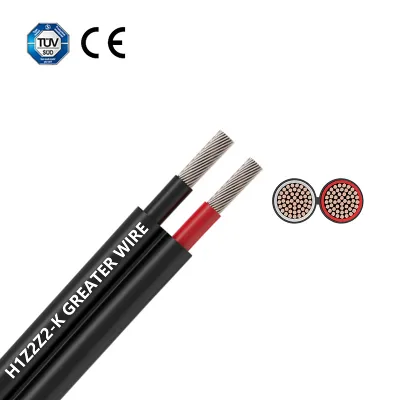
4. Selection of photovoltaic cables
When choosing the right photovoltaic cable, it is very important to consider the following factors:
Voltage requirements: Select cables according to the operating voltage of the solar system. For example, 1000V and 1500V systems need to select photovoltaic cables that can withstand these voltages.
Environmental conditions: Select cables that are resistant to high temperatures, UV rays, and corrosion according to the installation location of the system (such as indoors, outdoors, by the sea, etc.).
Conductor material: Generally speaking, copper cables have better conductivity and are suitable for systems that require efficient power transmission, while aluminum cables are also commonly used in some economical systems because they are lighter and less expensive.