























In modern power and data transmission projects, choosing the right type of cable is crucial for ensuring safety and efficient operation. With the rapid development of urban infrastructure, commercial buildings, airports, universities, and mining projects, engineers and project managers face increasingly complex wiring requirements. One key question in outdoor or underground installations is: Can Orange Circular Cable be used for direct underground burial?
Many clients and contractors misunderstand "direct burial," assuming that as long as a cable is orange or multi-core, it can be laid directly in the soil. In reality, the cable's material, insulation rating, mechanical protection, temperature tolerance, and soil conditions all affect its suitability for direct burial.
This article provides a comprehensive analysis of technical principles, standards, installation methods, practical applications, cable selection, and product advantages of Orange Circular Cable for direct underground use. It also includes practical tables and selection guidelines to help customers and project planners make safe and informed decisions.
What is Orange Circular Cable?
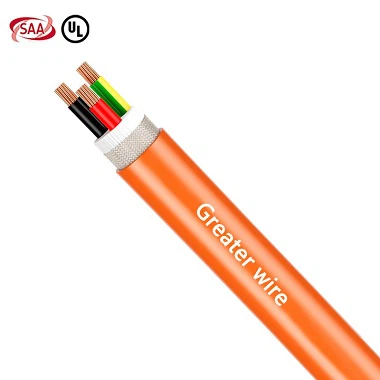
Orange Circular Cable is a high-performance, multi-purpose cable widely used in industrial, commercial, and infrastructure projects. Key features include:
- Appearance and structure: Orange outer insulation, multi-core copper conductors, available in various cross-sections and specifications.
- Main functions: Suitable for control systems, power transmission, instrumentation connections, signal transmission, and mining equipment power supply.
- Applicable environments: Can be used indoors, outdoors, and in specific conduit or underground installations, but direct burial depends on technical standards and certification.

Can Orange Circular Cable be directly buried?
Not all Orange Circular Cables are suitable for direct burial:
- Non-burial types: Designed for indoor or conduit use; direct soil burial may cause long-term moisture damage.
- Direct burial types: Certain models with moisture-resistant, corrosion-resistant materials (PVC, XLPE, or rubber jackets) and SAA certification can withstand soil pressure, humidity, and temperature changes.
- Selection principle: Always check the product datasheet, certifications, and technical parameters before installation.
Standards and Requirements for Direct Burial
Direct burial standards are crucial for safety and long-term cable reliability.
| Category | Requirement |
|---|---|
| Insulation material | Use corrosion-resistant, moisture-resistant, UV-resistant materials (PVC, XLPE, rubber) |
| Mechanical protection | Use armored (SWA) or conduit protection for high-pressure or exposed areas |
| Temperature rating | Operating range: -20℃~90℃; choose high/low temperature-resistant models if needed |
| Burial depth | Follow AS/NZS 3008 or local standards; minimum 600mm depth, optional sand or conduit protection |
| Soil drainage | Ensure good soil drainage; avoid prolonged water contact |
| Certification | Must meet SAA and local electrical safety standards |
⚠️ Note: Using cables not meeting these standards for direct burial can result in safety hazards or reduced service life.
Potential Risks of Direct Burial
Improper direct burial may cause:
- Insulation aging: Moisture, temperature fluctuations, and soil chemicals can degrade insulation.
- Mechanical damage: Heavy machinery or surface pressure may crush non-armored cables.
- Electrical faults: Moisture or compression can lead to short circuits, leakage, or fire.
- Maintenance difficulty: Buried cable faults are costly and time-consuming to repair.
These risks highlight the importance of choosing certified direct burial cable types.

Factors to Consider When Burying Orange Circular Cable
| Factor | Description |
|---|---|
| Soil type | Sandy soils drain well; clay soils need additional waterproofing/corrosion protection |
| Environmental conditions | High/low temperature, UV exposure, chemical corrosion |
| Mechanical protection | Whether SWA armor or conduit is needed |
| Cable specifications | Current load, cores, cross-section meet design requirements |
| Installation depth | Follow standards and consider future construction activities |
| Maintenance feasibility | Ease of future inspection or line expansion |
Proper evaluation ensures safe and reliable direct burial of Orange Circular Cable.
Installation Methods and Precautions
Installation Steps
- Trench excavation: Width 2–3 times cable diameter, bottom layered with 2–3cm fine sand.
- Cable laying: Maintain spacing according to load and specifications; use U-shaped supports or trays for alignment.
- Backfill protection: Cover with fine sand, then warning tape, then soil.
- Labeling and testing: Perform insulation resistance tests to confirm compliance.
Precautions
- Bend radius must meet minimum requirements.
- Avoid heat sources or corrosive chemicals.
- In high voltage or heavy load areas, use SWA armored cables.
Practical Applications
| Scenario | Cable Type | Size | Installation Method | Features |
|---|---|---|---|---|
| Commercial buildings | Orange Circular Cable | 1.5–16mm² | Burial & conduit | Flexible, easy installation |
| Airport runways | TPS Cable / V90 Cable | 25–95mm² | Burial | Interference-resistant, fireproof, weatherproof |
| University labs | Fire Rated Cable | 2–10mm² | Conduit | Fire-retardant |
| Railway signals | Instrumentation Cable | Multi-core | Burial | Interference-resistant, stable signals |
| Mining sites | Heavy Duty / Rubber Cable | 50–300mm² | Burial or overhead | Wear-resistant, corrosion-resistant |
Different applications require specific cable materials, cross-sections, and installation methods.

How to Choose the Right Orange Circular Cable
| Selection Factor | Recommendation |
|---|---|
| Current load | 1.5–16mm² for low load; 25–300mm² for high load |
| Environment | PVC for indoor; XLPE, rubber, or SWA for outdoor/direct burial |
| Safety standards | Must comply with SAA and AS/NZS 3008 |
| Installation method | Conduit: standard model; direct burial: pressure- and corrosion-resistant model |
| Additional requirements | Fire-resistant, interference-resistant, high/low temperature options available |
Cable Specifications Comparison Table
| Cable Type | Size Range | Direct Burial | Features | Typical Applications |
|---|---|---|---|---|
| Orange Circular Cable | 1.5–16mm² | Partial models | High flexibility, easy installation | Commercial buildings, labs |
| TPS Cable | 25–95mm² | Yes | Fire-resistant, moisture-proof, weatherproof | Airports, industrial distribution |
| Medium Voltage Cable | 35–300mm² | Yes | High voltage capacity, corrosion-resistant | Industrial parks, mining |
| VSD Cable | 2–50mm² | Partial models | Interference-resistant, fireproof | Motor drives |
| Fire Rated Cable | 2–16mm² | Conduit burial | Fire-retardant | Educational buildings, labs |
| Elastomer / Rubber Cable | 50–300mm² | Yes | Wear-resistant, corrosion-resistant | Mining, heavy industry |
| SWA Cable | 25–300mm² | Yes | Armored, mechanically robust | Railways, mining |
| Instrumentation Cable | Multi-core | Yes | Interference-resistant | Signal transmission, monitoring |
Product Advantages and Value
- Wide variety: Full range of SAA-certified cables for all project needs.
- Regional compliance: Meets Australia, New Zealand, and Oceania standards.
- Project experience: Extensive use in commercial buildings, airports, universities, railways, and mining projects.
- Complete specifications: From 1.5mm² to 300mm² for light to heavy loads.
- Fast delivery: Supports large and small batch orders.
- Professional technical service: Pre-sales, on-site, and after-sales support.
- Safety certification: SAA-certified, meets local electrical safety standards.
- Customization: Color, material, length, performance, labeling, and packaging tailored to client needs.
⚡highlight: We provide professional technical support and attentive service for projects of any scale, ensuring the most suitable and safe cable selection.
Best Practices for Direct Burial
1.Planning
- Determine load, voltage, and environment;
- Choose certified direct burial cable types;
- Plan trench design and mechanical protection.
2.On-site Installation
- Excavate trench, lay sand, install cables, backfill warning tape and soil;
- Maintain minimum bend radius; avoid mechanical damage;
- Test insulation and power continuity post-installation.
3.Maintenance
- Record cable specifications, depth, and path;
- Inspect insulation, electrical parameters, and surroundings regularly;
- Conduct preventive maintenance to reduce failure risks.
Common Problems and Solutions
| Problem | Solution |
|---|---|
| Insulation aging | Use moisture- and corrosion-resistant models; regular inspection |
| Mechanical damage | SWA armor or conduit protection; avoid heavy load contact |
| Moisture accumulation | Ensure trench drainage; sand layer with warning tape |
| Signal interference | Use shielded cables for instrumentation; maintain spacing |
| Difficult maintenance | Plan inspection paths; label cable routes |
Contact Us
Dongguan Greater Wire & Cable Co., Ltd.
- Tel / WhatsApp / WeChat: +86 135 1078 4550 / +86 136 6257 9592
- Email: manager01@greaterwire.com
💡 Tip: Contact us now for professional cable selection guidance and customization services, with fast delivery and international quality assurance.