























1. Understanding Mechanical Stress in Electrical Cables
1.1 What Is Mechanical Stress?
Mechanical stress in electrical cables refers to the physical forces and external conditions that can cause damage to a cable's insulation, conductors, or outer sheath. These stresses may include:
Impact and Compression: Heavy objects or construction equipment can crush or damage cables.
Tensile Stress: Cables subjected to pulling forces during installation or operation.
Flexing and Bending: Frequent movement, especially in industrial and automation applications, can cause wear and tear.
Abrasion and Friction: Contact with rough surfaces or repeated movement against other objects.
Environmental Factors: Exposure to extreme temperatures, moisture, UV radiation, and chemicals.
To prevent failures such as short circuits, insulation breakdown, and conductor damage, the AS/NZS 5000.1 standard specifies guidelines to enhance mechanical stress resistance.

2. Key AS/NZS 5000.1 Features for Mechanical Stress Resistance
2.1 Robust XLPE Insulation
One of the core features that improve cable durability under mechanical stress is cross-linked polyethylene (XLPE) insulation. This insulation material is widely used in SAA single core XLPE cables and 95mm XLPE cables AS/NZS 5000.1 due to its excellent mechanical and electrical properties:
High tensile strength: XLPE is stronger than conventional PVC insulation, making it more resistant to stretching and tearing.
Abrasion resistance: Reduces damage from friction or rubbing against surfaces.
Improved flexibility: Allows for easier bending and handling without cracking or degrading.
High-temperature tolerance: Maintains insulation integrity even under extreme heat.
Because of these advantages, XLPE-insulated cables are preferred in applications where cables may be subjected to movement, impact, or mechanical pressure.
2.2 Reinforced Cable Sheathing
Cables designed for high mechanical stress applications often feature reinforced outer sheathing. AS/NZS 5000.1 specifies the use of durable, impact-resistant materials such as:
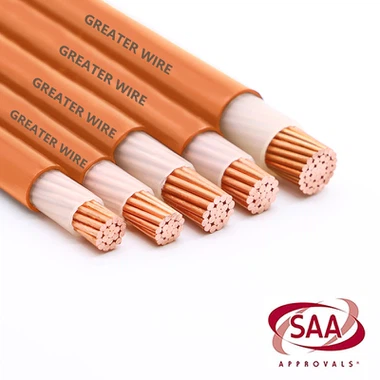
Polyvinyl Chloride (PVC) sheaths: Common in Australia orange circular cable sizes, providing good resistance to impact and wear.
Low Smoke Zero Halogen (LSZH) sheaths: Used in critical installations, providing fire safety without releasing toxic gases.
Rubber or thermoplastic elastomer (TPE) jackets: Used for flexible cables subjected to frequent movement.
The thickness and composition of the sheath are carefully chosen based on the cable's intended environment, ensuring protection against mechanical stress.
2.3 Steel Wire Armoring for Extra Protection
For cables exposed to extreme mechanical stress, steel wire armored (SWA) cables are an ideal solution. While AS/NZS 5000.1 focuses mainly on unarmored cables, armored versions are used in heavy-duty applications such as underground power distribution. The armoring provides:
Protection against crushing and impact forces (e.g., from excavation equipment or heavy machinery).
Enhanced tensile strength, allowing cables to withstand pulling forces during installation.
Rodent resistance, reducing the risk of damage from animals in underground or industrial settings.
In applications where 95mm XLPE cables AS/NZS 5000.1 are used, armoring can be incorporated to ensure maximum durability.
2.4 Stranding and Conductor Design for Flexibility
The standard also considers conductor stranding, which affects the cable's ability to withstand mechanical stress. Different conductor designs offer varying levels of flexibility and strength:
Solid Conductors: Found in rigid cables, providing high mechanical stability but limited flexibility.
Stranded Conductors: Made up of multiple small wires, enhancing flexibility and resistance to repeated bending and movement.
Compact Conductors: Offer a balance between flexibility and mechanical strength.
For applications where cables are frequently moved or flexed, SAA single core XLPE cables with finely stranded copper conductors provide enhanced durability.
2.5 Compliance with Impact and Crush Testing
To ensure compliance with AS/NZS 5000.1, cables must undergo impact and crush testing to assess their ability to withstand mechanical stress. These tests include:
Impact resistance tests: Simulating real-world conditions where objects may strike the cable.
Crush resistance tests: Applying pressure to check if the cable deforms or loses functionality.
Tensile strength tests: Measuring the cable's ability to withstand pulling forces.
By passing these tests, cables such as Australia orange circular cable sizes ensure their suitability for demanding environments.

3. Application-Specific Mechanical Stress Considerations
3.1 Industrial and Mining Applications
Cables used in industrial and mining environments must endure extreme mechanical stress due to exposure to heavy machinery, high tension, and rough handling. AS/NZS 5000.1 compliant cables for these applications include:
95mm XLPE cables AS/NZS 5000.1, which offer high power capacity and mechanical strength.
Armored and reinforced cables, which prevent crushing and damage from heavy vehicles and equipment.
Heat and chemical-resistant cables, ensuring long service life in extreme conditions.
3.2 Underground and Outdoor Installations
Cables used in underground and outdoor environments are exposed to factors such as moisture, soil movement, and heavy loads from above-ground activity. AS/NZS 5000.1 addresses these challenges with:
Water-resistant XLPE insulation, which prevents moisture ingress.
Steel wire armoring, which protects against crushing forces from soil and rocks.
UV-resistant sheathing, ensuring durability against sun exposure.
Australia orange circular cable sizes are commonly used in outdoor power distribution due to their robust construction and high visibility.
3.3 Construction and Infrastructure Projects
In the construction sector, cables often experience frequent movement, bending, and temporary installations. SAA single core XLPE cables are particularly suitable for these conditions due to:
Flexibility and ease of installation.
Resistance to abrasion and impact damage.
Durability in extreme temperature variations.
The standard ensures that these cables can handle the mechanical demands of constantly changing construction sites.

Dongguan Greater Wire & Cable Co., Ltd. has become an industry leader in the professional production of Australian SAA certified wires with years of intensive cultivation in the field of wires and cables. Our wire products use the most advanced production technology to ensure that each Australian SAA certified wire has extremely high heat resistance, water resistance and chemical corrosion resistance, and is suitable for various extreme application environments. We are based on integrity and quality, provide customers with preferential prices and perfect after-sales service, and are committed to becoming your most trusted wire supplier. Contact us now to experience excellent quality and meticulous service and create a better future together.