























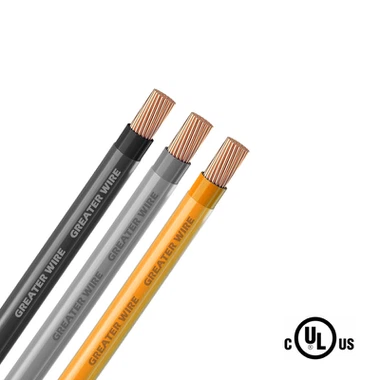
THHN wire, or Thermoplastic High Heat-resistant Nylon-coated wire, is widely recognized in the electrical industry for its durability, versatility, and fire resistance. Commonly used in commercial and residential projects, THHN wire is a staple for electrical wiring due to its ability to withstand various environmental conditions. This article delves into the fire-resistant properties of THHN wire and explores how it compares to other types of electrical wiring materials.


Thermoplastic: A plastic material that softens when heated and hardens upon cooling.
High Heat-resistant: Indicates its capability to withstand elevated temperatures without degradation.
Nylon-coated: A protective layer that provides additional mechanical strength and resistance to oil, gasoline, and abrasion.
Available in various gauges and types, THHN wire is extensively used in dry and damp locations. Its structure consists of a copper or aluminum conductor, thermoplastic insulation, and a nylon jacket.

Fire Resistance of THHN Wire
Temperature Ratings
THHN wire has impressive temperature ratings that contribute to its fire resistance. It is rated for:
90°C (194°F) in dry locations
75°C (167°F) in wet locations
90°C (194°F) for THWN-2, an upgraded version of THHN, even in wet conditions
These ratings ensure that THHN wire can perform safely in high-heat scenarios, reducing the risk of fire due to overheating.
Nylon Coating and Fire Resistance
The nylon jacket of THHN wire serves as an additional protective layer. While not explicitly fireproof, the nylon coating provides significant resistance to heat, minimizing damage during short-term exposure to high temperatures. It also helps reduce the risk of ignition from electrical sparks.
Flammability Standards
THHN wire meets stringent flammability standards, such as the UL 83 Standard for Thermoplastic Insulated Wires and Cables. Compliance with these standards ensures that the wire has undergone rigorous testing for fire resistance and safety.
Applications in Fire-prone Areas
THHN wire's ability to resist high temperatures makes it suitable for applications in environments prone to heat exposure, such as:
Industrial plants
Electrical enclosures
Buildings with high-power machinery
When used correctly, THHN wire reduces the likelihood of electrical fires by maintaining its integrity under heat stress.
Comparison with Other Wire Types
While THHN wire is a popular choice for its balance of cost and performance, it's essential to understand how it compares to other wire types regarding fire resistance.
THHN vs. XHHW
THHN Wire: Nylon-coated, suitable for dry and damp locations.
XHHW Wire: Cross-linked polyethylene insulation offers superior fire resistance and is preferred for environments with extreme heat exposure.
THHN vs. MC Cable
THHN Wire: Installed in conduit for added protection.
MC Cable: Often pre-assembled with a metallic jacket, providing an additional layer of fire resistance.
THHN vs. Fire-rated Cables
Fire-rated cables are explicitly designed to withstand direct fire exposure for extended periods, making them more suitable for life-safety systems than standard THHN wire.

Enhancing Fire Resistance with Proper Installation
Proper installation is crucial to maximizing the fire-resistant properties of THHN wire. Key considerations include:
Using Conduit: Metal conduits enhance fire resistance by acting as a barrier.
Avoiding Overloading: Exceeding the wire's current-carrying capacity can lead to overheating.
Regular Maintenance: Inspecting wires periodically prevents potential fire hazards.