























As an important part of renewable energy, solar power generation has been widely used in countries around the world. In the construction of solar photovoltaic systems, solar cables, as the key link connecting various components, bear important power transmission functions. Since solar cables usually need to be exposed to outdoor environments for a long time, their weather resistance, UV resistance and other properties are particularly important. H1Z2Z2-K cable is a high-performance cable that is particularly suitable for outdoor applications. It has excellent ultraviolet (UV) tolerance and is an indispensable part of photovoltaic systems. This article will analyze the UV tolerance of H1Z2Z2-K cable and explore the role of solar cables in practical applications.
1. UV tolerance requirements for solar cables
In solar photovoltaic systems, cables are often exposed to outdoor environments and need to withstand the test of harsh environments such as direct sunlight, ultraviolet radiation, rain, and wind and sand. Ultraviolet rays are one of the main factors that cause cable materials to age and become brittle. If the cable does not have good UV tolerance, long-term ultraviolet radiation will gradually degrade the cable outer sheath material, causing the cable to lose its protective function, ultimately affecting the power transmission effect of the photovoltaic system, and may even cause safety hazards. Therefore, the UV resistance of solar cables becomes a crucial consideration when selecting cables.
The UV resistance requirements of solar cables usually include the following aspects:
Anti-ultraviolet materials: The outer sheath material of the cable needs to be resistant to ultraviolet radiation to prevent ultraviolet rays from causing aging and damage to the material.
Long-term exposure performance: Solar cables usually need to be exposed outdoors for many years, so their materials need to have good durability and be able to maintain their performance under long-term ultraviolet radiation.
Environmental adaptability: In addition to ultraviolet rays, solar cables also need to have multiple weather resistance properties such as high temperature resistance, moisture resistance, and salt spray resistance to adapt to changes in different environments.
2. Analysis of UV resistance of H1Z2Z2-K cable
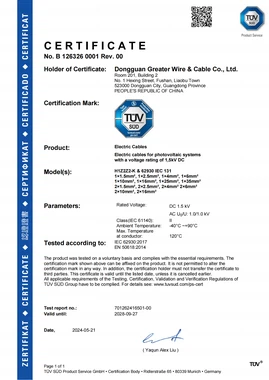
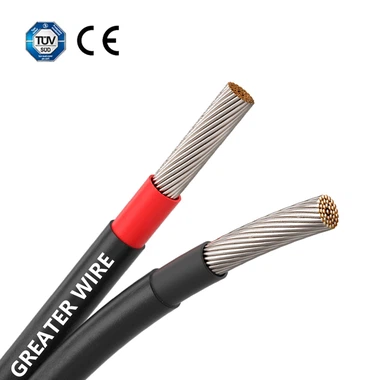
H1Z2Z2-K cable is a solar cable that complies with European standard EN 50618 and is specially designed for use in photovoltaic systems. The outer sheath of this cable is made of cross-linked polyethylene (XLPE) material, which not only has excellent electrical insulation, but also has extremely strong UV resistance. This makes the H1Z2Z2-K cable very suitable for long-term use in outdoor environments and can effectively resist ultraviolet radiation.
Here are a few outstanding features of H1Z2Z2-K cable in terms of UV tolerance:
Outer sheath material - cross-linked polyethylene (XLPE): Cross-linked polyethylene (XLPE) material has extremely strong UV resistance, which can effectively prevent UV damage to the cable surface. This material will not become brittle, crack or lose flexibility due to long-term exposure to UV rays, thus ensuring the long-term use of the cable in high temperature and strong UV environments.
Anti-UV test: H1Z2Z2-K cables undergo rigorous UV aging tests during production to ensure that their outer sheaths can withstand long-term sunlight exposure. According to the EN 50618 standard, the outer sheath material of solar cables should be able to withstand at least 2000 hours of UV radiation without significant physical property degradation. H1Z2Z2-K cables can effectively meet this requirement and ensure the stability and safety of photovoltaic systems.
Compliance with international standards: H1Z2Z2-K cables comply with multiple international standards such as EN 50618 and UL 4703, which have clear requirements for cables' UV tolerance, weather resistance and other aspects. The design and manufacture of H1Z2Z2-K cables strictly adhere to these standards to ensure that they are not affected by ultraviolet rays in long-term outdoor environments.

3. The relationship between the UV resistance of solar cables and photovoltaic systems
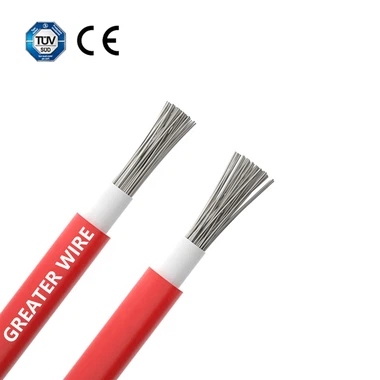
In photovoltaic power generation systems, cables connect equipment such as solar photovoltaic panels, inverters, batteries and power grids. The quality of the cable directly affects the operating safety and efficiency of the system. Since photovoltaic systems are usually located outdoors, the cables need to be exposed to sunlight for a long time, and ultraviolet rays are one of the important factors affecting the performance of cables. Solar cables (solar wire) in photovoltaic systems must have excellent UV resistance to maintain stable power transmission capabilities during long-term use.
Outer sheath materials of solar cables: The outer sheath of solar cables usually uses UV-resistant materials, such as cross-linked polyethylene (XLPE), polyvinyl chloride (PVC), etc. These materials can effectively isolate the damage of ultraviolet rays and prevent aging and damage caused by ultraviolet rays. Selecting materials with strong UV resistance is the key to ensure that the cable can still operate reliably when exposed to ultraviolet rays for a long time.
Cable aging and failure risk: If the outer sheath material of the solar cable cannot effectively resist ultraviolet rays, cracks and peeling may occur on the cable surface over time, resulting in a decrease in the insulation of the cable, and may even cause power leakage or short circuits. H1Z2Z2-K cable can effectively delay this aging process with its excellent ultraviolet resistance, thereby reducing the risk of system failure.

4. The impact of solar cable UV resistance on system safety
The UV resistance of solar cables is not only related to the service life of the cable, but also directly affects the safety of the photovoltaic system. If the outer sheath of the cable is damaged due to long-term ultraviolet radiation, the conductor of the cable may be exposed, increasing the risk of electrical fire. In addition, aging cables may have problems such as poor connection and signal interference, further affecting the performance of the photovoltaic system. Therefore, choosing cables with strong UV resistance and ensuring their stable operation in harsh environments is an important measure to ensure the safety and efficient operation of photovoltaic systems.
5. Future development trend of UV resistance of solar cables
With the continuous development of solar technology and the expansion of the scale of photovoltaic systems, the UV resistance of solar cables will face higher requirements in the future. Especially in some extreme climate conditions (such as high temperature, high humidity, high ultraviolet radiation, etc.), the performance requirements of cables will be more stringent. In order to meet these challenges, future solar cables may innovate in the following aspects:
Application of new materials: With the development of polymer materials and nanotechnology, future solar cables will use new materials that are more resistant to ultraviolet rays and aging to improve the service life and stability of cables.
Intelligent cable technology: Future solar cables may have built-in sensors to monitor the status of cables in real time, especially in terms of ultraviolet radiation and ambient temperature changes, and can provide early warning information to help maintenance personnel detect problems in time.