


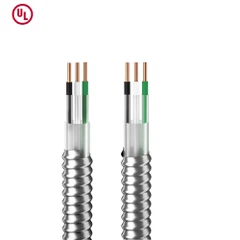
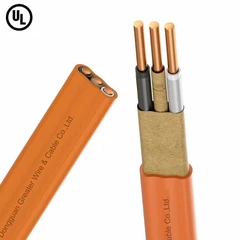
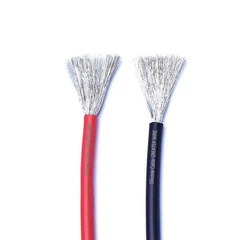
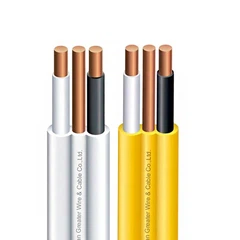
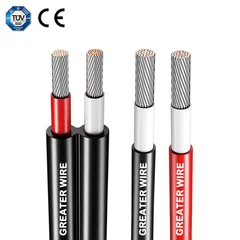

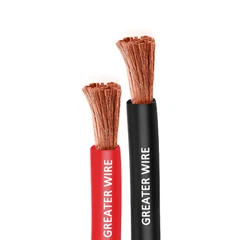
TC-ER Cable 600V vs 1000V: What Changes?
The main difference between 600V and 1000V TC-ER cable is the voltage rating, but that number alone does not determine cable construction, ampacity, or installation suitability. For buyers comparing TC Cable options, the right choice depends on the project's system voltage, applicable electrical codes, product certification, and installation conditions. A higher voltage rating does not automatically mean thicker insulation, greater current-carrying capacity, or better durability.


What Is TC-ER Cable?
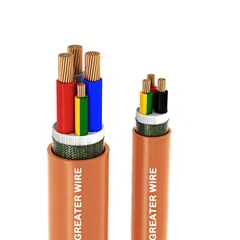
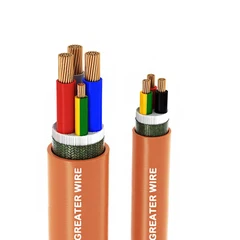
TC stands for Tray Cable, a cable type used in industrial power and control circuits. ER stands for Exposed Run, indicating that qualifying cable may be used in certain exposed-run installations under applicable code requirements.
Typical applications include factory equipment, industrial control circuits, and cable tray systems. However, TC-ER marking does not permit unrestricted exposed installation. The cable must meet the relevant product requirements and installation rules.
For North American projects, UL 1277 covers electrical power and control tray cables, while Article 336 of the National Electrical Code (NEC) addresses Type TC installation requirements. Product certification and installation compliance must be checked separately.

600V vs. 1000V: What Actually Changes?
The voltage rating is the starting point, not the only selection criterion.
| Comparison factor | 600V cable | 1000V cable |
|---|---|---|
| Voltage rating | Suitable within its applicable rating and approved uses | May suit projects requiring a higher cable rating, subject to applicable requirements |
| Insulation construction | Depends on the specific model | Depends on the specific model |
| Ampacity | Depends on conductor size, temperature rating, and installation conditions | Depends on the same factors |
| Certification | Must match the intended application | Must match the intended application |
| Installation limits | Governed by product markings and applicable codes | Governed by product markings and applicable codes |
Some manufacturers offer TC-ER cables marked for 600V or 1000V applications. Their construction and features vary by model. For example, certain products use cross-linked polyethylene (XLPE) insulation with a polyvinyl chloride (PVC) jacket, while others use XLPE insulation with a chlorinated polyethylene (CPE) jacket. These are product-specific configurations, not universal differences between voltage ratings.
A 1000V rating does not automatically mean thicker insulation, higher ampacity, greater oil resistance, or longer service life. Buyers should compare actual datasheets rather than infer performance from the voltage marking.
Can 1000V TC-ER cable be used in a 600V system? It may be suitable if its certification, equipment compatibility, and installation requirements permit the application.
Can it be used above 600V? Do not assume so based on the marking alone. Confirm the product's approved use and the applicable code requirements for the specific system.

How Do Conductors, Insulation, and Jackets Affect Selection?
Copper Conductors and Cable Size
Copper Tray Cable is one option for industrial power and control circuits. Buyers should verify conductor material, strand construction, size, and core count against the project specification.
For example, 12 AWG Tray Cable identifies a conductor size, not a universal voltage rating or ampacity. Allowable current depends on the applicable code, conductor temperature rating, ambient conditions, the number of current-carrying conductors, and other installation factors.
XHHW Cable and Insulation
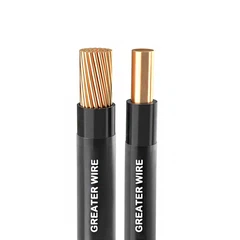
XHHW Cable refers to conductors with a recognized insulation designation. XHHW-2 is a related designation with defined wet- and dry-location temperature characteristics under applicable product requirements.
Some TC-ER products use XHHW-2 insulated conductors. However, XHHW describes the conductor insulation type, while TC-ER identifies the overall cable type and its applicable use. When evaluating XHHW Power Cable, verify the complete cable construction, voltage rating, temperature markings, and certification.
Jacket and Environmental Requirements
Cable jackets may use PVC, CPE, or other materials, depending on the product design. Material names alone do not establish suitability for every industrial environment.
Buyers seeking Oil Resistant Tray Cable should check the manufacturer's stated oil-resistance claims and supporting documentation for the intended exposure. Sunlight resistance, flame performance, and direct-burial suitability also require confirmation for the specific model.


Which Standards and Installation Rules Apply?
For North American applications, check UL 1277, the cable's actual certification, and the applicable NEC requirements. These serve different purposes: a product standard addresses cable requirements, while the installation code governs permitted use.
Canadian projects may require separate verification of CSA certification and applicable Canadian electrical requirements. International projects may specify IEC or AS/NZS standards, which should not be treated as automatically equivalent to UL TC-ER requirements.
For example, IEC 60502-1 covers specified extruded-insulation power cables rated at 1 kV (Um = 1.2 kV) and 3 kV. Its scope does not establish equivalence with a North American TC-ER cable.
What Should Buyers Check Before Ordering?
Use this checklist when comparing quotations and technical datasheets:
System voltage: Confirm the required rating and applicable electrical code.
Certification: Verify the exact product type, listing, and permitted application.
Conductor details: Check material, AWG or mm² size, core count, and grounding conductor requirements.
Temperature and ampacity: Verify the ratings and installation conditions used for the design.
Environmental performance: Confirm oil resistance, sunlight resistance, flame performance, and direct-burial suitability where required.
Compatibility: Check equipment terminals, connectors, and project specifications.
Procurement documents: Review datasheets, product markings, required approvals, quantities, and delivery terms.
The appropriate choice is the cable that meets the project's electrical, regulatory, environmental, and commercial requirements-not simply the one with the higher voltage number.
Discuss Your TC-ER Cable Requirements with GERITEL WIRE
Choosing the right TC-ER cable starts with a clear specification. GERITEL WIRE welcomes inquiries from electrical distributors, OEM manufacturers, contractors, and industrial procurement teams evaluating cable requirements for their projects. Share your target voltage, conductor size, core count, installation environment, and certification requirements to discuss the relevant product specifications. Confirming the exact ratings and supporting documentation before ordering can help reduce specification mismatches and support a more informed purchasing decision.
Dongguan Greater Wire & Cable Co., Ltd.
Tel/WhatsApp/Wechat: +86 136 6257 9592
Tel/WhatsApp/Wechat: +86 135 1078 4550
Email: manager01@greaterwire.com
Website: www.greaterwire.com