


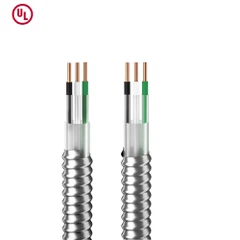
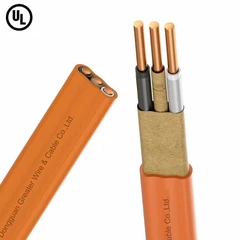
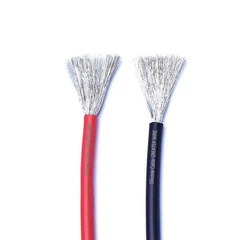
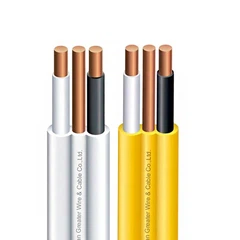
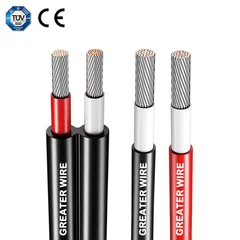

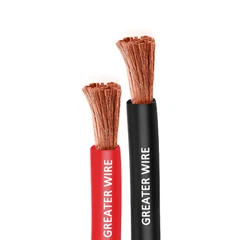
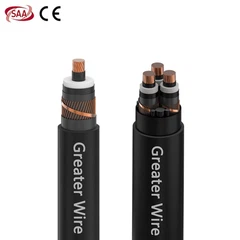
Choosing the right AWG size for TC-ER cable requires more than matching a wire gauge to the expected current. The decision also depends on ampacity, voltage drop, conductor insulation ratings, terminal limitations, and installation conditions. For electrical distributors, contractors, OEMs, and procurement teams, the goal is to specify a cable that meets the circuit design and the requirements of the actual installation.


1. Start With Load Current and Circuit Length
AWG stands for American Wire Gauge. A lower AWG number indicates a larger conductor, which generally has lower resistance than a smaller conductor of the same material.
Before selecting a size, establish the expected load current, circuit length, conductor material, number of conductors, and whether the load is continuous. Also identify the installation environment, ambient temperature, and temperature ratings of connected equipment.
These details affect allowable ampacity-the current a conductor can carry under specified conditions. A conductor size suitable for one installation may not be suitable for another, even when the load current is the same.

2. Check Ampacity and Voltage Drop
Ampacity: For installations governed by the U.S. National Electrical Code (NEC), determine allowable ampacity using the applicable code provisions. Relevant factors can include conductor size and material, insulation temperature rating, ambient temperature, the number of current-carrying conductors, installation conditions, and terminal limitations. Overcurrent protection requirements must also be satisfied.
Do not select a conductor solely from the highest temperature printed in a cable specification. A 90°C insulation rating does not automatically permit use of the 90°C ampacity value at equipment terminals; applicable code rules and terminal ratings may limit the result.
Voltage drop: Voltage drop generally increases with current, circuit length, and conductor resistance. Long runs or voltage-sensitive equipment may require a larger conductor than the minimum size indicated by ampacity alone.
Evaluate ampacity and voltage drop separately. Do not rely on a generic AWG-to-ampacity chart without confirming that its assumptions match the specific cable and installation.

3. Confirm Voltage and Temperature Ratings
A 600V Tray Cablemay be appropriate for a circuit designed for that voltage, but the voltage marking alone does not establish suitability for every application. Check the exact product's voltage rating, conductor insulation, environmental markings, and certification documentation.
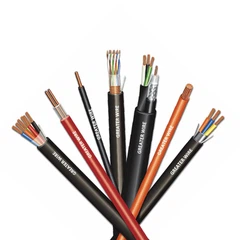
Temperature ratings also vary by construction. Some TC-ER cables use THHN/THWN conductor insulation with a PVC jacket; other designs use different insulation and jacket materials. Conductor insulation and the outer jacket serve different purposes, and their ratings should not be treated as interchangeable.
Use the manufacturer's technical data for the exact cable model. Confirm the applicable wet- or dry-location ratings and operating conditions rather than assuming all TC-ER products have the same construction or temperature rating.


4. Should You Choose Shielded or Unshielded Tray Cable?
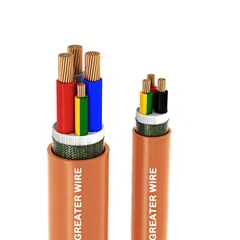
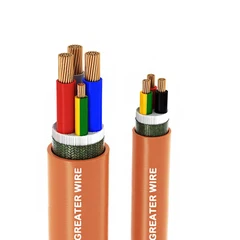
A Shielded Tray Cable may be appropriate when a circuit requires protection against electromagnetic interference (EMI) or has specific signal-integrity requirements. An Unshielded Tray Cable may be suitable where shielding is not required by the equipment design or installation conditions.
The choice depends on the circuit, nearby electrical equipment, grounding and bonding requirements, and manufacturer instructions. Shielding does not, by itself, determine the required AWG size. Conductor sizing must still account for load current, ampacity, voltage drop, and installation conditions.
Before ordering, confirm the required shielding type and construction. Verify that the supplier offers the specific configuration required by the project.
5. Verify Exposed-Run and Outdoor Suitability
The Exposed Run Cable designation must be interpreted in the context of the product's markings, listing, and applicable installation code. In the U.S. system, the TC-ER marking applies to specified exposed-run applications; it is not blanket permission to install cable in any exposed location or where it may suffer physical damage. UL 1277 describes TC-ER use for exposed runs between a cable tray and utilization equipment, with continuous support and protection against physical damage. The applicable NEC provisions and project conditions must also be checked.
For outdoor routes, verify each required environmental characteristic. A Sunlight Resistant Tray Cable should carry the appropriate product marking or have supporting documentation for sunlight resistance. Do not assume that every tray cable is sunlight resistant simply because it has an outer jacket.
Moisture resistance, oil resistance, direct-burial suitability, and other environmental properties must also be confirmed separately when the project requires them.
6. What Should Buyers Confirm Before Ordering?
Before requesting a quotation, prepare a specification covering:
Conductor size and material: Required AWG and specified conductor material.
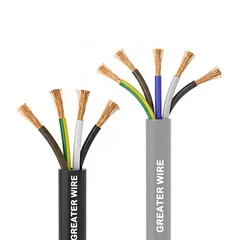
Cable configuration: Number of conductors, grounding conductor requirements, and shielded or unshielded construction.
Electrical ratings: Rated voltage, insulation temperature rating, and information needed to verify allowable ampacity.
Installation conditions: Cable-tray or exposed-run use, outdoor exposure, and requirements for sunlight, moisture, oil, or direct burial.
Physical requirements: Overall cable diameter, bending radius, termination compatibility, and available installation space.
Compliance documents: Applicable listing or certification, product markings, and the current technical data sheet.
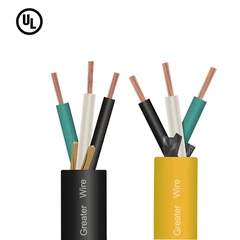
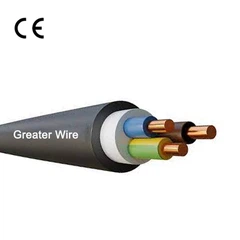
For U.S. projects, UL 1277 is a relevant product standard for electrical power and control tray cables. NEC Article 336 and other applicable NEC provisions address permitted uses and installation requirements. Confirm the applicable code edition and local requirements for each project. A UL marking should not be treated as proof of compliance with every Canadian or international standard.
7. Specify TC-ER Cable With GERITEL WIRE
A clear specification helps buyers compare cable options and reduces the risk of ordering a product that does not match the project. Before requesting a quotation, prepare the required AWG, conductor material, number of conductors, voltage and temperature ratings, shielding needs, and environmental requirements.
GERITEL WIRE welcomes inquiries from international buyers seeking cable specification information. Contact the company to discuss your requirements and confirm which products, technical data, and applicable certifications are available for your project. Final selection should be based on verified product documentation and the requirements of the intended installation.
Dongguan Greater Wire & Cable Co., Ltd.
Tel/WhatsApp/Wechat: +86 136 6257 9592
Tel/WhatsApp/Wechat: +86 135 1078 4550
Email: manager01@greaterwire.com
Website: www.greaterwire.com