


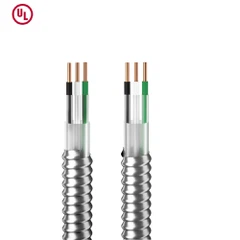
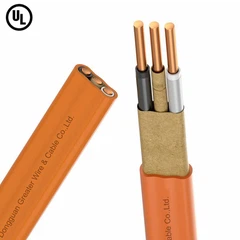
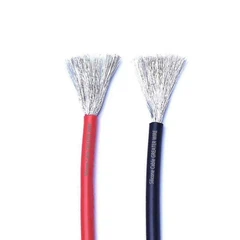
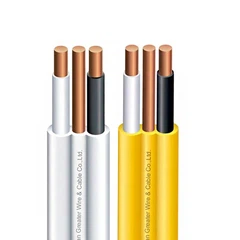
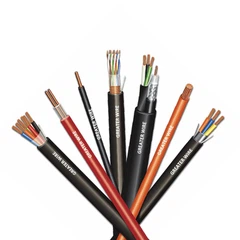
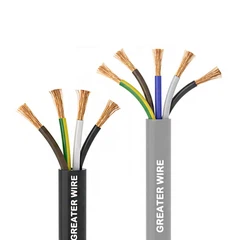
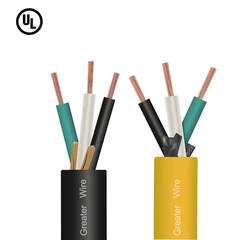
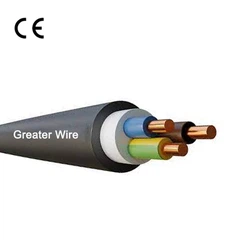
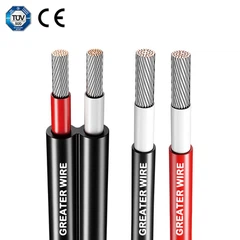

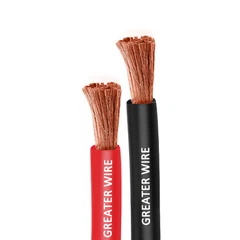
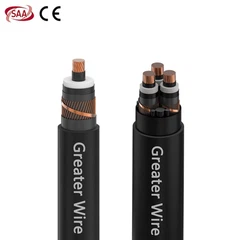
In electrical engineering and power distribution systems, wire colours are never chosen randomly. Instead, they are carefully defined by strict national and regional standards. For Australia, New Zealand, and the broader Oceania region, wire colour codes are more than just a way of identification - they are a fundamental safety mechanism and a critical part of electrical installation compliance.
Many buyers who purchase electrical cables often pay more attention to specifications, conductor size, or price, while overlooking the role of colour coding. However, wire colours directly determine their function in the circuit. Using the wrong colour can lead to confusion, malfunctions, short circuits, or even serious electrical accidents such as electrocution and fire. For this reason, whether you are wiring a new home, working as an electrical contractor, or supplying a large-scale infrastructure project, understanding and following the Australian wire colour codes is essential.
This article will answer the question, "What is the color code for electrical wiring in Australia?" It will explain the current Australian standard and compare it with older standards, outline the application scenarios for each color, and provide a practical guide for selecting the appropriate cable color for your specific project. We will also introduce the various cable types widely used in Australia, including orange round cable, TPS cable, SWA cable, SDI cable, rubber cable, building wire, grounding cable, neutral shield cable, instrumentation cable, and other standard-compliant cables. We will also explain how Dongguan Great Wire and Cable Co., Ltd. provides high-performance solutions for a wide range of industries in Australia and Oceania.
What Are Wire Colour Codes?
Wire colour coding is the practice of using different insulation colours to indicate the function of each conductor within an electrical system. It is a globally accepted safety method that makes it easier for electricians, engineers, and inspectors to identify the role of each wire.
In a typical electrical circuit, three fundamental conductors are always involved:
- Active/Phase Line (Live Wire): The conductor carrying current from the power source.
- Neutral Line: The conductor completing the return path of current.
- Earth/Ground Line: The safety conductor connected to ground to prevent electrocution and protect equipment.
Australia regulates wire colour codes under the AS/NZS 3000:2018 Wiring Rules, which apply to residential, commercial, industrial, and infrastructure projects alike.
The importance of colour codes can be summarised as follows:
1.Safety: Prevents wiring mistakes that may lead to fire, short circuits, or electric shock.
2.Efficiency: Enables quick identification of wires in complex circuits, saving time during installation or maintenance.
3.Compliance: Ensures installations meet Australian and New Zealand legal requirements.
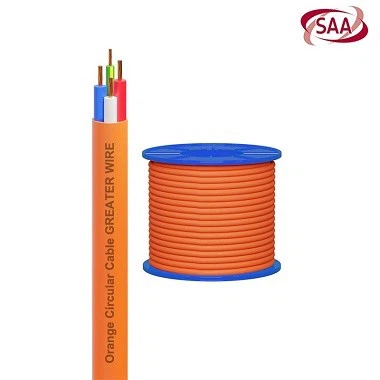
Current Australian Wire Colour Codes
According to AS/NZS 3000:2018, the standard wire colour codes in Australia are as follows:
| Function | Current Colour Code | Description | Old Standard Colour |
|---|---|---|---|
| Active (Single Phase) | Brown | Live wire carrying current | Red |
| Neutral | Blue | Return path of current | Black |
| Earth (Ground) | Green/Yellow | Safety conductor | Green |
| Three-Phase (L1 / L2 / L3) | Brown / Black / Grey | Three-phase supply for industrial systems | Red / White / Blue |
Note: Many older buildings in Australia still use the pre-2000 colour system. Therefore, electricians must always confirm wiring colours before carrying out maintenance or upgrades.
Which Colour Is Used in Which Scenario?
Each colour is assigned a specific function and should be used in specific applications:
- Brown (Active/Phase): Used for single-phase live wires. Common in household lighting circuits, general power outlets, and appliances such as refrigerators and washing machines.
- Blue (Neutral): Used as the neutral conductor in residential and commercial wiring systems.
- Green/Yellow (Earth): Used universally as the grounding wire to ensure electrical safety in homes, factories, schools, and public facilities.
- Brown/Black/Grey (Three-Phase): Used in three-phase power supply systems for industrial motors, HVAC systems, heavy-duty machinery, and mining equipment.
- Red (Old Active Colour): Found in older installations. Extra caution must be taken during retrofits or maintenance to avoid miswiring.
Example:
- In a typical Australian home, lighting circuits will use brown for live, blue for neutral, and green/yellow for earth.
- In a factory, a three-phase motor may use brown, black, and grey for L1, L2, and L3, plus blue for neutral and green/yellow for earth.

Why Are Colour Codes So Important?
- Safety: Miswiring active and neutral conductors can cause electrocution hazards or equipment damage.
- Standardisation: Helps ensure that all electricians, regardless of project size, work according to the same guidelines.
- Maintenance Efficiency: Standardised colours reduce troubleshooting time and improve productivity.
How to Choose Wire Colours for Different Situations
Residential Applications
- Lighting Circuits: Brown (active) + Blue (neutral) + Green/Yellow (earth).
- High-Power Kitchen Appliances (e.g., ovens, stoves): Require larger conductor sizes but maintain the same colour coding.
Industrial Applications
- Three-Phase Equipment: Brown, Black, and Grey for L1/L2/L3, with Blue (neutral) and Green/Yellow (earth).
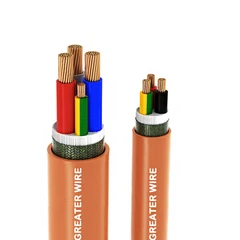
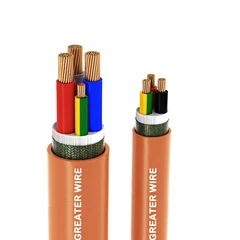
- Heavy-Duty Industrial Cabling: Often supplied in Orange Circular Cable with standardised conductor colours inside.
Special Applications
- Fire Alarm and Emergency Systems: Fire-rated cables are typically red-sheathed.
- Instrumentation and Control Systems: May use multi-core cables with various colour combinations for signal identification.
Cable Types and Colour Applications
| Cable Type | Application | Typical Sizes | Colour Code Usage |
|---|---|---|---|
| Orange Circular Cable | Industrial machinery, mining power supply | 2.5mm² – 95mm² | Three-phase colours (Brown/Black/Grey) + Blue + Green/Yellow |
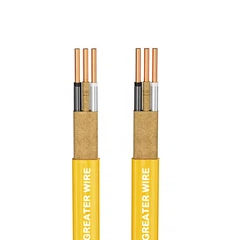
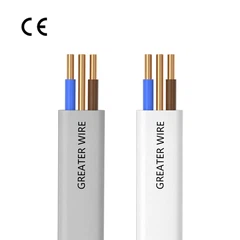
| TPS Cable | Residential and commercial wiring | 1.5mm² – 6mm² | Brown, Blue, Green/Yellow |
| Medium Voltage Cable | Industrial medium-voltage distribution | 6.6kV – 35kV | Standard-compliant cores |
| VSD Cable | Variable Speed Drive to motor | Shielded designs | Brown, Blue, Green/Yellow |
| Fire Rated Cable | Fire alarm, emergency systems | 90–120 min fire rating | Red outer sheath |
| Mining Cable | Mining and tunnelling, extra durability | 35mm² – 240mm² | Multi-colour, functional separation |
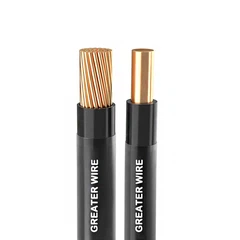
| Building Wire | Main power distribution in buildings | 1.5mm² – 16mm² | Brown, Blue, Green/Yellow |
How to Select the Right Cable Model
Based on Load Current
| Load Current (A) | Recommended Size (AWG) | Typical Application |
|---|---|---|
| ≤ 15A | 14 AWG | Indoor lighting |
| 16–20A | 12 AWG | Residential sockets, small appliances |
| 21–30A | 10 AWG | Air conditioning, heavy-duty outlets |
Based on Installation Environment
- Indoor: TPS cable.
- Outdoor/Underground: Orange Circular Cable or Medium Voltage Cable.
- High-Temperature/Fire Safety: Fire Rated Cable.
Based on Certification
- Always choose cables with SAA certification, the mandatory approval for electrical cables in Australia and New Zealand.
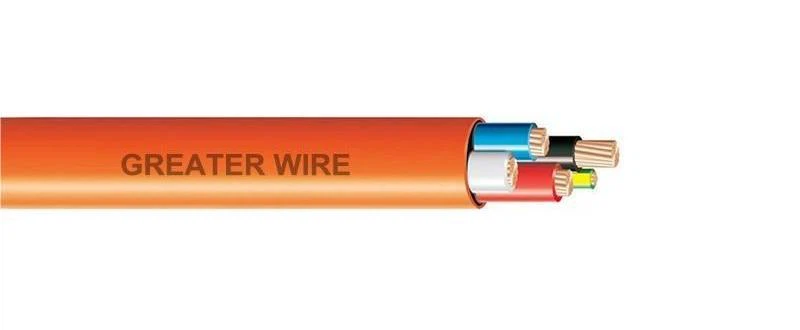
Choose Dongguan Greater Wire & Cable Co., Ltd.
We provide a comprehensive range of SAA-approved cables, including:
- Orange Circular Cable, TPS Cable, Medium Voltage Cable, VSD Cable, Fire Rated Cable, Elastomer Cable, Heavy Duty Cable, Ordinary Duty Cable, Aerial Cable, SWA Cable, Mining Cables, SDI Cable, Rubber Cable, Building Wire, Earthing Cable, Neutral Screen Cable, Instrumentation Cable.
Our Key Advantages:
1.Wide Variety: Complete range of Australian standard cables.
2.Regional Compliance: Fully compliant with markets in Australia, New Zealand, Papua New Guinea, Fiji, Solomon Islands, Vanuatu, Samoa, Tonga, Tuvalu, Kiribati, and more.
3.Proven Track Record: Supplied to major projects in commercial buildings, airports, universities, railways, and mining plants.
4.Full Specifications: Coverage from 1.5mm² upward across all standard sizes.
5.Fast Delivery: Large-scale manufacturing capacity, supporting bulk and small orders.
6.Technical Support: Pre-sales consultation and after-sales service.
7.Certified Quality: All products come with SAA certification.
8.Customisation: Options for materials, sizes, colours, performance, marking, and packaging.
Reliable Solutions for Projects of All Sizes
Whether you are a homeowner requiring residential wiring, a contractor wiring commercial buildings, or an industrial operator handling large-scale mining projects, we deliver professional-grade cables and reliable technical support. With years of global manufacturing and export experience, we ensure safe, cost-effective, and standard-compliant solutions for every application.
Contact Us
Dongguan Greater Wire & Cable Co., Ltd.
- Tel / WhatsApp / WeChat:
+86 135 1078 4550 / +86 136 6257 9592
- Email: manager01@greaterwire.com