























When selecting the right electrical cable for any installation, understanding its voltage rating is essential to ensure safety, performance, and long-term reliability. One common type of electrical cable used in residential, commercial, and industrial applications is the TPS cable (Thermoplastic Sheathed Cable). But one key question that often arises is, "What is the voltage of TPS cables?" The answer to this question depends on several factors, including the type of TPS electrical cable, its construction, and its intended use.
In this article, we will explore the voltage ratings of TPS cables, discuss how they are determined, and look at how flat TPS cables and other variations differ in terms of voltage capacity. By the end of this article, you will have a comprehensive understanding of the voltage capabilities of TPS cables and how to choose the right cable for your specific electrical needs.


1. What is a TPS Cable?
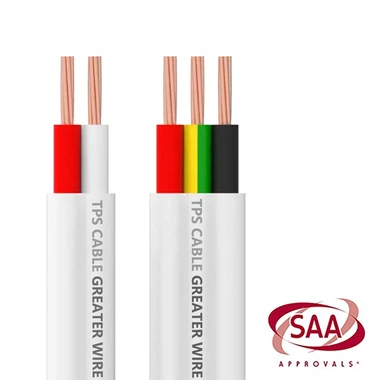
Before we dive into the voltage specifics, it is important to first define what a TPS cable is. TPS cables are a type of electrical cable commonly used for low-voltage electrical systems. The term TPS refers to the thermoplastic material that is used to insulate the cable, providing it with durability, protection, and resistance to environmental factors.
A typical TPS electrical cable consists of:
Conductors: These are the internal wires that carry the electrical current. The conductors are typically made of copper, although aluminum conductors may also be used.
Insulation: Each conductor is insulated to prevent accidental contact and short circuits. This insulation is typically made from a thermoplastic material such as PVC (Polyvinyl Chloride).
Outer Sheath: The outer sheath of the TPS cable is usually made of PVC, which provides additional protection to the internal wires, preventing damage from moisture, mechanical impact, and other environmental hazards.
TPS cables are commonly used for a variety of electrical applications, including lighting, power distribution, and appliances, both indoors and outdoors.
2. Understanding Voltage Ratings in TPS Cables
The voltage rating of an electrical cable is a crucial specification that determines the maximum voltage the cable can safely handle. The voltage rating ensures that the cable will not experience insulation breakdown, electrical arcing, or overheating under normal operating conditions. TPS cables are designed to meet certain voltage standards, and the rating may vary depending on the specific type of cable and its intended application.
For TPS electrical cables, the voltage rating is generally classified by the maximum voltage that the cable can carry safely. These ratings are determined by the insulation material, the conductor size, and the overall construction of the cable.
3. Standard Voltage Rating of TPS Cables
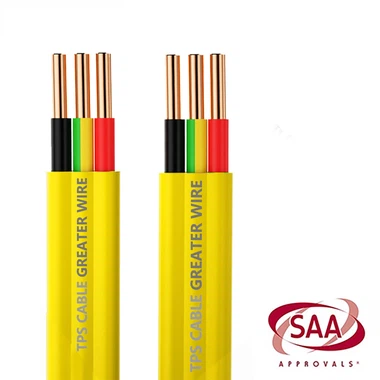
In most cases, TPS cables are used in low-voltage systems, and their voltage ratings typically fall into the following categories:
3.1 450/750V Rated TPS Cable
The most common voltage rating for TPS cables is 450/750V, meaning that the cable is designed to handle a maximum voltage of 450 volts between any conductor and the ground (earth), and 750 volts between two conductors. This voltage rating is typically used in residential and light commercial applications.
450V Rating: This is the maximum voltage that the cable can safely handle when a single conductor is considered relative to the ground. This voltage is appropriate for most domestic and small commercial applications, such as lighting circuits, power outlets, and home appliances.
750V Rating: The maximum voltage between two conductors of the cable (live and neutral or live and live) can be up to 750 volts. This higher rating allows the cable to handle more demanding circuits, such as larger appliances, motors, or equipment.
The 450/750V rating is suitable for most standard residential wiring installations, which typically involve voltages of 110V to 240V (in many countries). TPS cables rated at 450/750V are designed to provide sufficient insulation and protection to handle the electrical loads found in these types of installations.
3.2 Low-Voltage Systems (Up to 1000V)
In some cases, TPS cables may be rated for low-voltage systems that can handle up to 1000V. These cables are typically used in industrial, commercial, and larger residential applications where equipment with higher voltage demands may be involved.
For example, TPS electrical cables rated for 1000V may be used in more complex circuits, including those that power machinery, HVAC systems, or industrial equipment. While these cables are still considered low-voltage cables, the higher rating ensures that they can handle more power without risk of insulation failure.
However, it is important to note that cables rated for 1000V are not the most common TPS cables found in typical residential settings. They are more likely to be used in specialized applications or for circuits with higher power demands.

4. Voltage Rating of Flat TPS Cables
Flat TPS cables are a variant of traditional TPS cables. These cables have a flat profile, which makes them ideal for installations where space is limited, such as in confined areas, under flooring, or inside walls. Despite their flat shape, flat TPS cables still maintain the same voltage ratings as their round counterparts.
4.1 450/750V Flat TPS Cable
Just like round TPS cables, flat TPS cables are commonly rated for 450/750V in most installations. These cables are suitable for general electrical circuits, including lighting, outlets, and appliances, where the maximum voltage typically does not exceed 240V (in regions using 240V power).
4.2 1000V Flat TPS Cable
Some flat TPS cables are also rated for 1000V, although this is more commonly used in industrial or heavy-duty commercial applications. These higher-rated cables can handle the higher power requirements found in industrial machinery, large HVAC systems, and certain equipment that operates on higher voltages.
The main benefit of flat TPS cables in these applications is their space-saving design, which allows them to fit into narrow spaces without sacrificing safety or performance. This makes them ideal for use in both high-voltage and low-voltage environments where space is at a premium.
5. Factors Affecting Voltage Rating in TPS Cables
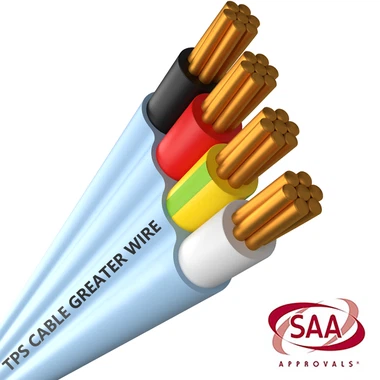
Several factors can influence the voltage rating of a TPS cable, including the following:
5.1 Insulation Material
The primary factor that determines the voltage rating of TPS cables is the insulation material used. Most TPS cables use PVC as the insulation material, which has excellent insulating properties and is able to handle a wide range of voltages. PVC is durable, flexible, and resistant to environmental factors such as moisture, UV radiation, and temperature extremes. However, if higher voltage ratings are required, other materials such as XLPE (cross-linked polyethylene) may be used for insulation to provide additional strength and resistance.
5.2 Conductor Size
The size of the conductor also impacts the voltage rating. Larger conductors have more surface area and are generally able to carry more current and handle higher voltages. However, the voltage rating is typically determined by the insulation material rather than the conductor size. For example, TPS cables with larger conductors may still be rated for 450/750V or 1000V depending on the insulation type and construction.
5.3 Cable Construction
The overall construction of the TPS cable, including the thickness of the insulation, the number of conductors, and the outer sheath, also plays a role in determining the voltage rating. For example, cables with thicker insulation or multiple layers of protective sheathing may have higher voltage ratings.
6. Safety Considerations and Voltage Ratings
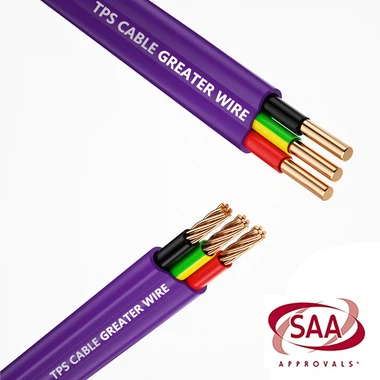
It is critical to choose the correct voltage-rated TPS cable for your application to ensure the safety and longevity of the electrical system. Installing a TPS cable that is not rated for the required voltage can result in insulation breakdown, overheating, or even electrical fires. This is why it is important to carefully check the cable specifications before installation, especially when working with higher voltage systems or circuits that involve heavy machinery or industrial equipment.
In addition, electrical codes and regulations in different regions may have specific requirements for the voltage rating of cables used in certain applications. Always consult with a licensed electrician and follow local building codes when selecting TPS cables for your electrical installations.