

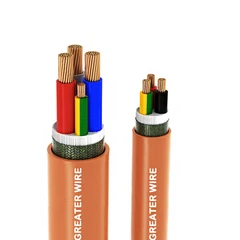
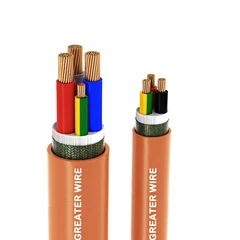

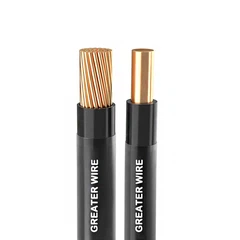
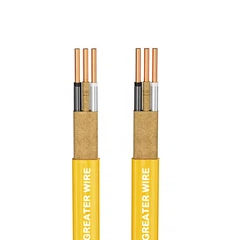
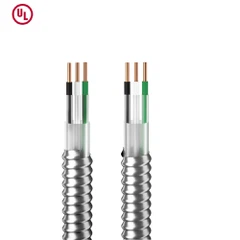
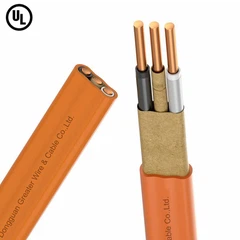
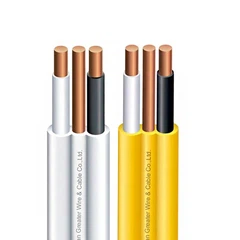
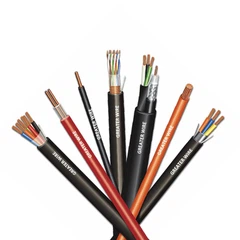
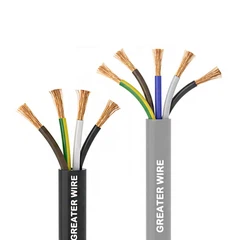
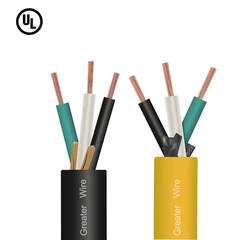
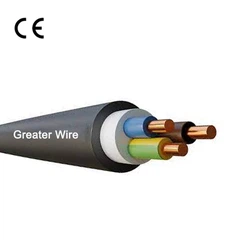
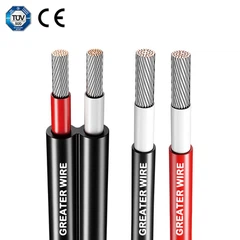

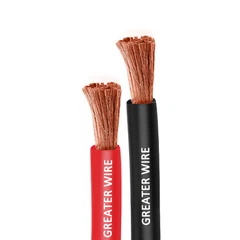
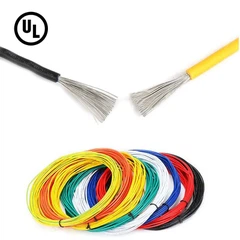
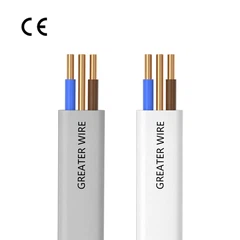
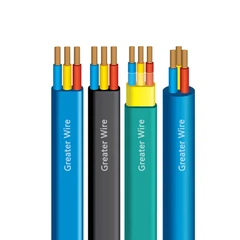
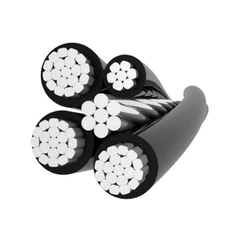
When cable factories process and produce thhn wires, they also divide them into many different product types, including American standard UL83 thhn wire and Philippine standard BPS certified thhn wire. Moreover, the cores used for different thhn cables are also different. Generally, copper thhn wire used has advantages over thhn aluminum wire. Now let's take a look at the advantages of copper thhn wire over thhn aluminum wire in use.
1, In terms of resistivity, copper thhn wire is lower than thhn aluminum wire
Firstly, the cable factory informed us that for this type of copper thhn wire, its resistivity is lower than that of thhn aluminum wire. This is because thhn aluminum wire has a much higher resistivity when conducting than copper thhn wire. Therefore, after processing and manufacturing into cable thhn, there are also differences in resistivity between them. When choosing, it is important to choose copper thhn wire products.
2, Copper thhn wire has better ductility
There is also a difference in ductility between copper thhn wire and thhn aluminum wire. Generally, for electrical copper, its ductility is higher, often reaching over 30%. However, for aluminum alloys, the ductility is often only 18%. For large thhn cables such as 500 thhn copper wire, 600 MCM thhn, and thhn 250 MCM, the ductility is even greater. So there is also a significant difference between the two in this regard.
3, The intensity also varies
There are significant differences in the strength between copper thhn wire and thhn aluminum wire. At room temperature, copper is many times stronger than aluminum, and at certain high temperatures, copper exhibits much higher strength than aluminum. Therefore, copper cores are more commonly used in electrical cables.
Fourthly, stability and fatigue resistance are also different
In addition, cable manufacturers have told us that THHN cables also have significant differences in stability and fatigue strength. Copper often has excellent elasticity in various aspects and is not easily broken during use. However, aluminum cores often break due to repeated bending. In addition, copper cores have excellent oxidation resistance, but aluminum cores are often more susceptible to corrosion
