

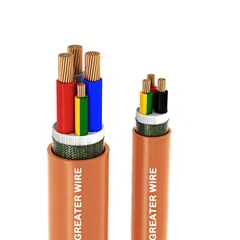
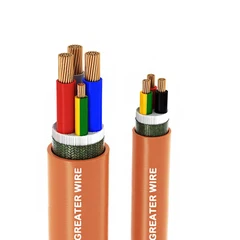

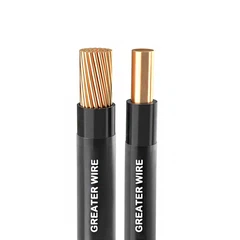
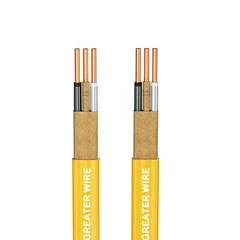
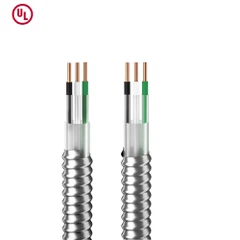
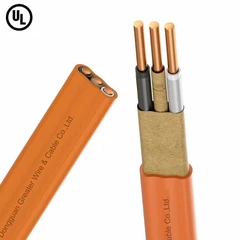
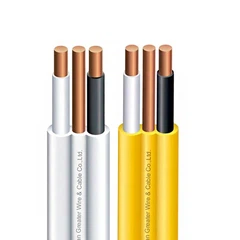

The main difference between AC90 and AC90 HL is hazardous-location certification, not simply the presence or absence of metal armour. Both cable types belong to the Canadian armoured-cable family, but standard AC90 should not be assumed suitable for a classified hazardous location. AC90 HL is additionally certified to the applicable Canadian hazardous-location cable requirements and carries the HL designation.
This distinction matters in facilities where flammable gases, vapours, or combustible dust may create a risk of fire or explosion. However, an HL marking does not eliminate the need to classify the area correctly, select compatible cable glands and fittings, and follow the applicable Canadian Electrical Code (CEC) installation rules.

1. What Is Standard AC90 Cable?
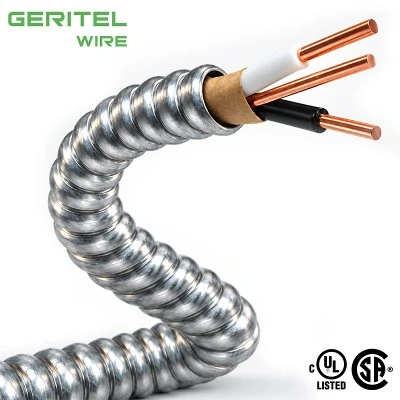
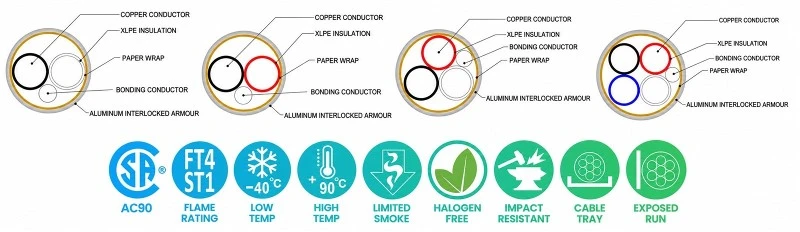
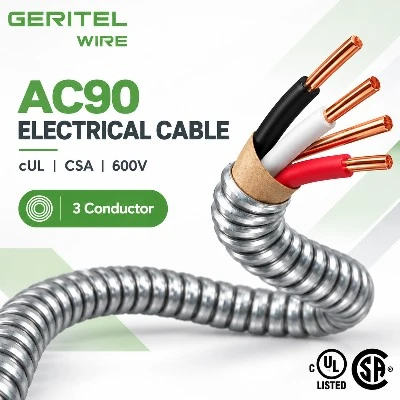
AC90 is a Canadian armoured cable type commonly used for open and concealed wiring in dry locations. A typical construction includes insulated copper or aluminum conductors, a bonding conductor, and interlocked metal armour. Exact conductor materials, sizes, insulation, and construction details depend on the certified product.
For example, a Nexans AC90 product specification identifies XLPE insulation, a bonding conductor, and interlocked armour, and limits the stated application to dry locations. This illustrates why buyers should check the individual manufacturer's datasheet rather than assume every product has identical specifications.
3C12(1) AC90 CU ST1 ZERO HAL+1
Standard AC90 provides mechanical protection through its armour, but that feature alone does not establish suitability for a classified hazardous location.
2. What Does the HL Designation Mean?
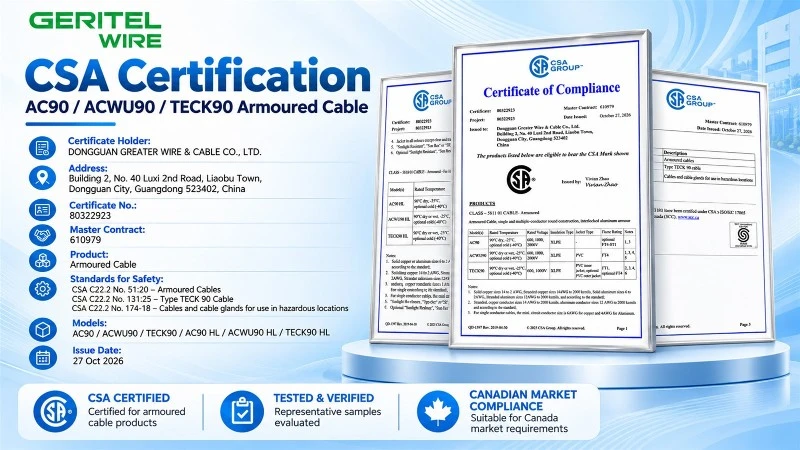
HL stands for Hazardous Locations. Under the Canadian system, a cable certified to CSA C22.2 No. 174 is marked "HL." The cable must first meet the requirements of an applicable cable product standard, and then satisfy the additional hazardous-location requirements.
philtech.ca+1
CSA C22.2 No. 174 applies to cables intended for use in hazardous locations under the Canadian Electrical Code, as well as cable glands for Class I, II, and III hazardous locations. Its requirements are additional to the basic requirements for ordinary-location cable products.
webstore.ansi.org
In practical terms, AC90 HL is not simply ordinary AC90 with a different label. Its specific certified construction has undergone additional evaluation for hazardous-location use.
What kinds of locations may require HL cable?
Hazardous locations are areas where flammable gases, vapours, combustible dust, or certain fibres and flyings may create a fire or explosion risk under defined conditions.
Examples of facilities that may contain classified areas include:
Oil and gas processing facilities
Petrochemical and chemical plants
Fuel storage and handling facilities
Grain handling and processing operations
Certain mining and industrial processing areas
Manufacturing facilities handling flammable materials or combustible dust
Not every part of these facilities is automatically a hazardous location. A site must be classified according to the substances present, the likelihood and duration of their presence, and the applicable classification system.
3. AC90 vs. AC90 HL: Key Differences
The most important difference is the additional hazardous-location certification. The HL designation does not, by itself, mean the cable has a higher voltage rating, a higher temperature rating, or better wet-location performance.
|
Feature |
Standard AC90 |
AC90 HL |
|---|---|---|
|
Basic cable family |
AC90 armoured cable |
AC90 armoured cable with additional HL certification |
|
Metallic armour |
Yes, according to product construction |
Yes, according to product construction |
|
Hazardous-location certification to CSA C22.2 No. 174 |
Not established by the AC90 designation alone |
Required for the HL marking |
|
HL marking |
No, unless separately certified and marked |
Yes, when covered by the certification |
|
Ordinary dry-location applications |
Subject to product rating |
Subject to product rating |
|
Hazardous-location applications |
Do not assume permitted |
May be used where the certified product and installation rules permit |
|
Wet-location suitability |
Must be verified; typical AC90 is dry-location rated |
Must also be verified; HL does not automatically mean wet-location rated |
|
Voltage and temperature ratings |
Product-specific |
Product-specific |
The two cable types may have similar basic construction. The critical difference is that AC90 HL has undergone additional evaluation for hazardous-location applications. Buyers should not assume that every physical or electrical rating is identical across manufacturers or product ranges.
A manufacturer datasheet for one AC90 HL product, for example, specifies dry-location use and identifies approval for Class I, II, and III, Division 1 and 2 hazardous locations. That is a product-specific example, not a universal specification for every AC90 HL cable.
cdn.gescan.com
4. When Does Hazardous-Location Certification Matter?
HL certification matters when the cable is intended to be installed in a classified hazardous location and the applicable Canadian code or project specification requires a cable certified for that use.
Case 1: Ordinary commercial or residential dry-location wiring
For ordinary building wiring in a non-hazardous dry location, standard AC90 may be suitable if its ratings, conductor configuration, and installation method meet the project requirements.
Using AC90 HL in such an area may provide a certification capability that the project does not need. It should not be assumed to offer a practical advantage unless the specification or future operating requirements justify it.
Case 2: Industrial facility with a classified hazardous area
Where an area has been classified as hazardous, standard AC90 should not be selected merely because it has metal armour.
The project team must confirm whether the cable is required to carry the HL marking and whether the exact cable construction is approved for the application. If HL cable is specified, an ordinary AC90 product without the relevant certification is not an equivalent substitute.
Case 3: A facility with both hazardous and non-hazardous areas
A single industrial facility can contain both classified and unclassified areas. Cable selection should follow the classification of each installation area, not simply the facility's overall industry or name.
For example, a processing plant may have ordinary electrical rooms, offices, and workshops alongside classified process areas. Standard AC90 may be appropriate in some non-hazardous dry areas, while HL-certified cable may be required in specified hazardous areas.
This distinction helps avoid both under-specification and unnecessary use of specialized cable.
5. Does AC90 HL Work in Every Hazardous Location?
HL certification is important, but it should not be interpreted as unrestricted permission to install a cable anywhere within a hazardous facility.
The 2024 Canadian Electrical Code explanatory material describes cables certified to CSA C22.2 No. 174 and marked HL as suitable for use in hazardous locations. It also explains that HL cable is not required for every hazardous-location installation; certain other certified cable types may be acceptable in specific applications, such as some Zone 2 and Zone 22 installations.
philtech.ca
The actual installation must still comply with the applicable hazardous-area classification, wiring method, equipment requirements, and local code.
Understand the hazardous-area classification
Canada uses two principal classification approaches:
Class and Division: Class I covers flammable gases and vapours; Class II covers combustible dust; Class III covers ignitable fibres and flyings. Divisions describe the likelihood and conditions under which the hazardous material may be present.
Zone: For gas hazards, Zones 0, 1, and 2 describe different likelihoods of an explosive atmosphere. For combustible dust, Zones 20, 21, and 22 are used.
The classification must come from the project's hazardous-area documentation. Do not select a cable based only on a general description such as "oil and gas facility" or "chemical plant."
Check the complete wiring system
Cable certification is only one part of a compliant installation. The project team must also consider:
Cable glands and connectors approved for the cable construction and application.
Suitable equipment entries and termination arrangements.
Required sealing and protection against the migration of flammable gases or vapours.
Mechanical protection and cable support.
Bonding and grounding requirements.
The applicable hazardous-location wiring rules.
CSA C22.2 No. 174 includes requirements for cable glands as well as cables, reinforcing the importance of compatible termination components.
webstore.ansi.org+1
6. Does AC90 HL Have Better Environmental Performance Than Standard AC90?
Not necessarily. The HL designation concerns hazardous-location certification. It does not automatically establish that a cable is suitable for wet locations, direct burial, outdoor exposure, or every demanding industrial environment.
For example, the referenced AC90 HL product datasheet specifies open and concealed wiring in dry locations only, despite its hazardous-location approval.
cdn.gescan.com
This is an important purchasing distinction: hazardous-location certification and environmental ratings address different requirements.
Before ordering AC90 HL, verify:
|
Specification |
What buyers should confirm |
|---|---|
|
Location rating |
Dry or wet location, as applicable |
|
Voltage rating |
Must meet the circuit and project design |
|
Temperature rating |
Confirm conductor operating and installation temperature limits |
|
Conductor material |
Copper or aluminum |
|
Conductor size |
Confirm the required AWG or kcmil size |
|
Number of conductors |
Match the circuit configuration |
|
Armour construction |
Confirm the approved cable design |
|
Flame classification |
Check whether FT4 or another classification is specified |
|
Hazardous-location marking |
Confirm HL certification on the exact product |
|
Cable glands and fittings |
Verify compatibility and hazardous-location approval where required |
If the installation requires wet-location capability, a jacketed cable such as an appropriately certified ACWU90-HL or TECK90-HL may be worth evaluating. However, the exact product datasheet and certification must confirm the required environmental ratings. The presence of an HL suffix alone is not enough.
7. Which Standards Apply to AC90 and AC90 HL?
For Canadian projects, it is important to distinguish the cable product standard from the additional hazardous-location standard and the electrical installation code.
|
Standard or code |
Main purpose |
|---|---|
|
CSA C22.2 No. 51 |
Requirements for armoured cable products |
|
CSA C22.2 No. 174 |
Additional requirements for cables and cable glands used in hazardous locations |
|
CSA C22.1 – Canadian Electrical Code, Part I |
Electrical installation requirements, including hazardous-location wiring |
CSA C22.2 No. 174 applies in addition to the basic electrical requirements for the relevant cable product. It is therefore not a replacement for the underlying cable standard.
webstore.ansi.org
The CEC governs how the cable is selected and installed in Canada. The edition adopted by the relevant province or territory, including local amendments, must be checked before installation.
What about UL, IEC, and AS/NZS standards?
AC90 and AC90 HL are Canadian cable designations. Their markings and certification should not be treated as automatically equivalent to US NEC Type AC or MC cables, IEC cable types, or AS/NZS cable designations.
For projects outside Canada, the buyer and project engineer should verify the applicable national standards, local approval requirements, and whether the cable certification is accepted by the authority having jurisdiction. A CSA HL marking does not automatically establish compliance with every international hazardous-area certification scheme.

8. Common Purchasing Mistakes to Avoid
Electrical distributors, contractors, OEMs, and procurement teams can reduce specification errors by avoiding several common assumptions.
Mistake 1: Assuming all armoured cables are approved for hazardous locations.
Metal armour provides mechanical protection, but it does not automatically provide hazardous-location certification. Confirm the HL marking and certification scope.
Mistake 2: Assuming the HL suffix means the cable is suitable for wet locations.
Check the actual dry- or wet-location rating. HL certification does not replace environmental performance specifications.
Mistake 3: Assuming every AC90 HL product has identical approvals.
Certification scope can vary by manufacturer, conductor size, voltage, and construction. Review the actual certification record and product markings.
Mistake 4: Selecting cable before confirming the hazardous-area classification.
Obtain the project's hazardous-area classification drawings or documentation before specifying the cable.
Mistake 5: Overlooking cable glands and accessories.
A certified cable does not automatically make an incompatible or incorrectly installed gland suitable for a hazardous location.
Mistake 6: Treating CSA certification as universal international approval.
CSA certification is relevant to the markets and standards covered by the certification. Other jurisdictions may require additional approvals.
9. Practical Selection Guide: AC90 or AC90 HL?
Use the following decision process as an initial procurement guide:
Is the installation in a classified hazardous location? If no, evaluate standard AC90 against the project's ordinary-location requirements. If yes, continue to the next step.
Does the project specification or applicable code require HL-certified cable? If yes, select a product with the required HL certification. Do not assume standard AC90 is acceptable.
Does the cable's certification cover the required application? Verify the hazardous-area classification, product markings, conductor configuration, and certification record.
Does the cable meet the environmental requirements? Check dry or wet location, sunlight exposure, temperature, and any other specified conditions.
Are the termination components suitable? Confirm the cable glands, connectors, and other accessories are appropriate for the cable and hazardous-location installation.
Does the final installation comply with the locally adopted CEC? Have the design and installation reviewed by qualified electrical professionals and the relevant authority where required.
The central selection principle is straightforward: use standard AC90 when its ordinary-location certification and ratings meet the installation requirements; specify AC90 HL when the hazardous-location requirements call for an HL-certified cable and the exact product is suitable for the classified area.
Conclusion
The difference between AC90 and AC90 HL is primarily the additional hazardous-location certification required for the HL designation. Standard AC90 may be suitable for many ordinary dry-location installations, but its metal armour alone does not establish approval for classified hazardous areas. AC90 HL provides an option for applications requiring cable certified to the relevant Canadian hazardous-location requirements.
However, HL certification does not automatically establish wet-location suitability, direct-burial approval, or compatibility with every hazardous-area installation. Engineers and buyers should verify the area's classification, cable certification, environmental ratings, accessories, and applicable CEC requirements before specifying or purchasing the cable.
Source References
CSA C22.2 No. 174 – Cables and Cable Glands for Use in Hazardous Locations - scope and additional certification requirements.
Canadian Electrical Code, 2024 edition - explanatory material on HL cable marking and hazardous-location applications.
AC90-HL product datasheet - example of product-specific construction, dry-location limitations, and hazardous-location approval.
CSA Group – Understanding Global Certification Requirements for Hazardous Locations - overview of North American hazardous-location certification.
GERITEL WIRE: Supporting Your AC90 and AC90 HL Cable Requirements
Choosing between AC90 and AC90 HL requires careful attention to cable construction, certification, and installation conditions. GERITEL WIRE supplies Canadian-standard armoured cable solutions for commercial and industrial electrical projects, helping distributors, contractors, OEM manufacturers, and procurement teams evaluate product specifications for their applications. Whether your project requires conventional AC90 or an HL-certified cable for a classified hazardous location, our team can assist with reviewing conductor materials, sizes, voltage ratings, and certification documentation. Contact GERITEL WIRE with your technical requirements and project details to discuss suitable cable options and request a quotation.
Dongguan Greater Wire & Cable Co., Ltd.
Tel/WhatsApp/Wechat: +86 136 6257 9592
Tel/WhatsApp/Wechat: +86 135 1078 4550
Email: manager01@greaterwire.com
Website: www.greaterwire.com