


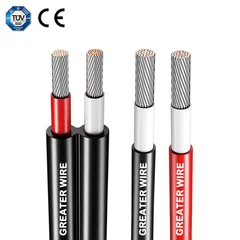

A damaged section of AC90 cable should be repaired only after the electrical circuit has been safely isolated and the damage has been assessed. The safest solution is often to replace the damaged cable section or the complete cable run rather than simply wrapping the damaged area with electrical tape. Any repair must restore the cable's electrical insulation, bonding continuity, mechanical protection, and suitability for its installation location.
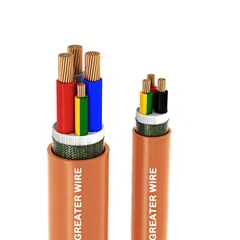
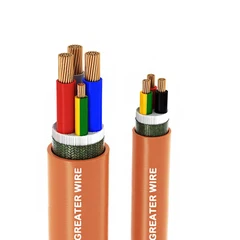
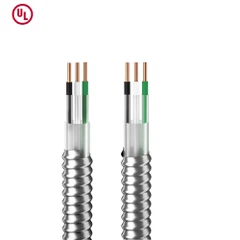
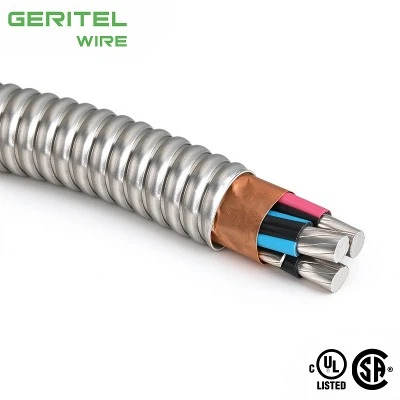
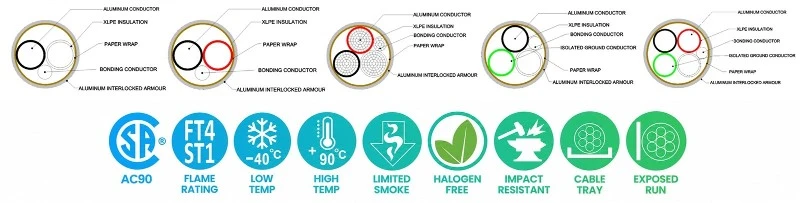
AC90 is a Canadian armoured cable type commonly used in approved dry-location building wiring. Its construction typically includes insulated conductors, a bonding conductor, and interlocked metal armour. Damage to any of these components can create electrical shock, short-circuit, overheating, or fire risks.
This guide explains how to assess AC90 cable damage, when replacement is necessary, what qualified electricians should consider when making a repair, and how to verify the installation against applicable Canadian Electrical Code (CEC) requirements.
Safety first: Do not attempt to repair energized AC90 cable. Electrical isolation, verification that the circuit is de-energized, and repair work should be handled by a qualified electrician in accordance with local regulations. If the cable is severely damaged, wet, overheated, or part of a critical circuit, keep it out of service until it has been professionally assessed.

1. First, Identify What Part of the AC90 Cable Is Damaged
Before deciding whether AC90 can be repaired, an electrician must determine which part of the cable has been affected.
China CSA AC90 BX Cable Aluminum Conductor PVC Or XLPE/AIA 600V Manufacturers Suppliers Factory
12/2 AC90 Copper Armored Cable – Green Bird Electric Solutions Inc.
600V AC90-12/2 X 150m Type AC90 Armored Cable - Electric Cable and AC Bx Cable
10 mm armored cable Manufacturer & Supplier in China - Hebei Huatong Wires & Cables Group Co.,Ltd.
Old House Wiring Inspection & Repair
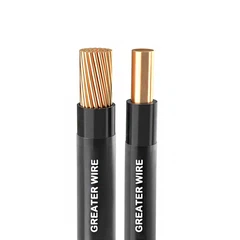
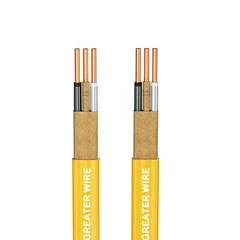
A typical AC90 cable assembly contains several components, and damage to each one has different implications.
|
Cable component |
Its function |
Examples of damage |
|---|---|---|
|
Metal armour |
Provides mechanical protection and forms part of the cable's approved construction |
Crushed, flattened, separated, or severely deformed armour |
|
Conductor insulation |
Prevents electrical contact between conductors and surrounding materials |
Cuts, cracks, punctures, or melted insulation |
|
Copper or aluminum conductors |
Carry electrical current |
Cut, nicked, broken, or overheated conductors |
|
Bonding conductor |
Provides the bonding path required by the cable installation |
Broken, cut, or damaged bonding conductor |
1.1 Minor External Scratches
A superficial mark on the armour may not necessarily mean that the insulated conductors have been damaged.
However, the electrician should inspect the affected area and determine whether the armour's mechanical and electrical continuity has been compromised. A visual inspection of the outside alone may not establish that the internal conductors are undamaged.
1.2 Crushed or Deformed Armour
Crushed or sharply kinked armour is more serious.
Deformation can put pressure on the insulated conductors, reduce mechanical protection, and potentially damage the bonding arrangement. A damaged section should not simply be reshaped and returned to service without an appropriate assessment.
1.3 Damaged Conductor Insulation
If the insulation has been cut, punctured, cracked, or melted, the cable has an electrical insulation defect.
Electrical tape wrapped around the outside of the armour does not restore the original cable construction or reliably repair internal conductor insulation.
1.4 Broken Conductors or Bonding Wire
A severed conductor interrupts the circuit. A damaged bonding conductor can compromise the fault-current path.
Both conditions require a proper electrical repair or cable replacement. The electrician must also check whether nearby conductors or the armour have sustained additional damage.
2. When Should You Replace the Damaged AC90 Cable Instead of Repairing It?
In many cases, replacing the damaged cable section is the most reliable solution.
Replacement is particularly appropriate when:
The armour is crushed, split, or severely distorted.
One or more insulated conductors have been cut or punctured.
The bonding conductor is broken or its continuity cannot be verified.
The cable shows signs of overheating, melting, or fire damage.
Water or contaminants have entered the cable assembly.
The damage extends beyond a small, clearly identifiable area.
The cable's original construction cannot be reliably restored using an approved repair method.
The electrician should assess the entire affected length, not just the most visible point. For example, a cable crushed by building equipment may have internal conductor damage extending beyond the visibly flattened area.
Replacing the damaged length is not always the same as replacing the entire circuit. If the remaining cable is in good condition and the installation permits an accessible junction point, a suitable replacement section may be installed. Whether this is acceptable depends on the circuit, cable type, connection method, and applicable code requirements.
3. Can Damaged AC90 Cable Be Repaired with a Junction Box?
Potentially acceptable when properly designed
A junction box can provide a suitable location for connecting a replacement cable section, provided the repair complies with the applicable electrical code and uses approved components.
The 2024 Canadian Electrical Code addresses conductor splices under Rule 12-112.
Key requirements include:
Conductors must be joined using splicing devices approved for the purpose or other permitted joining methods.
Splices must be mechanically and electrically secure.
The insulation over the splice must be equivalent to that of the conductors being joined.
Splices in conductors and cables must remain accessible.
StudyLib
These requirements mean that an ordinary electrical tape wrap or an unapproved connector is not a substitute for a compliant splice.
3.1 What Does a Proper AC90 Cable Section Replacement Involve?
For a typical repair involving an accessible junction box, the qualified electrician generally needs to evaluate the following:
Isolate the affected circuit. Disconnect the supply and verify that the conductors are de-energized using appropriate test equipment.
Determine the extent of damage. Identify whether the armour, insulated conductors, or bonding conductor has been affected.
Remove the damaged portion. Establish sound cable ends suitable for connection, following the cable and connector manufacturers' instructions.
Select compatible replacement cable. Confirm the cable type, conductor material, size, voltage rating, and other relevant specifications.
Provide suitable enclosures and connectors. Use an appropriately rated junction box and fittings compatible with the cable construction.
Make the conductor connections. Use approved connectors appropriate for the conductor material, size, and number of conductors.
Restore the bonding arrangement. Ensure the required bonding continuity and connections are maintained.
Inspect and test the completed installation. Verify that the connections, insulation, bonding, and enclosure are suitable before the circuit is returned to service.
This is a professional repair overview, not a do-it-yourself wiring procedure. The exact method and components must be determined by the electrician for the particular installation.
3.2 Why Must the Junction Box Remain Accessible?
Under CEC Rule 12-112(4), joints and splices in conductors and cables must be accessible.
StudyLib
A junction box should therefore not be concealed permanently behind drywall, plaster, or another building finish that prevents access for inspection and maintenance.
The box must also be suitable for the environment and provide enough space for the conductors, connectors, and cable entries.
3.3 Does the Junction Box Automatically Restore Armour Continuity?
No. This is an important point when repairing AC90.
The 2024 CEC Rule 12-608 requires the mechanical and electrical continuity of armoured cable to be maintained throughout the run and requires the armour to be mechanically and electrically secured to the equipment to which it is attached, subject to the rule's stated exception.
StudyLib+1
A junction box and ordinary conductor splices do not automatically restore the original armour construction or its continuity.
The electrician must select a suitable approved arrangement that addresses both the conductor connections and the bonding requirements. The armour ends, connectors, enclosure, and internal bonding conductor must be considered together.
4. Why Is Electrical Tape Not a Reliable AC90 Cable Repair?
Electrical tape is useful for certain electrical insulation and identification applications when used as part of an approved installation method. However, wrapping tape around damaged AC90 armour is not a general repair solution.
Armoured Cable FAQs
uk.rs-online.com
Tape cannot reliably:
Reconstruct crushed or separated interlocked armour.
Restore the original mechanical protection.
Replace a broken conductor or bonding conductor.
Restore damaged conductor insulation to its original certified construction.
Provide an approved mechanical connection between cable sections.
Establish the required armour continuity at cable terminations.
For example, if a metal object crushes an AC90 cable and damages the insulation underneath, wrapping the outer surface with tape does not eliminate the risk of an internal short circuit.
The repair must address the actual damaged components, not simply cover the visible mark.
5. What Connectors and Accessories Are Needed for an AC90 Repair?
The correct accessories depend on the cable size, conductor material, enclosure, and repair arrangement.
|
Component |
Purpose |
Selection consideration |
|---|---|---|
|
AC90 cable connector |
Secures the cable to a box or enclosure |
Must be suitable for the cable type and size |
|
Anti-short bushing or equivalent protection |
Protects conductor insulation from sharp armour edges |
Follow the connector design and applicable code requirements |
|
Junction box |
Encloses conductor connections |
Must be suitable for the environment and accessible |
|
Splicing connector |
Joins conductors electrically and mechanically |
Must be approved for conductor material, size, and application |
|
Bonding components |
Maintain the required bonding path |
Must be compatible with the cable and enclosure |
|
Box cover |
Encloses and protects connections |
Must remain accessible where required |
5.1 AC90 Cable Connectors
A connector must be suitable for the particular AC90 cable construction and diameter.
An incorrectly sized connector may fail to secure the armour properly or may damage the cable during installation.
5.2 Anti-Short Bushings
When conductors emerge from armoured cable, sharp armour edges can damage their insulation.
CEC Rule 12-610 requires insulating bushings or equivalent protection between the conductors and armour, subject to the rule's provisions for inner jackets and larger conductors. It also requires the protection to remain visible for inspection where the cable is fastened to equipment.
StudyLib
Eaton explains that anti-short bushings protect conductor sheathing from sharp edges in armoured cable installations.
Eaton
The appropriate bushing or equivalent protection must match the connector and cable arrangement.
5.3 Splicing Connectors for Copper and Aluminum Conductors
The connector must be compatible with the actual conductor material.
For copper conductors, use connectors identified for the relevant copper conductor size and type.
For aluminum conductors, the electrician must follow the applicable aluminum termination and splicing requirements, including suitable connectors, conductor preparation, and joint compound where required. CEC Rule 12-118 addresses precautions for aluminum conductor terminations and splices.
StudyLib
A copper-only connector should not be assumed suitable for aluminum conductors.
6. What Testing Should Be Completed After an AC90 Cable Repair?
A completed repair should be inspected and tested before the circuit is re-energized.
The testing and verification scope depends on the type of damage, circuit characteristics, and applicable requirements.
A qualified electrician should consider the following checks:
|
Inspection or test |
What it helps verify |
|---|---|
|
Visual inspection |
No exposed conductor, damaged insulation, loose fitting, or defective enclosure |
|
Conductor continuity |
The intended circuit conductors are electrically continuous |
|
Insulation resistance testing, where appropriate |
Insulation condition between conductors and between conductors and ground |
|
Bonding continuity |
The required bonding path is maintained |
|
Connection inspection |
Splicing connectors and terminations are correctly installed |
|
Polarity and circuit verification |
Conductors are connected as intended |
|
Functional testing |
The circuit and connected equipment operate correctly |
Why Is Bonding Continuity Important?
AC90 includes a bonding conductor as part of its typical construction. Depending on the installation, the metal armour also has continuity and bonding requirements.
A repair that restores the circuit conductors but leaves the bonding arrangement defective is not a complete repair.
The electrician must verify the bonding path in accordance with the applicable CEC requirements, including Section 10 and the armoured-cable provisions in Section 12.
Should Insulation Resistance Testing Always Be Performed?
Not necessarily in the same way for every circuit.
The electrician should select suitable test methods and test voltages for the connected equipment and circuit. Sensitive electronic devices, surge-protective devices, and other equipment may need to be disconnected or protected before insulation resistance testing.
Testing should follow appropriate professional procedures and manufacturer instructions.
7. Common AC90 Cable Repair Mistakes to Avoid
|
Common mistake |
Potential consequence |
Better approach |
|---|---|---|
|
Wrapping damaged armour with electrical tape |
Mechanical protection and armour continuity may remain defective |
Replace the damaged section or use an approved repair arrangement |
|
Splicing conductors outside an enclosure |
Exposed or inaccessible electrical connections |
Use a suitable accessible enclosure where required |
|
Hiding a junction box behind drywall |
Prevents required access to the splice |
Keep the junction box accessible |
|
Reusing a damaged connector |
Poor cable retention or insulation protection |
Replace with a suitable approved connector |
|
Ignoring the bonding conductor |
Fault-current path may be compromised |
Verify the complete bonding arrangement |
|
Mixing copper and aluminum without suitable connectors |
Connection deterioration or overheating |
Use connectors identified for the conductor combination |
|
Repairing cable that has been overheated |
Hidden insulation damage may remain |
Replace affected cable and investigate the cause |
|
Re-energizing without inspection |
Unidentified defects may remain |
Complete appropriate inspection and testing first |
8. How Can AC90 Cable Damage Be Prevented?
Preventing cable damage is generally more economical than repairing it after installation.
For contractors and project managers, several precautions can reduce the risk.
8.1 Protect Cable During Installation
Avoid pulling AC90 over sharp metal edges, rough openings, or surfaces that may damage the armour.
Use suitable bushings and edge protection where the cable passes through structural members or equipment openings.
8.2 Follow the Minimum Bending Radius
The 2024 CEC Rule 12-614 requires armoured cable bends to be made without undue distortion or damage to the armour. For the general armoured-cable provisions in that rule, the radius at the inner edge of the bend must be at least six times the cable's external diameter.
StudyLib
The cable manufacturer's instructions should also be checked.
8.3 Install Suitable Cable Supports
CEC Rule 12-618 specifies support requirements for armoured cable, including support intervals and distances from termination points.
StudyLib
Proper support helps prevent excessive strain on the armour and cable connectors.
8.4 Protect Cable from Building and Equipment Work
After installation, AC90 may be exposed to damage from:
Drilling and cutting.
Fasteners and screws.
Construction equipment.
Moving machinery.
Material handling.
Other trades working in the same area.
Protect the cable route and communicate its location to other workers before further construction or maintenance activities.
8.5 Inspect Before Energizing
Inspect the entire accessible cable run before energizing the circuit. Look for damaged armour, incorrect fittings, sharp bends, exposed conductors, and inadequate support.
Early identification can prevent a minor installation defect from becoming a more serious electrical problem.

9. Frequently Asked Questions About AC90 Cable Repair
Can a small scratch on AC90 armour be repaired with tape?
Not automatically. A superficial scratch may not affect the internal conductors, but the armour must be assessed for mechanical and electrical damage. Tape should not be treated as a substitute for restoring damaged armour.
Can I splice AC90 cable in the middle of a run?
A cable section may be replaced using suitable connections in an accessible junction box, provided the installation complies with the applicable CEC requirements. The conductor splices, armour continuity, bonding arrangement, and enclosure must all be addressed.
Can a damaged AC90 cable remain inside a wall if the damage is minor?
The location of the damage does not make it acceptable. The cable must be assessed, and any required splice or repair must comply with accessibility and other applicable requirements. A concealed, inaccessible splice is not a general solution.
Does replacing the damaged section require replacing the whole cable run?
Not necessarily. If the remaining cable is undamaged and a compliant replacement arrangement is possible, a qualified electrician may be able to replace only the affected section. Extensive damage or unsuitable connection locations may make complete cable replacement the better option.
Can AC90 cable be repaired using a heat-shrink sleeve?
A heat-shrink sleeve alone should not be assumed to restore the original AC90 cable construction or certification. Any repair system must be specifically suitable for the cable, damage, installation environment, and applicable electrical requirements.
Who should repair damaged AC90 cable?
The work should be performed by a qualified electrical professional authorized under the applicable provincial or territorial requirements. The electrician must determine the repair method, complete the required inspections, and verify the installation before returning the circuit to service.
10. Final Recommendation: How Can You Repair a Damaged Section of AC90 Cable Safely?
Repairing damaged AC90 cable requires more than covering the affected area. The electrician must determine whether the armour, conductor insulation, current-carrying conductors, or bonding conductor has been damaged and select a repair method that restores the required electrical and mechanical integrity.
For many installations, replacing the damaged cable section and making suitable connections in an accessible junction box is a practical solution. However, the conductor splices, cable connectors, armour continuity, bonding path, and enclosure must all comply with the applicable Canadian Electrical Code requirements.
Under the 2024 CEC, Rules 12-112, 12-608, and 12-610 are particularly relevant to conductor splicing, armour continuity, and armoured cable termination. Always verify the edition adopted by the project jurisdiction and follow the manufacturer's instructions.
The safest repair is one that restores the complete wiring system-not just the visible outer surface of the cable.
GERITEL WIRE: AC90 Armoured Cable for Reliable Electrical Installations
Preventing cable damage starts with selecting suitable AC90 products and following proper installation practices. GERITEL WIRE supports electrical distributors, contractors, OEM manufacturers, and industrial procurement teams with AC90 armoured cable solutions for Canadian building applications. From conductor material and cable dimensions to insulation specifications and armour construction, choosing the right product helps support reliable installation and long-term service. If you are sourcing AC90 cable for a new project or replacement work, contact GERITEL WIRE to discuss your technical requirements and request product information for your application.
Dongguan Greater Wire & Cable Co., Ltd.
Tel/WhatsApp/Wechat: +86 136 6257 9592
Tel/WhatsApp/Wechat: +86 135 1078 4550
Email: manager01@greaterwire.com
Website: www.greaterwire.com