

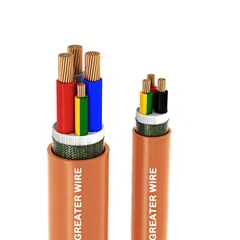
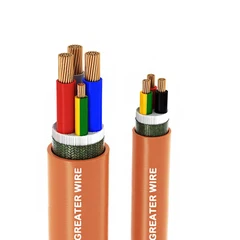

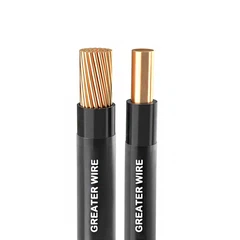
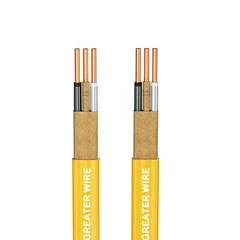
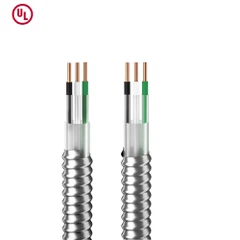
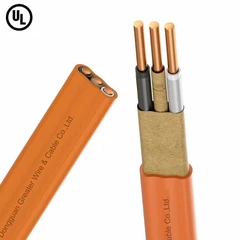
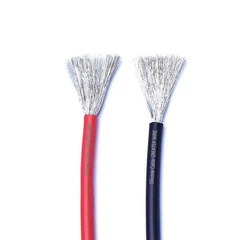
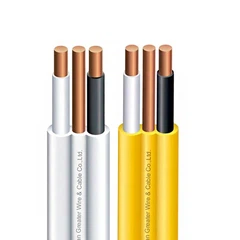
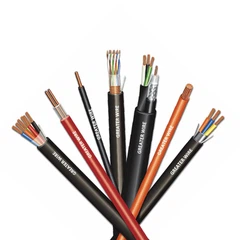
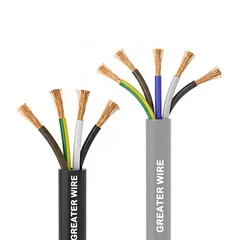
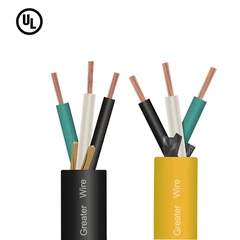
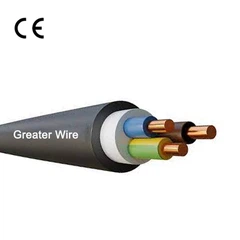

AC90 cable can generally be installed above suspended ceilings in Canada when the ceiling space, cable construction, and installation conditions comply with the applicable Canadian Electrical Code (CEC) requirements and the cable's CSA certification. However, being installed above a suspended ceiling does not automatically make every AC90 installation acceptable.
The key distinction is whether the space above the ceiling is an ordinary concealed wiring space or an environmental air-handling space, such as a return-air plenum. Electrical designers and contractors must also consider accessibility, mechanical protection, support requirements, and the cable's approved applications.
AC90 is a Canadian armoured cable designation. Its suitability should not be confused with the requirements for US NEC Type AC cable or other cable classifications.

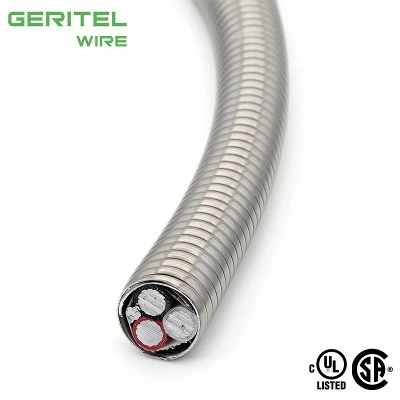
1. Is the Space Above a Suspended Ceiling Suitable for AC90 Cable?
Not all ceiling spaces have the same electrical installation requirements. Before selecting AC90 cable, contractors should identify how the space above the ceiling is used.
1.1 Ordinary Suspended Ceiling Spaces
An ordinary suspended ceiling space is generally used to accommodate electrical wiring, lighting connections, building services, and other equipment. It is not necessarily part of the building's air distribution system.
In Canada, AC90 is commonly used for certain concealed wiring applications and connections to ceiling fixtures. For example, manufacturers such as Nexans identify their AC90 products as suitable for open and concealed wiring in dry locations and approved for use with ceiling fixtures.
Typical applications include:
Wiring connections between junction boxes and recessed lighting fixtures.
Branch-circuit connections to ceiling-mounted electrical equipment.
Electrical wiring concealed above accessible ceiling tiles.
Connections to approved sensors and other ceiling-mounted devices.
However, approval for ceiling fixture connections does not automatically authorize unrestricted cable runs throughout every suspended ceiling space. Project specifications may impose additional restrictions on cable length, routing, support, and permitted wiring methods.
AC90+2
1.2 Suspended Ceilings Used for Return-Air Plenums
A more complicated situation occurs when the space above the suspended ceiling is used for environmental air, such as a return-air plenum.
In these installations, air may circulate through the ceiling cavity instead of being carried entirely through dedicated ductwork.
This creates additional fire and smoke considerations because cables and electrical equipment are installed in a space that forms part of the building's air-handling system.
Before specifying AC90 for this application, contractors should verify:
Whether the ceiling cavity is officially designated as an environmental air space.
Whether the exact AC90 product is approved for the intended plenum application.
Whether its armour and outer construction meet applicable fire and smoke requirements.
Whether the installation complies with the applicable building and electrical codes.
Important: A standard AC90 product intended for dry locations should not automatically be assumed suitable for a return-air plenum. Product-specific certification and applicable code requirements must be checked.
AC90+2
2. What Canadian Electrical Codes and Standards Apply?
For Canadian projects, AC90 cable selection involves both product standards and installation requirements. These serve different purposes and should not be treated as interchangeable.
2.1 CSA C22.2 No. 51 – Armoured Cables
CSA C22.2 No. 51 is the product standard associated with Type AC90 armoured cable.
It addresses the cable's construction and applicable product performance requirements.
When purchasing AC90, check that the product is properly certified and identified for its intended application.
2.2 CSA C22.2 No. 2556 – Electrical Wire and Cable Test Methods
CSA C22.2 No. 2556 covers test methods for electrical wires and cables, including relevant flame and smoke performance classifications.
You may encounter markings such as:
FT4: A vertical flame-test classification used for cable installations subject to applicable building-code requirements.
ST1: A limited-smoke classification under the relevant CSA test requirements.
FT6: A classification associated with flame and smoke performance in plenum applications.
These markings are not interchangeable. In particular, FT4 or ST1 alone should not be treated as automatic approval for every environmental air space.
The applicable Canadian building code, electrical code, product construction, and authority having jurisdiction (AHJ) must all be considered.
Electro Cables by Nexans+2
2.3 Canadian Electrical Code Rule 2-130
CEC Rule 2-130 addresses electrical equipment installed in spaces used for environmental air.
Its requirements must be considered when determining whether electrical wiring and equipment are suitable for a return-air plenum.
The CEC also references building-code requirements concerning flame spread in different building environments.
One important distinction is that the National Building Code of Canada recognizes certain armoured cables without exposed outer combustible jackets in its guidance on flame-spread compliance. Therefore, it is not technically correct to assume that every armoured cable must carry an FT6 marking simply because it is installed above a suspended ceiling.
The actual cable construction and applicable code provisions must be reviewed.
philtech.ca+1
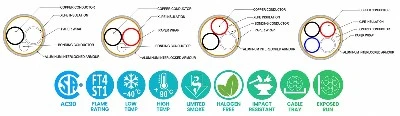
3. What AC90 Cable Specifications Should You Check?
Before ordering AC90 for above-ceiling installation, electrical contractors and procurement teams should review several product details.
|
Specification |
What to verify |
|---|---|
|
Cable type |
CSA-certified Type AC90 |
|
Voltage rating |
Suitable for the circuit requirements, commonly 600V |
|
Insulation |
Approved insulation type, such as RW90 XLPE |
|
Temperature rating |
Compatible with operating and installation conditions |
|
Armour |
Interlocked armour construction and mechanical suitability |
|
Fire performance |
Applicable FT classification and product construction |
|
Smoke performance |
Relevant ST classification where required |
|
Installation location |
Dry concealed space or approved environmental air space |
|
Certification |
Valid certification and manufacturer documentation |
For example, Nexans lists a 600V AC90 product with RW90 XLPE insulation, a 90°C maximum conductor temperature, and approval for open and concealed wiring in dry locations. Its published application information also identifies ceiling fixture use.
AC90+1
The important point is to evaluate the complete cable assembly rather than relying on one insulation rating or test marking.
4. Installation Requirements Above Suspended Ceilings
Even when AC90 is suitable for the installation location, proper installation remains essential.
4.1 Support and Secure the Cable Properly
AC90 cable should be supported and secured according to the applicable electrical code and manufacturer's instructions.
Do not assume that the suspended ceiling grid or ceiling support wires can be used to support electrical cable.
For example, Parks Canada's electrical specifications explicitly prohibit supporting AC90 from suspended ceiling support wires or laying it directly on the ceiling grid. This illustrates why project specifications must be checked alongside general installation requirements.
buyandsell.gc.ca
4.2 Avoid Mechanical Damage
Above-ceiling spaces may contain sharp metal edges, HVAC components, moving equipment, and other potential sources of damage.
Although AC90 has metal armour for mechanical protection, installers should avoid:
Excessive bending or twisting.
Crushing the armour during installation.
Contact with sharp edges that could damage the cable.
Improper pulling methods.
Unsupported cable sections.
Follow the manufacturer's minimum bending radius and installation instructions.
4.3 Follow Project-Specific Cable Length Restrictions
Some commercial and institutional projects restrict AC90 to short fixture drops rather than allowing it to serve as a general wiring method throughout the ceiling cavity.
For example, certain government and institutional specifications limit AC90 to connections between junction boxes and lighting fixtures.
These restrictions are project-specific and should not be mistaken for universal CEC requirements.
canadabuys.canada.ca+2
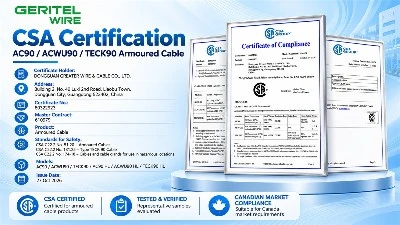
5. Common Mistakes When Using AC90 Above Suspended Ceilings
Electrical contractors and procurement teams should avoid these common specification errors:
Mistake 1: Assuming every ceiling cavity is a dry concealed space.
A ceiling cavity used for return air has different environmental and fire-safety considerations.
Mistake 2: Assuming FT4 automatically means plenum-approved.
FT4 and FT6 represent different test classifications. Check the applicable code and product documentation.
Mistake 3: Assuming all AC90 products have identical application approvals.
Manufacturers may offer different constructions, certifications, and permitted applications under the AC90 designation.
Mistake 4: Supporting cable directly on ceiling grids.
The ceiling grid should not automatically be treated as an approved cable support system.
Mistake 5: Ignoring project specifications.
Building owners, consulting engineers, and institutional projects may impose stricter installation conditions than the general product application.
6. Final Recommendation: Can You Use AC90 Above Suspended Ceilings?
Yes, AC90 cable can be used above suspended ceilings in appropriate Canadian installations, but the answer depends on the actual ceiling environment and the exact cable product.
For ordinary dry suspended ceiling spaces, appropriately certified AC90 is commonly used for concealed wiring and ceiling fixture connections.
For return-air plenums or other environmental air spaces, additional verification is necessary. Check the cable's construction, certification, applicable flame and smoke requirements, and approval for the intended installation.
Before purchasing, confirm the cable type, voltage rating, insulation, armour, installation conditions, and project-specific restrictions.
The most reliable approach is to specify AC90 according to its certified application, not simply because it is an armoured cable or because it fits above a suspended ceiling.

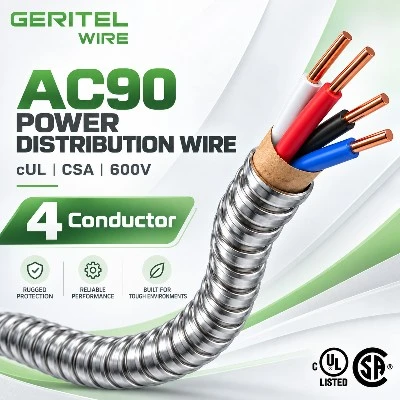
7. AC90 Cable Solutions from GERITEL WIRE
GERITEL WIRE understands the importance of selecting the right armoured cable for commercial buildings, industrial facilities, and electrical installation projects. Our AC90 cable solutions are designed to address different requirements for conductor materials, insulation systems, armour construction, and fire performance. Whether you need AC90 cable for concealed wiring, ceiling fixture connections, or specified above-ceiling applications, our team can help you review product specifications and identify a suitable cable configuration. Contact GERITEL WIRE to discuss your project requirements, request technical information, and explore reliable AC90 cable solutions for your electrical distribution needs.
Dongguan Greater Wire & Cable Co., Ltd.
Tel/WhatsApp/Wechat: +86 136 6257 9592
Tel/WhatsApp/Wechat: +86 135 1078 4550
Email: manager01@greaterwire.com
Website: www.greaterwire.com
Research References
The technical discussion is based on the following product documentation and regulatory references:
Nexans – AC90 Cable - Product construction, dry-location applications, and ceiling fixture approval.
Canadian Electrical Code 2024 – Rule 2-130, Appendix B - Environmental air spaces and flame-spread requirements.
Ontario Building Code 2024 – Fire Protection Requirements - Cable requirements for plenum spaces.
Electro Cables – AC90 Technical Specifications - AC90 construction and FT4/ST1 classifications.
Parks Canada – Electrical Installation Specifications - Practical AC90 installation and ceiling support restrictions.
Government of Canada – Electrical Project Specifications - Examples of AC90 use restrictions for suspended ceiling fixture connections.