

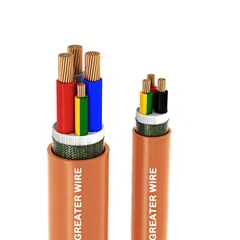
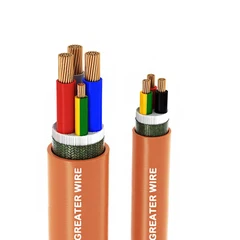

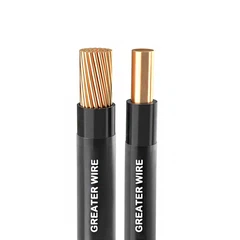
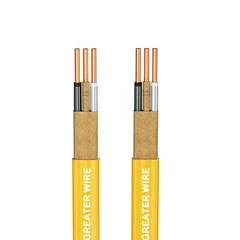



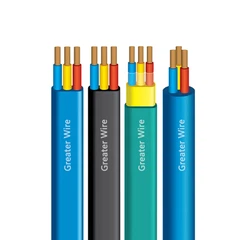
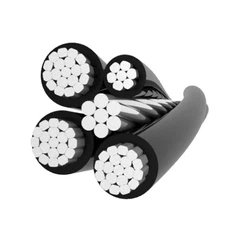
For AC90 armoured cable, the choice between copper and aluminum conductors depends on more than the initial cable price. Copper offers higher electrical conductivity and allows a smaller conductor size for a given electrical requirement in many applications. Aluminum is lighter and often provides a lower material cost, making it attractive for larger feeders and commercial or industrial power distribution.
However, conductor material affects cable sizing, termination requirements, installation weight, and long-term project costs. Before specifying copper or aluminum AC90 cable, electrical designers, contractors, and procurement teams should evaluate the actual load, applicable Canadian Electrical Code requirements, equipment terminals, installation conditions, and project budget.

1. Copper vs. Aluminum AC90 Cable: Key Differences
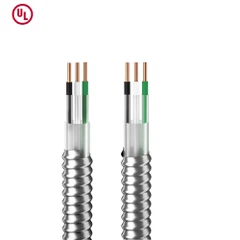
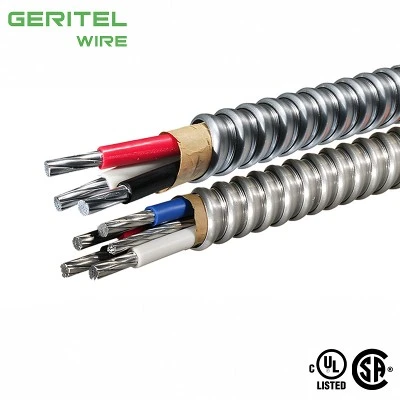
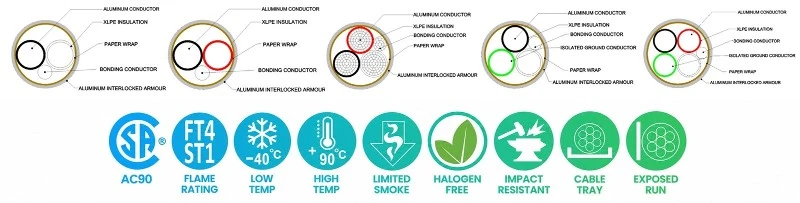
AC90 cable is a Canadian-designated type of armoured cable covered by CSA C22.2 No. 51. It typically consists of insulated conductors, a bonding conductor, and interlocked metal armour. Many commercial AC90 products use XLPE insulation identified as RW90 and carry a 600V rating.
Both copper and aluminum versions are available, but their conductor materials create different electrical, mechanical, and installation characteristics.
Product construction references: Nexans, Southwire, and Northern Cables.
AC90+2
1.1 Electrical Conductivity
Copper has higher electrical conductivity than aluminum. For conductors of the same cross-sectional area and length, copper generally has lower electrical resistance.
This means aluminum conductors typically need a larger cross-sectional area than copper conductors to achieve comparable electrical performance under equivalent design conditions.
However, this does not mean aluminum AC90 cable is electrically inferior. Properly sized aluminum conductors can meet the same circuit requirements as copper conductors.
When comparing the two materials, engineers should consider:
Required circuit ampacity.
Conductor size and electrical resistance.
Voltage drop over the installation distance.
Available conductor configurations.
Applicable electrical code requirements.
The final conductor size must be determined through electrical calculations rather than selecting copper and aluminum cables based only on AWG numbers.
1.2 Weight and Installation
Aluminum is considerably lighter than copper for an equivalent conductor function. This can make aluminum AC90 cable easier to handle, transport, and install, particularly in larger feeder applications.
Copper cable, by comparison, has a higher conductor weight. This may increase transportation and handling costs, especially when a project requires long cable runs or multiple large conductors.
For contractors working on commercial buildings and industrial distribution systems, cable weight can influence:
Material transportation and storage.
Manual handling and lifting arrangements.
Installation labor.
Support and routing considerations.
The actual cable weight also depends on conductor size, insulation, bonding conductor, and armour construction. Therefore, compare complete cable datasheets rather than conductor material alone.
1.3 Mechanical Characteristics
Copper generally offers higher tensile strength and greater mechanical robustness than aluminum at comparable conductor dimensions.
Aluminum is lighter but requires appropriate handling because its mechanical behavior differs from copper. Its conductor size, stranding, and bending characteristics should be considered when planning installation.
Neither material should be bent beyond the manufacturer's specified minimum bending radius. Installers should also follow the applicable pulling tension and termination instructions.
1.4 Material Cost and Project Economics
Aluminum is generally less expensive than copper by conductor material weight. Its lower material cost can make it an economical option for projects requiring larger conductors or extensive feeder installations.
Copper usually carries a higher initial material cost, but its smaller conductor size for comparable electrical performance may offer advantages where installation space is limited.
A useful cost comparison should include more than the cable purchase price:
Cable material cost.
Required conductor size.
Connectors and termination accessories.
Installation labor.
Transportation and handling.
Long-term operating requirements.
The lowest-priced cable is not necessarily the lowest-cost solution for the entire project.
2. Copper vs. Aluminum AC90 Cable: Comparison Table
The following table summarizes the main differences between the two conductor materials.
|
Comparison factor |
Copper AC90 |
Aluminum AC90 |
|---|---|---|
|
Electrical conductivity |
Higher |
Lower |
|
Electrical resistance at equal size |
Lower |
Higher |
|
Conductor size for equivalent performance |
Generally smaller |
Generally larger |
|
Conductor weight |
Heavier |
Lighter |
|
Tensile strength |
Generally higher |
Generally lower |
|
Material cost |
Generally higher |
Generally lower |
|
Installation handling |
Heavier |
Easier to handle in many large-cable applications |
|
Termination requirements |
Standard compatible copper terminals |
Aluminum-rated terminals and proper preparation |
|
Typical project consideration |
Space and electrical performance |
Weight and material economics |
These are general material comparisons, not universal product specifications. Actual cable performance depends on conductor construction, size, installation conditions, and applicable electrical requirements.
3. When Should You Specify Copper AC90 Cable?
Copper AC90 cable is often a practical choice when electrical performance, compact conductor dimensions, and straightforward equipment compatibility are important.
Consider copper conductors in the following situations.
3.1 Limited Installation Space
When cable routing space is restricted, the smaller conductor size that copper may permit can be advantageous.
This can be relevant in crowded electrical rooms, distribution panels, and building service installations.
However, the final cable diameter must be checked because insulation thickness and armour construction also affect overall dimensions.
3.2 Existing Copper Electrical Infrastructure
Projects with existing copper-based equipment and distribution systems may benefit from specifying copper AC90 cable.
Using compatible conductor materials can simplify some connection arrangements and reduce the need to coordinate different termination components.
3.3 Projects Prioritizing Installation Simplicity
Copper conductors are generally easier to integrate with equipment designed specifically for copper connections.
They can be a suitable choice when the project specification prioritizes familiar termination practices and the available equipment does not support aluminum conductors.
4. When Should You Specify Aluminum AC90 Cable?
Aluminum AC90 cable can be an attractive alternative when project economics and cable weight are important considerations.
4.1 Large Feeder Installations
Commercial and industrial projects often require substantial power distribution circuits.
For these applications, aluminum can reduce conductor weight and material costs. Its advantages may become more significant as conductor sizes and cable quantities increase.
4.2 Projects With Long Cable Routes
Long feeder routes can require considerable quantities of conductor material.
Aluminum may offer purchasing and transportation advantages, particularly when properly engineered conductor sizes meet the required ampacity and voltage-drop limits.
4.3 Weight-Sensitive Installation Projects
Where handling large cable assemblies is a concern, aluminum AC90 may reduce the physical burden on installation teams.
Its lower weight can also influence lifting, storage, and cable-routing arrangements.
However, the cable's complete weight and installation requirements must still be evaluated before specification.
5. What Should You Check Before Specifying Aluminum AC90 Cable?
Choosing aluminum does not simply involve replacing a copper conductor with an aluminum conductor of the same AWG size. Several technical details require attention.
5.1 Verify Conductor Ampacity and Size
The conductor must be sized according to the calculated load and applicable electrical code.
For Canadian installations, designers should refer to the applicable edition of the Canadian Electrical Code (CEC), including its ampacity, correction, and adjustment requirements.
Important considerations include:
Ambient temperature.
Number of current-carrying conductors.
Installation conditions.
Terminal temperature limitations.
Voltage drop.
Overcurrent protection requirements.
A cable's 90°C insulation rating does not automatically mean that every connected terminal or circuit can operate at 90°C.
5.2 Check Terminal Compatibility
Aluminum conductors require terminals and connectors specifically approved for aluminum conductor applications.
Before specifying aluminum AC90, verify that the connected equipment supports aluminum conductors or uses an approved compatible termination arrangement.
The installation must also follow the connector manufacturer's requirements for conductor preparation, cleaning, joint compound where required, and tightening torque.
These details are essential for achieving reliable electrical connections.
5.3 Confirm the Bonding Conductor
AC90 cable includes a bonding arrangement, but the bonding conductor material can vary between product designs.
For example, copper AC90 products may use a bare copper bonding conductor, while some aluminum AC90 products use an aluminum bonding conductor.
Check the bonding conductor material and size against the project grounding and bonding requirements. Do not assume that every AC90 construction uses the same configuration.
5.4 Verify CSA Certification and Product Construction
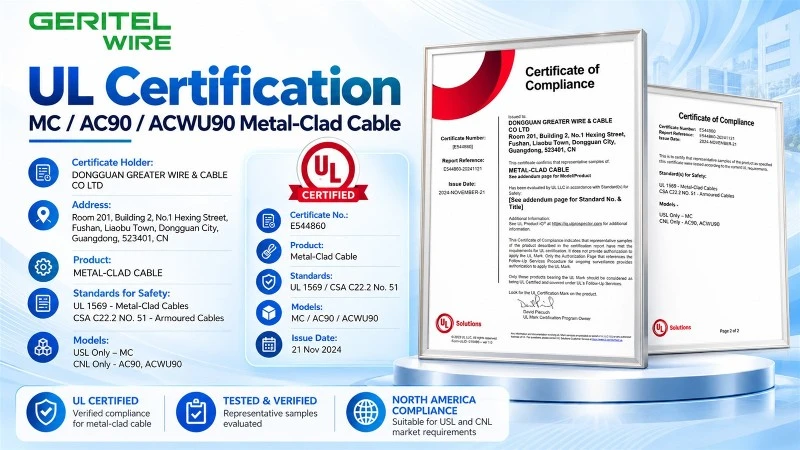
For Canadian projects, confirm that the selected product is certified and marked for the intended application.
Relevant standards include:
CSA C22.2 No. 51 – Armoured Cables.
CSA C22.2 No. 38 – Thermoset-Insulated Wires and Cables.
Also verify the actual product's voltage rating, insulation type, temperature rating, conductor material, and permitted installation conditions.
For example, a common 600V AC90 product with RW90 XLPE insulation is rated for dry-location applications. Do not assume that every AC90 product is suitable for wet locations, direct burial, or outdoor exposure.
The manufacturer's certification and datasheet should determine the permitted applications.
AC90+3
6. Common Mistakes When Comparing Copper and Aluminum AC90 Cable
Procurement teams and electrical contractors should avoid several common specification mistakes.
Mistake 1: Comparing identical AWG sizes as equivalent.
Copper and aluminum conductors of the same AWG size do not necessarily provide equivalent ampacity or voltage-drop performance.
Mistake 2: Choosing aluminum based only on its purchase price.
Connector compatibility, installation requirements, and conductor sizing must be included in the total project cost.
Mistake 3: Assuming all equipment accepts aluminum conductors.
Terminal markings and manufacturer instructions must be checked before selecting aluminum cable.
Mistake 4: Assuming the same AC90 installation conditions apply to every product.
Voltage, temperature, location, and environmental approvals must be confirmed using the exact cable specification.
Mistake 5: Ignoring the bonding conductor.
The bonding conductor is an essential part of the cable construction and must meet the applicable electrical requirements.
7. Final Recommendation: Copper or Aluminum AC90 Cable?
There is no universal winner between copper and aluminum AC90 cable. The right choice depends on the electrical design, installation environment, equipment compatibility, and project economics.
Copper AC90 is generally preferable when smaller conductor dimensions, higher conductivity, and compatibility with copper-based equipment are priorities.
Aluminum AC90 is often a strong option for larger feeder circuits and projects where lower cable weight and reduced conductor material costs are important.
Before placing an order, electrical designers and procurement teams should compare the required ampacity, voltage drop, cable dimensions, bonding configuration, certification, and termination requirements.
The best specification is the one that satisfies the electrical design and installation requirements while providing the most practical overall project cost.


8. Specify the Right AC90 Cable With GERITEL WIRE
Selecting the right conductor material is an important step in AC90 cable procurement. GERITEL WIRE understands that different projects have different requirements for electrical performance, cable construction, installation conditions, and material costs. Whether your project requires copper or aluminum AC90 armoured cable, choosing the correct conductor size, insulation, bonding configuration, and armour design is essential. GERITEL WIRE supports B2B buyers looking for cable solutions for commercial buildings, industrial facilities, and electrical distribution projects. Contact our team to discuss your technical specifications, product requirements, and customized cable needs.
Dongguan Greater Wire & Cable Co., Ltd.
Tel/WhatsApp/Wechat: +86 136 6257 9592
Tel/WhatsApp/Wechat: +86 135 1078 4550
Email: manager01@greaterwire.com
Website: www.greaterwire.com