

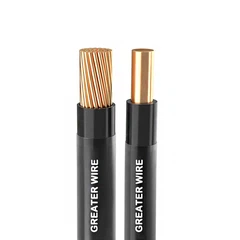

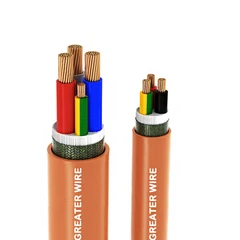
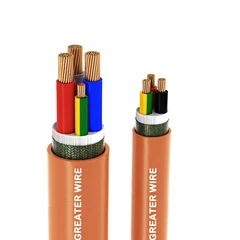
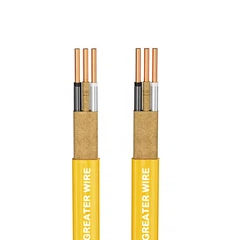
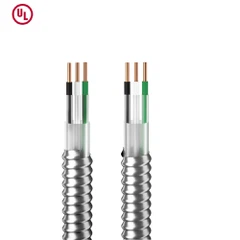
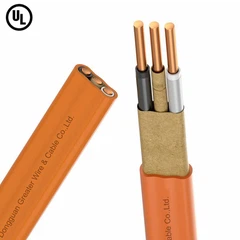
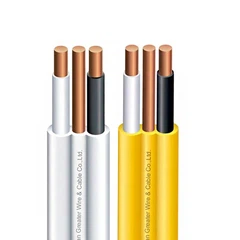
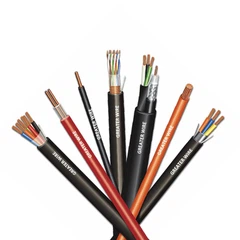
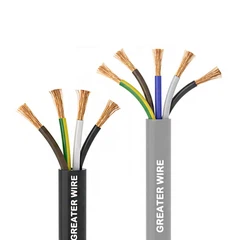
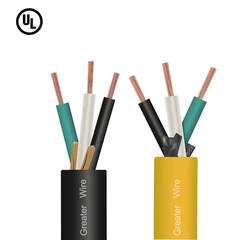
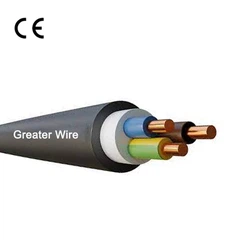

When it comes to wiring your home safely and efficiently, many homeowners and electricians wonder: can I use MC cable in residential settings? Metal clad cable (MC cable) offers a durable and fire-resistant alternative to traditional wiring like NM-B (Romex). With a wide range of sizes available-from 12/2 MC cable and 12/3 MC cable for lighting and standard outlets, to 10/2 MC cable and 6/3 MC cable for high-power appliances-MC cable provides versatile solutions for modern homes. In this article, we'll explore the applications, advantages, and common sizes of MC cable for residential use, helping you decide if it's the right choice for your next home wiring project.
1. What Is Metal Clad Cable?
Metal clad cable (MC cable) is a type of electrical wiring that combines durability, safety, and flexibility. It typically consists of stranded copper or aluminum conductors, covered with insulation and enclosed in a metallic sheath that protects the wires from physical damage, moisture, and fire. Unlike standard non-metallic cables, MC cable can be used in exposed or concealed locations, making it ideal for residential, commercial, and industrial applications. Common residential sizes include 12/2 metal clad cable, 12/3 MC cable, 10/2 MC cable, and 6/3 MC cable, offering solutions for lighting circuits, outlets, and high-power appliances. Its robust construction not only enhances electrical safety but also simplifies compliance with local electrical codes.

2.Residential Applications of MC Cable
MC cable is highly versatile for residential wiring, offering a safe and durable solution for various areas of the home. It is commonly used for lighting circuits, wall outlets, kitchen appliances, laundry rooms, and garage installations. Compared to standard NM-B (Romex) cable, MC cable provides superior protection against physical damage and fire hazards, making it suitable for exposed wiring or areas prone to moisture. Popular sizes for residential use include 12/2 MC cable for general lighting and outlets, 12/3 MC cable for three-way switch setups, 10/2 MC cable for high-power appliances, and 6/3 MC cable for heavy-duty circuits like electric ovens or HVAC systems. With additional options such as 8/3 MC cable, 12/4 MC cable, and 10/4 MC cable, homeowners and electricians can select the right specification to meet diverse electrical needs safely and efficiently.
3. Common MC Cable Sizes for Residential Use
Choosing the right size of MC cable is essential for safe and efficient residential wiring. Some of the most commonly used sizes include 12/2 MC cable, ideal for standard lighting circuits and general outlets, and 12/3 MC cable, perfect for three-way switches and multi-outlet setups. For higher-power applications, 10/2 MC cable and 10/3 MC cable are widely used in kitchens, laundry rooms, or home workshops. Heavy-duty circuits may require 6/3 MC cable or 4/3 MC cable for electric ranges, HVAC systems, or large appliances. Other sizes like 8/2 MC cable, 8/3 MC cable, 12/4 MC cable, and 10/4 MC cable offer additional flexibility for specialized residential circuits. With a full range of MC cable sizes available, homeowners and electricians can ensure proper amperage capacity, code compliance, and long-term safety for every residential installation.
4. Advantages of Using MC Cable in Homes
Using MC cable in residential settings offers several key advantages over traditional wiring. Its metallic sheath provides excellent protection against physical damage, moisture, and fire, making it safer for exposed or high-risk areas. MC cable is also highly durable and resistant to wear, reducing maintenance needs over time. Additionally, it supports a wide range of applications, from standard 12/2 MC cable lighting circuits to high-power appliances using 10/2 MC cable or 6/3 MC cable. Other sizes like 12/3 MC cable, 8/3 MC cable, and 12/4 MC cable allow for multi-way switches, large appliances, and specialized circuits. With these benefits, MC cable not only enhances safety and reliability but also simplifies compliance with local electrical codes, providing homeowners with a long-lasting and versatile wiring solution.
5. MC cable Installation Considerations in Residential Settings
When installing MC cable in homes, several important factors must be considered to ensure safety and code compliance. First, always respect the minimum bend radius to prevent damaging the metallic sheath or internal conductors. Proper junction boxes and connectors should be used to maintain secure connections, especially when using sizes like 12/2 MC cable, 12/3 MC cable, or 10/2 MC cable. It's also crucial to follow local electrical codes and the National Electrical Code (NEC) guidelines, which dictate proper grounding, circuit protection, and spacing. For high-power circuits, using 6/3 MC cable, 8/3 MC cable, or 10/4 MC cable ensures adequate amperage capacity and reduces voltage drop. With careful planning and adherence to installation standards, MC cable provides a safe, reliable, and long-lasting solution for residential wiring projects.

Dongguan Greater Wire & Cable Co., Ltd is a trusted manufacturer with 30+ experience. We offer a full range of MC cable sizes, including 12/2 MC cable, 12/3 MC cable, 10/2 MC cable, 6/3 MC cable, and many more, ensuring the right solution for every project. Beyond MC cable, our product line includes a wide variety of UL-listed wires and cables, such as THHN, THWN, XHHW, and more, all manufactured to meet international safety standards. With professional technical support, customizable specifications, and reliable delivery, Greater Wire ensures your residential wiring is safe, durable, and code-compliant. Contact us today to find the perfect cable solution for your home or project.