























1.Understanding XHHW Wire: Composition and Key Features
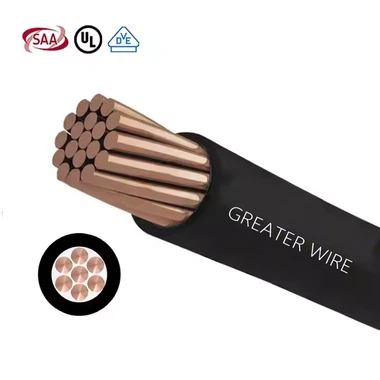
XHHW wire is a type of electrical cable insulated with cross-linked polyethylene (XLPE), a material renowned for its exceptional thermal stability, chemical resistance, and mechanical strength. The "W" in XHHW denotes its suitability for both wet and dry locations, making it versatile for indoor and outdoor use. Available in aluminum and copper conductors, XHHW wire is commonly rated for voltages up to 600V, such as the 2/0 XHHW wire 600V, which is widely used in feeder circuits and branch wiring.
Key attributes of XHHW wire include:
High Temperature Resistance: Rated for up to 90°C in dry conditions and 75°C in wet environments.
Chemical and Moisture Resistance: XLPE insulation resists oil, grease, and UV degradation.
Flexibility and Durability: Suitable for conduit installations and harsh environments.
Cost-Effectiveness: Aluminum variants like 2 AWG XHHW-2 aluminum wire offer a lightweight, budget-friendly alternative to copper.
2.Overload Handling: How XHHW Wire Excels
An overload occurs when electrical current exceeds a wire's rated ampacity, generating excessive heat that can damage insulation, melt conductors, or even cause fires. XHHW wire is engineered to mitigate these risks through its advanced design.
2.1 Thermal Stability of XLPE Insulation
The cross-linked polyethylene insulation is the backbone of XHHW's overload resilience. Unlike PVC, which softens at high temperatures, XLPE retains structural integrity up to 90°C. This ensures that during temporary overloads, the insulation won't crack or deform, maintaining a protective barrier between conductors and external elements. For example, a 250MCM XHHW aluminum cable can endure short-term current surges without compromising safety.
2.2 Aluminum Conductors: Balancing Ampacity and Cost
Aluminum XHHW wires, such as 2/0 XHHW aluminum wire or 2 AWG XHHW cable, are popular for their balance of performance and affordability. While aluminum has lower conductivity than copper, modern alloys and larger conductor sizes (e.g., 250MCM) compensate by increasing ampacity. Properly sized aluminum wires can handle overloads effectively when paired with circuit breakers or fuses calibrated to their ratings.
2.3 Heat Dissipation Properties
XHHW's insulation allows heat generated during overloads to dissipate efficiently. This prevents localized hot spots, reducing the risk of insulation failure. For instance, a 2/0 XHHW wire 600V installed in conduit will transfer heat to the surrounding air, maintaining stable temperatures even under moderate overcurrent conditions.
2.4 Compliance with Safety Standards
XHHW wires meet stringent UL (Underwriters Laboratories) and NEC (National Electrical Code) standards. These certifications ensure that products like 2 AWG XHHW-2 aluminum wire are tested for overload scenarios, guaranteeing consistent performance in real-world applications.
3.Advantages of XHHW Wire in Specific Applications
3.1 Industrial Power Distribution
In industrial settings, overloads can occur due to machinery startups or faulty equipment. Heavy-duty cables like 250MCM XHHW aluminum provide the ampacity needed for high-load circuits while resisting heat and chemical exposure in factories.
3.2 Commercial Buildings
The 2/0 XHHW wire 600V is ideal for commercial lighting, HVAC systems, and feeder lines. Its moisture resistance makes it suitable for basements or outdoor installations, where overload risks from environmental factors are higher.
3.3 Renewable Energy Systems
Solar farms and wind turbines require cables that endure fluctuating loads. Aluminum XHHW wires, such as 2 AWG XHHW cable, offer a cost-effective solution for connecting inverters and transformers, withstanding intermittent overloads common in renewable energy setups.
4.Comparing XHHW Aluminum vs. Copper Wires
While copper is often praised for its conductivity, aluminum XHHW wires like 2 AWG XHHW-2 aluminum wire have distinct advantages:
Lower Cost: Aluminum is significantly cheaper, ideal for large-scale projects.
Lightweight: Easier to handle and install, reducing labor costs.
Corrosion Resistance: Modern aluminum alloys resist oxidation better than older formulations.
However, aluminum requires proper installation techniques (e.g., anti-oxidant paste at terminations) to prevent loosening and overheating-a critical consideration during overloads.

5.Mitigating Overload Risks: Best Practices
Even with XHHW's inherent advantages, safe electrical design is paramount:
Proper Sizing: Use NEC tables to select the correct wire size (e.g., 250MCM XHHW aluminum for high-amp circuits).
Circuit Protection: Pair wires with appropriately rated breakers or fuses.
Regular Maintenance: Inspect connections for signs of corrosion or overheating.

Dongguan Greater Wire & Cable Co., Ltd. is expanding in the US market with the help of UL certification. Our production scale is expanding year by year, and our production technology is constantly upgrading. The R&D team cooperates with US scientific research institutions to improve the technical content of our products. Our products have passed UL83, UL44, UL719, UL493 UL1277 and other certifications, and XHHW WIRE has excellent performance. In terms of price, we rely on our cost advantage to provide competitive quotations to US customers to help your project go smoothly.