























The question of how many solar panels a 5kW inverter can handle involves several technical factors, including the type of solar panels, their wattage, the inverter's capacity, and system design considerations like solar cables and solar wires. This article will explain these factors in detail and provide insights into optimizing your solar system for maximum efficiency.

Understanding the Capacity of a 5kW Inverter
A 5kW inverter can convert up to 5,000 watts of DC (direct current) electricity into AC (alternating current) electricity. The number of solar panels it can handle depends on the wattage of individual panels. For example:
If each solar panel has a wattage of 300W, the inverter can handle approximately 16 to 18 panels (depending on system design).
If higher-wattage panels, such as 400W, are used, the inverter can handle 12 to 14 panels.
However, oversizing the solar array slightly-by 10–20% above the inverter's capacity-is a common practice to account for energy losses and improve overall system performance. This means you could theoretically connect panels with a total wattage of 5.5kW to 6kW.

The Role of Solar Cables and Solar Wires
Efficient energy transfer from the solar panels to the inverter depends on high-quality solar cables and solar wires. Here's how they factor into the system:
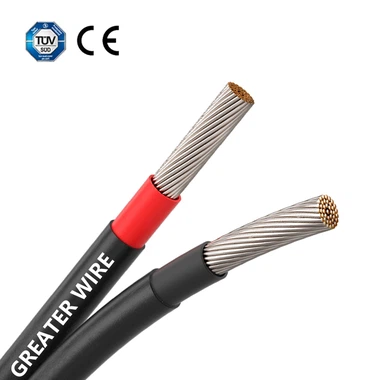
Solar Cables: Solar cables are specially designed for photovoltaic systems and are used to connect solar panels. They are resistant to UV radiation, weather, and temperature changes. Proper sizing of solar cables is critical to minimize power loss during transmission.
Solar Wires: Solar wires are typically used for internal connections within the panel strings or between the combiner box and the inverter. The choice of wire material (copper or aluminum), gauge, and insulation type influences energy efficiency.
Key Factors to Consider When Selecting Solar Cables and Wires:
Voltage Rating: The cables and wires must support the system's voltage, which can be up to 1,500V in modern systems.
Current Capacity: Ensure that the solar cables and wires can handle the current produced by the array.
Length of Cable Runs: Longer cables result in higher resistance and power loss, so calculate the appropriate gauge to minimize this.
Temperature Ratings: Choose cables that can withstand the environmental temperatures in your installation area.

String Sizing and Voltage Compatibility
To maximize the performance of a 5kW inverter, the solar array must be designed within the inverter's operating voltage range, which is typically between 300V and 500V for residential systems.
Series Connection (String): Panels connected in series increase the system voltage. The combined voltage must stay below the inverter's maximum input voltage.
Parallel Connection: Panels connected in parallel maintain the voltage but increase the current. Properly sized solar wires are crucial in this setup to handle higher current without overheating.
Practical Example
Let's assume you're using 300W solar panels. To calculate how many panels your 5kW inverter can handle:
Total power: 300W×16=4,800W
Voltage per panel: 40V; String voltage with 10 panels in series: 40V×10=400V
Current: Assuming 8A per panel, total current for two parallel strings: 8A×2=16A
From this example, ensure that:
The solar wires are rated for at least 16A.
The cables connecting the array to the inverter can handle the combined voltage of 400V.

Oversizing the Solar Array
Oversizing the solar array is a common practice to compensate for environmental factors like shading, soiling, and panel degradation over time. When oversizing, use properly rated solar cables and wires to prevent overheating and energy loss.
For example:
A 5kW inverter with a 6kW solar array would require cables rated for the higher power output.
Check that the inverter allows oversizing (usually specified in the datasheet).

System Losses and Cable Optimization
The efficiency of the solar system depends on minimizing losses during transmission. Solar cables and wires should have low resistance and high conductivity. Copper cables are generally preferred due to their superior conductivity, although aluminum cables may be used to reduce costs in large systems.
Calculating Voltage Drop in Solar Cables: Voltage Drop (%)=2×Length×Current×Resistance of Wire/Voltage For optimal performance, the voltage drop should be less than 3%.

Safety Considerations
Fuses and Breakers: Install appropriate fuses and breakers to protect solar cables and wires from overcurrent.
Grounding: Ensure the system is properly grounded to prevent electrical faults.
Insulation: Use cables with durable insulation to protect against environmental stressors.