

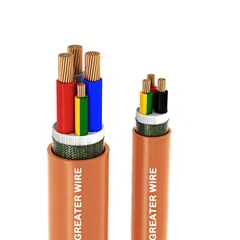
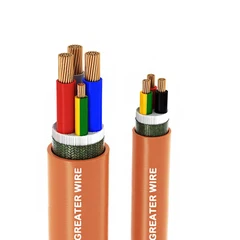

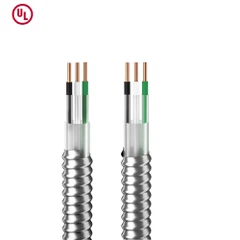
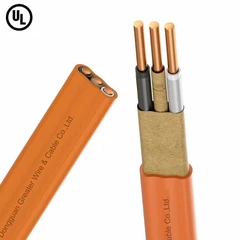
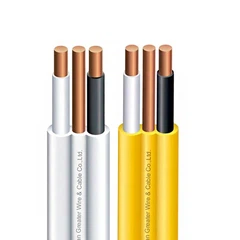
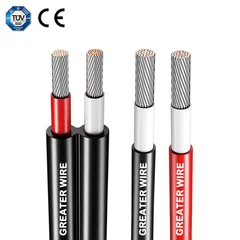

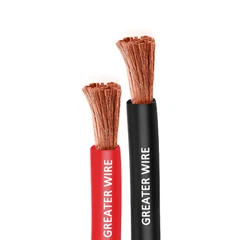
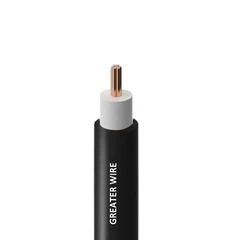
AC90 cable can be used for certain outdoor equipment connections, but standard AC90 cable should not automatically be considered suitable for outdoor or wet-location installations. Its suitability depends on the cable's specific CSA certification, construction, environmental exposure, and the applicable Canadian Electrical Code (CEC) requirements.
AC90 is a Canadian armoured cable commonly used in commercial and industrial electrical installations. Its interlocked metal armour provides mechanical protection, while its insulated conductors carry electrical power. However, mechanical protection does not automatically provide protection against moisture, rain, UV exposure, or prolonged outdoor weather conditions.
For electrical contractors, equipment manufacturers, and procurement professionals, the key is to distinguish between a cable installed in a dry indoor location near outdoor equipment and one exposed directly to outdoor environmental conditions.

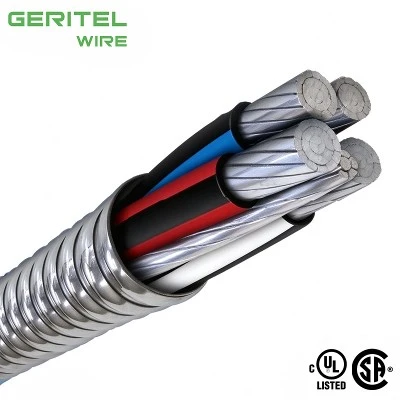
1. What Is AC90 Cable and How Is It Constructed?
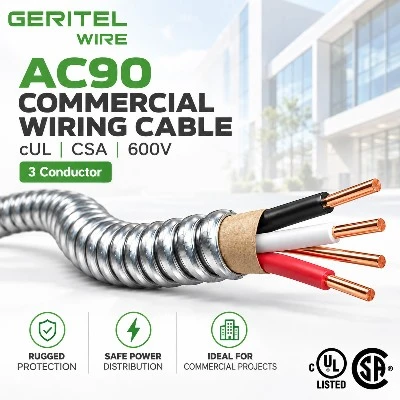
AC90 is a Canadian Type AC armoured cable designed for commercial, industrial, and residential electrical wiring applications.
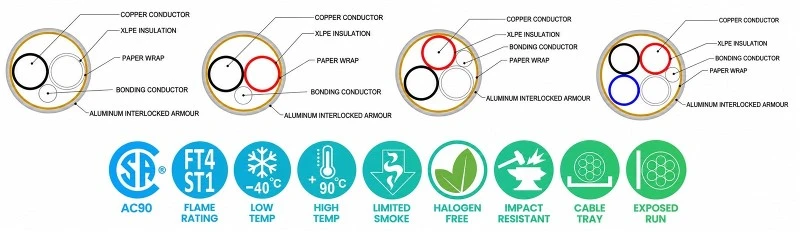
A typical AC90 cable consists of several components:
Conductors: Copper or aluminum conductors that carry electrical current.
Insulation: Typically cross-linked polyethylene (XLPE), identified as RW90.
Bonding conductor: Provides the bonding path required by the cable design.
Armour: Interlocked aluminum armour surrounding the conductor assembly.
Overall jacket: Standard AC90 generally does not have an additional overall PVC jacket.
Many Canadian-market AC90 products have a 600V rating and a maximum conductor operating temperature of 90°C. However, these ratings do not establish suitability for outdoor exposure.
For example, Nexans identifies its AC90 cable as suitable for open and concealed wiring in dry locations only. Southwire likewise specifies its AC90 product for dry-location applications.
AC90+1
This distinction is important: the XLPE insulation protects individual conductors, while the metal armour provides mechanical protection. Neither feature automatically makes the complete cable assembly suitable for wet locations.
2. Why Is Standard AC90 Generally Not Recommended for Outdoor Connections?
Outdoor installations expose electrical cables to environmental conditions that are not normally present in dry indoor locations.
Several factors explain why standard AC90 is generally unsuitable for direct outdoor exposure.
2.1 Rain and Moisture Exposure
Rainwater, condensation, and moisture can affect cable components and electrical connections.
Standard AC90 does not normally include an overall moisture-resistant jacket. Its exposed interlocked metal armour is not equivalent to a sealed environmental barrier.
Even when the insulated conductors use RW90 XLPE, the complete cable assembly must still be approved for the intended location.
Therefore, do not assume that an AC90 cable is suitable for outdoor equipment simply because its individual conductors have moisture-resistant insulation.
2.2 Sunlight and UV Exposure
Outdoor cables may be exposed to continuous sunlight and ultraviolet (UV) radiation.
Long-term UV exposure can deteriorate certain cable materials, particularly polymeric jackets and insulation systems that are not designed for sunlight exposure.
Standard AC90 should not be assumed to have a sunlight-resistant rating.
When selecting an outdoor cable, check the manufacturer's documentation for an explicit sunlight-resistant approval or marking where required.
2.3 Temperature and Weather Changes
Outdoor equipment connections may experience significant temperature variations throughout the year.
Although some AC90 products carry a low-temperature installation rating, this does not automatically establish suitability for outdoor operation.
Check both the installation temperature and operating temperature ratings, along with the cable's approved environmental conditions.
2.4 Corrosion and Physical Exposure
Outdoor installations may involve rainwater, pollutants, industrial chemicals, and other corrosive conditions.
Metal armour provides mechanical protection, but it does not eliminate the possibility of corrosion or environmental deterioration.
The cable's armour, jacket, connectors, and termination accessories must all be suitable for the actual installation environment.
3. AC90 vs. ACWU90 vs. TECK90 for Outdoor Equipment Connections
If standard AC90 is unsuitable for an outdoor installation, two commonly considered Canadian alternatives are ACWU90 and TECK90.
China CSA AC90 BX Cable Aluminum Conductor PVC Or XLPE/AIA 600V Manufacturers Suppliers Factory
China CSA ACWU90 Cable 4 conductor 600V AIA Flame Retardant Manufacturers Suppliers Factory - Customized CSA ACWU90 Cable 4 conductor 600V AIA Flame Retardant Made in China
Teck90 600/1000V Armored Cable & Wire Manufacturer | Zetastone Cable
3.1 AC90 Cable
AC90 is generally designed for dry-location installations.
Its typical construction includes insulated conductors, a bonding conductor, and interlocked metal armour without an overall PVC jacket.
Common applications include:
Indoor branch circuits.
Commercial building wiring.
Industrial electrical distribution in dry areas.
Connections to approved indoor electrical equipment.
It is generally not the appropriate choice for cable sections directly exposed to rain or other wet-location conditions.
3.2 ACWU90 Cable
ACWU90 is a jacketed armoured cable designed for suitable dry- and wet-location applications.
Its typical construction includes:
Copper or aluminum conductors.
XLPE insulation.
A bonding conductor.
Interlocked aluminum armour.
An overall PVC jacket.
The additional PVC jacket provides an extra protective layer against environmental moisture.
Depending on its certification and product markings, ACWU90 can be used for outdoor equipment connections, exposed wiring, and other approved wet-location applications.
For example, Southwire identifies its ACWU90 products for exposed and concealed wiring in dry or wet locations and exposure to weather. Its product specifications also identify sunlight-resistant versions.
cabletechsupport.southwire.com+1
3.3 TECK90 Cable
TECK90 is another widely used Canadian armoured cable for demanding industrial and outdoor installations.
Its typical construction includes:
Copper or aluminum conductors.
XLPE insulation.
A bonding conductor.
An inner jacket.
Interlocked metal armour.
An overall protective jacket.
The additional inner and outer protective layers make TECK90 suitable for many industrial environments.
Depending on the specific certification and construction, TECK90 can be used in dry or wet locations and exposed outdoor installations.
However, sunlight resistance, direct-burial suitability, and other special application approvals should be verified separately.
3.4 Comparison Table
|
Technical factor |
AC90 |
ACWU90 |
TECK90 |
|---|---|---|---|
|
Overall PVC jacket |
No |
Yes |
Yes |
|
Interlocked armour |
Yes |
Yes |
Yes |
|
Typical insulation |
XLPE |
XLPE |
XLPE |
|
Dry-location use |
Yes |
Yes |
Yes |
|
Wet-location use |
Generally no |
Yes, when approved |
Yes, when approved |
|
Outdoor weather exposure |
Generally unsuitable |
Yes, when approved |
Yes, when approved |
|
Sunlight resistance |
Do not assume |
Verify marking |
Verify marking |
|
Typical applications |
Indoor wiring |
Outdoor and industrial distribution |
Industrial and outdoor power distribution |
These are typical Canadian-market constructions. Always confirm the exact manufacturer's certification and product markings before specifying a cable.
4. Can AC90 Be Used If Outdoor Equipment Is Installed Under a Roof?
This is a common question for electrical contractors.
A roof or protective enclosure may reduce direct exposure to rain, but it does not automatically make an installation a dry location.
Consider the following situations:
Situation A: Outdoor equipment in a fully protected dry electrical area
If the entire cable route and termination environment meet the product's approved dry-location conditions, AC90 may be considered, subject to the applicable code and installation requirements.
Situation B: Outdoor equipment under a roof but exposed to wind-driven rain
Moisture can still reach the cable and electrical connections. A wet-location-rated cable such as an appropriately approved ACWU90 or TECK90 is generally a better choice.
Situation C: Equipment installed in an outdoor electrical enclosure
An enclosure can provide environmental protection, but its rating, cable entry arrangements, condensation conditions, and installation details must be evaluated.
Do not assume that placing an AC90 termination inside an enclosure automatically changes the cable's environmental rating.
The entire cable route must be assessed, not just the equipment connection point.
5. What Should You Check When Specifying Outdoor Armoured Cable?
Before purchasing cable for outdoor equipment connections, electrical designers and procurement professionals should confirm the following details.
5.1 CSA Certification and Cable Type
For Canadian installations, verify that the cable carries the appropriate CSA certification for its intended use.
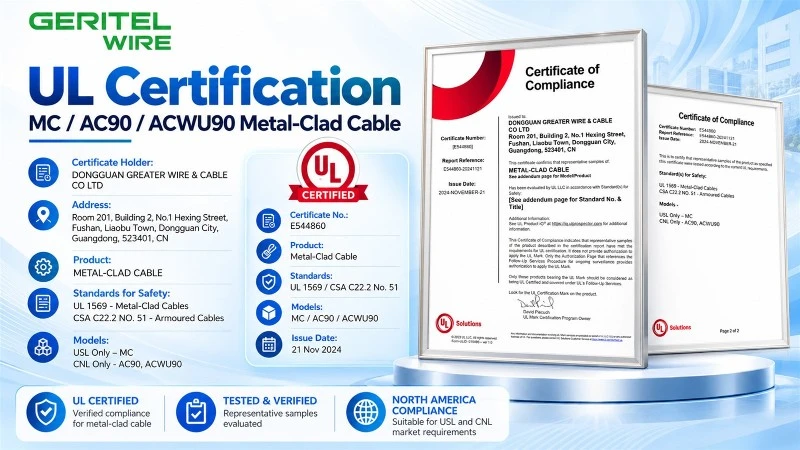
CSA C22.2 No. 51 covers armoured cables, including relevant AC90, ACWU90, and TECK90 constructions.
Do not rely solely on the cable name. The exact certified product construction determines its permitted applications.
5.2 Voltage and Temperature Ratings
Confirm that the selected cable meets the equipment's electrical requirements.
Check:
Rated system voltage.
Conductor material and size.
Insulation type.
Maximum conductor operating temperature.
Minimum installation temperature.
Applicable ampacity and voltage-drop requirements.
A 90°C conductor temperature rating does not automatically mean the cable can be operated at its maximum ampacity under every installation condition.
5.3 Sunlight and Moisture Resistance
For exposed outdoor installations, verify the required environmental approvals.
Look for relevant manufacturer markings, such as:
CSA SUN RES for sunlight resistance.
Appropriate wet-location approval.
Applicable flame and smoke classifications where required.
Remember that sunlight resistance and wet-location suitability are separate considerations.
5.4 Cable Glands, Connectors, and Terminations
Outdoor cable connections require more than selecting the correct cable.
Check that:
Cable glands and connectors are suitable for the cable construction.
Fittings are approved for the installation environment.
Enclosure entries maintain the required environmental protection.
Bonding and grounding connections meet applicable requirements.
Terminations follow equipment and connector manufacturer instructions.
An unsuitable connector can compromise an otherwise properly specified outdoor cable installation.
5.5 Applicable Electrical Codes
The Canadian Electrical Code (CEC), particularly its requirements for wiring methods and environmental conditions, should guide cable selection and installation.
Provincial and territorial adoption, local amendments, project specifications, and authority having jurisdiction (AHJ) requirements must also be considered.
AC90 is a Canadian cable designation. Do not assume that CSA approval automatically establishes compliance with US NEC, IEC, or AS/NZS requirements.
6. Common Mistakes When Selecting Cable for Outdoor Equipment
Avoid these common specification errors:
Assuming metal armour makes AC90 waterproof. Interlocked armour provides mechanical protection, not automatic wet-location approval.
Treating RW90 insulation as an outdoor cable rating. Conductor insulation ratings do not establish the environmental suitability of the complete cable.
Assuming a covered installation is always dry. Wind-driven rain, condensation, and moisture can still affect protected outdoor locations.
Ignoring sunlight resistance. Outdoor exposure may require a specific sunlight-resistant approval.
Choosing cable without checking connectors. Cable fittings and equipment terminations must be compatible with the cable and installation environment.
7. Final Recommendation: Which Cable Should You Specify?
Standard AC90 is generally intended for dry-location installations and should not be specified for outdoor equipment connections where the cable is exposed to rain, moisture, or other wet-location conditions.
For outdoor applications, ACWU90 and TECK90 are often more appropriate alternatives, provided their specific certifications and environmental ratings match the installation.
ACWU90 is a practical option for many outdoor electrical distribution applications, while TECK90 offers a different multi-layer construction commonly used in demanding industrial environments.
The final decision should consider the complete cable route, weather exposure, sunlight resistance, voltage rating, termination requirements, and applicable electrical codes.
The right cable is not simply the one with the strongest armour. It is the one whose complete construction and certification match the actual installation environment.

8. Outdoor Armoured Cable Solutions from GERITEL WIRE
GERITEL WIRE understands the technical requirements of outdoor power distribution and industrial equipment connections. Selecting the right armoured cable is essential for reliable performance in environments exposed to moisture, sunlight, and changing weather conditions. Whether your project requires AC90 for indoor dry-location wiring, ACWU90 for approved outdoor applications, or TECK90 for demanding industrial installations, our team can help you evaluate cable construction, conductor options, and technical specifications. Contact GERITEL WIRE to discuss your application, request product information, and explore suitable cable solutions for your next electrical project.
Dongguan Greater Wire & Cable Co., Ltd.
Tel/WhatsApp/Wechat: +86 136 6257 9592
Tel/WhatsApp/Wechat: +86 135 1078 4550
Email: manager01@greaterwire.com
Website: www.greaterwire.com