

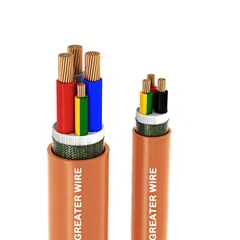
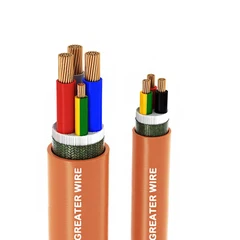

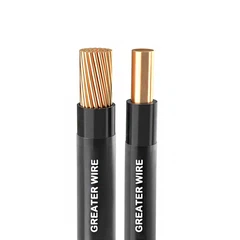
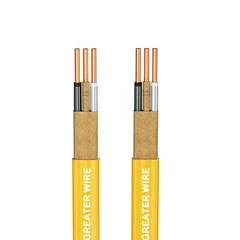
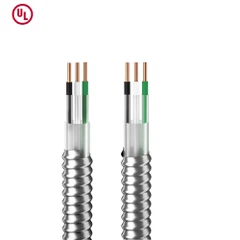
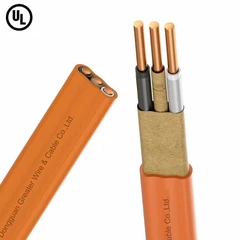
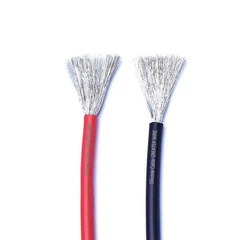
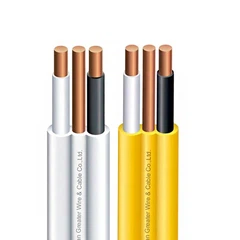
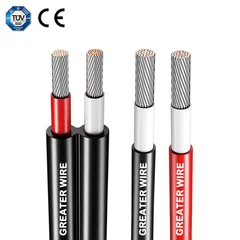

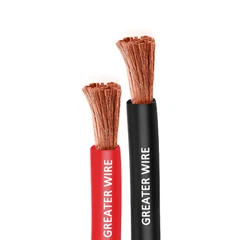
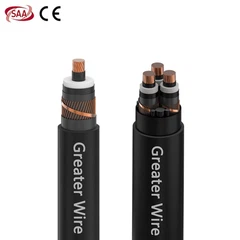
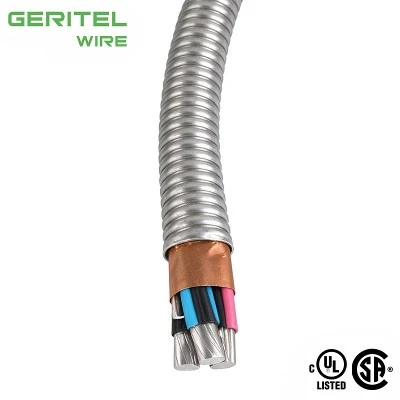
Overheating at AC90 cable terminations is commonly caused by loose connections, incorrect tightening torque, incompatible connectors, poor conductor preparation, or excessive electrical loading. Although AC90 cable is designed for commercial and industrial electrical installations, its performance depends not only on the cable itself but also on the quality of its connections to electrical equipment.
A termination is the point where an insulated conductor connects to a terminal, lug, circuit breaker, or other electrical device. If the connection has excessive electrical resistance, heat can develop locally even when the cable itself is correctly sized.
For electrical contractors, engineers, and procurement professionals, understanding the causes of termination overheating is essential for improving electrical safety, reducing equipment failures, and maintaining reliable power distribution systems.
This article examines the main causes of AC90 termination overheating, explains how copper and aluminum conductors affect connection requirements, and outlines practical measures for specifying and installing reliable AC90 cable assemblies.
1. How Does Overheating Occur at an AC90 Cable Termination?
To understand why AC90 cable terminations overheat, it is helpful to understand the relationship between electrical resistance and heat generation.
When electric current flows through a conductor, some electrical energy is converted into heat. This is normal. However, a properly installed termination should maintain sufficiently low contact resistance to prevent excessive localized heating.
The heat generated by electrical resistance can be described by Joule's law:
This equation explains two important points:
Higher electrical current increases heat generation.
Higher contact resistance increases heat generation, even when the current remains unchanged.
For example, if a connection becomes loose, the effective contact area may decrease and electrical resistance may increase. The resulting heat can damage conductor insulation, terminal components, and nearby equipment.
In severe cases, continued overheating may cause insulation deterioration, electrical arcing, equipment failure, or fire.
Loose and poorly made connections are recognized causes of localized electrical overheating.
Fire Risk Analysis for Low-Voltage Switchgear+2
2. Seven Common Causes of AC90 Cable Termination Overheating
Several installation and operating conditions can contribute to excessive heat at AC90 cable connections.
2.1 Loose Electrical Connections
Loose connections are one of the most common causes of termination overheating.
When an AC90 conductor is not properly secured inside a terminal or connector, the contact pressure between the conductive surfaces may become insufficient.
This can increase contact resistance and generate excessive heat under electrical load.
Loose connections may result from:
Incorrect initial installation.
Insufficient tightening torque.
Vibration from nearby machinery.
Repeated heating and cooling cycles.
Mechanical stress on the cable or termination.
For example, an AC90 cable connected to an industrial motor control panel may experience vibration from nearby equipment. If the termination is not properly secured, mechanical movement can contribute to connection deterioration.
Prevention: Follow the equipment and connector manufacturer's specified tightening torque. Use a suitable calibrated torque wrench or screwdriver when required by the manufacturer's instructions.
Do not assume that tightening a connection as much as possible will produce a better result.
2.2 Incorrect Tightening Torque
Tightening torque is the rotational force applied when securing a screw, bolt, or terminal connection.
Both insufficient and excessive torque can cause problems.
4 AWG Wire Specifications: Gauge, Amps, and Applications
fr-cable.com
|
Installation condition |
Possible consequence |
|---|---|
|
Under-tightening |
Insufficient contact pressure and increased resistance |
|
Correct torque |
Properly established mechanical and electrical connection |
|
Over-tightening |
Damaged conductor strands, distorted terminals, or damaged threads |
Over-tightening can be particularly problematic for aluminum conductors because excessive compression may deform the conductor and affect connection reliability.
The correct torque value depends on the specific terminal, connector, conductor size, and equipment design.
Prevention: Always follow the torque value specified by the terminal or equipment manufacturer. Do not use a universal torque value for all AC90 connections.
2.3 Incorrect Connector Selection
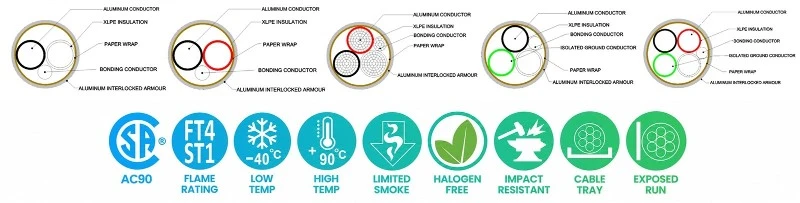
AC90 cable is available with copper or aluminum conductors. The connector must be compatible with the conductor material and size.
Using an unsuitable connector can create poor electrical contact and increase connection resistance.
Common mistakes include:
Using a copper-only terminal with an aluminum conductor.
Selecting a connector that does not support the conductor size.
Using terminals unsuitable for stranded conductors.
Using connectors that are not approved for the intended application.
Mixing copper and aluminum conductors without an appropriately rated connector.
For aluminum AC90 cable, connectors must be specifically identified or approved for aluminum conductor use.
For copper-to-aluminum connections, an appropriately rated connector designed for the combination is necessary.
Prevention: Verify the connector's conductor material compatibility, size range, temperature rating, and applicable certification before installation.
2.4 Oxidation and Corrosion
Oxidation and corrosion can increase electrical resistance at termination interfaces.
Aluminum naturally develops an oxide layer when exposed to air. Although this layer is extremely thin, aluminum oxide has much higher electrical resistance than the underlying metal.
If the connection is not properly prepared and assembled, the oxide layer or surface contamination can interfere with reliable electrical contact.
Copper connections can also experience oxidation and corrosion, particularly in environments involving moisture, chemicals, or other corrosive substances.
Сечение кабеля для чайников: как выбрать и рассчитать под нагрузку | Почему греется провод
saray.ru
Typical contributing factors include:
Improper conductor surface preparation.
Moisture entering electrical enclosures.
Corroded terminal surfaces.
Contaminated connector contact areas.
Incompatible metal combinations.
Prevention: Follow the connector manufacturer's instructions for conductor cleaning, preparation, and the use of approved oxide-inhibiting compounds where required.
Do not assume that every aluminum termination requires the same preparation procedure.
2.5 Improper Conductor Stripping and Installation
Conductor preparation is another important factor affecting termination reliability.
Before connecting an AC90 conductor to a terminal, the insulation must be removed to the correct length without damaging the conductor.
Incorrect stripping can create several problems:
Cutting or nicking individual conductor strands.
Removing too much insulation.
Leaving insulation inside the terminal contact area.
Inserting the conductor too deeply or insufficiently.
Allowing loose strands to remain outside the connector.
Damaged strands reduce the effective conducting cross-section and can create uneven contact pressure.
For stranded conductors, incorrect insertion or compression may also result in an unreliable electrical connection.
Prevention: Use an appropriate stripping tool and follow the connector manufacturer's specified stripping length and conductor insertion instructions.
2.6 Excessive Electrical Loading
An AC90 cable termination may overheat because the connected circuit carries more current than the cable or terminal can safely handle.
Even a properly installed connection generates heat when current flows through it. Excessive current increases heat generation according to Joule's law.
Possible causes include:
Undersized conductors.
Incorrect circuit ampacity calculations.
Equipment operating above its intended load.
Incorrect overcurrent protection.
Changes in connected equipment or operating conditions.
For example, an AC90 cable originally selected for a particular industrial machine may become overloaded if additional equipment is connected to the same circuit.
The cable and termination must both be suitable for the actual operating current.
Prevention: Verify conductor ampacity, overcurrent protection, terminal ratings, and actual operating loads. Follow the applicable Canadian Electrical Code requirements and equipment manufacturer's instructions.
2.7 High Ambient Temperature and Poor Heat Dissipation
Not all termination overheating originates from a defective connection.
Environmental conditions can also contribute to excessive operating temperatures.
AC90 cables may be installed near:
Industrial motors.
Heating equipment.
Hot machinery.
Electrical distribution panels.
Other heavily loaded cables.
When the surrounding temperature is high, the cable and termination have less capacity to dissipate additional heat.
Cable grouping and installation arrangements may also affect the temperature of conductors and connections.
Prevention: Consider ambient temperature, cable grouping, ventilation, equipment loading, and terminal temperature limitations during cable selection and installation.
3. Does Copper or Aluminum AC90 Cable Have a Higher Risk of Termination Overheating?
Both copper and aluminum AC90 cables can experience termination overheating if they are incorrectly installed or operated.
However, their different material properties create different connection requirements.
CABLE COBRE DESNUDO 3 AWG 7H 242 POR METRO
Copper AC90
Higher electrical conductivity and generally straightforward compatibility with copper-rated terminals.
Al Xhhw-2 AA 8000 Series Aluminum Alloy Wire Direct Burial XLPE Cable 600V - Xhhw-2 and Xhhw-2 Wire
Aluminum AC90
Lower weight and different surface and mechanical characteristics requiring appropriate termination practices.
3.1 Copper AC90 Termination Considerations
Copper has higher electrical conductivity than aluminum. For the same conductor cross-sectional area and length, copper generally has lower electrical resistance.
However, copper connections can still overheat because of:
Loose terminals.
Incorrect tightening torque.
Corrosion or contamination.
Damaged conductor strands.
Incompatible connectors.
Excessive circuit loading.
Copper's higher conductivity does not eliminate the need for correct termination procedures.
3.2 Aluminum AC90 Termination Considerations
Aluminum conductors require particular attention to connector compatibility and conductor preparation.
Aluminum forms a surface oxide layer naturally, and its mechanical behavior differs from copper.
Important considerations include:
Using aluminum-rated terminals and connectors.
Following manufacturer-approved surface preparation procedures.
Applying oxide-inhibiting compound where specified.
Using the correct conductor insertion and tightening procedures.
Avoiding excessive compression or repeated unnecessary retightening.
3.3 Copper vs. Aluminum Termination Comparison
|
Factor |
Copper AC90 |
Aluminum AC90 |
|---|---|---|
|
Electrical conductivity |
Higher |
Lower |
|
Surface oxidation |
Possible |
Naturally forms aluminum oxide |
|
Connector compatibility |
Copper-rated connectors |
Aluminum-rated connectors |
|
Copper-to-aluminum connection |
Requires an approved compatible connector |
Requires an approved compatible connector |
|
Installation preparation |
Follow connector instructions |
Pay particular attention to oxide and preparation requirements |
|
Torque requirements |
Manufacturer-specific |
Manufacturer-specific |
|
Overheating risk |
Possible |
Possible |
The conductor material alone does not determine whether a termination will overheat. Proper connector selection, installation, and operating conditions are more important.
4. How Can You Identify an Overheating AC90 Termination?
Early identification can help prevent equipment damage and unexpected electrical failures.
Common warning signs include:
What Causes Terminal Overheating? Common Factors and Prevention
Stefan Benz - Sachverständiger Heidenheim
Enisave Solutions | Thermographic Infrared Surveys
How to Fix a Loose Wire Terminal: Professional Guidelines and Safety Practices
200 Amp Breaker For Sub Panel: 5 Critical Truths Exposed 2025
Diagnosing faulty electrical wiring
testo 875-2i kit - Thermal imager testo 875-2i with 2 lenses and accessories
What is going on here? - Page 1
Melted electrical terminal after overheating and short circuit
Visuele inspectie: waar moet je allemaal op letten?
Close up of burned and oxidized heavy duty electrical terminals with wires connected.
Sichere Elektroinstallationen - BS Brandschutz – Die Fachzeitschrift & Profimagazin für Brandschutz
|
Warning sign |
Possible indication |
|---|---|
|
Discolored terminal |
Excessive heat or oxidation |
|
Darkened conductor insulation |
Thermal deterioration |
|
Melted connector housing |
Severe overheating |
|
Burning smell |
Insulation or component deterioration |
|
Unusual heat around terminal |
Possible high-resistance connection |
|
Intermittent equipment operation |
Possible unstable electrical connection |
|
Visible corrosion |
Deteriorated contact surfaces |
4.1 Visual Inspection
A qualified electrician can inspect accessible terminations for discoloration, damaged insulation, corrosion, loose hardware, and other visible signs of deterioration.
However, visual inspection alone cannot identify every high-resistance connection.
4.2 Infrared Thermography
Infrared thermal imaging can help identify abnormal temperature differences between electrical connections.
Terminal Block Overheating in Control Panels: Causes, Diagnosis, and Prevention
viox.com
For example, if one phase termination is significantly hotter than comparable connections under similar operating conditions, it may indicate:
A loose connection.
An overloaded circuit.
An unbalanced electrical load.
A defective connector.
Poor electrical contact.
Thermal imaging is a diagnostic tool, not a definitive diagnosis. Readings must be interpreted in relation to load current, ambient temperature, equipment design, and comparable connections.
4.3 Electrical Testing
Depending on the equipment and observed symptoms, qualified electrical personnel may use:
Load-current measurements.
Voltage-drop measurements across connections.
Low-resistance contact measurements.
Insulation-resistance testing where appropriate.
Infrared thermographic inspections.
The selected test must match the suspected failure mechanism. For example, an insulation-resistance test does not by itself establish that a bolted termination has sufficiently low contact resistance.
Safety reminder: Do not touch, tighten, or dismantle a suspected overheated termination while energized. Electrical inspection and repair should be performed by qualified personnel using appropriate isolation, lockout/tagout, and safety procedures.
5. How to Prevent Overheating at AC90 Cable Terminations
Preventing termination overheating begins with correct cable specification and continues through installation, commissioning, and maintenance.
5.1 Select the Correct Cable Size
The conductor must be sized according to the actual electrical load and installation conditions.
Consider:
Circuit operating current.
Conductor material.
Cable installation method.
Ambient temperature.
Number of current-carrying conductors.
Voltage drop.
Equipment terminal temperature limitations.
A cable with an appropriate 90°C insulation rating does not automatically permit the connected equipment terminals to operate at 90°C.
The applicable conductor ampacity and terminal limitations must both be considered.
5.2 Use Compatible Electrical Connectors
Check that terminals and connectors match the selected AC90 conductor material, size, and construction.
For aluminum conductors, verify the connector's aluminum compatibility.
For copper-to-aluminum transitions, use connectors specifically approved for the intended combination.
5.3 Follow Manufacturer Torque Specifications
Use the specified torque values for the actual terminal or connector.
A calibrated torque tool should be used where required by the manufacturer's instructions and applicable electrical requirements.
Avoid estimating torque by hand or assuming that all terminal screws require the same tightening force.
5.4 Prepare Conductors Correctly
Before termination:
Confirm the conductor material and size.
Remove insulation to the specified stripping length.
Inspect the exposed conductor for damage.
Prepare the conductor according to connector instructions.
Insert the conductor correctly.
Apply the specified tightening or crimping procedure.
Inspect the completed connection.
For compression connectors, use the specified crimping tool and die combination.
5.5 Provide Appropriate Environmental Protection
Where AC90 is installed in commercial or industrial environments, ensure that the termination location is suitable for the cable and electrical equipment.
Moisture, corrosive substances, vibration, and high temperatures can all affect connection reliability.
Use appropriate enclosures, fittings, and connectors for the actual installation environment.
5.6 Establish a Suitable Maintenance Program
Electrical connections should be inspected according to equipment manufacturer recommendations, applicable maintenance standards, and the operating environment.
Maintenance activities may include:
Visual inspections.
Infrared thermographic surveys.
Load-current measurements.
Inspection of connector condition.
Investigation of abnormal temperature differences.
Do not automatically retighten every connection during routine maintenance. Unnecessary tightening can damage conductors, terminals, and fasteners. Connections showing signs of deterioration require proper investigation and corrective work.
Manufacturer installation guidance also emphasizes following connector instructions and using thermal inspections to monitor connection reliability.
irp-cdn.multiscreensite.com+2
6. What Standards and Requirements Should You Consider?
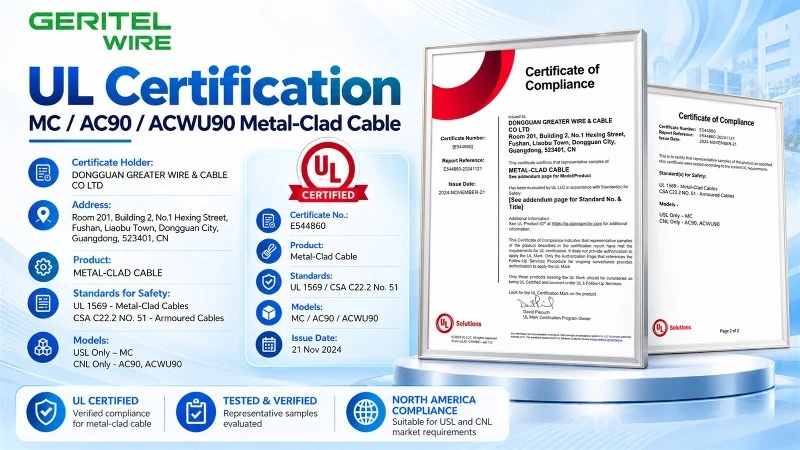
For Canadian AC90 installations, cable selection and termination work should consider both product certification and electrical installation requirements.
|
Standard or requirement |
Relevance |
|---|---|
|
CSA C22.2 No. 51 |
Product requirements for armoured cables, including AC90 |
|
CSA C22.2 No. 2556 |
Electrical wire and cable test methods |
|
Canadian Electrical Code (CSA C22.1) |
Wiring methods, conductor ampacity, connections, and installation requirements |
|
Connector certification and manufacturer instructions |
Conductor compatibility, preparation, and tightening requirements |
|
Equipment manufacturer's documentation |
Terminal temperature ratings and connection specifications |
Nexans lists its AC90 product as certified to CSA C22.2 No. 51 and CSA C22.2 No. 2556. Its product documentation also identifies copper and aluminum conductor options, RW90 XLPE insulation, and a maximum conductor temperature of 90°C.
AC90+1
An important distinction is that AC90 cable certification does not automatically certify every terminal or connector used with the cable.
The complete connection must comply with the applicable product approvals, installation requirements, and equipment manufacturer's instructions.
For projects outside Canada, confirm the applicable local wiring rules and product approvals. CSA AC90 should not automatically be treated as equivalent to UL Type AC, IEC cable classifications, or AS/NZS cable types.
7. Common Mistakes That Lead to AC90 Termination Failures
Electrical contractors and procurement teams should avoid the following mistakes:
Mistake 1: Assuming the cable is responsible for every overheating problem.
A termination may overheat even when the AC90 cable itself is correctly manufactured and sized.
Mistake 2: Using the wrong connector for the conductor material.
Copper and aluminum conductors require appropriately rated connection hardware.
Mistake 3: Tightening terminals without checking the specified torque.
Both under-tightening and over-tightening can compromise connection reliability.
Mistake 4: Ignoring conductor preparation.
Damaged strands, incorrect stripping, and poor insertion can increase connection resistance.
Mistake 5: Increasing cable size without investigating the termination.
A larger conductor will not necessarily solve a defective connector or poor contact interface.
Mistake 6: Repeatedly retightening overheated connections.
An overheated connection may already have damaged conductors or terminal components. The underlying problem must be identified and defective parts replaced as necessary.
8. Final Recommendation: How to Keep AC90 Cable Terminations Reliable
Overheating at AC90 cable terminations is usually associated with poor electrical contact, incompatible connectors, incorrect installation torque, conductor damage, excessive loading, or unfavorable operating conditions.
Copper and aluminum AC90 cables can both provide reliable electrical performance when correctly specified and installed. However, each conductor material requires compatible connectors and proper termination procedures.
For electrical designers, contractors, and procurement professionals, the most important precautions are to:
Select the correct AC90 conductor size and material.
Verify connector compatibility.
Follow manufacturer termination and torque instructions.
Prepare conductors correctly.
Check circuit loading and terminal temperature limitations.
Inspect connections for signs of deterioration.
Reliable electrical connections depend on more than cable quality. Proper conductor preparation, compatible terminals, and correct installation practices are equally important in preventing overheating and extending equipment service life.

9. AC90 Cable Solutions from GERITEL WIRE
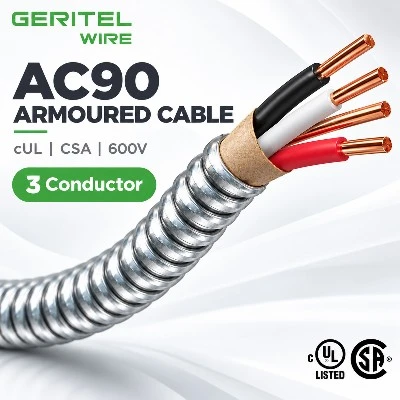
GERITEL WIRE understands that reliable electrical performance depends on both cable quality and correct application. Our AC90 cable solutions are designed to meet different commercial and industrial wiring requirements, with options for copper and aluminum conductors, suitable insulation systems, and specified armour constructions. Whether you are sourcing AC90 cable for electrical distribution panels, industrial equipment, or commercial building projects, our team can help you review conductor specifications and product configurations. Contact GERITEL WIRE to discuss your cable requirements, request technical information, and explore suitable solutions for your next electrical project.
Dongguan Greater Wire & Cable Co., Ltd.
Tel/WhatsApp/Wechat: +86 136 6257 9592
Tel/WhatsApp/Wechat: +86 135 1078 4550
Email: manager01@greaterwire.com
Website: www.greaterwire.com