























The insulation material of a solar cable plays a critical role in ensuring the safety, durability, and efficiency of a solar power system. For solar applications, cables are exposed to harsh environmental conditions, including high temperatures, UV radiation, moisture, and mechanical stress. Therefore, the choice of insulation material is crucial to guarantee that the cable performs optimally throughout its service life. One such high-performance cable used extensively in solar power systems is the H1Z2Z2-K cable. In this article, we will explore the insulation material of the H1Z2Z2-K cable, its benefits, and why it is well-suited for use in solar power installations.
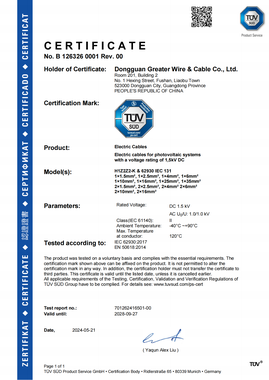
1. Overview of the H1Z2Z2-K Cable
Before delving into the specifics of the insulation material, it is essential to understand the general characteristics of the H1Z2Z2-K cable. The H1Z2Z2-K cable is a specialized solar wire used primarily for photovoltaic systems. It is designed to connect solar panels to inverters, batteries, and the grid, ensuring the efficient transfer of electricity generated from solar energy.
The H1Z2Z2-K cable is known for its robust construction, designed to withstand challenging environmental conditions. It has a high resistance to UV radiation, a wide operating temperature range (from -40°C to +90°C), and a long lifespan of up to 30 years or more. These features make it an ideal choice for both residential and commercial solar installations that require cables capable of performing reliably in a range of outdoor conditions.

2. Insulation Material of the H1Z2Z2-K Cable
The insulation material of a solar cable is essential for providing electrical safety, protecting the conductors from external environmental factors, and ensuring the longevity of the cable. For the H1Z2Z2-K cable, the insulation material used is XLPE (cross-linked polyethylene). This material is well-regarded for its excellent insulation properties, and it is commonly used in a wide range of solar cables and power cables.
2.1 What is XLPE (Cross-Linked Polyethylene)?
Cross-linked polyethylene (XLPE) is a thermoset polymer, which means that its molecular structure is modified through a chemical process called cross-linking. During this process, the polyethylene chains are chemically bonded, forming a three-dimensional network. This cross-linking enhances the physical properties of the material, giving it higher strength, better heat resistance, and improved electrical insulation capabilities compared to standard polyethylene.
XLPE is a popular choice for solar wire insulation due to its ability to resist degradation from various environmental factors such as heat, UV radiation, moisture, and mechanical wear. The material also has a high dielectric strength, meaning it can effectively isolate the electrical current flowing through the conductors, ensuring safe operation of the solar power system.
2.2 Advantages of XLPE Insulation for Solar Cables
The use of XLPE as an insulation material in the H1Z2Z2-K cable offers several advantages, making it highly suitable for solar applications:
High Temperature Resistance: One of the most important factors in choosing an insulation material for solar cables is its ability to withstand high temperatures. XLPE has excellent heat resistance and can operate effectively in environments with temperatures ranging from -40°C to +90°C, which matches the operating temperature range of the H1Z2Z2-K cable. This makes it well-suited for solar installations in both hot and cold climates.
UV Resistance: Since solar wires are typically installed outdoors and exposed to sunlight, the insulation material must be able to resist UV radiation. XLPE is known for its high UV resistance, which prevents the insulation from degrading under prolonged exposure to the sun. This ensures the H1Z2Z2-K cable maintains its performance and safety even after years of exposure to sunlight.
Moisture and Chemical Resistance: The H1Z2Z2-K cable with XLPE insulation is resistant to moisture, oils, and other chemicals, making it ideal for installation in damp environments or areas where exposure to chemicals is a concern. This is particularly important in solar installations where cables might be buried underground or installed in locations with high humidity.
Mechanical Durability: The cross-linked structure of XLPE gives the insulation material excellent mechanical properties. It can withstand abrasion, impacts, and other forms of mechanical stress, ensuring the solar cable remains intact and functional even in physically demanding environments. This durability is especially important for cables used in solar power systems where cables are exposed to movement, vibration, or pressure.
Electrical Insulation Properties: XLPE offers outstanding electrical insulation capabilities, which is crucial for solar cables carrying electrical current. Its high dielectric strength ensures that the H1Z2Z2-K cable remains safe from electrical faults and minimizes the risk of short circuits or power loss.
2.3 Long-Term Reliability and Service Life
The H1Z2Z2-K cable with XLPE insulation is designed for long-term reliability. The high-quality insulation material ensures that the cable can withstand environmental factors over an extended period, providing a service life of up to 30 years or more. This longevity is crucial for solar power installations, where maintenance costs are a significant concern, and systems are expected to perform efficiently for decades.
The cross-linked polyethylene used in the H1Z2Z2-K cable ensures that the cable's insulation maintains its integrity throughout its life cycle. The material's resistance to wear and tear, UV radiation, and chemical exposure contributes to the cable's overall durability, making it a long-term investment for any solar energy system.

3. How the Insulation Material Affects Solar Power System Performance
The insulation material of a solar wire is not just a protective layer; it directly impacts the overall performance of the solar power system. Here's how the XLPE insulation in the H1Z2Z2-K cable plays a critical role:
3.1 Safe Electrical Conductivity
The XLPE insulation in the H1Z2Z2-K cable ensures safe electrical conductivity by preventing short circuits or electrical faults. When the cable is installed properly, the insulation material ensures that the conductors are isolated and that no electrical current leaks into the surrounding environment, which is crucial for the safety of the system and its users.
3.2 Minimizing Power Loss
The H1Z2Z2-K cable with XLPE insulation helps to minimize electrical power losses by maintaining high electrical insulation properties. The effective insulation ensures that the electrical current flows efficiently from the solar panel to the inverter or grid without interference, optimizing the overall efficiency of the solar power system.
3.3 Reducing the Risk of Overheating
Good insulation plays a significant role in reducing the risk of overheating in solar wires. XLPE insulation is known for its high temperature resistance, which prevents the insulation from breaking down or melting in high-heat conditions. This property helps to maintain the solar cable's performance in extreme temperatures, such as those found in areas with high sun exposure.
3.4 Durability and Reliability of the Entire System
A solar power system is a long-term investment, and the durability of its components is essential for minimizing maintenance and ensuring reliable operation. The XLPE insulation used in the H1Z2Z2-K cable contributes to the overall durability of the system, ensuring that the solar cables maintain their integrity over decades of operation.