

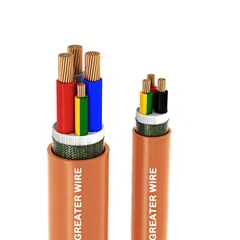
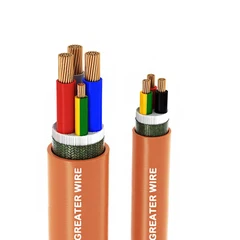

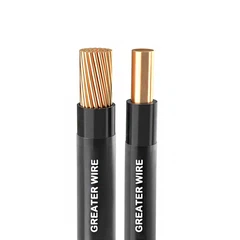
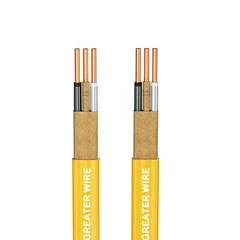
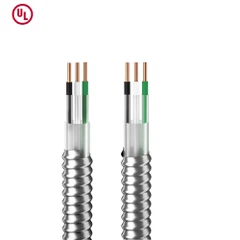
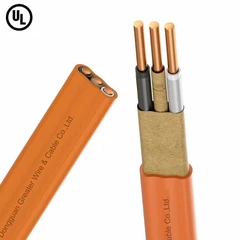
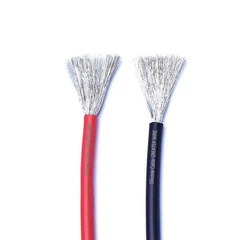
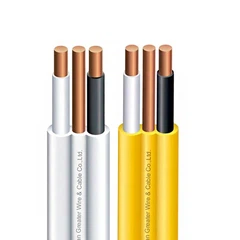
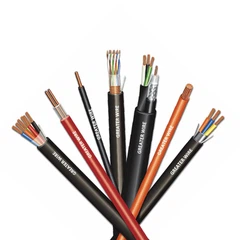
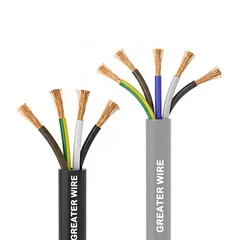
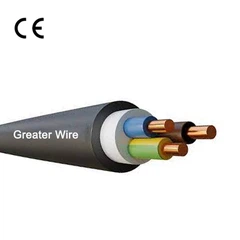
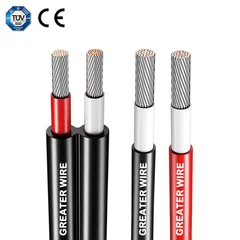

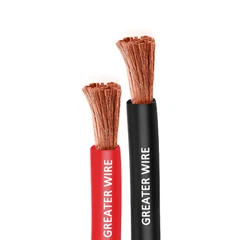
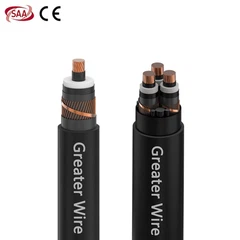
ACWU90 cable is widely used in commercial and industrial electrical installations because its insulated conductors, interlocked aluminum armour, and protective outer jacket provide mechanical protection and resistance to environmental moisture. However, even when the cable itself is designed for wet-location applications, water can still enter at its terminations.
This problem often surprises electrical contractors and maintenance personnel. If ACWU90 has a protective PVC jacket and metallic armour, why does moisture appear inside the cable or electrical enclosure?
The answer is that water resistance along the cable length and water sealing at the termination are two different engineering requirements.
A cable's outer jacket does not automatically create a watertight connection at the point where the cable enters an electrical panel, junction box, motor, or outdoor enclosure. Incorrect cable glands, damaged jackets, poor sealing practices, and water migration along internal cable pathways can all contribute to moisture ingress.
This article explains why water enters ACWU90 cable at terminations, identifies common installation mistakes, examines the potential consequences, and provides practical recommendations for preventing moisture-related problems in industrial electrical installations.
1. Why Can Water Enter ACWU90 Cable at Terminations?
The most important point to understand is that ACWU90 cable is designed to provide protection through its cable construction, but the termination introduces a transition between the protected cable assembly and electrical equipment.
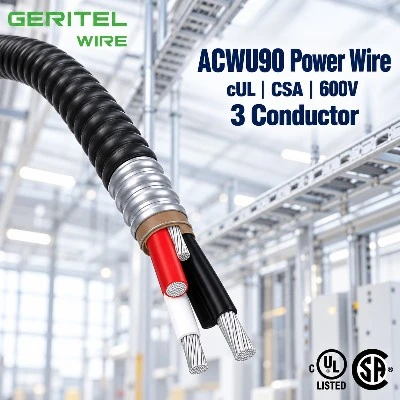
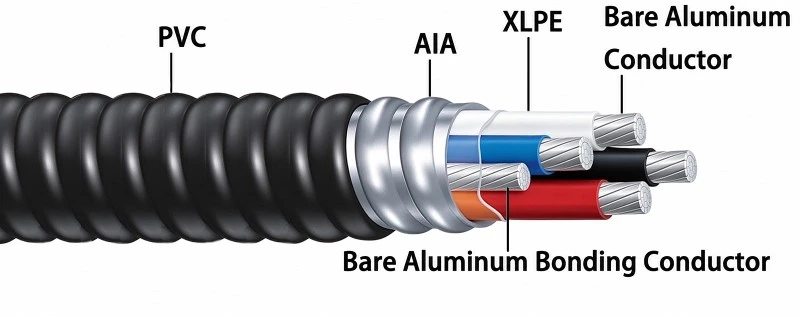
A typical ACWU90 cable consists of:
Conductor: Stranded copper or aluminum, depending on the product specification.
Insulation: Cross-linked polyethylene (XLPE), commonly rated RW90.
Bonding conductor: Included according to the cable design and applicable requirements.
Armour: Interlocked aluminum armour (AIA).
Outer jacket: Typically PVC, providing additional environmental and moisture protection.
The outer jacket surrounds the armour and helps protect the internal cable components from environmental exposure.
However, during termination, the cable must be cut and prepared so that its conductors can connect to electrical equipment.
This process exposes portions of the cable construction and creates an entry point that must be properly managed.
For example, when ACWU90 enters an outdoor distribution panel, the installer must prepare the cable, install a compatible cable connector, maintain the required armour bonding, and ensure that the cable entry provides the appropriate environmental protection.
If the connector does not seal correctly against the cable jacket or the enclosure entry, water may enter the equipment.
In some cases, moisture can also migrate beyond the termination into the cable assembly.
Therefore, even a properly manufactured ACWU90 cable can experience water ingress if the termination is incorrectly designed or installed.
1.1 Cable Water Resistance Is Not the Same as Termination Waterproofing
This distinction is particularly important for B2B cable buyers and electrical contractors.
A wet-location-rated cable is designed and tested for specified environmental conditions. However, that rating does not automatically extend to every connector, junction box, or electrical enclosure attached to it.
Consider an outdoor installation:
The ACWU90 cable has an intact PVC jacket.
The cable enters an electrical enclosure through an incorrectly selected connector.
Rainwater runs along the cable surface.
Water passes through the poorly sealed cable entry.
Moisture accumulates inside the enclosure and reaches the termination area.
In this situation, the cable jacket may remain completely intact. The failure occurs at the connection between the cable and the enclosure.
This is why cable selection and termination accessory selection must be treated as separate but related engineering decisions.
2. Six Common Reasons Water Enters ACWU90 Cable at Terminations
Water ingress usually results from one or more weaknesses in the cable entry, termination, or surrounding installation environment.
Understanding these causes helps maintenance teams identify the actual source rather than replacing cable unnecessarily.
2.1 Incorrect Cable Gland or Connector Selection
<text color="secondary" size="sm" weight="medium">Common cause 01 - Incompatible termination accessories</text>
An incorrectly selected cable gland is one of the most common reasons for moisture entering an ACWU90 termination.
The gland provides the mechanical and sealing interface between the cable and the electrical enclosure.
It must be suitable for the actual cable construction and installation environment.
Potential problems include:
Using a connector that is not approved for ACWU90.
Selecting a gland designed for a different armour construction.
Using a gland with an unsuitable cable diameter range.
Installing a connector that does not provide the required wet-location protection.
Using an ordinary indoor connector in an exposed outdoor location.
For example, a cable gland may physically fit an ACWU90 cable but fail to compress its outer jacket correctly.
This can leave small gaps through which rainwater or condensation can enter.
The correct solution is to select a connector specifically approved for the relevant cable type, outside diameter, armour construction, and environmental conditions.
For industrial applications, check the manufacturer's connector documentation for the applicable CSA or UL certification and environmental rating.
2.2 Improper Cable Gland Installation
<text color="secondary" size="sm" weight="medium">Common cause 02 - Incorrect installation and sealing</text>
Even a correctly selected cable gland may fail if it is installed incorrectly.
Cable glands rely on properly assembled components and correctly positioned sealing elements.
Common installation mistakes include:
Insufficient tightening of the sealing nut.
Excessive tightening that damages the sealing components.
Incorrect cable preparation.
Misalignment between the cable and gland.
Incorrect positioning of the armour gripping components.
Failure to maintain proper contact between the sealing element and the outer jacket.
The sealing element must make the intended contact with the cable jacket.
If the jacket is too small for the gland's approved diameter range, or the cable is incorrectly positioned, the seal may not perform as designed.
Some industrial cable glands also have separate components for armour retention, grounding continuity, and outer-jacket sealing.
These functions should not be confused.
A gland that securely grips the armour does not necessarily provide an effective environmental seal unless its sealing components are correctly installed.
Always follow the exact gland manufacturer's installation instructions, including cable preparation dimensions and tightening requirements.
2.3 Damaged Outer Jacket During Cable Preparation
<text color="secondary" size="sm" weight="medium">Common cause 03 - Damage to the protective jacket</text>
ACWU90 cable terminations require the outer jacket and armour to be prepared to expose the insulated conductors.
During this process, the installer must remove the required length of protective material without damaging the remaining cable construction.
If the outer jacket is cut too deeply, the damage may extend beyond the intended termination area.
Potential problems include:
Small cuts in the remaining PVC jacket.
Deep scratches caused by cutting tools.
Excessive removal of jacket material.
Damage near the cable entry point.
Cracks or splits caused by bending after installation.
These defects can create pathways for moisture to reach the armour or internal cable components.
The problem may not become immediately visible.
For example, an installation may pass its initial electrical inspection but develop moisture-related problems after repeated exposure to rain or condensation.
To prevent this, installers should use appropriate cable preparation tools and follow the cable manufacturer's stripping recommendations.
Any damaged section should be assessed before the cable is terminated. Simply covering a damaged area with ordinary electrical tape should not be treated as a guaranteed long-term repair.
2.4 Water Migration Through Stranded Conductors
<text color="secondary" size="sm" weight="medium">Common cause 04 - Longitudinal moisture migration</text>
This is a particularly important mechanism because water may travel beyond the location where it originally entered.
Many ACWU90 cables use stranded copper or aluminum conductors.
Stranded conductors contain small spaces between individual strands. Depending on the cable construction, these spaces may provide pathways through which water can migrate.
If water enters an exposed conductor end or an internal cable pathway, it may move longitudinally along the cable.
This phenomenon is commonly associated with capillary action and gravity.
For example:
Water enters an inadequately sealed cable termination.
Moisture reaches exposed conductor strands or internal interstices.
Water begins moving along available pathways.
Moisture travels away from the original entry point.
Water accumulates at lower sections of the cable route or another termination.
This explains why water may appear at a location some distance away from the original termination.
However, not every ACWU90 construction has the same water-blocking characteristics.
Standard stranded construction should not be assumed to provide longitudinal water blocking. Unless the manufacturer specifically identifies a water-blocked design, buyers should not assume that the cable can prevent water migration along its internal pathways.
Water-blocking powders, swellable tapes, and other specialized materials are used in certain cable designs to limit moisture propagation, but these features must be confirmed for the actual product.
2.5 Water Entering Through Conduits and Enclosures
<text color="secondary" size="sm" weight="medium">Common cause 05 - Water accumulation around cable entries</text>
Water does not always enter through the cable itself.
In many industrial installations, water reaches the termination through the surrounding electrical infrastructure.
Examples include:
Rainwater entering an outdoor junction box.
Water accumulating inside an underground conduit.
Floodwater entering a low-mounted electrical enclosure.
Water running down a cable into an enclosure.
Poorly sealed enclosure doors or covers.
Inadequate drainage around equipment foundations.
Underground conduits can accumulate water through condensation, groundwater intrusion, or water entering from exposed ends.
If a conduit connects to an electrical enclosure without suitable sealing or drainage provisions, accumulated water may reach the cable entry.
Similarly, a cable routed downward into an outdoor enclosure may allow water to travel along its outer surface toward the gland.
The solution requires evaluating the complete wiring system rather than focusing only on the ACWU90 cable.
Depending on the installation, appropriate measures may include:
Suitable wet-location cable connectors.
Properly sealed enclosure entries.
Correct enclosure orientation.
Drip loops where appropriate.
Suitable conduit sealing arrangements.
Drainage provisions where permitted and required.
2.6 Condensation Inside Electrical Enclosures
<text color="secondary" size="sm" weight="medium">Common cause 06 - Temperature changes and humidity</text>
Not all moisture inside an electrical enclosure comes from rainwater or external leakage.
Condensation can also create water around ACWU90 cable terminations.
This commonly occurs when warm, humid air enters an enclosure and encounters cooler internal surfaces.
For example, an outdoor electrical panel may experience:
High daytime temperatures.
Cooler nighttime conditions.
High relative humidity.
Repeated heating and cooling cycles.
When the temperature of an internal surface falls below the dew point of the surrounding air, water vapor can condense into liquid droplets.
These droplets may collect around cable glands, terminal blocks, enclosure walls, and electrical connections.
In this situation, replacing the cable gland alone may not solve the problem.
The installation may also require improved enclosure sealing, ventilation designed for the environment, condensation control, or suitable enclosure heaters.
The appropriate solution depends on the enclosure design and operating conditions.

3. What Happens When Water Enters ACWU90 Cable?
Water ingress should not be treated as a minor cosmetic issue.
Once moisture reaches the cable's internal components or electrical termination, it may affect electrical performance, mechanical condition, and long-term reliability.
The consequences depend on the amount of water, its chemical composition, the cable construction, and the operating voltage.
3.1 Insulation Resistance May Decrease
Water contamination around electrical connections can create unwanted conductive paths.
If moisture reaches damaged insulation or exposed conductive components, insulation resistance may decrease.
This can increase the risk of leakage current and electrical faults.
A reduction in insulation resistance does not automatically mean that the entire cable must be replaced, but it requires proper investigation.
Qualified electrical personnel may need to perform appropriate insulation resistance testing and inspect the affected termination.
3.2 Corrosion of Metallic Components
Water can contribute to corrosion when it remains in contact with metallic components.
In ACWU90 installations, the relevant components may include:
Aluminum interlocked armour.
Copper or aluminum conductors.
Metallic cable connectors.
Grounding and bonding components.
Terminal lugs and equipment terminals.
The corrosion risk depends on the materials, water chemistry, electrical conditions, and exposure duration.
Particular attention should be paid to connections involving dissimilar metals.
For example, improperly selected or installed aluminum-to-copper connections may experience additional corrosion-related problems if the connection system is not designed for the materials involved.
3.3 Electrical Connection Problems
Moisture around cable terminations can contribute to connection deterioration.
Possible consequences include:
Increased contact resistance.
Unstable electrical connections.
Localized heating.
Corrosion of terminal surfaces.
Intermittent electrical faults.
These problems may become more serious when the cable supplies motors, pumps, industrial control panels, or other equipment operating under continuous loads.
3.4 Premature Cable and Equipment Failure
Water migration can extend beyond the original termination.
If moisture travels along internal cable pathways, it may reach other sections of the cable system.
Depending on the cable design and electrical conditions, prolonged internal moisture exposure may contribute to insulation deterioration and premature failure.
Water-related degradation of XLPE insulation is a recognized concern in power cable engineering, particularly when water remains within the insulation system under electrical stress.
However, medium-voltage water-treeing mechanisms should not be automatically applied to every 600 V ACWU90 installation.
For ACWU90 projects, the immediate priorities are to identify moisture ingress, assess the condition of the insulation and conductors, and prevent further water entry.
4. How to Prevent Water from Entering ACWU90 Cable at Terminations
Preventing moisture ingress requires attention to the cable, connector, enclosure, and installation environment.
The following practices can significantly reduce the risk of water-related termination problems.
4.1 Select the Correct Cable Gland
The cable gland should be selected according to the actual cable construction and installation conditions.
Important selection criteria include:
| Selection Parameter | What to Check |
|---|---|
| Cable compatibility | Approved for ACWU90 or the exact applicable cable construction |
| Cable diameter | Within the manufacturer's specified clamping range |
| Armour type | Suitable for interlocked aluminum armour |
| Outer jacket | Compatible with the jacket material and dimensions |
| Environmental rating | Suitable for the actual wet or outdoor location |
| Temperature rating | Appropriate for the operating environment |
| Grounding and bonding | Maintains the required electrical continuity |
| Certification | Applicable CSA or UL approval for the intended application |
For example, ABB's AMC series cable fittings are designed for jacketed and non-jacketed metal-clad and TECK90 cables, including ACWU90.
The manufacturer's datasheet identifies a Type 4 ingress protection rating when the fitting is used with jacketed cables.
This illustrates why connector selection must consider both cable compatibility and environmental performance.
The exact fitting model and its installation conditions must still be checked before use.
4.2 Install the Gland According to Manufacturer Instructions
Correct installation is just as important as selecting the correct gland.
A typical installation process involves:
Confirming the cable diameter and gland compatibility.
Measuring and preparing the cable according to the gland instructions.
Removing the required length of outer jacket and armour.
Positioning the armour and cable within the appropriate gland components.
Ensuring that the sealing element contacts the intended jacket surface.
Tightening the gland components to the specified requirements.
Checking mechanical retention, sealing, and bonding continuity.
Not every cable gland uses the same assembly procedure.
For this reason, installers should never rely on a generic tightening method when the manufacturer provides model-specific instructions.
4.3 Protect the Outer Jacket During Cable Preparation
Careful jacket preparation helps preserve the cable's protective construction.
Recommended practices include:
Use suitable jacket stripping tools.
Follow the manufacturer's stripping dimensions.
Avoid cutting too deeply into the cable.
Inspect the remaining jacket for damage.
Maintain the specified minimum bending radius.
Do not force the cable into a gland that is outside its approved diameter range.
If the outer jacket is damaged outside the intended termination area, the cable should be assessed before installation continues.
Any repair must use a method specifically suitable for the cable construction and environment.
4.4 Use Suitable Sealing Methods for the Application
The required sealing arrangement depends on the installation environment.
For example, a cable entering an outdoor distribution panel may require a wet-location-rated cable gland and a suitable enclosure entry arrangement.
A hazardous-location installation may require additional certified fittings or sealing arrangements.
The following distinctions are important:
Cable gland sealing: Controls the interface between the cable and the enclosure entry.
Enclosure sealing: Protects the enclosure against environmental ingress through doors, covers, and other openings.
Cable-end sealing: Protects exposed cable ends against moisture entry during storage, transportation, or installation.
Hazardous-location sealing: Addresses specific requirements for preventing the passage of gases, vapors, or other substances where applicable.
These functions are related but are not interchangeable.
Ordinary silicone sealant or electrical tape should not be used as a substitute for an appropriately certified cable gland or required hazardous-location sealing system.
4.5 Design the Cable Route to Reduce Water Exposure
Cable routing can also influence moisture ingress.
For outdoor installations, consider:
Avoiding cable entries at locations where water naturally accumulates.
Using appropriate drip loops where the installation design permits.
Preventing cable runs from directing rainwater toward enclosure entries.
Providing suitable support to prevent excessive bending near glands.
Avoiding unnecessary low points where water may collect.
Providing appropriate conduit drainage or sealing arrangements where required.
For underground installations, conduit water accumulation should be considered even when the cable itself is suitable for wet locations.
The objective is not necessarily to eliminate every possibility of moisture exposure, but to prevent water from entering vulnerable connection points or remaining around electrical terminations.
4.6 Control Condensation Inside Electrical Enclosures
Where condensation is the primary problem, additional environmental control may be necessary.
Possible solutions include:
Appropriate enclosure heaters.
Properly designed ventilation systems.
Suitable condensation-control devices.
Improved enclosure location and orientation.
Appropriate drainage provisions where permitted.
The enclosure's required IP or NEMA protection level must be maintained when introducing ventilation or drainage components.
A ventilation opening should never be added without considering the enclosure's environmental protection requirements.
5. How to Inspect ACWU90 Terminations for Water Ingress
When moisture is discovered around an ACWU90 cable termination, the first step should be identifying the actual source.
Simply replacing the cable gland without investigating the surrounding installation may allow the problem to return.
A systematic inspection can help narrow down the cause.
5.1 Check the Cable Gland
Inspect the cable gland for:
Visible gaps between the gland seal and cable jacket.
Incorrect gland size.
Loose components.
Cracked or deteriorated sealing elements.
Signs of corrosion.
Incorrect cable positioning.
Damage caused by excessive tightening.
A gland that appears mechanically secure may still have an ineffective environmental seal.
5.2 Inspect the Cable Jacket
Check the cable near the termination for:
Cuts and scratches.
Cracks or splits.
Abrasion.
Improper stripping.
Excessive bending.
Visible moisture around damaged sections.
Pay particular attention to areas where the cable enters or exits the enclosure.
5.3 Inspect the Enclosure and Conduit
Water may originate outside the cable.
Inspect:
Enclosure doors and covers.
Cable entry openings.
Conduit connections.
Drainage arrangements.
Mounting surfaces.
Nearby plumbing or cooling equipment.
Evidence of condensation or flooding.
If water is present inside the enclosure, determine whether it entered through the cable gland, another opening, the conduit system, or condensation.
5.4 Test the Electrical Condition
Where water ingress is suspected, electrical testing may be necessary.
Depending on the installation, qualified personnel may perform:
Insulation resistance testing.
Continuity testing.
Grounding and bonding verification.
Visual inspection of conductors and terminals.
Thermal inspection after the system has been safely restored to service.
Testing must be performed using methods appropriate for the cable, connected equipment, and electrical system.
Sensitive electronic equipment and connected components may need to be isolated before insulation resistance testing.
If water has entered the cable interior, merely drying the enclosure may not resolve the problem.
The affected cable and termination should be assessed by a qualified electrical professional, with replacement considered where the cable's integrity cannot be verified.
Safety note: Electrical enclosures should not be opened or inspected while energized unless the work is performed under the applicable electrical safety procedures by qualified personnel. Wet electrical equipment should not be re-energized until it has been properly assessed.
6. ACWU90 Cable Termination: What Should Buyers Specify?
For electrical distributors, EPC contractors, OEMs, and industrial procurement teams, termination compatibility should be considered before purchasing ACWU90 cable.
A cable may meet the project's electrical and environmental requirements but still create installation problems if compatible termination accessories are unavailable.
When preparing an RFQ, buyers should consider the following information:
| Purchasing Item | Information to Confirm |
|---|---|
| Cable type | ACWU90 |
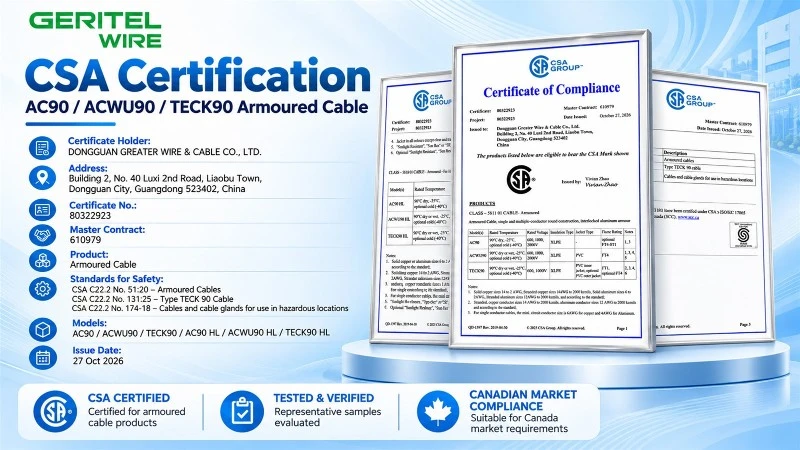
| Certification | Applicable CSA certification |
| Product standard | CSA C22.2 No. 51 |
| Conductor material | Copper or aluminum |
| Conductor size | AWG or kcmil |
| Number of conductors | According to circuit design |
| Insulation | XLPE / RW90 as specified |
| Armour | Interlocked aluminum armour |
| Outer jacket | PVC or specified alternative |
| Voltage rating | According to project requirements |
| Temperature rating | 90°C where specified |
| Wet-location suitability | Confirmed for the exact product |
| Sunlight resistance | Required for exposed outdoor sections |
| Cable outside diameter | Compatible with the selected gland |
| Termination accessories | Approved for the cable construction |
| Environmental rating | Suitable for the enclosure and installation location |
| Technical documentation | Datasheet, certification and installation instructions |
Buyers should also clarify whether the installation involves:
Outdoor distribution panels.
Underground junction boxes.
Industrial motor connections.
Pump stations.
Wet cable trays.
Hazardous locations.
Areas exposed to frequent washing or condensation.
These details help manufacturers and cable accessory suppliers recommend compatible products.
6.1 Why Cable and Connector Compatibility Matters
The cable and its termination accessories form one electrical installation system.
For example, specifying a jacketed ACWU90 cable without checking the required gland dimensions can result in installation delays.
The connector may not fit the cable correctly, or its sealing components may not provide the intended environmental protection.
For large industrial projects, it is good practice to confirm cable outside diameter, gland compatibility, armour requirements, and enclosure entry details during the engineering and procurement stages.
This is particularly important when cables are supplied internationally and termination accessories are sourced locally.
7. Frequently Asked Questions About Water Ingress at ACWU90 Terminations
Q1. Is ACWU90 Cable Waterproof?
Not in the absolute sense.
ACWU90 is designed for approved wet-location applications, and its outer jacket provides additional protection against moisture.
However, this does not mean every ACWU90 cable is suitable for continuous submersion or that its terminations are automatically waterproof.
The exact product approval, installation method, and termination accessories must be checked.
Q2. Can Water Travel Inside ACWU90 Cable?
Yes, depending on the cable construction and the location of water entry.
Water may migrate through available internal pathways, including spaces between conductor strands or other cable interstices.
However, the extent of water migration depends on the cable design.
Unless the manufacturer specifically identifies longitudinal water-blocking features, buyers should not assume that standard ACWU90 construction prevents water migration.
Q3. Does a Cable Gland Make ACWU90 Terminations Waterproof?
Not automatically.
A cable gland provides mechanical retention and, depending on its design and certification, environmental sealing.
Its performance depends on compatibility with the cable, correct installation, the sealing method, and the specified environmental rating.
A connector intended for a dry location should not automatically be used in an outdoor wet environment.
Q4. Can I Use Silicone Sealant Around an ACWU90 Cable Gland?
Silicone sealant should not be treated as a substitute for a properly selected and installed cable gland.
Some manufacturers may permit specific supplementary sealing products in defined applications, but compatibility must be verified.
In hazardous locations, only the required approved sealing arrangements should be used.
Q5. Does Water in an ACWU90 Enclosure Mean the Cable Must Be Replaced?
Not necessarily.
Water may have entered through the enclosure cover, conduit, cable gland, or condensation rather than through the cable itself.
However, if water has entered the cable interior, the cable requires further assessment.
A qualified electrical professional should determine whether the affected cable and terminations can remain in service or need replacement.
Q6. Is ACWU90 Suitable for Outdoor Industrial Installations?
Yes, suitable ACWU90 products are commonly used for outdoor industrial electrical distribution.
However, buyers must verify the specific product's wet-location, sunlight-resistance, temperature, and other required ratings.
Correct connectors, enclosure protection, and installation practices are equally important.

8. Final Thoughts: How to Prevent Water Ingress at ACWU90 Terminations
Water entering ACWU90 cable at terminations is not necessarily a cable manufacturing defect.
In many cases, the problem originates from the interface between the cable, cable gland, and electrical enclosure.
The most common causes include incorrect connector selection, improper gland installation, damaged outer jackets, water migration through internal cable pathways, conduit water accumulation, and condensation.
To prevent these problems, contractors and engineers should:
Select cable glands specifically approved for the cable construction.
Confirm that the gland is suitable for the actual wet or outdoor environment.
Prepare the cable carefully without damaging the remaining jacket.
Follow the gland manufacturer's installation instructions.
Maintain appropriate enclosure sealing and water management.
Inspect and test suspected moisture-related failures before re-energizing equipment.
The key takeaway is simple: a moisture-resistant cable cannot compensate for an improperly sealed termination. Reliable performance requires the cable, connector, enclosure, and installation method to work together as a properly designed system.
Need Reliable ACWU90 Cable for Your Industrial Projects?
Reliable cable performance depends on more than insulation and armour. Proper cable construction and compatible termination accessories are equally important for demanding industrial environments. GERITEL WIRE, manufactured by Dongguan Greater Wire & Cable Co., Ltd., supplies CSA-certified ACWU90 cable solutions for international distributors, electrical contractors, OEMs, and industrial projects. Whether you require copper or aluminum conductors, different cable sizes, or specific jacket and certification requirements, our team can help you review your specifications and select suitable products. Contact GERITEL WIRE for technical information, product details, and a quotation tailored to your application.
Dongguan Greater Wire & Cable Co., Ltd.
Tel/WhatsApp/Wechat: +86 136 6257 9592
Tel/WhatsApp/Wechat: +86 135 1078 4550
Email: manager01@greaterwire.com
Website: www.greaterwire.com